- Company Articles
- Products and Technology
- Product knowledge
- Computer Peripheral Manufacturing: Five Way Straight Lean Pipe Joint Use

Computer Peripheral Manufacturing: Five Way Straight Lean Pipe Joint Use
Related Product
Five Way Straight Lean Pipe Joint
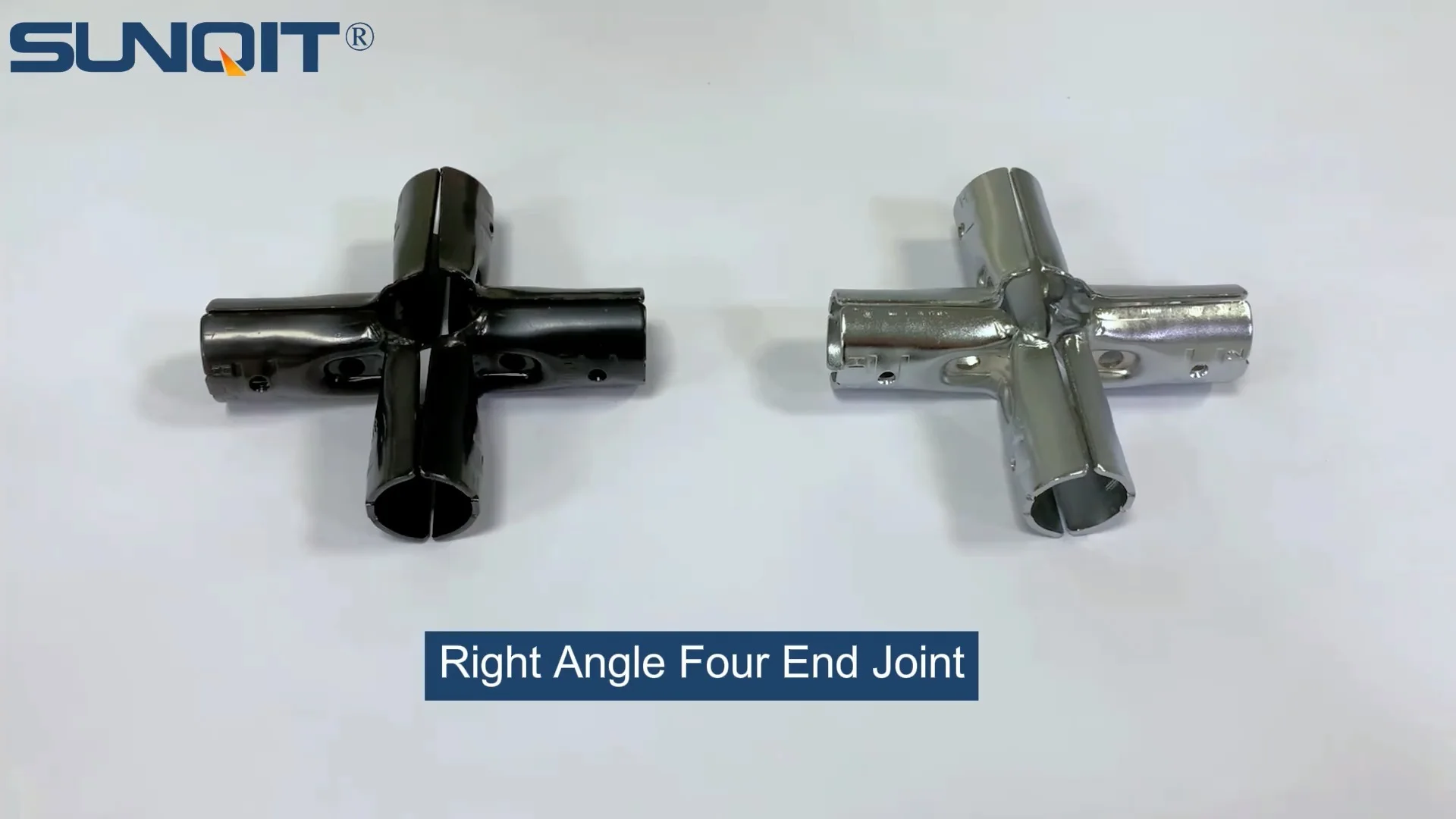
Five way straight lean pipe joint, for 5 pcs 28mm lean pipe connect in straight angle,which used widely in workbench, flow rack, hand trolley frame connection.
How a single component transforms efficiency, flexibility, and workflow in modern production lines
Introduction: The Hidden Backbone of Computer Peripheral Production
Walk into any tech store, and you'll find shelves lined with computer peripherals—sleek keyboards, ergonomic mice, high-resolution monitors, and noise-canceling headsets. These devices, as they may seem, are the unsung heroes of our digital lives, connecting us to work, entertainment, and communication. What many don't realize is that behind every smooth, responsive keyboard or crystal-clear monitor lies a manufacturing process that demands precision, speed, and adaptability.
Computer peripheral manufacturing is a fast-paced world. With consumer demands shifting constantly—new designs, updated features, eco-friendly materials—factories can't afford to rely on rigid, one-size-fits-all production setups. This is where lean manufacturing steps in, and at the heart of lean physical infrastructure are components like the five way straight lean pipe joint. It's not the flashiest part of the process, but it's a workhorse that quietly enables factories to stay agile, reduce waste, and keep up with the ever-changing market.
The Basics: Why Lean Systems Matter in Modern Manufacturing
Before diving into the specifics of the five way straight lean pipe joint, let's take a step back. Lean manufacturing isn't just a buzzword—it's a philosophy built on eliminating waste, streamlining workflows, and continuous improvement. In computer peripheral production, where even small delays or inefficiencies can derail deadlines, lean principles are critical.
Traditional manufacturing setups often use fixed, heavy equipment that's expensive to modify. If a factory needs to switch from assembling wireless mice to gaming keyboards, reconfiguring the production line could take days or even weeks. That's a problem when product cycles are shorter than ever. Lean systems solve this by prioritizing modularity and flexibility. Instead of permanent structures, lean setups use lightweight, adjustable components that can be rearranged quickly—think of it as building with digital "Legos" for the physical world.
At the core of these lean systems are lean pipes (also called "lean tubes") and their accompanying joints. These pipes—often made of steel, aluminum, or plastic-coated materials—are lightweight yet strong, and they connect using simple, durable joints. Together, they form workbenches, material racks, conveyors, and more. And among all these joints, the five way straight lean pipe joint stands out for its unique ability to create complex, multi-directional structures with minimal parts.

Meet the Star: What Is a Five Way Straight Lean Pipe Joint?
Let's get up close with the five way straight lean pipe joint. Imagine a small, unassuming connector—usually made of die-cast aluminum or steel—that can link five lean pipes together in a straight or slightly angled configuration. Unlike standard two-way or three-way joints, which connect pipes in limited directions, the five way joint is a multitasker. It can anchor vertical supports, horizontal beams, and diagonal braces all at once, making it ideal for building sturdy, intricate structures without cluttering the setup with extra connectors.
Most five way straight lean pipe joints are designed with a central hub and five equally spaced ports. Each port has a threaded or friction-fit mechanism that securely holds a lean pipe in place, often with the help of a setscrew or clamp. Some models even allow for 360-degree rotation of individual ports, adding another layer of adjustability. This might sound simple, but in a factory setting, that simplicity is its greatest strength. Workers don't need specialized tools to assemble or disassemble it—just a basic wrench or even their hands for quick adjustments.
Materials matter, too. Many five way joints are made from corrosion-resistant materials like stainless steel or aluminum, which is crucial in computer peripheral manufacturing environments where dust, oils, and occasional spills are common. This durability ensures the joints can withstand daily wear and tear, keeping the production line running smoothly for years.

Applications in Computer Peripheral Manufacturing: Where It All Comes Together
Now, let's talk about how this humble joint makes a real difference on the factory floor. Computer peripheral manufacturing involves multiple stages: component storage, assembly, testing, packaging, and shipping. Each stage has unique needs, and the five way straight lean pipe joint plays a role in nearly all of them. Let's break down three key applications.
1. Lean Pipe Workbenches: The Heart of Assembly
Every computer peripheral starts as a collection of small parts—circuit boards, plastic casings, buttons, sensors. These parts need to come together at an assembly station, which is where the lean pipe workbench shines. A well-designed workbench puts everything the assembler needs within arm's reach, reducing unnecessary movement and speeding up production.
Here's where the five way straight lean pipe joint proves invaluable. A typical assembly workbench might have a flat surface (often an aluminum honeycomb panel for lightweight strength), overhead lighting, tool holders, and bins for small parts. To support all this, the workbench frame needs vertical posts, horizontal rails for shelves, and diagonal braces for stability. A five way joint can connect all these elements at key points—for example, anchoring a vertical post to two horizontal rails (one for the shelf, one for the tool holder) and two diagonal braces, all in one compact connector.
Take a wireless keyboard assembly line, for instance. Each workbench might need to accommodate different keyboard sizes (standard, compact, ergonomic). With a five way joint, the factory can easily adjust the height of the shelf or the position of the tool holder without rebuilding the entire bench. If a new keyboard model with a larger circuit board comes in, the assembler can reposition the parts bin by loosening the setscrew on the joint, sliding the pipe, and tightening it back up—done in minutes, not hours.
2. Flow Racks: Streamlining Material Storage
After assembly, peripherals move to testing, packaging, and shipping. Along the way, they need to be stored temporarily, and that's where flow racks (also called "gravity racks") come in. Flow racks use inclined shelves with roller tracks, allowing materials to slide forward as items are removed—first in, first out (FIFO). This ensures that older inventory gets used first, reducing waste from expired components or outdated models.
Building a flow rack requires a sturdy frame with multiple levels, each holding roller tracks. The vertical supports need to connect to horizontal beams (for the rack sides) and cross-braces (for stability), while also supporting the weight of stacked boxes. Five way straight lean pipe joints are perfect for this. At each vertical post, a five way joint can connect the main post to two horizontal beams (one for the top shelf, one for the middle shelf), a cross-brace, and a diagonal support—all without needing extra connectors. This not only simplifies assembly but also makes the rack stronger, as the load is distributed across multiple connection points.
For example, a flow rack storing mouse casings might have three levels. If the factory starts producing a larger gaming mouse that requires bigger boxes, the five way joints allow workers to adjust the height of the shelves by moving the horizontal beams up or down the vertical posts. No need to buy a new rack—just reconfigure the existing one.
3. Material Handling with Conveyors
Moving components and finished products between stations is another critical part of the process. Conveyors—whether roller, belt, or chain-driven—keep things flowing smoothly. But conveyors need support structures, guides to keep items on track, and sometimes adjustable height to match different workstations.
Five way straight lean pipe joints help here, too. A roller conveyor might need side guides to prevent small parts (like USB dongles or keyboard keycaps) from falling off. These guides can be attached using horizontal pipes connected to the conveyor frame via five way joints. If the conveyor needs to feed into a testing station that's slightly higher, the frame legs can be adjusted using five way joints to tilt the conveyor upward, ensuring a steady flow.
In one case study, a monitor manufacturing plant used five way joints to build a custom conveyor system that moved monitors from assembly to quality control. The conveyor had to navigate a tight corner, so the team used five way joints to connect the straight sections to the curved roller track, adding diagonal braces for stability. When the plant started producing larger monitors, they simply adjusted the side guides by repositioning the pipes on the joints—no need for a custom-built conveyor.

Why It Works: The Benefits of Five Way Straight Lean Pipe Joints
By now, you might be thinking, "Okay, it's flexible, but why not just use more three-way joints?" The answer lies in the unique benefits that five way straight lean pipe joints bring to the table—benefits that directly address the challenges of computer peripheral manufacturing.
| Benefit | How It Helps Computer Peripheral Manufacturing |
|---|---|
| Fewer Components, Less Waste | One five way joint replaces multiple smaller joints, reducing the number of parts needed. This cuts down on inventory costs and waste from excess connectors. |
| Faster Reconfiguration | With all connections in one joint, adjusting a structure (like a workbench or flow rack) takes less time. Critical for switching between product models quickly. |
| Enhanced Stability | By connecting multiple pipes at a single point, the joint distributes weight more evenly, reducing the risk of wobbling or collapse—important for delicate components like LCD screens. |
| Cost Savings | Less time spent reconfiguring means less downtime. Fewer parts mean lower procurement costs. Over time, these savings add up, especially for high-volume production. |
Perhaps the biggest advantage, though, is adaptability. Computer peripheral trends change rapidly—think of the shift from wired to wireless mice, or the rise of mechanical keyboards. Factories that can't adapt quickly get left behind. With five way straight lean pipe joints, adaptation isn't just possible; it's easy. A factory that yesterday was assembling basic mice can today switch to high-end gaming mice with minimal disruption, thanks to a setup that bends rather than breaks.
Integration with Aluminum Profiles: A Match Made in Manufacturing Heaven
While lean pipes are the star here, they rarely work alone. Many modern factories pair lean pipe systems with aluminum profiles, which are extruded aluminum bars with T-slots for easy mounting of accessories (like shelves, brackets, or lights). Aluminum profiles are lightweight, corrosion-resistant, and incredibly strong, making them ideal for heavier loads or more permanent structures.
The five way straight lean pipe joint plays well with aluminum profiles, too. For example, a lean pipe workbench might use aluminum profiles for the main frame (for added rigidity) and lean pipes with five way joints for the adjustable components (like the tool holder or parts bin). The T-slots in the aluminum profiles allow the lean pipe joints to be mounted directly, creating a hybrid system that combines the best of both worlds—strength from aluminum and flexibility from lean pipes.
Take a monitor assembly line that needs to support larger, heavier screens. The main workbench frame could be built with 4040 aluminum profiles (a common size, 40mm x 40mm), providing a stable base. The overhead light bar and tool holder, which need to be adjustable, could be attached using lean pipes connected via five way joints. This way, the frame stays strong, while the adjustable parts remain easy to reconfigure.
Real-World Impact: A Case Study
The Challenge: A mid-sized manufacturer of computer headsets was struggling with inefficiencies in their assembly line. They produced three headset models (wireless, wired, gaming) and spent 8-10 hours reconfiguring workbenches and flow racks every time they switched models. Inventory of connectors and pipes was also ballooning, as they needed different parts for each setup.
The Solution: The factory switched to a lean pipe system centered around five way straight lean pipe joints. They replaced their traditional fixed workbenches with modular lean pipe workbenches and converted static shelving to flow racks using five way joints for the frames.
The Results: Reconfiguration time dropped from 8-10 hours to 1-2 hours per model switch. Connector inventory was reduced by 40% (fewer joints needed overall), and assembly line throughput increased by 25% as workers spent less time moving between tools and parts. The factory also reported fewer errors, as the ergonomic, adjustable workbenches reduced strain and fatigue.
Conclusion: Small Part, Big Difference
In the world of computer peripheral manufacturing, where precision, speed, and adaptability are everything, the five way straight lean pipe joint might not get the spotlight—but it deserves it. This small, unassuming connector is a quiet innovator, enabling factories to build flexible, efficient, and cost-effective production lines that can keep up with the fastest-moving trends.
From lean pipe workbenches that adjust to any component size to flow racks that keep materials moving and conveyors that adapt to new layouts, the five way joint is more than just a piece of hardware. It's a tool that empowers manufacturers to embrace lean principles, reduce waste, and focus on what matters most: creating high-quality peripherals that connect us all.
So the next time you plug in your keyboard or put on your headset, take a moment to appreciate the unseen infrastructure that made it possible. Behind that sleek device is a story of innovation—and at the heart of that story might just be a five way straight lean pipe joint, quietly doing its job.