- Company Articles
- Products and Technology
- Product knowledge
- Connection Methods for 4040E EU Standard Aluminum Profile: Internal Rotation Joints Explained

Connection Methods for 4040E EU Standard Aluminum Profile: Internal Rotation Joints Explained
Related Product
4040E EU Standard Aluminum Profile
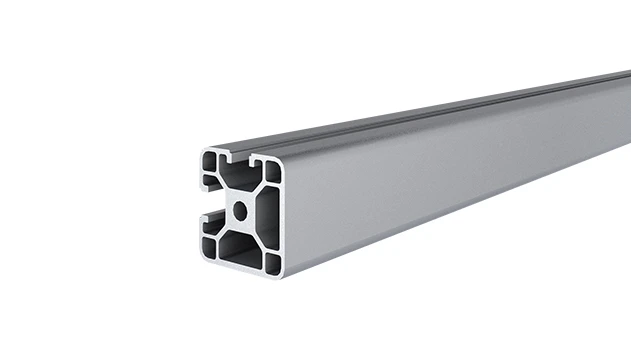
4040E is a 4.00x4.00 CM fractional 40 series square extrusion T-slot profile with two side open T-slots, two side with closed face, each side with 4.00cm face. The profile has align-a-grooves to assist in aligning connecting profiles.
In the fast-paced world of manufacturing, where efficiency and adaptability can make or break a production line, the unsung heroes often lie in the details of your workspace setup. Enter the 4040E EU Standard Aluminum Profile—a workhorse in modern lean systems—and the internal rotation aluminum joint, the quiet innovator that turns rigid structures into flexible, dynamic workspaces. Whether you're building a custom workbench, a material rack, or a conveyor system, understanding how these two components work together isn't just about assembly—it's about unlocking the full potential of your lean manufacturing goals. Let's dive into the nuts and bolts (or rather, profiles and joints) of this essential pairing.
Understanding the 4040E EU Standard Aluminum Profile
Before we get into joints, let's start with the foundation: the 4040E EU Standard Aluminum Profile. If you've spent any time around factory floors, workshops, or even DIY project spaces, you've likely seen these sleek, silver extrusions. But what makes the 4040E stand out? First, the "4040" refers to its dimensions: 40mm in width and 40mm in height, making it a versatile middleweight—sturdy enough for heavy-duty tasks but not so bulky that it limits design flexibility. The "E" denotes its specific groove design, a key feature of EU standard profiles that ensures compatibility with a wide range of aluminum profile accessories.
Manufactured through aluminum extrusion—a process where heated aluminum is pushed through a die to create consistent, precise shapes—the 4040E profile boasts a smooth surface, uniform wall thickness, and most importantly, T-slots running along its length. These T-slots are the profile's superpower: they allow accessories like joints, brackets, and panels to be attached anywhere along the extrusion without drilling or welding. This is where the magic of modularity begins, and it's why the 4040E is a staple in lean system setups worldwide.
But why EU standard? Simply put, consistency. EU standards ensure that profiles and accessories from different suppliers (yes, even if you're sourcing from a lean system supplier across the globe) will fit together seamlessly. That means if you buy a 4040E profile from one manufacturer and an internal rotation joint from another, you won't be stuck with parts that don't align—a common headache in non-standard setups. For manufacturers, this consistency translates to reduced downtime, easier repairs, and the freedom to mix and match components to suit evolving needs.
Internal Rotation Aluminum Joints: The "Flexibility Engine" of Modular Systems
Now, let's talk about the star of the show: the internal rotation aluminum joint. If the 4040E profile is the backbone of your structure, joints are the joints (pun intended) that give it mobility and adaptability. Internal rotation joints, in particular, are designed to do one thing exceptionally well: allow controlled rotation between connected profiles. Unlike fixed joints that lock two profiles at a strict angle (say, 90° or 45°), these joints let you pivot, swivel, or adjust the angle of connected components—all while maintaining a secure hold.
You might be wondering, "When would I need that kind of flexibility?" Let's take a common scenario: a production workbench. Maybe you're assembling small electronics one week and larger components the next. With a fixed workbench frame, you're stuck with the same height and layout. But with internal rotation joints, you could adjust the angle of a side shelf to better position tools, or tilt a material rack to feed parts more ergonomically to the assembly line. It's these small, on-the-fly adjustments that make lean systems truly "lean"—eliminating waste (like unnecessary movement) and keeping workflows smooth.
Internal rotation joints come in various designs, but most share a few key features. They're typically made from high-grade aluminum (matching the 4040E profile's material for compatibility and corrosion resistance) and feature a rotating core housed within a T-slot compatible body. The core often has a threaded hole or set screw that locks the joint into place once the desired angle is achieved. Some models even include ball bearings for smoother rotation, which is a game-changer for applications where frequent adjustments are needed—think conveyor systems or adjustable material feeders.

Step-by-Step: How to Connect 4040E Profiles with Internal Rotation Joints
Connecting 4040E profiles with internal rotation joints isn't rocket science, but getting it right the first time ensures safety, stability, and longevity. Let's walk through the process step by step, so you can confidently tackle your next project—whether you're a seasoned facility manager or a small business owner setting up your first workbench.
1. Gather Your Tools and Materials
First, make sure you have everything you need. You'll need: the 4040E aluminum profiles (cut to your desired length), internal rotation joints (check that they're compatible with 4040E T-slots—most reputable suppliers will label this clearly), a hex key (size depends on the joint's set screws; often 3mm or 4mm), a rubber mallet (for gentle tapping, if needed), a tape measure, a pencil or marker, and a deburring tool (to smooth any rough edges on cut profiles).
2. Prepare the Profiles
Start by inspecting your 4040E profiles. If they're newly cut, there might be burrs or sharp edges along the cut ends—these can scratch the joint or make insertion difficult. Use the deburring tool to smooth these edges. Next, measure and mark where you want the joint to sit on the profile. For most applications, centering the joint between two profiles is best for balance, but if you're building an asymmetrical structure (like a tilted shelf), mark accordingly. A quick tip: Use a piece of masking tape to mark the position—this avoids leaving permanent pencil marks on the aluminum.
3. insert the Internal Rotation Joint
Now, take the internal rotation joint and align its T-slot tongue with the groove in the 4040E profile. Gently slide the joint into the slot, using the rubber mallet to tap it into place if it's a tight fit (be careful not to hit too hard—aluminum is strong but can dent). The joint should sit flush against the profile's inner wall; if it wobbles, double-check that the T-slot tongue is fully engaged in the groove.
4. Align and Connect the Second Profile
With the joint secured in the first profile, it's time to connect the second profile. Rotate the joint to your desired angle (this is where the "internal rotation" comes in—most joints allow 180° rotation, but some are limited to 90° or 120°, so check the specs!). Once aligned, slide the second profile onto the joint's opposite end, again ensuring the T-slot tongue is fully inserted. You may need a helper here to hold the profiles steady while you work—stability during this step prevents misalignment.
5. Lock the Joint in Place
Once both profiles are connected and the angle is set, it's time to lock the joint. Using your hex key, tighten the set screw(s) on the joint. These screws press against the profile's T-slot, creating friction that holds the joint (and thus the profiles) securely. Don't overtighten—you risk stripping the screw or damaging the profile's slot. A good rule of thumb: tighten until you feel resistance, then give it a quarter-turn more. Test the joint by gently trying to rotate it—if it moves, tighten the screw a bit more.
6. Test for Stability and Functionality
Finally, give your connected structure a once-over. Check that both profiles are straight (no bending or warping), that the joint holds firm under light pressure, and that the rotation (if you need to adjust it later) still moves smoothly when the set screw is loosened. If something feels off—like a wobbly connection—disassemble and check for misalignment or debris in the T-slot. It's better to fix it now than to have a structure fail during use.
Comparing Joint Types: When to Choose Internal Rotation Over Fixed or Swivel Joints
Internal rotation joints are powerful, but they're not the only option. To make sure you're choosing the right joint for your project, let's compare them to two common alternatives: fixed angle joints and swivel joints. The table below breaks down their key differences, so you can match the joint to your needs.
| Joint Type | Rotation Range | Max Load Capacity (Approx.) | Best For | Installation Difficulty (1-5) |
|---|---|---|---|---|
| Internal Rotation Joint | 0°–180° (adjustable) | 150–300 kg | Adjustable workbenches, tiltable racks, dynamic conveyors | 3 (requires precise alignment) |
| Fixed 90° Joint | 0° (fixed at 90°) | 300–500 kg | Sturdy frames, static shelving, machine bases | 2 (simple lock-and-go) |
| Swivel Joint | 360° continuous rotation | 50–150 kg | Tool hangers, rotating display racks, lightweight material feeders | 4 (needs bearing maintenance) |
As you can see, internal rotation joints strike a balance between flexibility and strength. They're ideal when you need occasional angle adjustments but still require a robust connection (like a workbench that needs to adapt to different tasks). Fixed joints, on the other hand, are your go-to for static structures where stability is non-negotiable—think a heavy-duty material rack that never needs to move. Swivel joints offer the most rotation but at the cost of lower load capacity, making them better for lightweight, frequently rotated components.
Another factor to consider is cost. Internal rotation joints are generally pricier than basic fixed joints but more affordable than high-quality swivel joints with ball bearings. If your project needs both flexibility and durability, though, the investment in internal rotation joints pays off—you won't have to replace them as often, and you'll save time on reconfiguring setups.
Real-World Applications: How Manufacturers Are Using Internal Rotation Joints
To bring this all to life, let's look at how real manufacturers are leveraging 4040E profiles and internal rotation joints to optimize their operations. These examples show that the right connections don't just hold structures together—they transform workflows.
Case Study 1: Automotive Parts Assembly Line
A mid-sized automotive parts manufacturer was struggling with bottlenecks in their assembly line. Their workers often had to reach across fixed workbenches to grab tools or parts, leading to fatigue and slower production. The facility manager decided to upgrade their workstations using 4040E profiles and internal rotation joints. They installed adjustable side shelves on each workbench, connected via internal rotation joints, allowing workers to pivot the shelves to their preferred angle—whether they were left or right-handed, tall or short. Within a month, the company reported a 12% increase in assembly speed and a 20% drop in worker complaints about discomfort. The internal rotation joints made it easy to reconfigure the shelves for new employees or different tasks, ensuring the setup remained adaptable as the team grew.
Case Study 2: Electronics Manufacturing Material Rack
An electronics plant producing circuit boards needed a way to feed small components (like resistors and capacitors) to their assembly robots without jamming. Their old static racks often caused parts to pile up or get stuck, leading to downtime. They switched to a dynamic material rack built with 4040E profiles and internal rotation joints. The rack's shelves were tilted at a 15° angle (adjustable via the joints) to let parts slide gently into the robot's feeder. If a new component size required a steeper angle, the maintenance team simply loosened the joint screws, adjusted the tilt, and retightened—no tools beyond a hex key. The result? A 95% reduction in feeder jams and a more reliable production flow.
Maintenance Tips: Keeping Your Internal Rotation Joints (and Profiles) in Top Shape
Like any piece of equipment, internal rotation joints and 4040E profiles need a little care to last. Here are some simple maintenance tips to ensure they stay functional for years—saving you money on replacements and keeping your lean system running smoothly.
- Inspect Regularly: Once a month, check joints for signs of wear—like loose set screws, cracks in the aluminum, or debris (dust, grease) in the T-slots. Tighten any loose screws and clean out debris with a soft brush or compressed air.
- Lubricate Moving Parts: If your internal rotation joints have ball bearings, apply a small amount of silicone-based lubricant every 3–6 months (avoid oil-based lubes, which attract dust). This keeps rotation smooth and prevents seizing.
- Protect Against Corrosion: While aluminum is corrosion-resistant, exposure to harsh chemicals or moisture can still cause issues. If your setup is in a damp environment (like a food processing plant), wipe down profiles and joints with a dry cloth weekly, and consider using stainless steel screws for added protection.
- replace Worn Components: Over time, set screws can strip, or the T-slot tongue on joints can wear down. Keep a stock of spare aluminum profile accessories (like extra joints and screws) on hand, and replace any part that feels loose or damaged—don't wait for it to fail.
Choosing a Supplier: What to Look for in a 4040E Profile and Joint Provider
Not all aluminum profiles and joints are created equal. To ensure you're getting quality components that work together seamlessly, keep these factors in mind when choosing a supplier:
EU Standard Compliance: Verify that the 4040E profiles are certified to EU standards—look for labels like "EN 15085" or "ISO 9001" to ensure consistency and compatibility with accessories.
Material Quality: The best 4040E profiles are made from 6063-T5 aluminum alloy, which offers a great balance of strength and lightweight. Ask suppliers about the aluminum grade and extrusion process—poorly extruded profiles may have uneven walls or rough T-slots, leading to joint connection issues.
Accessory Range: A good supplier should offer not just profiles and joints, but a full line of aluminum profile accessories—like end caps, gussets, and caster wheels. This one-stop shopping saves time and ensures compatibility.
Technical Support: Even seasoned pros run into questions. Choose a supplier with responsive technical support—whether it's help selecting the right joint for your load or troubleshooting a connection issue. Look for suppliers with online guides, videos, or phone support.
Conclusion: The Power of Adaptable Connections in Lean Manufacturing
At the end of the day, the 4040E EU Standard Aluminum Profile and internal rotation aluminum joint are more than just parts—they're tools for building a smarter, more efficient workspace. By combining the modularity of EU-standard profiles with the flexibility of internal rotation joints, you're not just assembling a structure; you're creating a lean system that can grow, change, and adapt to whatever your production line throws at it. Whether you're building a simple workbench or a complex conveyor system, these components empower you to eliminate waste, improve workflows, and keep your team productive.
So, the next time you're planning a workspace upgrade, remember: the right connections matter. Invest in quality 4040E profiles, pair them with reliable internal rotation joints, and take the time to install and maintain them properly. Your lean system (and your bottom line) will thank you.