- Company Articles
- Products and Technology
- Product knowledge
- Consumer Electronics Assembly: Four Way Straight Lean Pipe Joint Chrome Applications

Consumer Electronics Assembly: Four Way Straight Lean Pipe Joint Chrome Applications
Related Product
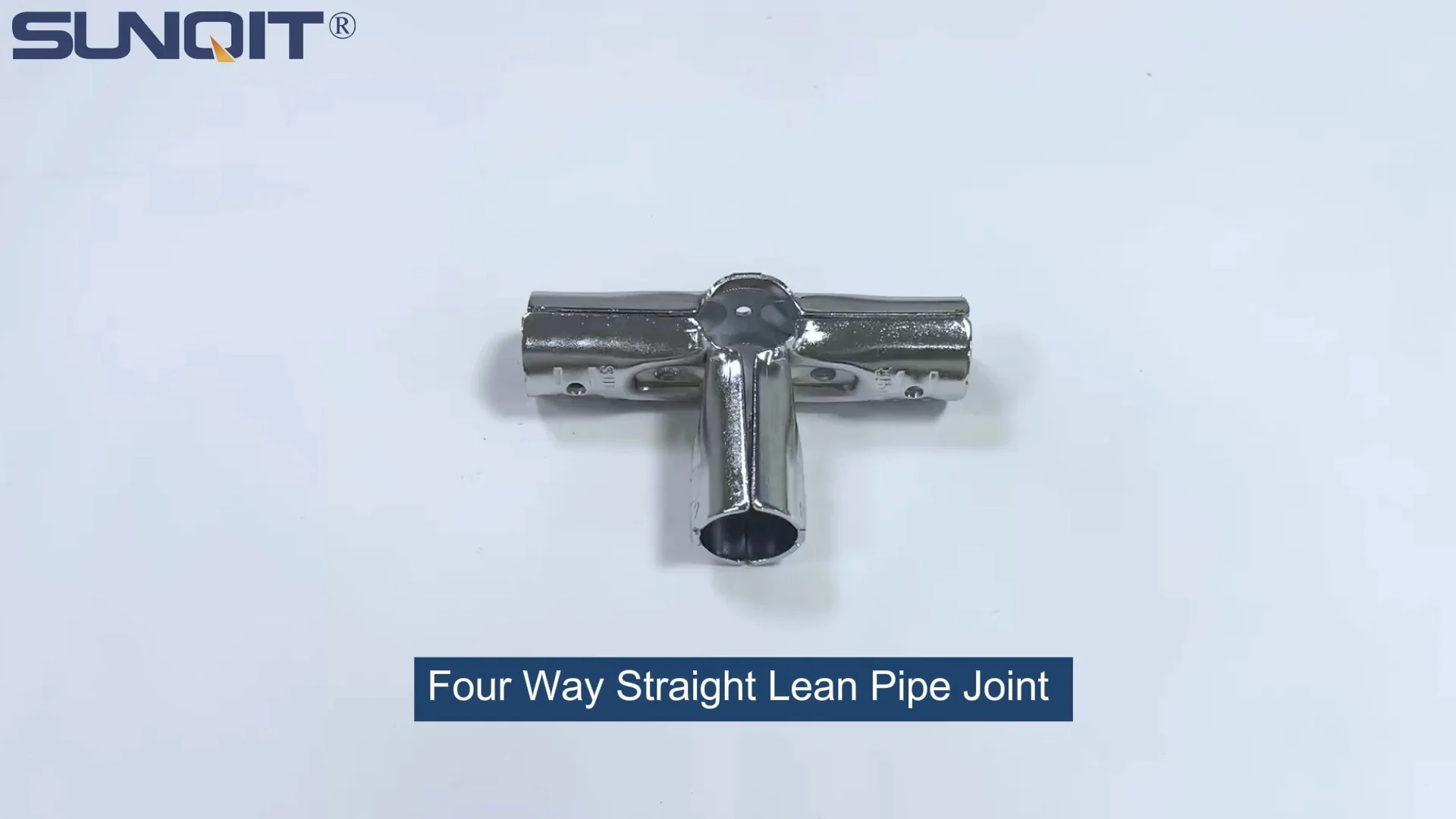
Four Way Straight Lean Pipe Joint Chrome
Four way lean pipe joint for 4 pcs 28MM lean pipe connection in straight angle, which used widely in workbench, flow rack, hand trolley frame connection.
Walk into any consumer electronics assembly plant, and you'll feel it immediately—the hum of precision. Workers hunched over benches, fingers deftly maneuvering tiny components; conveyor belts whispering as circuit boards glide past; the soft beep of quality checks marking another step toward a finished smartphone, laptop, or smartwatch. In this world, where a single misplaced resistor can derail an entire production run, efficiency isn't just a goal—it's the lifeblood of the operation. But what if the secret to that efficiency isn't in the high-tech robots or the cutting-edge software? What if it's in something far simpler: the unassuming joints and pipes that hold the assembly line together?
Today, we're diving into the backbone of modern lean manufacturing: the four way straight lean pipe joint chrome . It might not have the flash of a robotic arm, but this small component plays a starring role in keeping assembly lines flexible, durable, and adaptable—qualities that matter more than ever in an industry where product cycles shrink from years to months. We'll explore how it works, why it's indispensable in consumer electronics assembly, and how it teams up with other components like lean pipe workbenches , roller tracks , and ESD workstations to create workflows that feel almost intuitive. Let's start by understanding why lean manufacturing isn't just a buzzword—it's the difference between struggling to keep up and leading the pack.
The Lean Revolution in Manufacturing: Beyond Buzzwords
Lean manufacturing has been around since the 1950s, popularized by Toyota's legendary production system. But in today's consumer electronics world, it's evolved from a "nice-to-have" into a survival strategy. Here's why: Electronics companies don't just compete on features—they compete on speed. A new smartphone model needs to go from design to store shelves in months, not years. That means assembly lines can't be fixed, rigid structures bolted to the floor. They need to pivot, reconfigure, and adapt as quickly as the products themselves.
At its core, lean is about eliminating waste—whether that's wasted time, wasted space, or wasted effort. And in consumer electronics, waste often creeps in through inflexible workstations. Imagine a team that assembles smartwatches one month and fitness trackers the next. If their workbench is welded into place, with fixed shelves and static tool holders, switching between products means hours (or days) of downtime. But with lean pipe systems? It's a matter of loosening a few joints, rearranging the pipes, and having a brand-new workstation ready by lunch.
This is where components like the four way straight lean pipe joint chrome shine. They're the building blocks of a modular system that lets manufacturers create, modify, and expand workspaces on the fly. No welding, no heavy machinery, no downtime. Just a few hand tools and a team that can adapt as quickly as the market demands. But to truly appreciate this joint, we need to get up close and personal with its design and purpose.
Meet the Unsung Hero: Four Way Straight Lean Pipe Joint Chrome
What Is It, Exactly?
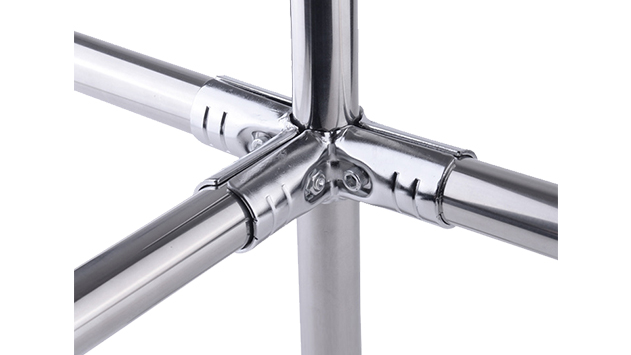
Let's break it down: A "four way straight lean pipe joint" is a connector designed to join lean pipes (hollow tubes, often made of steel or aluminum) at right angles, allowing for the creation of sturdy, multi-directional structures. The "chrome" refers to its finish—a layer of chromium plating that adds durability and resistance to corrosion. But this isn't just any connector. Unlike plastic or uncoated metal joints, the chrome-plated four way joint is built to withstand the rigors of a busy assembly line: constant adjustments, heavy loads, and the occasional bump from a forklift or turnover trolley.
Picture this: You're building a lean pipe workbench for assembling laptop motherboards. You need vertical supports, horizontal shelves, and a crossbar to hang tools. The four way joint lets you connect four pipes at once—one vertical, one horizontal left, one horizontal right, and one horizontal forward—creating a stable node that can support shelves, bins, or even a small roller track for sliding components into place. It's like the T-junction of the manufacturing world, but with an extra arm to handle more complexity.
Design and Material Excellence: Why It's Built to Last
Not all lean pipe joints are created equal. The four way straight lean pipe joint chrome is typically made from high-grade steel, chosen for its strength-to-weight ratio. Steel can handle the stress of holding up heavy workbenches or loaded material racks without bending or warping, which is critical when you're dealing with expensive electronics components. But steel alone isn't enough—the chrome plating takes it to the next level.
Chrome plating isn't just about shine (though it does look professional). It's a functional choice. Chrome forms a hard, protective barrier that resists scratches, rust, and chemical damage—common hazards in assembly environments where cleaning agents, oils, and even sweat can take a toll. Think about how often workers lean on workbenches, or how many times a trolley bumps into a rack. A chrome finish ensures the joint stays smooth and functional for years, not months. Plus, it's easy to clean—just a quick wipe with a damp cloth, and it's ready for the next shift.
Why Chrome? The Finish That Makes a Difference
You might be wondering: Why chrome instead of plastic, paint, or another metal finish? Let's compare. Plastic joints are cheaper, but they're prone to cracking under heavy loads or warping in high temperatures—common in plants with industrial lighting and machinery. Paint chips, exposing the metal underneath to rust. Chrome, on the other hand, bonds tightly to steel, creating a finish that's both hard and flexible. It can absorb minor impacts without flaking, and it doesn't fade under UV light, so your workbench or rack will look (and perform) like new even after years of use.
In consumer electronics, where even tiny particles of dust can ruin a circuit board, chrome's smooth surface is another advantage. Unlike rough, uncoated metal, chrome doesn't trap dirt or debris. That means less time spent cleaning and more time spent assembling—a small detail that adds up to big efficiency gains over a production run.
Building Blocks: How It Works with Other Components
A single joint is just a piece of metal. Its true power comes from how it interacts with other components to create functional, adaptable systems. Let's take a look at three key partnerships that make the four way straight lean pipe joint chrome indispensable in consumer electronics assembly.
1. Lean Pipe Workbench: The Assembly Line's Command Center
The lean pipe workbench is where the magic happens. It's the surface where workers spend most of their day, assembling components, testing circuits, and inspecting finished parts. A well-designed workbench needs to be sturdy, adjustable, and organized—and the four way joint is central to making that happen.
Consider an ESD-safe workbench for assembling smartphone screens. ESD (Electrostatic Discharge) can fry delicate microchips, so the workbench must be grounded. The frame, built with lean pipes and four way joints, connects to a grounding cable, ensuring any static charge dissipates harmlessly. Shelves above the work surface hold tools and parts bins, each supported by joints that can be moved up or down to match the worker's height. A small roller track along the back edge lets completed screens slide gently to the next station, reducing the risk of drops or scratches.
What if the next model has a larger screen? No problem. Loosen the bolts on the four way joints, adjust the height of the shelves, and reposition the roller track—all in under an hour. Compare that to a traditional wooden or metal workbench, which would need to be replaced entirely. The four way joint turns a static piece of furniture into a dynamic tool that grows with your needs.
2. Roller Track: Keeping Materials Flowing Smoothly
In any assembly line, materials need to move—from storage to workbench, from workbench to testing, and finally to packaging. Roller tracks are the conveyor belts of lean systems, using gravity or gentle pushes to move components along without manual lifting. And they rely on four way joints to stay aligned and stable.
Imagine a material rack for PCB (Printed Circuit Board) components. Each shelf has a roller track, so bins of resistors, capacitors, and diodes can slide forward as the front bin is emptied. The rack's frame is built with lean pipes, and four way joints connect the vertical supports to the horizontal rails that hold the roller tracks. This structure is strong enough to hold hundreds of pounds of components but flexible enough to reconfigure if you need to add more shelves or adjust the height.
Workers love roller tracks because they reduce strain. Instead of reaching across a deep shelf or lifting heavy bins, they can simply slide the bin toward them. And because the four way joints keep the tracks level and secure, there's no risk of bins tipping or getting stuck—critical when you're dealing with tiny, easy-to-lose parts like SMD (Surface Mount Device) resistors.
3. ESD Workstation: Protecting What Matters Most
In consumer electronics, ESD protection isn't optional—it's a requirement. An ESD workstation includes grounded work surfaces, wrist straps, and sometimes even ionizers to neutralize static. But the frame of the workstation, often built with lean pipes and four way joints, plays a hidden role in this protection.
Steel lean pipes conduct electricity, so when connected via four way joints (which also conduct), the entire frame becomes a grounding path. Attach a grounding cable to one of the vertical pipes, and suddenly every part of the workstation—shelves, tool hooks, even the roller track—is grounded. This creates a Faraday cage effect, shielding sensitive components from static discharges that could otherwise ruin them.
What makes the four way joint essential here is its reliability. A loose or corroded joint could break the grounding path, putting components at risk. But the chrome plating resists corrosion, and the steel construction ensures a tight, consistent connection. Workers can focus on assembling, not worrying if their workstation is properly grounded—another small win that adds up to fewer defects and higher quality.

Real-World Impact: How It Changes the Game for Workers
To truly understand the value of the four way straight lean pipe joint chrome, let's step into the shoes of Maria, a lead assembler at a mid-sized electronics plant that makes smart home devices. A year ago, her team was stuck with, fixed workbenches and metal racks that took hours to reconfigure. Today, they use lean pipe systems with four way joints—and Maria says the difference is night and day.
"We used to dread product launches," Maria recalls. "When we switched from making smart thermostats to smart doorbells, the old workbenches were too low for the new larger circuit boards. We had to stack phone books under the boards to raise them up—that's how primitive it was. Now? We just loosen the four way joints, adjust the shelf height, and we're ready. Last month, we reconfigured three workstations in 45 minutes. The guys in maintenance still joke that we put them out of a job!"
Her team also uses a material rack built with four way joints and a roller track to hold plastic bins of sensors. "Before, we'd have to walk across the line to get parts. Now, the bins slide right to us. I've seen fewer dropped parts since we installed it—those sensors are tiny, like grains of rice, and dropping one used to mean a 10-minute hunt on the floor. Now, they stay in the bin until we need them."
Maria's story isn't unique. Across the industry, workers are finding that lean pipe systems—powered by components like the four way straight lean pipe joint chrome—make their jobs easier, safer, and more efficient. It's not just about faster production; it's about creating a workplace that respects the people who keep the assembly line moving.
The Numbers Speak: Comparing Traditional vs. Lean Pipe Setups
Still not convinced? Let's look at the data. Below is a comparison of traditional fixed assembly setups versus lean pipe systems using four way joints, based on industry studies and real-world case reports from consumer electronics manufacturers.
| Metric | Traditional Fixed Setup | Lean Pipe System with Four Way Joints |
|---|---|---|
| Initial Setup Cost | Higher (custom welding, fixed materials) | 30-40% lower (modular components, no welding) |
| Reconfiguration Time | 2-3 days (requires tools, possibly new parts) | 1-2 hours (hand tools, reusable components) |
| ESD Protection Reliability | Moderate (grounding often limited to work surface) | High (entire frame grounded via conductive joints/pipes) |
| Worker Fatigue (ergonomic score) | Lower (fixed heights, manual material handling) | Higher (adjustable heights, roller tracks reduce lifting) |
| 5-Year Lifespan Cost | Higher (replacement of entire structures) | 50% lower (reuse components, replace only worn parts) |
| Space Utilization | Inefficient (fixed layouts waste space) | 20-30% more efficient (modular design fits changing needs) |
The numbers tell a clear story: lean pipe systems with four way joints aren't just more flexible—they're more cost-effective, safer, and better for workers. For consumer electronics manufacturers operating on tight margins and even tighter deadlines, that's a game-changer.
Maintenance and Longevity: Keeping Your System Strong
Like any tool, a lean pipe system needs a little care to keep performing at its best. The good news? Maintaining four way straight lean pipe joints is simple and requires minimal time or expertise. Here are a few tips:
Check for Loose Bolts Monthly: The joints are secured with bolts that can loosen over time, especially in high-traffic areas. A quick once-over with a wrench ensures everything stays tight.
Clean Chrome Surfaces Regularly: Wipe joints with a soft, damp cloth to remove dirt and oils. Avoid abrasive cleaners, which can scratch the chrome finish.
Lubricate Moving Parts: If your system includes rotating joints or roller tracks, a drop of machine oil on hinges and bearings every few months will keep things sliding smoothly.
replace Worn Components Promptly: While the joints themselves are durable, parts like caster wheels or roller track guides may wear out. The modular design means you can replace just the worn part, not the entire system.
By following these simple steps, your lean pipe system can last 5-7 years or more—far longer than most traditional setups—and still be reconfigurable enough to adapt to whatever new product comes down the line.
Conclusion: The Future of Assembly Is Modular
In the fast-paced world of consumer electronics, where innovation never stops, the tools we use to build our products must be just as innovative. The four way straight lean pipe joint chrome might not grab headlines, but it's a quiet revolutionary—empowering workers, reducing waste, and making assembly lines as adaptable as the products they create. It's the difference between struggling to keep up with change and leading it.
Whether you're building a lean pipe workbench for smartphone assembly, a roller track for moving PCBs, or an ESD workstation to protect sensitive components, this joint is the glue that holds it all together—strong, reliable, and ready for whatever the future brings. So the next time you pick up your smartphone or power on your laptop, take a moment to appreciate the unsung heroes of manufacturing: the small, chrome-plated joints that helped bring it to life.
In the end, lean manufacturing isn't just about pipes and joints. It's about creating systems that respect people—making their jobs easier, safer, and more fulfilling. And in that mission, the four way straight lean pipe joint chrome is more than a component. It's a partner.