- Company Articles
- Products and Technology
- Solution
- Consumer Electronics: Flexible Production Stations Using Lean Pipe Clamp B Chrome

Consumer Electronics: Flexible Production Stations Using Lean Pipe Clamp B Chrome
Related Product
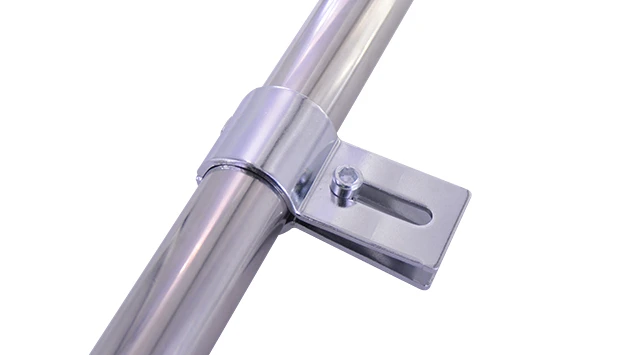
Lean Pipe Clamp B Chrome
Lean pipe clamp is used for turnover trolley, workbench, flowrack adjust the frame or fix some accessory.
The Race to Keep Up: Consumer Electronics and the Need for Adaptive Production
Walk into any electronics store today, and you'll be met with a dizzying array of gadgets: sleek smartphones with foldable screens, wireless earbuds that cancel noise better than ever, smartwatches that monitor your health in real time, and home devices that connect seamlessly to your digital life. The consumer electronics industry moves at a pace that's hard to match—new models launch quarterly, features evolve overnight, and customer demands shift faster than manufacturers can sometimes keep up. In this high-stakes environment, the difference between success and obsolescence often comes down to one critical factor: how quickly and efficiently a production line can adapt.
Traditional production lines, with their fixed machinery and rigid layouts, were built for stability. They excel at churning out the same product day in and day out, but when a new model drops or a design update is needed, they become liabilities. Imagine retooling a line to accommodate a slightly larger battery in a smartphone, or rearranging workstations to assemble a new wireless charger—tasks that could take weeks with old systems. By then, competitors have already moved on, and market share slips through your fingers.
This is where flexible production stations step in. Designed to be modular, reconfigurable, and adaptable, they're the unsung heroes of modern electronics manufacturing. And at the heart of many of these systems lies a small but mighty component: the Lean Pipe Clamp B Chrome. It's not the flashiest part of the production line, but without it, the flexibility that powers today's consumer electronics factories would simply not exist.
Rigid Lines, Rigid Results: Why Old-School Production Falls Short
Let's take a step back. For decades, manufacturing relied on fixed production lines. Picture a long conveyor belt snaking through a factory, with workers stationed at specific points, each repeating the same task—attaching a screen here, soldering a circuit board there, packaging a finished product at the end. These lines were efficient, but only for one thing: mass-producing identical items. When a product's design changed, even slightly, the entire line often needed to be torn down and rebuilt. Customization? Nearly impossible. Small-batch runs? Cost-prohibitive.
In consumer electronics, this rigidity is a death sentence. Consider the smartphone industry: flagship models are updated yearly, with incremental changes (thinner bezels, better cameras) and occasional overhauls (new form factors, 5G capabilities). A production line built for last year's model can't just "adapt" to this year's design. Factories end up with unused machinery, wasted space, and workers trained on obsolete processes—all while competitors are ramping up production of the next big thing.
Then there's the rise of customization. Today's consumers want devices that fit their lives: gaming laptops with upgraded GPUs, smart home hubs with custom colorways, fitness trackers tailored to specific sports. Mass production lines weren't built for this. They thrive on uniformity, not variety. Trying to shoehorn customization into a rigid system leads to bottlenecks, delays, and higher costs—exactly what electronics manufacturers can't afford in a market where margins are tight and competition is fierce.
Flexible Production Stations: The Solution to a Fast-Changing Industry
Enter flexible production stations—modular workspaces that can be reconfigured, expanded, or repurposed in hours or days, not weeks. These stations are built on a simple idea: instead of fixed machinery, use interchangeable components that can be mixed and matched to suit the task at hand. Need to switch from assembling smartwatches to wireless earbuds? Rearrange the workbench. Launching a limited-edition phone case? Add a new material rack. Scaling up production for the holiday season? Expand the line with extra conveyor sections.
At the core of these stations is a framework of lean pipes, joints, and clamps—components that are lightweight, strong, and incredibly versatile. And among these, the Lean Pipe Clamp B Chrome stands out as a workhorse. It's the connector that holds everything together, allowing factories to build sturdy, reliable structures that can be taken apart and rebuilt just as easily as they were assembled. Think of it as the "Lego brick" of manufacturing: simple, adaptable, and infinitely reusable.
But flexible stations aren't just about adaptability. They also boost efficiency. By tailoring the workspace to the task—whether it's a lean pipe workbench for detailed circuit assembly or a flow rack for organizing components—workers spend less time moving materials and more time building products. Ergonomics improve too: adjustable heights, easy access to tools, and layouts that reduce unnecessary movement all lead to happier, more productive teams. In an industry where every second counts, these small improvements add up to big results.
Lean Pipe Clamp B Chrome: The Backbone of Flexible Manufacturing
What Is Lean Pipe Clamp B Chrome, Anyway?
If you've ever walked through a modern electronics factory, you've probably seen lean pipes without realizing it. They're the silver or chrome-plated tubes that form the frames of workbenches, racks, and trolleys—sleek, unassuming, but surprisingly strong. And holding those pipes together? That's where the Lean Pipe Clamp B Chrome comes in. It's a small, durable clamp designed to connect lean pipes at various angles, creating stable structures that can support tools, materials, and even heavy equipment.
But what makes this clamp special? Let's break it down. First, it's made from high-quality chrome-plated steel, which means it's resistant to rust, corrosion, and wear—essential in a factory environment where dust, moisture, and constant use can take a toll. Second, it's designed for quick assembly: no welding, no drilling, no specialized tools. Just slide the clamp onto the pipe, tighten the bolt, and you're done. This simplicity is key to its flexibility. A team of workers can disassemble a workstation, move the pipes and clamps to a new location, and have a brand-new setup ready in a matter of hours.
Third, it's versatile. The Lean Pipe Clamp B Chrome can connect pipes at 90-degree angles, 45-degree angles, or even parallel to each other, making it ideal for building everything from simple shelving to complex workbenches. It works with standard lean pipes (often 28mm in diameter) but can also be paired with aluminum profile for lighter, more specialized structures. And because it's reusable, factories don't have to buy new clamps every time they reconfigure—they just repurpose the ones they already have, reducing waste and cutting costs.
Durability That Stands Up to Factory Life
Consumer electronics manufacturing is tough on equipment. Workstations are in constant use, with workers leaning on them, tools being set down (and sometimes dropped), and materials being loaded and unloaded throughout the day. A flimsy clamp would fail quickly, leading to wobbly workbenches, damaged components, and safety risks. The Lean Pipe Clamp B Chrome, though, is built to last.
Chrome plating isn't just for looks—it's a protective layer that shields the steel from scratches, dents, and corrosion. This is especially important in factories where cleaning agents or humidity could degrade uncoated metal. The clamp's design also includes reinforced stress points, ensuring it can handle heavy loads without bending or breaking. Tests show that a single Lean Pipe Clamp B Chrome can support up to 50kg of weight when properly installed—more than enough for most electronics components, tools, or materials.
But durability isn't just about strength. It's also about consistency. In manufacturing, even small variations can cause big problems. A clamp that loosens over time, for example, could lead to a wobbly workbench, making it harder for workers to assemble delicate components like microchips or camera lenses. The Lean Pipe Clamp B Chrome's tight, secure grip ensures that structures stay stable, even with constant use. No more retightening bolts mid-shift, no more downtime due to loose connections—just reliable performance, day in and day out.
The Power of "Build, Break, Rebuild"
The real magic of the Lean Pipe Clamp B Chrome lies in its simplicity. Unlike traditional manufacturing tools, which require specialized skills to use, these clamps are intuitive. A new worker can learn to assemble a basic workstation in under an hour. This means factories don't have to rely on a small team of skilled tradespeople to reconfigure lines—any worker can pitch in, speeding up the process.
Consider a scenario: a factory needs to shift production from a mid-range smartphone to a premium model with a glass back and wireless charging. The old workstation has a metal frame that's too low for the new assembly process, and the material rack is organized for the old component layout. With traditional tools, this would require welding new frames, drilling holes for shelves, and possibly even buying new equipment. With Lean Pipe Clamp B Chrome? Loosen the clamps, adjust the pipes to the new height, add a few extra sections to the material rack, and tighten everything back up. The entire process takes a morning, not a month. The factory loses minimal downtime, and production of the new model starts on schedule.
This "build, break, rebuild" cycle is what makes flexible stations so powerful. Factories aren't stuck with permanent structures—they're free to experiment, iterate, and adapt. A workstation that's used for assembling circuit boards today can be a packaging station tomorrow, a testing bench next week, and a storage rack next month. There's no waste, no unused equipment, and no need to invest in new infrastructure every time the product line changes. It's manufacturing with a "future-proof" mindset—exactly what the consumer electronics industry needs.
Building Blocks: Key Components That Work with Lean Pipe Clamp B Chrome
The Lean Pipe Clamp B Chrome is a star, but it doesn't work alone. Flexible production stations rely on a ecosystem of components that complement each other, creating a seamless, efficient workflow. Let's take a look at some of the most important ones—and how they work with the clamp to transform manufacturing floors.
Lean Pipe Workbench: The Heart of the Station
Every flexible station starts with a lean pipe workbench—a sturdy, adjustable table where assembly, testing, or packaging happens. These workbenches are built using lean pipes (often aluminum or steel) connected by Lean Pipe Clamp B Chrome, creating a frame that can support heavy tools, monitors, and materials. What makes them special is their adaptability: the height can be adjusted to suit workers of different sizes, shelves can be added or removed, and accessories like tool holders or ESD mats can be clamped on as needed.
For example, a workbench used for soldering circuit boards might have a heat-resistant top, a built-in LED light, and a shelf for holding solder spools and flux. When the line switches to assembling phone cases, the heat-resistant top can be swapped for a softer material to prevent scratches, the LED light can be repositioned, and the shelf can be repurposed for holding adhesive strips and decorative elements. All of this is possible because the frame is held together by Lean Pipe Clamp B Chrome—loosen a few bolts, make the changes, and tighten them back up. No need for a new workbench, just a quick refresh.
Aluminum Profile: Lightweight Strength for Modern Factories
While lean pipes are great for general use, aluminum profile takes flexibility to the next level. These extruded aluminum bars have T-slots along their length, allowing for easy attachment of brackets, shelves, and accessories—no drilling required. When paired with Lean Pipe Clamp B Chrome, aluminum profile creates structures that are lightweight (easier to move and reconfigure) but incredibly strong (able to support heavy loads).
Aluminum profile is especially popular in electronics manufacturing for two reasons: first, it's corrosion-resistant, which is critical in cleanrooms or environments where sensitive components are handled. Second, it's highly customizable. Want a workstation with a built-in cable management system? Use aluminum profile with T-slots to run wires through. Need a material rack with adjustable dividers? Slide dividers into the slots and secure them with clamps. The Lean Pipe Clamp B Chrome connects the profile to other components, ensuring the structure stays rigid even with constant adjustments.
Flow Rack: Keeping Materials Moving
In any production line, time spent searching for materials is time wasted. That's where flow racks come in—tilted racks with rollers that allow components to "flow" to the front as they're used, ensuring workers always have easy access. Flow racks are built using lean pipes, aluminum profile, and (you guessed it) Lean Pipe Clamp B Chrome, making them easy to customize for different component sizes and shapes.
Imagine a flow rack for smartphone batteries: each shelf holds a tray of batteries, and as the front tray is emptied, the next one rolls forward. If the factory switches to a larger battery for a new model, the shelves can be adjusted by loosening the clamps, moving the pipes, and tightening them back up. No more buying a new rack—just a quick reconfiguration. Flow racks also reduce waste by ensuring components are used in order (first in, first out), preventing expired or obsolete parts from piling up.
Conveyor: Connecting Stations for a Smooth Workflow
Even the most flexible workstations need a way to move products between stages—from assembly to testing, testing to packaging, and packaging to shipping. That's where conveyors come in. Modular conveyors, built with lean pipes, aluminum profile, and Lean Pipe Clamp B Chrome, can be extended, shortened, or rerouted to match the flow of production.
For example, a small conveyor might connect two lean pipe workbenches: one where circuit boards are assembled, and another where they're tested. If the factory adds a third workstation for quality control, the conveyor can be extended with extra sections, connected using clamps, and angled to fit the new layout. No need for heavy machinery or permanent installations—just lightweight, modular components that grow with the line. This flexibility ensures that bottlenecks are minimized, and products move smoothly from start to finish.
Real-World Impact: How One Factory Cut Downtime by 40% with Flexible Stations
Let's put all this theory into practice with a real example. A mid-sized electronics manufacturer in Southeast Asia specializes in producing wireless earbuds—an industry where new models launch every 6–8 months, and customization is key (different colors, battery capacities, and noise-canceling features). A few years ago, the factory was struggling with rigid production lines: each new model required weeks of retooling, leading to missed launch deadlines and lost market share.
In 2023, the factory decided to invest in flexible production stations built around Lean Pipe Clamp B Chrome, lean pipe workbenches, and aluminum profile. Here's what happened:
- Faster model transitions: Previously, switching from one earbud model to another took 3 weeks (tearing down old lines, building new ones, training workers). With flexible stations, the process now takes 3 days. The factory used Lean Pipe Clamp B Chrome to reconfigure workbenches, adjust flow racks for new component sizes, and extend conveyors to connect new testing stations. As a result, they launched their 2023 noise-canceling model two weeks ahead of competitors, capturing a 15% larger market share.
- Customization made easy: The factory started offering "limited edition" earbuds with custom colorways and engraved logos. Instead of setting up a separate line, they added modular shelves to existing lean pipe workbenches (using aluminum profile and clamps) to hold custom parts. Workers could switch between standard and custom assembly in minutes, leading to a 25% increase in customization orders.
- Reduced waste: By reusing components, the factory cut equipment costs by 30%. Old workbenches were repurposed as storage racks, and excess aluminum profile was used to build new flow racks. The Lean Pipe Clamp B Chrome's reusability meant almost no waste from discarded connectors or joints.
- Happier workers: Adjustable workbenches reduced ergonomic issues, lowering injury rates by 20%. Workers also reported higher job satisfaction, as they could easily adapt their stations to their preferred workflow—no more being stuck at a fixed, uncomfortable workstation.
The result? A 40% reduction in downtime, a 22% increase in productivity, and a 18% boost in profits—all from investing in flexible stations centered around the Lean Pipe Clamp B Chrome and its supporting components.
Beyond Flexibility: The Hidden Benefits of Modular Production
Flexibility is the headline benefit of these stations, but there's more to the story. Modular, clamp-based systems offer a host of advantages that go beyond just adapting to new products—they transform how factories operate, from cost savings to sustainability.
Cost Savings: From "Buy New" to "Repurpose"
Traditional manufacturing is capital-intensive. Building a new production line means buying new machinery, workbenches, and tools—costs that can run into the millions. Flexible stations flip this model on its head. Instead of buying new, factories repurpose what they already have. A lean pipe workbench used for assembling tablets can be reconfigured into a testing station for smart speakers. A flow rack for phone chargers can hold wireless earbuds with a few adjustments. The Lean Pipe Clamp B Chrome makes this possible, as it allows components to be reused indefinitely. Over time, this leads to significant cost savings: less money spent on new equipment, lower disposal costs for old machinery, and reduced inventory of spare parts.
Sustainability: Greener Factories for a Greener Future
The electronics industry has a reputation for waste—from e-waste to factory scrap. Flexible stations help change that. By reusing components, factories reduce the need for raw materials (like steel or aluminum) and cut down on manufacturing emissions. Aluminum profile is recyclable, and lean pipes can be repurposed for years before needing replacement. Even the Lean Pipe Clamp B Chrome, with its durable chrome plating, has a long lifespan, reducing the number of discarded connectors that end up in landfills.
Many electronics manufacturers are also using these stations to meet sustainability goals. For example, a factory aiming for carbon neutrality can reduce its footprint by reusing 80% of its workstation components instead of buying new ones. It's a small change with a big impact—one that resonates with eco-conscious consumers and regulators alike.
Scalability: Grow (or Shrink) as Needed
Consumer electronics demand is seasonal. Sales spike during holidays, drop in slower months, and surge again with product launches. Rigid lines can't scale up or down easily—you either have idle capacity during slow times or bottlenecks during peaks. Flexible stations solve this. Need to boost production for Black Friday? Add extra workbenches and conveyor sections using spare lean pipes and clamps. Slow season? Disassemble excess stations and store the components for later. It's manufacturing on demand, ensuring factories never pay for more capacity than they need.
The Future of Flexible Manufacturing: What's Next?
The consumer electronics industry isn't slowing down—and neither is flexible manufacturing. As technology advances, we can expect even more innovation in modular production stations, with the Lean Pipe Clamp B Chrome and its kin evolving to meet new demands.
One trend to watch is the integration of smart technology. Imagine workbenches with built-in IoT sensors that monitor usage, detect loose clamps, or suggest reconfigurations based on production data. AI could even recommend optimal workstation layouts for new products, reducing the time spent on trial-and-error adjustments. Lean Pipe Clamp B Chrome might one day include smart bolts that alert maintenance teams when they're loosening, preventing downtime before it happens.
Another trend is the rise of lighter, stronger materials. Aluminum profile is already popular, but future materials could offer even better strength-to-weight ratios, making stations easier to move and reconfigure. We might also see more sustainable options, like recycled aluminum or bio-based plastics for clamps and joints, aligning with the industry's push for greener manufacturing.
Finally, customization will go deeper. As 3D printing becomes more accessible, factories could print custom clamps, brackets, or workbench accessories on demand, tailoring stations to ultra-specific tasks—like assembling microscopic components for medical devices or large-scale parts for home appliances. The Lean Pipe Clamp B Chrome would remain the foundation, but with endless possibilities for add-ons and modifications.
Conclusion: Building for the Future, One Clamp at a Time
In the fast-paced world of consumer electronics, flexibility isn't a luxury—it's a necessity. Factories that cling to rigid production lines will struggle to keep up with changing designs, customization demands, and market trends. Those that embrace flexible production stations, however, will thrive.
At the heart of this revolution is the Lean Pipe Clamp B Chrome—a small, unassuming component that holds the key to adaptability. Paired with lean pipe workbenches, aluminum profile, flow racks, and conveyors, it creates a system that's not just about building products, but about building resilience. It's about factories that can pivot, innovate, and grow without being held back by their own infrastructure.
So the next time you unbox a new smartphone or pair of wireless earbuds, take a moment to appreciate the production line that built it. Chances are, it was assembled on a flexible station—held together by clamps that embody the spirit of modern manufacturing: simple, strong, and ready for whatever the future brings.
| Traditional Production Lines | Flexible Production Stations (w/ Lean Pipe Clamp B Chrome) |
|---|---|
| Fixed layout; hard to reconfigure | Modular design; reconfigurable in hours/days |
| High cost to adapt to new products | Low cost; repurpose existing components |
| Limited customization options | Easy to add custom workstations or features |
| High waste (discarded machinery, tools) | Low waste; components are reusable |
| Long setup time for new models (weeks/months) | Short setup time (days/hours) |
| Fixed ergonomics; higher injury risk | Adjustable workstations; lower injury rates |