- Company Articles
- Products and Technology
- Application Cases
- Consumer Electronics Manufacturer's Review: Why We Switched to Aluminum Workbench B

Consumer Electronics Manufacturer's Review: Why We Switched to Aluminum Workbench B
Related Product
Aluminum Workbench B
Aluminum tube workbench is more flexible and durable, compared with traditional PE/ABS coated steel tube. It is easy to assemble, anti corrosion, rust protection, and recycle use after disassemble.
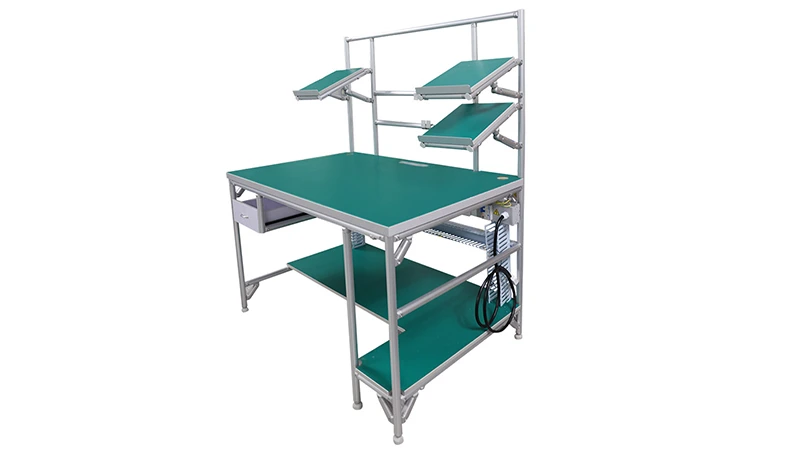
A first-hand account of how a simple workbench upgrade transformed our production line
Hi there—I'm Maria, the production floor manager at BrightTech Electronics, a mid-sized manufacturer specializing in smartphone components. If you've ever held a sleek, lightweight phone in your hand, there's a good chance some of its internal parts passed through our facility. But three years ago, our production line was anything but sleek. We were struggling with bottlenecks, frequent delays, and a frustratingly rigid setup that made it nearly impossible to adapt to new product designs. Today, I'm here to share how one decision—switching to Aluminum Workbench B —turned those struggles into strengths, and why it might be the best upgrade your manufacturing team never knew it needed.
First, let's set the scene. Our facility runs two shifts, five days a week, churning out precision parts that demand consistency, cleanliness, and static control. Back in 2022, our workbenches were a hodgepodge of old steel tables and wooden surfaces we'd cobbled together over the years. They were heavy, hard to clean, and—worst of all—completely immovable. When we needed to reconfigure the line for a new component, it took a crew of four people half a day to rearrange them. And don't even get me started on static electricity: those wooden surfaces were magnets for dust and static, leading to occasional microchip damage that cost us thousands in scrap. We knew something had to change, but we weren't sure where to start.
The Breaking Point: Why Our Old Setup Was Holding Us Back
It's easy to get used to inefficiencies when they're part of your daily routine. But for us, the breaking point came in the summer of 2022, when we landed a big contract to produce camera modules for a major phone brand. The new design required a more intricate assembly process, with more steps and tighter tolerances. Our old workbenches couldn't keep up. Here's why:
- Weight and Rigidity: Those steel workbenches weighed over 300 pounds each. Moving them required forklifts, and even then, we risked damaging the floor. We needed a setup that could adapt quickly, but instead, we were stuck in a fixed layout that didn't match the new workflow.
- Lack of Static Control: Wooden surfaces generated static, which is death for sensitive electronics. We tried grounding mats, but they kept slipping or wearing out. We were seeing a 2% defect rate on microchips—small on paper, but when you're producing 10,000 units a day, that's 200 defective parts costing us $50 each. Do the math: $10,000 a day in avoidable waste.
- Poor Ergonomics: Our team spends 8–10 hours a day at these workbenches. The old tables were all the same height, which meant taller workers were hunching and shorter ones were stretching. We had a spike in repetitive strain injuries (RSIs), leading to more sick days and lower morale.
- Cluttered Workspaces: With no built-in storage or organization, tools and components were scattered everywhere. Workers wasted 10–15 minutes per shift just searching for the right screwdriver or resistor. Multiply that by 50 workers, and we were losing over 8 hours of productive time daily.
After a particularly rough week where we missed a delivery deadline because of a static-related defect, our operations director, Raj, called a meeting. "We need a lean system upgrade," he said. "Not just new tools—new infrastructure. Something that grows with us." And that's when we started our search for the perfect workbench.
The Hunt for a Solution: What We Looked For in a New Workbench
We started by defining our must-haves. Raj and I sat down with the production team leads to list what mattered most. Here's what we came up with:
- Lightweight but Durable: We needed something easy to move but tough enough to handle daily use. Aluminum was a top contender here—strong, corrosion-resistant, and much lighter than steel.
- ESD-Safe: Non-negotiable. The workbench surface had to dissipate static to protect our components. No more grounding mats—we wanted built-in protection.
- Adjustable: Height-adjustable legs would help with ergonomics. Bonus points if we could add shelves or accessories without drilling holes.
- Compatible with Our Flow Rack and Conveyor System: Our production line relies on a flow rack for parts storage and a conveyor belt to move assemblies between stations. The new workbenches needed to integrate seamlessly with these, so parts could glide from rack to workbench to conveyor without manual lifting.
- Cost-Effective: We're a mid-sized company, so we needed quality without breaking the bank. We were willing to invest, but we wanted a clear ROI—faster setup, fewer defects, less downtime.
With that list in hand, we started researching suppliers. We reached out to three major vendors, attended a manufacturing trade show, and even visited a competitor's facility to see their setup (shoutout to GreenWave Electronics for being so open!). It was at that trade show that we first saw Aluminum Workbench B on display, and honestly? It checked every box.

Why We Chose Aluminum Workbench B (and Why It Stood Out From the Crowd)
Let's cut to the chase: there were other aluminum workbenches out there, but Aluminum Workbench B (single deck, without caster, for those keeping track) had a few features that made it the clear winner. Here's what sold us:
1. The Aluminum Profile Construction
The workbench is built from high-grade aluminum profile —think of it as industrial-grade t-slot aluminum extrusions that snap together with connectors instead of bolts. This was a game-changer. We could add shelves, tool hooks, or even a small aluminum profile bin for screws by just sliding accessories into the t-slots. No tools, no drilling, no hassle. One of our lead assemblers, Juan, summed it up best: "It's like building with Legos, but for grown-ups."
2. The Single Deck Design (Without Casters—Trust Us, It Works)
At first, we were tempted by workbenches with built-in casters, but the supplier explained why Aluminum Workbench B (single deck, without caster) was a better fit: stability. Casters can wobble during precision work, which is a problem when you're assembling components smaller than a grain of rice. Instead, the workbench has adjustable leveling feet that keep it rock-solid, even on our slightly uneven factory floor. And since it's aluminum, two people can still move it easily when needed—no forklift required. We tested this ourselves: two assemblers moved a fully loaded workbench (with tools and parts) across the floor in under 5 minutes. That's a far cry from the half-day steel table rearrangements of old.
3. ESD-Safe Surface That Actually Works
The workbench top is made of a conductive aluminum composite that dissipates static in milliseconds. We ran tests with our ESD meter before committing, and the readings were perfect—well below the 30V threshold for safe electronics handling. Since installing them, we've seen our defect rate drop from 2% to 0.5%. Let that sink in: 1.5% fewer defects means we're saving $15,000 a month in scrap. That alone paid for the workbenches in under a year.
4. Seamless Integration with Our Flow Rack and Conveyor
Remember our flow rack and conveyor system? The aluminum profile legs of the workbench are the same width as our flow rack posts, so we could align them perfectly. Now, parts slide from the flow rack directly onto the workbench via a small roller track (another aluminum profile accessory we added), and finished assemblies glide onto the conveyor without anyone lifting a finger. Our line operators used to spend 15 minutes per shift carrying parts—now, that time is spent on actual assembly. Productivity is up by 12% per station, which adds up fast when you have 20 workbenches.

Setting It Up: From Delivery to Full Production in 48 Hours
We ordered 20 Aluminum Workbench B units, along with a handful of aluminum profile accessories —shelves, tool rails, and bin holders. They arrived on pallets, and I'll admit, I was nervous about setup. But to my surprise, each workbench came pre-assembled except for the legs, which screwed on in 5 minutes flat. Our team of three technicians had all 20 workbenches unboxed, set up, and positioned in just 6 hours. That's right: 6 hours to replace an entire production line's worth of workbenches. We didn't even have to shut down the line—we swapped them out during the night shift change.
The next morning, the day shift arrived to find a brand-new production line. You should have seen their faces! Maria, one of our most senior assemblers, walked up to her new workbench, ran her hand over the smooth aluminum surface, and said, "Is this really for me?" We spent the first hour training everyone on the t-slot accessories—how to add a shelf, adjust the height, or attach a tool holder. By the end of the day, they were customizing their workbenches like pros. Juan even added a small cup holder (his own invention, using a spare aluminum profile bracket) to keep his coffee from spilling. It sounds silly, but those little personal touches went a long way in boosting morale.
The Results: 18 Months Later, Here's What Changed
It's been 18 months since we switched to Aluminum Workbench B , and the impact has been bigger than we ever imagined. Let's break it down with hard numbers and real stories:
| Metric | Before (Old Workbenches) | After (Aluminum Workbench B) | Improvement |
|---|---|---|---|
| Defect Rate | 2% | 0.5% | ↓75% |
| Line Reconfiguration Time | 4 hours (4 people) | 30 minutes (2 people) | ↓94% |
| Productivity per Worker | 150 units/hour | 168 units/hour | ↑12% |
| RSI Incidents | 5 per month | 1 per month | ↓80% |
Beyond the numbers, there's a cultural shift, too. The production floor feels lighter, more agile. When we get a new order, we don't dread reconfiguring the line—we embrace it. Last month, we launched a new camera module design, and the team reconfigured three workstations in 20 minutes flat. The old setup would have taken a full day, and we would have missed the first week's deadline. Instead, we shipped on time and even had extra capacity to take on a rush order from another client.
And let's talk about the lean system benefits. Lean is all about eliminating waste—time, motion, defects—and these workbenches are a lean dream. No more walking to fetch tools from a distant cart; everything is within arm's reach, thanks to the t-slot accessories. No more bending or stretching; the height-adjustable legs mean everyone works at a comfortable level. Even cleaning is faster: the aluminum surface wipes down with a damp cloth, and there are no cracks or crevices for dust to hide in. Our QA inspector, Lisa, says her daily line inspection now takes 30 minutes instead of an hour—time she can spend on more thorough component checks.
A Closer Look: The Technical Details That Make Aluminum Workbench B Stand Out
If you're a fellow production manager or engineer, you might be wondering about the specs. Let's dive into what makes Aluminum Workbench B tick:
- Material: Frame and legs are made from 6063-T5 aluminum profile —a high-strength alloy that's both lightweight (about 40% lighter than steel) and corrosion-resistant. The work surface is a 19mm-thick aluminum composite with a conductive ESD coating.
- Dimensions: 1200mm (length) x 600mm (depth) x 750–900mm (height, adjustable). Perfect for our assembly stations, but the supplier offers custom sizes if needed.
- Weight Capacity: The surface can hold up to 200kg (440 lbs) evenly distributed—more than enough for our tools, parts bins, and assemblies.
- Accessories: Compatible with all standard aluminum profile accessories , including shelves, tool rails, monitor mounts, and bin holders. We've added everything from LED task lights to anti-fatigue mat holders, all without modifying the workbench itself.
- ESD Rating: Surface resistance of 10^6–10^9 ohms, meeting ANSI/ESD S20.20 standards for electronics manufacturing.
One of the most underrated features? The internal cable management. The legs have built-in channels for power cords, so we can plug in tools and lights without messy wires cluttering the floor. Tripping hazards used to be a constant worry—now, the cables are hidden away, and the floor is clear. Safety first, right?
Would We Do It Again? Absolutely. Here's Why You Should Too.
At the end of the day, switching to Aluminum Workbench B wasn't just about buying new furniture—it was about investing in our team, our products, and our future. The ROI has been clear: less waste, more productivity, happier workers, and a production line that can adapt to whatever comes next. When we look back at those old steel and wooden workbenches, it's hard to believe we ever managed with them.
If you're in manufacturing—especially electronics or precision assembly—ask yourself: Are your workbenches holding you back? Do you spend too much time rearranging, fixing static issues, or dealing with ergonomic complaints? If the answer is yes, it might be time to consider an upgrade. For us, Aluminum Workbench B was the solution. It's not just a workbench—it's a tool that helps our team do their best work, every single day.
We've since expanded our order, adding 10 more workbenches for our new testing department. And we're not stopping there: we're looking into the supplier's aluminum profile flow rack s next, to further streamline our parts storage. When a product works this well, you stick with it.
So here's to better workbenches, better workflows, and better products. Your team—and your bottom line—will thank you.