- Company Articles
- Products and Technology
- Application Cases
- Consumer Electronics Manufacturing: Four Way Straight Lean Pipe Joint Use Cases in PCB Assembly

Consumer Electronics Manufacturing: Four Way Straight Lean Pipe Joint Use Cases in PCB Assembly
Related Product
Four Way Straight Lean Pipe Joint
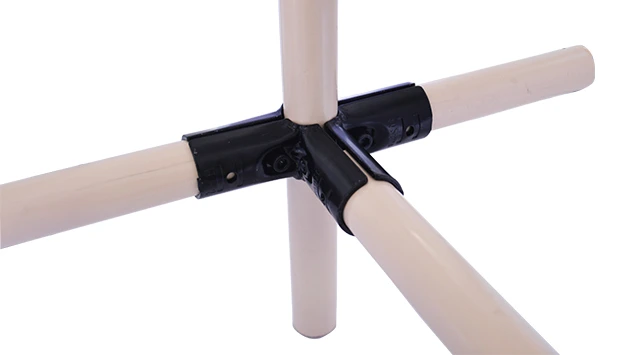
Four way lean pipe joint for 4 pcs 28MM lean pipe connection in straight angle, which used widely in workbench, flow rack, hand trolley frame connection.
The Fast-Paced World of Consumer Electronics: Where Precision Meets Pressure
Walk into any modern consumer electronics factory, and you'll be met with a symphony of hums, clicks, and the steady rhythm of assembly lines. From sleek smartphones that fit in the palm of your hand to high-performance laptops powering remote work, every device starts with a critical component: the Printed Circuit Board (PCB). These intricate boards, with their web of copper traces and tiny components, are the brains behind our favorite gadgets. But producing them at scale—with the precision demanded by today's tech-savvy consumers—isn't just a manufacturing challenge; it's a daily balancing act between speed, accuracy, and adaptability.
In consumer electronics, product lifecycles are shorter than ever. A smartphone model might be outdated within a year, and a new wearable tech gadget could hit the market before the previous version even hits store shelves. This rapid turnover means PCB assembly lines can't afford to be rigid. They need to pivot quickly—whether to accommodate a new PCB design, ramp up production for a holiday rush, or scale down for a niche product. Traditional manufacturing setups, with their fixed workbenches, static storage racks, and one-size-fits-all conveyor systems, often struggle to keep up. They're expensive to reconfigure, slow to adapt, and can leave workers frustrated when tools or components aren't within easy reach.
This is where lean manufacturing steps in. Lean principles—rooted in eliminating waste, optimizing flow, and empowering workers—have become the backbone of efficient electronics production. At the heart of lean systems are modular, flexible components that grow and change with your needs. And among these components, one unsung hero stands out for its ability to transform PCB assembly lines: the Four Way Straight Lean Pipe Joint. This small but mighty connector is quietly revolutionizing how factories design workstations, organize components, and keep production flowing. Let's dive into how this unassuming joint is making a big impact in PCB assembly.
Lean Systems: The Foundation of Modern Electronics Manufacturing
Before we zoom in on the Four Way Straight Lean Pipe Joint, it's important to understand the broader context of lean systems in manufacturing. Lean isn't just a buzzword; it's a mindset that prioritizes value —for the customer, the worker, and the business. In PCB assembly, "value" translates to producing defect-free boards quickly, with minimal downtime and waste. This means reducing everything from excess inventory (components sitting unused on shelves) to unnecessary motion (workers walking across the floor to grab tools) to overproduction (making more PCBs than needed, tying up resources).
Lean systems achieve this by focusing on three key pillars: flexibility , modularity , and worker-centric design . Flexibility ensures that production lines can adapt to changes without overhauling entire setups. Modularity allows factories to build, expand, or reconfigure workspaces using interchangeable components. And worker-centric design puts the people operating the lines at the center—ensuring tools, materials, and workbenches are ergonomically designed to reduce fatigue and boost productivity.
At the core of these lean systems are components like lean pipes, joints, workbenches, flow racks, and conveyors—all designed to work together seamlessly. Unlike traditional metal or wooden structures, lean components are lightweight, durable, and incredibly versatile. They're the building blocks of a factory floor that can evolve as quickly as the products it makes. And among these building blocks, the Four Way Straight Lean Pipe Joint is a linchpin—enabling the creation of complex, multi-directional structures with simple, tool-free assembly.

Meet the Four Way Straight Lean Pipe Joint: Small Design, Big Impact
At first glance, the Four Way Straight Lean Pipe Joint might seem unremarkable. It's a compact, often chrome-plated connector, typically made from durable materials like steel or aluminum, designed to link lean pipes (hollow tubes used in lean systems) at right angles. But its simplicity is its strength. Unlike traditional joints that might only connect two or three pipes, the Four Way Straight Lean Pipe Joint lives up to its name: it features four connection points, allowing for pipes to extend in four directions—up, down, left, right—from a single hub. This might sound like a minor detail, but in the world of PCB assembly, where every inch of workspace counts, this multi-directional capability is a game-changer.
Let's break down its design. Most Four Way Straight Lean Pipe Joints are crafted with a central body, with four threaded or friction-fit ports (one on each side) to accept lean pipes. Some models, like the "four way straight lean pipe joint chrome" variant, feature a chrome plating that adds corrosion resistance—critical in factory environments where moisture or chemicals might be present. The joints are often designed for tool-free assembly: simply slide a lean pipe into a port, tighten a setscrew or twist a locking collar, and the connection is secure. This ease of use means workers or maintenance teams can reconfigure a workstation in minutes, not hours.
But why does this matter for PCB assembly? PCBs come in all shapes and sizes—from tiny 1-inch boards for smartwatches to larger, multi-layered boards for laptops. Assembly tasks vary too: soldering delicate components, inspecting for defects under microscopes, testing functionality, and packaging. Each task demands a different setup. A soldering station might need a raised shelf for a fume extractor, while an inspection station might require a flat, well-lit workbench with storage bins for testing tools. The Four Way Straight Lean Pipe Joint lets factories build exactly what they need, when they need it—without being locked into a one-time design.

Use Case 1: Modular Workstations—Tailored to Every PCB Task
Walk over to the PCB assembly area of any electronics factory, and you'll find workstations as diverse as the tasks they support. A worker soldering surface-mount devices (SMDs) onto a PCB needs a stable, well-lit workspace with easy access to soldering irons, flux, and tweezers. A quality control inspector, on the other hand, might need a taller workstation with a microscope, magnifying lamp, and bins for sorting defective vs. passing boards. Traditional workstations, often built from fixed steel or wood, force workers to adapt to the space—hunching over a too-low bench, reaching across a cluttered surface, or walking to a separate storage area for tools. This isn't just uncomfortable; it's inefficient.
Enter lean workbenches built with Four Way Straight Lean Pipe Joints. These workstations are modular by design, meaning they can be customized to fit the task, the worker, and the PCB. Let's take a closer look at how the joint makes this possible:
Adjustable Height and Layout
Most lean workbenches start with a basic frame: four vertical lean pipes (legs) connected by horizontal pipes (supports) at the top and bottom. With a standard two-way or three-way joint, the frame is limited to a fixed rectangle. But with the Four Way Straight Lean Pipe Joint, you can add vertical or horizontal extensions anywhere along the frame. Need a shelf above the work surface to hold a monitor displaying assembly instructions? Attach a vertical pipe to the back of the bench using the joint, then add a horizontal pipe for the shelf. Want a side table for a laptop running PCB design software? Add a horizontal pipe to the side of the bench, supported by a vertical leg—all connected with the four-way joint.
Height adjustability is another key benefit. By using the joint to connect pipes of different lengths, or by adding telescoping lean pipes, workbenches can be raised or lowered to match a worker's height. For example, a 5'2" operator might need a bench height of 32 inches, while a 6' tall colleague prefers 36 inches. With traditional benches, this would require buying two separate setups. With lean benches and four-way joints, it's a matter of adjusting a few pipes—saving cost and space.
Tool and Material Integration
PCB assembly requires a steady stream of small tools and components: screwdrivers, IC extractors, resistors, capacitors, and more. Misplacing even one tool can disrupt the workflow, leading to delays. Lean workbenches with Four Way Straight Lean Pipe Joints solve this by integrating storage directly into the workstation. For example, a vertical pipe extending from the side of the bench (connected via the four-way joint) can support hanging tool holders or magnetic strips for metal tools. A horizontal pipe above the bench can hold bins for component storage, positioned at eye level so workers don't have to bend or stretch.
One electronics manufacturer in Shenzhen, China, recently reconfigured their soldering workstations using Four Way Straight Lean Pipe Joints. Previously, workers kept tools in a separate cart, which often wandered to other stations. After adding side-mounted tool racks (built with the four-way joint) to each bench, tool retrieval time dropped by 40%, and the number of "lost tool" incidents fell to zero. "It sounds small, but not having to search for my tweezers every 10 minutes means I can focus on soldering," one worker noted. "The bench feels like it was built just for me."
Use Case 2: Flow Racks—Keeping PCB Components Moving Efficiently
In PCB assembly, component storage is a balancing act. You need easy access to hundreds (if not thousands) of parts, but you also need to avoid overcrowding the workspace. Traditional storage solutions—like static shelves or bulky cabinets—often fail here: parts get buried in the back, workers waste time searching, and restocking becomes a tedious chore. Flow racks, however, are designed to solve this. These gravity-fed systems use sloped shelves with rollers, allowing components to "flow" forward as the front bin is emptied—ensuring first-in, first-out (FIFO) inventory management and easy access.
But building a flow rack that's tailored to PCB components (which range from tiny SMD reels to larger PCB panels) requires flexibility. Shelf heights need to adjust for different component sizes, and the rack itself might need to fit into tight spaces between assembly lines. This is where the Four Way Straight Lean Pipe Joint shines. Unlike prefabricated flow racks, which come in fixed sizes, lean flow racks built with four-way joints can be customized to the inch.
Imagine a flow rack for SMD components. These small, tape-and-reel parts are often stored in shallow bins. A standard flow rack might have shelves spaced 12 inches apart, but with the Four Way Straight Lean Pipe Joint, you can adjust shelf spacing to 8 inches—doubling the number of bins per rack. Or, if you need to add a vertical divider to separate resistors from capacitors on the same shelf, simply connect a vertical pipe between two horizontal rails using the four-way joint. The result? A rack that fits exactly what you need, where you need it.
Another example: PCB panels, which are often large and fragile, require sturdy, flat storage. A flow rack for PCBs might need wider shelves and reinforced supports. Using the Four Way Straight Lean Pipe Joint, you can add cross-braces (horizontal pipes connecting the front and back of the rack) for extra stability. These cross-braces can be positioned at 18-inch intervals (instead of the standard 24 inches) to prevent sagging, ensuring PCBs remain flat and undamaged. And if production shifts to larger PCBs six months later? Simply add more cross-braces or raise the shelves—no need to buy a new rack.
Use Case 3: Conveyor Integration—Smoothening the PCB Assembly Flow
Once a PCB is assembled, it needs to move to the next stage: testing, inspection, packaging, or shipping. Conveyors are the arteries of this process, but traditional conveyor systems are often rigid—fixed in place, with little room for adjustment. If a new PCB model is thicker or wider than the last, the conveyor might need costly modifications. Enter lean conveyors, built with lean pipes, roller tracks, and yes, Four Way Straight Lean Pipe Joints. These systems are lightweight, modular, and infinitely adaptable—perfect for the ever-changing demands of PCB assembly.
Conveyors in PCB assembly often need to navigate tight spaces: around workbenches, under overhead shelves, or between machines. The Four Way Straight Lean Pipe Joint allows for the creation of conveyor supports that can bend, rise, or lower as needed. For example, a conveyor line might need to rise 18 inches to feed into a testing machine. Using the four-way joint, you can build a support structure with vertical pipes of varying heights, connected by horizontal cross-braces for stability. The joint ensures the structure is square and secure, even as the conveyor changes elevation.
Merging or splitting conveyor lines is another scenario where the four-way joint excels. In a factory producing multiple PCB models, two assembly lines might need to merge into a single testing line. Traditional conveyors would require complex, motorized mergers. With lean conveyors, you can build a "Y" shaped merge using Four Way Straight Lean Pipe Joints: two incoming conveyor tracks (left and right) connect to a central track (forward) via a four-way joint at the merge point. The joint's four connection points allow for precise alignment of the tracks, ensuring PCBs glide smoothly from either line onto the testing conveyor.
A mid-sized electronics manufacturer in Vietnam recently used this approach when adding a second assembly line for smartwatch PCBs. Instead of installing a separate testing conveyor (which would have cost $20,000), they merged the new line into the existing testing conveyor using Four Way Straight Lean Pipe Joints and roller tracks. The total cost? Under $2,000, and the project was completed in a single day. "We were up and running before lunch," the plant manager recalled. "The flexibility of the joint meant we didn't have to redesign the entire layout—we just added a few pipes and adjusted the tracks."
Traditional vs. Lean: A Comparative Look at PCB Assembly Setups
To truly understand the impact of the Four Way Straight Lean Pipe Joint, let's compare traditional PCB assembly setups with lean setups that incorporate this joint. The table below highlights key differences in flexibility, cost, and productivity across five critical areas:
| Feature | Traditional Setups (Fixed Workbenches/Racks) | Lean Setups with Four Way Straight Lean Pipe Joint |
|---|---|---|
| Reconfiguration Time | 2–4 hours (requires tools, possibly external contractors) | 15–30 minutes (tool-free, done by in-house staff) |
| Adaptability to New PCB Sizes | Limited; often requires new equipment | High; adjust shelf heights/pipes to fit new dimensions |
| Ergonomic Customization | Low; fixed height/work surface | High; adjustable height, integrated tool storage |
| Initial Cost | High ($500–$2,000 per workstation) | Moderate ($300–$800 per workstation) |
| Long-Term Cost (5 Years) | Very high (replacement/modification costs) | Low (reusable components, minimal modifications) |
| Worker Productivity | Moderate (frequent delays from tool/material retrieval) | High (reduced waste, ergonomic design) |
The data speaks for itself. Traditional setups may seem sturdy, but their rigidity comes with hidden costs—downtime during reconfiguration, missed opportunities to adapt to new products, and worker fatigue from poorly designed workspaces. Lean setups, powered by components like the Four Way Straight Lean Pipe Joint, prioritize adaptability and worker needs, leading to lower costs and higher productivity over time.
Beyond the Joint: Holistic Benefits of Lean Systems in PCB Assembly
While the Four Way Straight Lean Pipe Joint is a critical component, its impact is amplified when combined with other lean system elements like workbenches, flow racks, and conveyors. Together, these components create a manufacturing ecosystem that's greater than the sum of its parts. Let's explore the holistic benefits:
Flexibility to Scale Up or Down
Consumer electronics demand is notoriously seasonal. Think of the holiday rush, when factories must triple production to meet gift-giving demand, then scale back in the new year. Traditional setups struggle with this: adding temporary workstations often means buying cheap, flimsy tables that break down, while scaling down leaves expensive equipment idle. Lean systems with modular components solve this by allowing factories to quickly add or remove workstations, flow racks, or conveyor sections. The Four Way Straight Lean Pipe Joint makes this easy: disassemble a workstation in one area, move the pipes and joints to another, and reassemble—no waste, no extra cost.
Sustainability and Waste Reduction
In an era of increasing environmental awareness, sustainability is no longer optional for manufacturers. Lean systems align with green principles by reducing waste in multiple ways. First, lean components are reusable: a Four Way Straight Lean Pipe Joint can be used in a workbench today, a flow rack tomorrow, and a conveyor support next year. This reduces the need for new materials. Second, modular setups mean fewer discarded structures; instead of scrapping an entire workbench when it's no longer needed, you can reconfigure its parts. One European electronics manufacturer reported a 35% reduction in waste sent to landfills after switching to lean systems—largely due to component reuse.
Empowering Workers
At the end of the day, factories are run by people, and happy, empowered workers are more productive. Lean systems, with their focus on ergonomics and customization, give workers a sense of ownership over their workspace. When a worker can adjust their workbench height, add a tool rack, or reposition a flow rack to better suit their needs, they feel valued. This leads to higher job satisfaction, lower turnover, and a more engaged team. "I used to dread coming to work because my bench was so uncomfortable," one PCB inspector shared. "Now, I helped design my workstation—with the four-way joint, I added a shelf for my inspection lamp and a bin for rejected boards. It's small, but it makes me feel like my opinion matters. I take more pride in my work now."
Looking Ahead: The Future of Lean Components in Electronics Manufacturing
As consumer electronics continue to evolve—with smaller, more powerful PCBs, and demands for faster production cycles—the role of lean systems will only grow. Innovations in materials (like lighter, stronger aluminum lean pipes) and smart features (like IoT-enabled joints that track usage or alert maintenance teams to loose connections) are on the horizon. But even as technology advances, the core principle of the Four Way Straight Lean Pipe Joint—simplicity, flexibility, and adaptability—will remain relevant.
Imagine a future where PCB assembly lines can be reconfigured overnight to produce a new smart home device, or where workstations automatically adjust to a worker's height and preferences using AI. These scenarios aren't science fiction; they're built on the foundation of modular, lean components like the Four Way Straight Lean Pipe Joint. As one industry expert put it: "The factories of tomorrow won't be defined by how many PCBs they can produce, but by how quickly they can adapt to produce any PCB. Lean systems, and the joints that hold them together, are the key to that adaptability."
Conclusion: The Joint That Connects It All
In the high-stakes world of consumer electronics manufacturing, where precision and speed are non-negotiable, the Four Way Straight Lean Pipe Joint might not grab headlines—but it's quietly transforming how PCBs are made. From modular workstations that adapt to every task, to flow racks that keep components at workers' fingertips, to conveyors that merge and bend with ease, this small but mighty connector is the glue that holds lean systems together.
It's a reminder that innovation in manufacturing doesn't always come from flashy robots or high-tech software. Sometimes, it's the humble, hardworking components—the ones designed to make workers' lives easier, to reduce waste, and to turn a rigid factory floor into a flexible, evolving ecosystem. The Four Way Straight Lean Pipe Joint is more than a part; it's a symbol of lean manufacturing's core promise: to build better products by building better processes—one joint, one pipe, one workstation at a time.
So the next time you pick up your smartphone or power on your laptop, take a moment to appreciate the PCB inside. And remember: behind that tiny, powerful board is a factory floor full of innovation—including a little joint that helped bring it all together.