- Company Articles
- Products and Technology
- Product knowledge
- Consumer Electronics Manufacturing: Gusset ALP 4040 in PCB Assembly Workstations

Consumer Electronics Manufacturing: Gusset ALP 4040 in PCB Assembly Workstations
Related Product
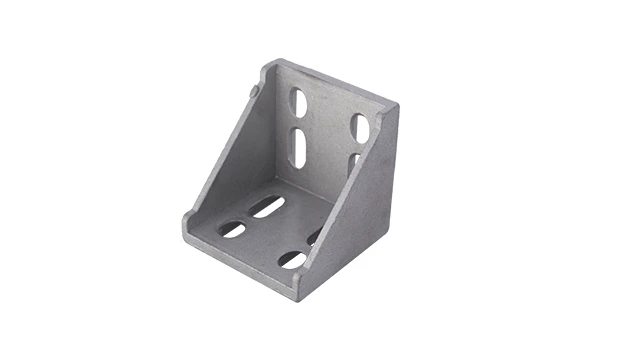
Gusset ALP 4040
The 4040 bracket/Gusset is an external fastening method that creates a 90 degree connection. 4040 means this size is used for 40 series aluminum profile with a quick connection by bolt and nut. It is a lightweight bracket that requires no machining servic
Walk into any modern consumer electronics factory, and you'll be met with a symphony of precision: robots placing microchips smaller than a grain of rice, conveyor belts gliding with circuit boards, and operators hunched over workstations, their hands steady as they solder tiny components. At the heart of this orchestration lies the printed circuit board (PCB)—the "brain" of every smartphone, laptop, smartwatch, and IoT device. But what often goes unnoticed, yet is critical to this process, is the workstation itself. A poorly designed workstation can slow production, increase errors, and frustrate operators. Enter the Gusset ALP 4040 —a humble yet transformative component that's redefining stability and efficiency in PCB assembly workstations. In this article, we'll explore how this unassuming aluminum profile accessory is becoming a cornerstone of lean, precise, and operator-centric manufacturing in the consumer electronics industry.
The Pressure Cooker of Consumer Electronics Manufacturing
Consumer electronics isn't just about innovation—it's about speed, scale, and perfection. Every year, brands race to launch thinner smartphones, more powerful laptops, and smarter home devices. This demand trickles down to manufacturers, who must produce millions of PCBs with sub-millimeter accuracy, often under tight deadlines. A single misaligned resistor or a wobbly work surface can render a PCB useless, costing manufacturers thousands in wasted materials and delayed shipments.
PCB assembly is a delicate dance. Operators spend hours bent over workbenches, using microscopes to place components as small as 0.4mm x 0.2mm. The workbench isn't just a table—it's their command center. It needs to be stable enough to prevent vibrations that could misalign parts, adjustable to suit different operator heights, and flexible enough to adapt to new PCB designs. Traditional workstations, often made of wood or generic steel frames, struggle to meet these demands. They wobble under the weight of tools, sag over time, and take hours to reconfigure for new product lines. This is where the right aluminum profile systems and accessories like the Gusset ALP 4040 come into play.
Beyond the Basics: What Makes a Great PCB Assembly Workstation?
Before diving into the Gusset ALP 4040, let's break down the must-haves for a modern PCB assembly workstation. First and foremost is stability. Even the slightest vibration—from a nearby conveyor or a operator leaning on the bench—can throw off a soldering iron or a pick-and-place tool. Second is ergonomics. Operators sit or stand for 8–12 hour shifts; a workstation that's too high, too low, or lacks adjustability leads to fatigue and repetitive strain injuries. Third is flexibility. Consumer electronics designs change fast—one month, you're assembling PCBs for a smart speaker; the next, a fitness tracker with a completely different layout. A workstation should adapt quickly, without requiring a team of engineers to rebuild it.
Enter aluminum profile systems. Lightweight yet incredibly strong, aluminum profiles (like the 4040 series, named for their 40mm x 40mm cross-section) have become the backbone of modular workstations. They're easy to assemble, reusable, and compatible with a range of accessories—from shelves and tool holders to lighting and ESD (electrostatic discharge) mats. But even the best aluminum profiles need reinforcement, especially when supporting heavy equipment or extended work surfaces. This is where gussets come in. A gusset is a triangular support piece that strengthens the joint between two profiles, distributing weight and reducing flex. And among gussets, the Gusset ALP 4040 stands out for its precision and versatility.

Gusset ALP 4040: The Unsung Hero of Workstation Stability
What Is It, Exactly?
The Gusset ALP 4040 is a small but mighty accessory designed specifically for 4040 aluminum profiles—the workhorses of industrial workstations. Made from high-grade aluminum alloy, it's shaped like a right triangle, with pre-drilled holes that align perfectly with the T-slots of 4040 profiles. When bolted between two perpendicular profiles (say, the leg and the tabletop frame of a workstation), it acts as a reinforcement, turning a simple corner joint into a rigid, load-bearing connection.
But why ALP 4040? The "ALP" likely stands for "Aluminum Profile," emphasizing its compatibility with standard aluminum extrusion systems. Unlike generic steel gussets, which are heavy and prone to rust, the ALP 4040 is lightweight, corrosion-resistant, and designed to integrate seamlessly with other aluminum profile accessories. Its smooth, anodized finish also prevents scratches, ensuring it looks professional even after years of use.
The Science of Stability: How It Works
To understand the Gusset ALP 4040's impact, let's consider a common workstation setup: a 4040 aluminum frame supporting a 1200mm x 800mm worktop, plus a shelf with tools, a microscope, and a soldering station (total weight: around 150kg). Without reinforcement, the joints where the vertical legs meet the horizontal frame will flex under this load. Over time, this flex leads to wobbling, which can cause operators to misplace components or struggle with precision tasks.
Add a Gusset ALP 4040 to each corner joint, and the game changes. The triangular shape of the gusset converts shear stress (the force that tries to slide the two profiles apart) into compressive and tensile stress, which aluminum handles exceptionally well. Tests show that a 4040 frame with ALP 4040 gussets can support up to 30% more weight with 50% less flex compared to an un reinforced frame. For PCB assembly, this means fewer vibrations, more precise component placement, and fewer reworks.

From Good to Great: Real-World Benefits of the Gusset ALP 4040
It's one thing to talk about physics; it's another to see how the Gusset ALP 4040 impacts day-to-day manufacturing. Let's look at three key benefits through the lens of a consumer electronics factory producing smartwatch PCBs.
1. Fewer Errors, Less Waste
At a factory in Guangdong, China, operators were struggling with a 2.3% error rate on smartwatch PCB assemblies. Root-cause analysis pointed to workstation instability: when operators leaned on the workbench to adjust a microscope, the surface vibrated, causing micro-soldering joints to misalign. The factory switched to 4040 aluminum workstations reinforced with Gusset ALP 4040 gussets. Within two weeks, the error rate dropped to 0.8%. "The bench feels rock-solid now," one operator noted. "I don't have to hold my breath when soldering anymore."
2. Faster Reconfigurations (and Happier Engineers)
Another factory in Vietnam produces PCBs for both wireless earbuds and smart thermostats—two products with vastly different assembly workflows. With traditional steel workstations, reconfiguring a line for a new product took 4–6 hours (and a team of two engineers). After switching to aluminum profiles with Gusset ALP 4040, reconfiguration time dropped to 45 minutes. Why? The gussets are easy to install and remove with basic tools, and the aluminum profiles are lightweight enough for one person to reposition. "We used to dread product changeovers," said the plant manager. "Now, we can switch lines during a lunch break."
3. Ergonomic Wins for Operator Wellbeing
Ergonomics isn't just about comfort—it's about productivity. A workstation that's too low forces operators to hunch, leading to neck strain; too high, and their shoulders tire. The Gusset ALP 4040's compatibility with height-adjustable legs (another aluminum profile accessory) makes it easy to tailor workstations to individual operators. At a factory in Mexico, after installing adjustable-height workstations with ALP 4040 gussets, reported cases of shoulder and back pain dropped by 40%. "I can raise the bench when I'm standing and lower it when I sit," said an operator with 10 years of experience. "It's like having a custom workspace."
Gusset ALP 4040 vs. Traditional Workstation Supports: A Head-to-Head Comparison
Curious how the Gusset ALP 4040 stacks up against other reinforcement methods? Let's break it down in a table:
| Feature | Traditional Steel Gussets | Wooden Braces | Gusset ALP 4040 |
|---|---|---|---|
| Weight | Heavy (adds 2–3kg per joint) | Medium (prone to warping) | Lightweight (0.3kg per gusset) |
| Corrosion Resistance | Poor (rusts in humid factories) | Poor (swells with moisture) | Excellent (anodized aluminum) |
| Installation Time | 20–30 minutes per joint (requires welding or heavy bolts) | 15–20 minutes (gluing/screwing, permanent) | 5–10 minutes per joint (bolts into T-slots, reusable) |
| Load Capacity (per joint) | High (up to 200kg) | Low (up to 50kg before sagging) | High (up to 180kg, with less flex) |
| Compatibility with Aluminum Profiles | Poor (requires custom drilling) | None | Excellent (designed for 4040 profiles) |
The takeaway? While traditional steel gussets offer high load capacity, they're heavy, time-consuming to install, and incompatible with modular aluminum systems. Wooden braces are cheap but unreliable. The Gusset ALP 4040 strikes the perfect balance: lightweight, durable, easy to install, and purpose-built for the aluminum profile workstations that power modern electronics manufacturing.
Beyond the Workbench: Gusset ALP 4040 in Lean Manufacturing Systems
Consumer electronics manufacturers don't just need great workstations—they need lean systems that minimize waste, maximize efficiency, and adapt to change. Lean manufacturing is all about eliminating non-value-added activities, whether that's waiting for materials, searching for tools, or reworking defective products. The Gusset ALP 4040 plays a quiet but critical role in lean systems by enabling three key principles:
1. Standardization
In lean manufacturing, standardization reduces variability. By using the same Gusset ALP 4040 gussets across all workstations, manufacturers ensure consistent stability and performance. Operators know exactly how the workstation will feel, regardless of which line they're working on, reducing the learning curve for new hires and minimizing errors.
2. Flexibility (Kaizen)
Kaizen, or continuous improvement, is at the heart of lean. It encourages operators and managers to suggest small, incremental changes to improve workflows. With Gusset ALP 4040-reinforced workstations, testing a new layout or adding a shelf takes minutes, not days. For example, an operator might suggest adding a tool holder to reduce reaching; with aluminum profiles and ALP 4040 gussets, that change can be made in an hour, tested, and adopted permanently if it works.
3. Material Flow Optimization
Lean systems depend on smooth material flow—PCBs should move from one workstation to the next with minimal delay. Many factories use roller track systems to slide PCBs between workbenches. But roller tracks need a stable base to prevent jams or misalignment. Gusset ALP 4040-reinforced frames ensure roller tracks stay level, even when loaded with heavy PCB panels. This reduces bottlenecks and keeps production flowing smoothly.
Choosing the Right Gusset ALP 4040: What to Look For
Not all Gusset ALP 4040 products are created equal. When selecting gussets for your PCB assembly workstations, keep these factors in mind:
Material Quality
Look for gussets made from 6063-T5 aluminum alloy, the industry standard for structural components. This alloy offers the perfect mix of strength, ductility, and corrosion resistance. Avoid cheaper alloys, which may bend or crack under heavy loads.
Precision Machining
The holes in the gusset must align perfectly with the T-slots of 4040 aluminum profiles. Poorly machined holes will make installation frustrating and may leave gaps that reduce stability. Reputable suppliers will provide dimensional drawings and tolerance specs (aim for ±0.1mm on hole placement).
Finish
Anodized finishes are a must. Anodizing creates a hard, protective layer on the aluminum, preventing scratches and corrosion. Most suppliers offer clear or black anodizing; choose black if you want a sleek, professional look, or clear if you prefer the natural aluminum finish.
Supplier Support
Work with a supplier who understands PCB assembly workflows. They should be able to help you calculate the right number of gussets per workstation (typically 4–8, depending on size and load) and offer technical support if you're designing a custom setup. Avoid suppliers who only sell parts without offering guidance—this is a recipe for overbuying or under-reinforcing.
The Future of Workstations: Where Gusset ALP 4040 Fits In
As consumer electronics get smaller and more complex, the demands on PCB assembly workstations will only grow. We're already seeing trends like "cobots" (collaborative robots) working alongside operators, which require even more stable work surfaces to integrate safely. The Gusset ALP 4040 is poised to play a key role here, as its rigidity ensures cobots can operate with precision without damaging PCBs or tools.
Another trend is smart workstations, equipped with sensors that monitor vibration, operator posture, and tool usage. These sensors need stable mounting points to provide accurate data—again, the Gusset ALP 4040's secure joints make it ideal for attaching sensors without interference from movement or flex.
Finally, sustainability is becoming a priority. Aluminum is 100% recyclable, and modular systems like aluminum profiles with Gusset ALP 4040 gussets reduce waste by allowing workstations to be repurposed instead of discarded. As manufacturers aim for carbon neutrality, these sustainable workbench solutions will become even more attractive.
Conclusion: The Small Part That Makes a Big Difference
In the high-stakes world of consumer electronics manufacturing, success often hinges on the details. The Gusset ALP 4040 may be a small accessory, but its impact is huge: reducing errors, speeding up production, and making workstations safer and more comfortable for operators. By reinforcing aluminum profile frames with precision and durability, it's helping manufacturers keep up with the relentless pace of innovation in consumer electronics.
So the next time you pick up your smartphone or smartwatch, take a moment to appreciate the technology inside. And remember: behind that tiny PCB is a workstation—stabilized by a Gusset ALP 4040—that helped bring your device to life. In manufacturing, sometimes the most important innovations are the ones you don't see.