- Company Articles
- Products and Technology
- Technology Sharing
- Consumer Electronics Production: Lightweight Workstations with Aluminum Honeycomb Panels

Consumer Electronics Production: Lightweight Workstations with Aluminum Honeycomb Panels
Related Product
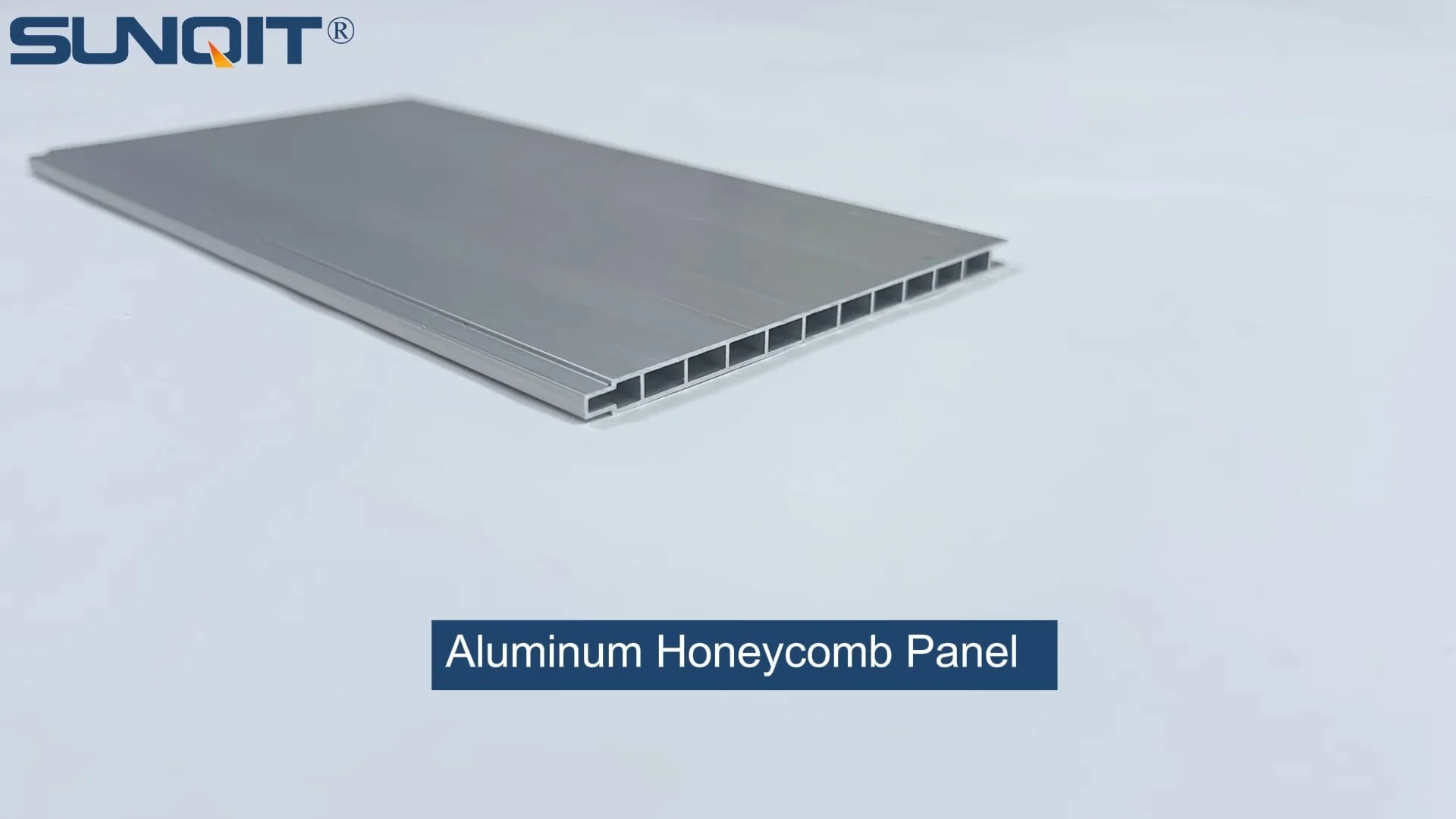
Aluminum Honeycomb Panel
Aluminum honeycomb panel used as table top, side wall, it is connected one pcs by one pcs from the side slot to make a full pieces.This panel width 105mm, 55mm, 35mm are optional for slection.
Walk into any consumer electronics factory, and you'll quickly realize that the magic of your smartphone, laptop, or smartwatch isn't just in the sleek design or cutting-edge tech inside. It starts on the production floor—where teams of workers, engineers, and machines collaborate to turn tiny components into finished products. And at the center of this chaos? The humble workstation. It's where circuit boards are soldered, screens are attached, and final quality checks happen. But not all workstations are created equal. In an industry where every second counts and precision is non-negotiable, the right workstation can mean the difference between a smooth, efficient line and a bottleneck of delays, errors, and frustrated workers.
For years, many factories relied on heavy, one-size-fits-all workstations made of wood or steel. They were sturdy, sure, but they came with a hidden cost: weight. Workers strained to reposition them during line changes. Maintenance teams struggled to repair them when parts wore out. And worst of all, their bulk made it nearly impossible to adapt to the fast-paced shifts in consumer demand—like when a new phone model launches and production needs to pivot overnight. Enter the game-changer: lightweight workstations built with aluminum honeycomb panels. These aren't just "lighter" versions of old designs; they're a rethink of what a workstation can be—strong, flexible, and tailored to the unique needs of consumer electronics manufacturing. Let's dive into why they're becoming the backbone of modern production lines.
The Problem with "Good Enough": Why Traditional Workstations Fall Short
To understand why aluminum honeycomb workstations are gaining traction, let's first talk about the status quo. For decades, wood and steel dominated the workstation market, and for good reason—they were cheap, easy to source, and familiar. But in the high-stakes world of consumer electronics, "familiar" often translates to "limiting."
Take wood workstations, for example. They're relatively lightweight compared to steel, but that's where the perks end. Wood warps over time when exposed to the humidity and temperature fluctuations common in factories. That warping isn't just a cosmetic issue; it throws off the flat, stable surface needed for precise tasks like placing microchips on a circuit board. Even worse, wood is porous, making it a magnet for dust and debris—two enemies of electronics that can scratch screens or short out components. And forget about static control: wood doesn't conduct electricity, so static charges build up easily, putting sensitive microelectronics at risk of invisible damage that only shows up later, when a customer's device fails.
Steel workstations, on the other hand, solve some of wood's problems. They're durable, resistant to warping, and can be grounded to reduce static. But they bring a new set of headaches: weight. A standard steel workstation can weigh 200 pounds or more, making it nearly impossible for a single worker to move. When production lines need to be reconfigured—say, to accommodate a new product size or assembly process—teams have to bring in forklifts or spend hours disassembling and reassembling the steel frames. This isn't just time-consuming; it's a safety risk. Workers strain their backs lifting heavy tools or parts onto these workstations, leading to injuries and lost productivity. And steel is prone to rust, especially in factories where cleaning solutions or humidity are present, which means constant repainting or replacement.
Then there's the issue of customization. Consumer electronics production lines aren't static. One day, you're assembling smartwatches with tiny components; the next, you're scaling up to tablets with larger screens. Traditional workstations, built with fixed frames and limited adjustability, can't keep up. Adding a shelf, adjusting the height, or mounting a tool holder often requires drilling holes, welding, or calling in a carpenter—all of which eat into production time. In an industry where product cycles last months, not years, this rigidity is a liability.
Enter Aluminum Honeycomb Panels: A Lightweight Revolution
If wood is too flimsy and steel is too clunky, what's the alternative? The answer lies in a material that's been quietly revolutionizing industries from aerospace to automotive: aluminum honeycomb panels. At first glance, they might look like any other metal sheet, but their secret is in the structure—one that borrows from nature's own engineering genius.
Imagine a sheet of aluminum with a core that looks like a honeycomb—thousands of tiny, hexagonal cells sandwiched between two thin aluminum skins. This design isn't just for show. The honeycomb core distributes weight evenly across the panel, making it surprisingly strong despite being lightweight. Think of it like a bridge: the structure (honeycomb core) bears the load, while the outer layers (aluminum skins) protect and stabilize. The result? A material that's up to 70% lighter than solid steel but just as strong, if not stronger, in terms of rigidity and impact resistance.
For consumer electronics factories, this strength-to-weight ratio is a game-changer. An aluminum honeycomb workstation weighs roughly 40-50 pounds—light enough for two workers to move by hand, no forklift needed. This might not sound like a big deal until you consider how often workstations need to be repositioned. A typical factory might rearrange lines 10-12 times a year to adapt to new products or seasonal demand. With steel workstations, each rearrangement could take a full day; with aluminum honeycomb, it might take an hour. That's days of lost production saved annually.
But the benefits don't stop at weight. Aluminum honeycomb panels are also naturally resistant to the elements that plague traditional workstations. Unlike wood, they don't warp or absorb moisture, so they maintain a flat, stable surface for precise assembly tasks. Unlike steel, they're corrosion-resistant—no more rust stains or costly repainting. And because the panels are non-porous, they're easy to clean with disinfectants or industrial cleaners, critical in environments where dust and contamination can ruin delicate electronics.
Perhaps most importantly for electronics production, aluminum honeycomb panels can be engineered to support ESD (Electrostatic Discharge) protection. Static electricity is the silent killer of microchips—even a small charge (like the static from shuffling your feet on carpet) can damage a circuit board without leaving a visible mark. By adding anti-static coatings or grounding layers to the honeycomb panels, manufacturers can create ESD workstations that safely dissipate static charges, protecting components from invisible damage. This is a non-negotiable feature in modern electronics production, where even a 0.1% defect rate can cost millions in recalls and lost customer trust.

Building the Perfect Workstation: Key Components That Matter
An aluminum honeycomb panel is the star of the show, but a great workstation is more than just a tabletop. To truly shine in consumer electronics production, it needs to be paired with other modular, lightweight components that enhance flexibility, functionality, and ergonomics. Let's break down the essential parts that make these workstations tick.
Aluminum Profile: The Backbone of Modularity
While the honeycomb panel handles the surface and weight, the frame of the workstation is typically built with aluminum profile—extruded aluminum beams with T-shaped slots running along their length. These T-slots are the secret to modularity. They allow workers to attach accessories—shelves, tool holders, LED lights, even small monitors—without drilling holes or welding. Just slide a bolt into the slot, tighten it, and you're done. Need to move a shelf up by 6 inches? Loosen the bolts, adjust, and retighten. It's that simple.
Aluminum profile comes in various sizes (from 20x20mm to 40x80mm) to support different weights and configurations. For example, a basic assembly workstation might use 30x30mm profile, while a heavier-duty station with multiple shelves could use 40x40mm. This flexibility means manufacturers can build workstations tailored to specific tasks: a compact station for soldering small components, a larger one for assembling laptop screens, or a mobile cart for transporting parts between lines. And because the profile is lightweight and corrosion-resistant, it pairs perfectly with the honeycomb panel to keep the overall workstation light and durable.
Aluminum Lean Pipe: Flexibility in Every Joint
No workstation is complete without the ability to customize workflows, and that's where aluminum lean pipe comes in. Lean pipe (also called "flexible pipe" or "kitchen pipe") is a lightweight aluminum tube that, when combined with modular joints, can be bent, connected, and reconfigured to create custom structures like tool racks, cable management systems, or part bins. Unlike traditional rigid frames, aluminum lean pipe is designed for quick assembly—no special tools required. A worker can build a simple shelf or bin in 15 minutes using just a hex key.
This flexibility is critical in electronics production, where tasks vary widely. For example, a smartphone assembly line might use lean pipe to build a tilted bin for holding screws and small parts, making them easier to access without bending over. A laptop line might use it to create a overhead shelf for monitors displaying assembly instructions. And because the pipe is lightweight, these structures can be adjusted or disassembled entirely when production needs change. It's lean manufacturing in action—eliminating waste (like time spent on custom tooling) and adapting to demand in real time.
ESD Workstation Features: Protecting the Heart of Electronics
We've touched on ESD protection, but it's worth diving deeper because of how critical it is in electronics production. Even the most lightweight, modular workstation is useless if it doesn't protect components from static damage. Aluminum honeycomb workstations address this with integrated ESD features that go beyond a simple grounding strap.
First, the honeycomb panel itself can be treated with an anti-static coating that has a surface resistance between 10^6 and 10^9 ohms—low enough to dissipate static charges but not so low that it conducts electricity (which could damage components). The aluminum frame and lean pipe components are also grounded via conductive joints or wires, ensuring that any static charge from the worker or environment is safely directed to the floor. Some workstations even include ESD mats, wrist straps, or ionization fans for added protection in high-risk areas, like semiconductor assembly.
Why does this matter? Consider that a single static discharge can destroy a microchip costing $50 or more. Multiply that by thousands of components per day, and the cost of poor ESD protection becomes clear. Factories using ESD workstations report up to 50% fewer static-related defects, which translates to millions in savings annually. For consumers, it means more reliable devices that don't fail prematurely due to hidden static damage.

Traditional vs. Aluminum Honeycomb Workstations: A Side-by-Side Comparison
Still on the fence about whether aluminum honeycomb workstations are worth the investment? Let's break down how they stack up against traditional wood and steel options across key metrics that matter to factory managers, workers, and bottom lines.
| Feature | Traditional Wood Workstation | Traditional Steel Workstation | Aluminum Honeycomb Workstation |
|---|---|---|---|
| Weight (standard size) | 80-100 lbs (bulky, hard to move) | 200-250 lbs (requires forklift for relocation) | 40-50 lbs (movable by 2 workers) |
| Durability | Warping, water damage, scratch-prone; lifespan ~2-3 years | Rust-prone, dents easily; lifespan ~5-7 years | Corrosion-resistant, impact-resistant; lifespan ~10-15 years |
| ESD Compatibility | Poor (insulates static; requires add-on mats) | Fair (can be grounded but heavy; add-on coatings needed) | Excellent (built-in anti-static coatings; integrated grounding) |
| Customization | Limited (requires cutting/drilling; permanent changes) | Minimal (welding/bolting needed; hard to reconfigure) | High (modular aluminum profile; T-slots for easy accessory attachment) |
| Long-Term Cost | Low upfront, high over time (frequent replacement, repairs) | High upfront, moderate over time (maintenance, rust treatment) | Moderate upfront, low over time (minimal maintenance, long lifespan) |
| Ergonomics | Poor (fixed height; heavy, hard to adjust for worker comfort) | Fair (height-adjustable options, but heavy base limits mobility) | Excellent (lightweight, height-adjustable; easy to tailor to worker needs) |
Real-World Impact: Stories from the Factory Floor
Numbers and specs tell part of the story, but nothing beats hearing from factories that have made the switch. Let's look at two real-world examples of how aluminum honeycomb workstations transformed production lines for consumer electronics manufacturers.
Case Study 1: Smartphone Assembly Line in Vietnam
A major smartphone manufacturer in Vietnam was struggling with two key issues: frequent line reconfigurations and high worker fatigue. Their old steel workstations weighed 220 lbs each, and with 50 workstations per line, rearranging took 2 full days of production. Additionally, workers reported back pain from leaning over the fixed-height steel tables, leading to a 15% higher turnover rate in assembly roles.
In 2023, they switched to aluminum honeycomb workstations with height-adjustable legs and aluminum lean pipe accessories. The results were immediate. Line reconfigurations dropped from 2 days to 4 hours, saving 16 production days annually. Worker complaints about back pain decreased by 70%, and turnover in assembly roles fell to 5%. Perhaps most notably, static-related defects (which had been costing the company $200,000 annually in scrap) dropped by 65% thanks to the integrated ESD protection. The factory manager summed it up: "We used to see workstations as just tables. Now we see them as tools that make our team more efficient and our products better."
Case Study 2: Wearable Tech Manufacturer in Malaysia
A wearable tech company in Malaysia produces fitness trackers and smartwatches, which require extremely precise assembly (components as small as 0.5mm). Their wood workstations were warping in the humid climate, leading to misaligned parts and a 3% defect rate—unacceptably high for a product with tight profit margins.
After switching to aluminum honeycomb workstations with anti-static panels, the flatness of the work surface improved by 95%, and the defect rate dropped to 0.8%. The lightweight design also allowed the company to add casters to the workstations, making it easy to move them to testing stations or quality control areas without disrupting assembly. "We used to have to carry components across the factory; now we move the workstation to the components," said the production supervisor. "It's cut down on walking time by 2 hours per worker per week."
Overcoming Skepticism: Addressing Common Concerns
Despite the clear benefits, some factory managers are hesitant to switch to aluminum honeycomb workstations. Let's tackle the most common concerns head-on.
"They're too expensive upfront."
It's true: aluminum honeycomb workstations cost more upfront than wood or even steel. A basic aluminum honeycomb workstation might run $800-$1,200, compared to $300-$500 for wood or $600-$900 for steel. But this is a classic case of "pay now or pay later." Wood workstations need replacement every 2-3 years; steel every 5-7. Aluminum honeycomb workstations last 10-15 years with minimal maintenance. When you factor in replacement costs, repairs, and lost production from downtime, aluminum honeycomb often becomes the cheapest option within 3-4 years.
"Aluminum is flimsy—won't it dent or bend?"
This is a common misconception. While solid aluminum might dent easily, aluminum honeycomb panels are reinforced by the honeycomb core, which distributes impact force. In lab tests, they've been shown to withstand 500+ pounds of pressure without bending and resist dents from dropped tools (a common factory occurrence). One factory even reported a workstation surviving a 30-lb toolbox falling on it with no visible damage. The key is the structure: the honeycomb core acts like a crumple zone, absorbing impact so the outer panels don't deform.
"Customization sounds complicated. Will we need special training?"
Not at all. Most aluminum honeycomb workstations use standard aluminum profile with T-slots, which are designed for easy assembly. Suppliers typically provide basic training (1-2 hours) on how to attach accessories using bolts and joints. Many factories find that their existing maintenance teams can master the system in a day. One bonus: the modularity means workers can experiment with configurations without permanent changes. If a new shelf design doesn't work, just loosen the bolts and try again—no sawdust or welding sparks required.
Looking Ahead: The Future of Workstations in Consumer Electronics
Aluminum honeycomb workstations are just the beginning. As consumer electronics production becomes more automated, connected, and sustainable, workstations will evolve to keep pace. Here's what we can expect in the next 5-10 years:
Integration with Industry 4.0
The next generation of workstations will be "smart." Imagine built-in sensors that track usage (how often the workstation is moved, which tools are used most), monitor ESD levels in real time, or even alert maintenance when a component (like a caster wheel) is wearing out. These sensors will feed data into the factory's MES (Manufacturing Execution System), allowing managers to optimize workflows, predict maintenance needs, and reduce downtime. For example, if data shows a workstation is rarely moved, it might be converted to a fixed station with additional storage. If ESD levels spike in a certain area, the system could automatically adjust humidity or alert workers to check grounding connections.
Sustainability at the Core
Aluminum is already one of the most recyclable materials on the planet (95% of the energy used to produce new aluminum is saved by recycling), but future workstations will take sustainability further. Look for honeycomb cores made from recycled aluminum or plant-based composites, and panels with solar film to power small tools or sensors. Some manufacturers are even exploring "circular" workstation designs, where components can be disassembled and reused at the end of their lifespan, reducing waste.
Ergonomics 2.0
As factories compete for talent, worker comfort will become even more critical. Future workstations might include AI-powered height adjustment that learns a worker's posture and adjusts the table automatically, or built-in cooling systems to combat heat in tropical factories. Some designs could even integrate with exoskeletons, reducing strain on workers who perform repetitive tasks. The goal? Workstations that adapt to the worker, not the other way around.
Conclusion: Investing in the Right Tools for Tomorrow's Production
Consumer electronics production is a high-stakes, fast-moving industry where every detail matters. From the microchips in your phone to the assembly line that builds it, success depends on precision, efficiency, and adaptability. For too long, workstations have been an afterthought—heavy, rigid, and prone to the same problems that slow down production and frustrate teams.
Aluminum honeycomb workstations change that. They're not just lighter or stronger; they're a statement that your factory values innovation, worker well-being, and quality. By combining the strength of aluminum, the flexibility of modular design, and the protection of ESD features, these workstations empower teams to do their best work—whether they're assembling the next smartphone or reconfiguring a line for a new product launch.
The numbers speak for themselves: faster line changes, fewer defects, happier workers, and long-term cost savings. But beyond the metrics, there's a simpler truth: in a world where consumer electronics evolve overnight, your production tools should too. Aluminum honeycomb workstations aren't just a upgrade—they're a foundation for the future of manufacturing. And that future starts with the right workstation.