- Company Articles
- Products and Technology
- Solution
- Consumer Electronics Testing: Stable Workspace Solutions with Aluminum Workbench C

Consumer Electronics Testing: Stable Workspace Solutions with Aluminum Workbench C
Related Product
Aluminum Workbench C
aluminum-tube-workbench-is-more-flexible-and-durable,-compared-with-traditional-pe/abs-coated-steel-tube.-it-is-easy-to-assemble,-anti-corrosion,-rust-protection,-and-recycle-use-after-disassemble.
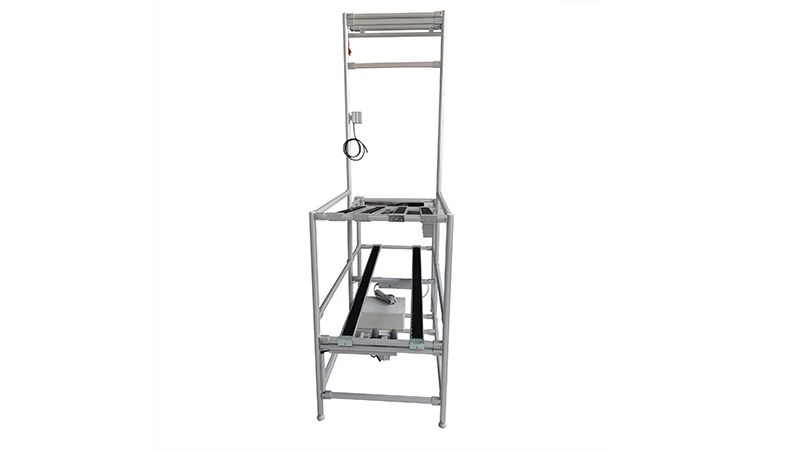
In an era where a smartwatch can monitor your heart rate with the precision of a medical device and a wireless earbud packs technology that once required a bulky headset, the world of consumer electronics demands perfection at every step. Testing these intricate devices—with components smaller than a sesame seed—isn't just about having the right tools; it's about having the right workspace. A slight tremor, a static spark, or a disorganized bench can turn a routine quality check into a costly disaster. That's why forward-thinking manufacturers and labs are turning to a solution built for the unique challenges of electronics testing: Aluminum Workbench C. More than just a table, it's the foundation of reliable, efficient, and safe testing workflows.
Why Your Workbench Isn't Just Furniture—It's a Critical Testing Tool
Let's cut to the chase: when you're testing a circuit board with 100+ tiny resistors and capacitors, "good enough" doesn't cut it. A workbench that wobbles when you place a oscilloscope on it? That's not just annoying—it's a threat to accuracy. A surface that builds up static electricity? It could fry a $200 microchip before you even start the test. And a cluttered bench with tools scattered and components misplaced? It slows down technicians, increases frustration, and turns a 5-minute test into a 15-minute chore.
Traditional workbenches fail here. A wooden bench might feel sturdy, but over time, humidity warps it into an uneven surface. A steel bench is heavy but conducts static like a lightning rod, turning it into an ESD hazard. Plastic benches? Lightweight, sure, but they flex under heavy equipment, leading to measurement errors. What you need is a workbench designed from the ground up for electronics testing—a workspace that addresses stability, static protection, and adaptability. Enter Aluminum Workbench C.
Aluminum Workbench C: Engineered for the Demands of Modern Electronics
Aluminum Workbench C isn't a one-size-fits-all solution. It's part of a lean system that prioritizes efficiency, durability, and customization—key pillars in today's fast-paced manufacturing environments. Built with high-grade aluminum profile, this workbench isn't just about looking professional; it's about solving real-world problems that technicians face daily. Let's break down why it's become the go-to choice for labs and production lines testing everything from smartphones to IoT sensors.
1. ESD Workstation Protection: Safeguarding Sensitive Components
Static electricity is the silent enemy of electronics. Even a small charge—like the 5,000 volts generated by shuffling across a carpet—can destroy delicate semiconductors. Aluminum Workbench C eliminates this risk by integrating ESD workstation features into its core design. The aluminum extrusion profile is treated with an anti-static coating that dissipates static charges safely, preventing them from building up on the work surface. But it doesn't stop there: optional add-ons like ESD-safe wrist strap connectors, grounding points, and conductive floor mats create a complete static-protective environment.
Imagine testing a batch of Bluetooth chips. With a standard workbench, you might unknowingly damage a chip with static, only to find out during final assembly—costing time and money. With Aluminum Workbench C, that risk vanishes. Technicians can focus on testing, not worrying about invisible static threats. For high-precision components like those in VR headsets or drone controllers, this peace of mind is priceless.
2. Rock-Solid Stability with Aluminum Profile: No Wobbles, No Errors
Stability starts with the frame, and aluminum profile is a game-changer. Aluminum extrusion profile—created by forcing heated aluminum through precision dies—offers exceptional rigidity while remaining lightweight. Unlike wood, it won't warp or twist in humid conditions. Unlike plastic, it doesn't flex under heavy loads. Aluminum Workbench C uses this material for its frame and worktop, ensuring that even when you stack a multimeter, power supply, and thermal camera on it, the surface stays perfectly level. No more adjusting equipment mid-test because the bench shifted. No more redoing measurements because a slight vibration threw off the readings.
Take, for example, testing the touch sensitivity of a smartphone screen. The equipment needs to press precisely on specific points with minimal force. A wobbly bench would cause inconsistent pressure, leading to false results. Aluminum Workbench C's rigid frame eliminates that variable, ensuring each test is accurate and repeatable. For manufacturers, that means fewer defective products slipping through the cracks.
3. Modular Design for Lean System Integration: Adapt as Your Needs Change
In electronics manufacturing, workflows evolve. One month you're testing smart speaker PCBs; the next, you're shifting to fitness tracker sensors. A lean system thrives on adaptability—eliminating waste and optimizing processes as needs change. Aluminum Workbench C embraces this with its modular design, made possible by compatible aluminum profile accessories.
Need extra storage for test fixtures? Attach a side shelf using aluminum profile brackets. Want to organize tools within arm's reach? Add a hanging tool rail with hooks. Testing samples piling up? Mount a flow rack to the bench, letting components slide to you as needed. The beauty is that these changes don't require drilling holes or hiring a carpenter—just snap on the accessories and go. When your team starts testing larger devices, you can even add an extension to the worktop using the same aluminum profile system. It's customization without the hassle.
4. Durability That Lasts: Built for the Long Haul
A workbench shouldn't need replacing every 3 years. Aluminum Workbench C is built to withstand the chaos of a busy lab. The aluminum profile is anodized—a process that adds a hard, protective layer—so it resists scratches from tools and dents from dropped components. Unlike steel, it won't rust, even in humid environments or if you spill a cleaning solution. And because aluminum is naturally corrosion-resistant, it stays looking new for years, even with daily use.
This durability translates to cost savings. A workbench that lasts 10+ years reduces replacement costs and downtime. For small businesses, that's more money to invest in testing equipment. For large manufacturers, it's fewer disruptions to production schedules. Either way, it's a smart financial choice.
| Feature | Aluminum Workbench C | Traditional Wooden Bench | Basic Steel Bench |
|---|---|---|---|
| Core Material | Anodized aluminum extrusion profile | Solid wood or particleboard | Uncoated mild steel |
| ESD Protection | Built-in anti-static surface; optional grounding accessories | No inherent protection (requires ESD mats) | Conductive (risk of static discharge) |
| Stability | Rigid frame; no flex under 100kg+ loads | Prone to warping; uneven surface over time | Stable but heavy; vibrates with nearby movement |
| Customization | Modular with aluminum profile accessories (shelves, flow racks, tool holders) | Limited; requires drilling/ permanent modifications | Basic; few compatible accessories |
| Durability | Resists scratches, rust, and warping; 10+ year lifespan | Stains, warps, and splinters; 3–5 year lifespan | Rusts without coating; dents easily; 5–7 year lifespan |

Real-World Impact: How Teams Are Winning with Aluminum Workbench C
Don't just take our word for it—see how Aluminum Workbench C transforms testing workflows. Take a mid-sized electronics manufacturer in Shenzhen, testing smartwatch PCBs. Before switching, their technicians struggled with static damage (costing $3,000/month in ruined components) and wobbly benches causing 20% of tests to be redone. After installing Aluminum Workbench C with ESD workstation features, static failures dropped to near-zero, and retests fell by 15%. Plus, adding flow racks to the benches cut down on time spent fetching components, increasing daily tests by 12%.
Or consider a startup in Berlin developing IoT sensors for home appliances. Their small lab needed a workspace that could handle both prototyping and testing. Aluminum Workbench C's modular design let them start with a basic setup, then add shelves and tool holders as they grew. The ESD protection ensured their sensitive sensors weren't damaged during testing, and the stable surface made calibrating their equipment a breeze. As they expanded, they simply reconfigured the bench with new aluminum profile accessories—no need to buy a whole new system.

Beyond the Bench: Integrating with Flow Racks and Lean Systems
Aluminum Workbench C is most powerful when it's part of a lean system—a workflow designed to eliminate waste and maximize efficiency. One of the easiest ways to boost productivity is by pairing it with flow racks. Flow racks use gravity to slide components or subassemblies to the technician, reducing the need to bend, reach, or walk for materials. Since Aluminum Workbench C uses standard aluminum profile, attaching a flow rack is simple: just bolt it to the bench or position it adjacent for seamless access.
Imagine testing smartphone cameras. With a flow rack mounted to your Aluminum Workbench C, you load 20 camera modules into the rack in the morning. As you test each one, the next slides down, ready to go. No more getting up to grab the next module, no more fumbling with trays. It's a small change that adds up to hours saved each week.
Other lean system accessories work seamlessly too: tool rails to keep tweezers and screwdrivers organized, cable management trays to eliminate tangled wires, and mobile carts to transport tested components. All of these attach using the same aluminum profile system, creating a workspace that's tailored to your team's exact needs.

Addressing the Skeptics: Cost, Setup, and Compatibility
We get it: upgrading workbenches feels like a big investment. But let's do the math. If static damage costs you $1,000/month, Aluminum Workbench C pays for itself in under a year. If retests take 2 hours/day and your technicians earn $30/hour, that's $1,500/month in wasted time—again, the bench pays for itself quickly. And with a 10-year lifespan, it's cheaper than replacing a wooden bench every 3 years.
Worried about setup complexity? Don't be. Aluminum profile systems are designed for easy assembly. Most accessories snap or bolt on without special tools, and suppliers provide clear instructions. Even if you've never built furniture before, you can have the bench set up in under an hour.
Compatibility with existing equipment? No problem. The flat, stable surface of Aluminum Workbench C works with any testing tool—oscilloscopes, multimeters, thermal cameras, you name it. And since aluminum profile is an industry standard, accessories from different suppliers (shelves, hooks, flow racks) are interchangeable.
The Bottom Line: Your Workspace Should Work as Hard as Your Team
In consumer electronics, where a single defective component can lead to returns, bad reviews, and lost customers, every detail matters. Aluminum Workbench C isn't just about having a nice workspace—it's about protecting your products, your team's efficiency, and your bottom line. It's stable enough for precision testing, safe enough for ESD-sensitive components, and flexible enough to grow with your needs.
So why settle for a workbench that's "good enough"? Aluminum Workbench C is the partner your testing team deserves—a workspace that turns chaos into order, guesswork into precision, and frustration into productivity. In the world of consumer electronics, where excellence is the only option, that's not just an upgrade. It's a necessity.