- Company Articles
- Products and Technology
- Product knowledge
- Continuous Improvement with Lean Pipe Clamp B Chrome: Quick Adjustments

Continuous Improvement with Lean Pipe Clamp B Chrome: Quick Adjustments
Related Product
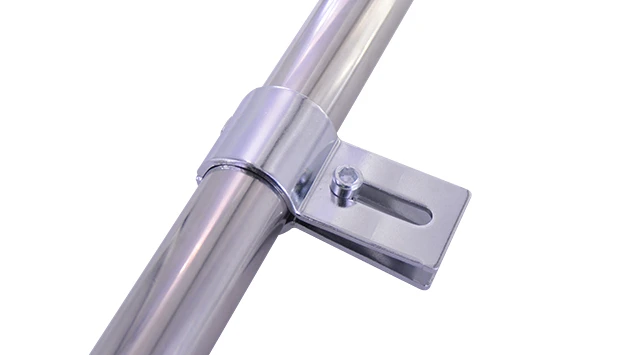
Lean Pipe Clamp B Chrome
Lean pipe clamp is used for turnover trolley, workbench, flowrack adjust the frame or fix some accessory.
In the fast-paced world of manufacturing, where every second counts and adaptability is key, the difference between a smooth production flow and a bottleneck often comes down to the tools on the factory floor. For years, production managers, line supervisors, and frontline workers have grappled with a common challenge: how to keep up with changing demands without sacrificing efficiency or incurring unnecessary costs. This is where lean manufacturing principles step in—emphasizing continuous improvement, waste reduction, and flexibility. And at the heart of this philosophy lies a seemingly small but mighty tool: the Lean Pipe Clamp B Chrome . More than just a hardware component, this clamp is a catalyst for change, enabling teams to reconfigure workspaces, adapt to new product lines, and maintain that all-important momentum of continuous improvement.
The Foundations of Lean: Why Flexibility Matters
Lean manufacturing isn't just a buzzword—it's a mindset. Born from the Toyota Production System, it's built on the idea that every process can be refined, every waste eliminated, and every resource optimized. Central to this is the concept of "just-in-time" production, where materials and processes align seamlessly to meet demand without excess. But here's the catch: to achieve this, your workspace can't be static. Product designs evolve, order volumes fluctuate, and new technologies emerge—all requiring your physical setup to keep pace.
Traditional manufacturing setups often rely on rigid, fixed structures: heavy steel workbenches bolted to the floor, inflexible material racks welded into place, and conveyor systems that take days (or even weeks) to reconfigure. When a new product rolls out or a process needs tweaking, teams are forced into a time-consuming cycle of disassembly, modification, and reassembly. Hours (or worse, days) are lost, employees grow frustrated, and opportunities for improvement slip through the cracks. This is where flexible tools like lean pipe systems come into play—and within that system, the Lean Pipe Clamp B Chrome stands out as a game-changer.
The Problem with Rigid Joints: A Common Factory Frustration
To understand the value of the Lean Pipe Clamp B Chrome, let's first look at its predecessor: the traditional lean pipe joint . Early lean pipe systems relied on basic connectors—often plastic or uncoated metal—that were designed to hold pipes together but lacked the precision and durability needed for frequent adjustments. Imagine a scenario: Maria, a line supervisor at a electronics assembly plant, needs to reconfigure a workbench to accommodate a new circuit board design. The current setup uses old plastic joints that have become brittle from years of use. To adjust the height of the workbench, she has to loosen multiple bolts with a wrench, only to find that the joints have fused slightly to the pipes, requiring extra force. By the time she's done, 45 minutes have passed, and her team has fallen behind schedule. "If we could just make these changes faster," she sighs, "we'd never miss a beat."
This is a story repeated in factories worldwide. Rigid joints lead to downtime, which leads to missed deadlines, which ultimately erode the very efficiency lean manufacturing aims to create. They also limit creativity: when reconfiguring a space feels like a chore, teams are less likely to experiment with better layouts, stunting continuous improvement. The Lean Pipe Clamp B Chrome was designed to solve exactly this problem.
Introducing Lean Pipe Clamp B Chrome: More Than Just a Clamp
At first glance, the Lean Pipe Clamp B Chrome might look like any other pipe connector. But take a closer look, and you'll see why it's become a staple in forward-thinking manufacturing facilities. Let's break down its key features:
Durability That Stands the Test of Time
Chrome plating isn't just for aesthetics—it's a shield. The clamp's chrome finish resists corrosion, scratches, and wear, even in high-moisture or dusty environments (common in automotive or food processing plants). Unlike plastic joints that degrade under UV light or extreme temperatures, these clamps maintain their integrity for years, reducing the need for frequent replacements. "We've had some of these clamps on our flow rack s for over three years now," says Raj, a maintenance manager at a packaging facility. "They still look and function like new, even with daily use."
Tool-Free (or Minimal-Tool) Adjustments
Here's where the "quick adjustment" magic happens. The Lean Pipe Clamp B Chrome features a unique locking mechanism that allows for tool-free loosening and tightening in most cases. A simple twist of the integrated knob (or a quick turn with a hex key for heavier loads) is all it takes to release the clamp, reposition the pipe, and lock it back into place. Compare this to traditional joints that require wrenches, screwdrivers, or even power tools—suddenly, a 45-minute reconfiguration becomes a 5-minute task. For teams that need to switch between product runs multiple times a day, this is a game-changer.
Precision Alignment for Stable Structures
A wobbly workbench or a sagging flow rack isn't just annoying—it's dangerous. The Lean Pipe Clamp B Chrome's design ensures a tight, secure fit between pipes, with minimal play. The internal grip mechanism evenly distributes pressure around the pipe, preventing slippage even under heavy loads (up to 150 kg per clamp, depending on pipe diameter). This precision is critical for tasks that require stability, like assembly work or material handling. "We use these clamps on our inspection workbenches," notes Priya, a quality control lead at a medical device plant. "The last thing we need is a shaky surface when examining tiny components. These clamps keep everything rock-solid."
Compatibility with Multiple Pipe Types
Flexibility isn't just about adjustability—it's about adaptability to existing systems. The Lean Pipe Clamp B Chrome works seamlessly with standard lean pipes (1.2mm, 1.5mm, or 2.0mm PE-coated), stainless steel pipes, and even aluminum profile s. This means factories don't have to overhaul their entire setup to switch to these clamps; they can retrofit existing structures, saving time and money. "We had a mix of aluminum and steel pipes in our facility," explains Mike, a plant manager at a furniture manufacturer. "These clamps worked with both, so we didn't have to replace a single pipe—just the old joints. That cut our transition costs in half."
Real-World Applications: Where Lean Pipe Clamp B Chrome Shines
To truly appreciate the impact of this clamp, let's explore how it's being used in different manufacturing scenarios:
Workbench Reconfiguration: From One-Size-Fits-All to Custom Fit
Workbenches are the heart of any assembly line, but one size rarely fits all. A tall worker might need a higher surface to avoid back strain, while a precision task might require a lower bench for better visibility. With traditional joints, adjusting height or adding accessories (like tool holders or shelves) is a hassle. With Lean Pipe Clamp B Chrome, it's a breeze. Take a team assembling smartphones: one day, they're working on large battery modules that require a wide, flat surface; the next, they're assembling small camera components that need a raised platform with side rails. Using the clamps, they can adjust the bench's layout in minutes, ensuring ergonomic comfort and optimal workflow. "Our employees actually look forward to reconfiguring now," laughs Sarah, a HR manager at a tech plant. "They'll even suggest better layouts because it's so easy to test them out."
Flow Rack Optimization: Keeping Materials Moving
Flow racks are designed to keep materials flowing smoothly to the production line, but they often become bottlenecks when product sizes change. For example, a cosmetics manufacturer might switch from 100ml bottles to 50ml tubes, requiring the flow rack's dividers to be narrowed. With traditional joints, this means disassembling sections of the rack. With Lean Pipe Clamp B Chrome, operators can simply slide the dividers to the desired width and lock them in place. "We used to have to shut down the flow rack for an hour to adjust for new packaging," says Tom, a logistics coordinator. "Now, we do it during a short break, and production never stops. It's like night and day."
Turnover Trolleys: Adapting to Load Sizes
Turnover trolleys (used to transport materials between departments) need to be sturdy but also adjustable to carry different loads—from small parts bins to large pallets. The Lean Pipe Clamp B Chrome allows teams to adjust the trolley's height, add or remove shelves, or even change the number of casters (wheels) based on the load. For instance, a trolley carrying heavy engine parts might need extra support bars, which can be added in minutes with the clamps. "We used to have a fleet of specialized trolleys—one for small parts, one for large, one for fragile items," explains Lisa, a warehouse supervisor. "Now we have a few adjustable trolleys that do it all. We've saved so much space and money."
The Numbers Speak: Quantifying the Benefits
It's one thing to talk about the benefits of the Lean Pipe Clamp B Chrome, but hard data tells the real story. Let's compare it to traditional lean pipe joints using a simple table:
| Metric | Traditional Lean Pipe Joints | Lean Pipe Clamp B Chrome |
|---|---|---|
| Time to Adjust a Workbench (Height + Width) | 45-60 minutes | 5-10 minutes |
| Number of Adjustments Before Wear (Average) | 20-30 adjustments | 200+ adjustments |
| Cost per Adjustment (Labor + Tools) | $15-$25 | $2-$5 |
| Employee Satisfaction with Reconfiguration Tasks | Low (frustration with downtime) | High (empowerment to improve) |
| Compatibility with Aluminum Profile | Limited (often requires adapters) | High (direct fit with most profiles) |
These numbers translate to real savings. A mid-sized manufacturing plant with 10 workbenches and 5 flow racks might spend 10 hours per week on reconfigurations with traditional joints. With Lean Pipe Clamp B Chrome, that drops to 1-2 hours—freeing up 8-9 hours of labor for more value-added tasks (like quality checks or process improvements). Over a year, that's roughly 400+ hours saved—enough to train new employees, implement new lean initiatives, or boost production output by 5-10%.
Overcoming Resistance: Why Some Teams Hesitate (and How to Convince Them)
Despite its benefits, introducing new tools can sometimes meet resistance. "If it ain't broke, don't fix it" is a common mindset, especially among teams comfortable with old systems. So how do you convince skeptics? Start with a small pilot project. Choose a high-traffic area (like a frequently reconfigured workbench or flow rack) and swap out traditional joints for Lean Pipe Clamp B Chrome. Let the team experience the difference firsthand. "We started with just one workbench in the assembly line," recalls James, a plant manager. "Within a week, the operators were asking when we'd roll it out to the rest of the floor. They saw the time savings, and that's all the proof we needed."
Another concern is cost. Chrome-plated clamps are slightly more expensive upfront than basic plastic joints. But as the table above shows, the long-term savings (fewer replacements, less downtime) more than offset the initial investment. "Think of it as buying a good pair of shoes," says Raj (the maintenance manager). "You could buy cheap ones that wear out in a month, or spend a little more on ones that last years. It's the same with these clamps—they pay for themselves in no time."
The Future of Lean: Small Tools, Big Impact
As manufacturing continues to evolve—with trends like automation, customization, and shorter product lifecycles—flexibility will only become more critical. The Lean Pipe Clamp B Chrome is a testament to how even small tools can drive big change. It's not just about connecting pipes; it's about empowering teams to take ownership of their workspace, experiment with improvements, and adapt quickly to new challenges. In the end, continuous improvement isn't about grand gestures—it's about the everyday tools that make those small, incremental changes possible.
So, the next time you walk through a factory, take a closer look at the workbenches, flow racks, and trolleys. Chances are, the ones that are bustling with activity, where teams are adjusting layouts with ease, are held together by tools like the Lean Pipe Clamp B Chrome. And that's the beauty of lean manufacturing: it's the little things that create the biggest impact.
In a world where change is constant, the ability to adjust quickly isn't just an advantage—it's a necessity. The Lean Pipe Clamp B Chrome doesn't just help factories keep up; it helps them stay ahead. And in the end, that's what continuous improvement is all about.