- Company Articles
- Products and Technology
- Product knowledge
- Conveyor Support Structures: Five Way Straight Lean Pipe Joint Design

Conveyor Support Structures: Five Way Straight Lean Pipe Joint Design
Related Product
Five Way Straight Lean Pipe Joint
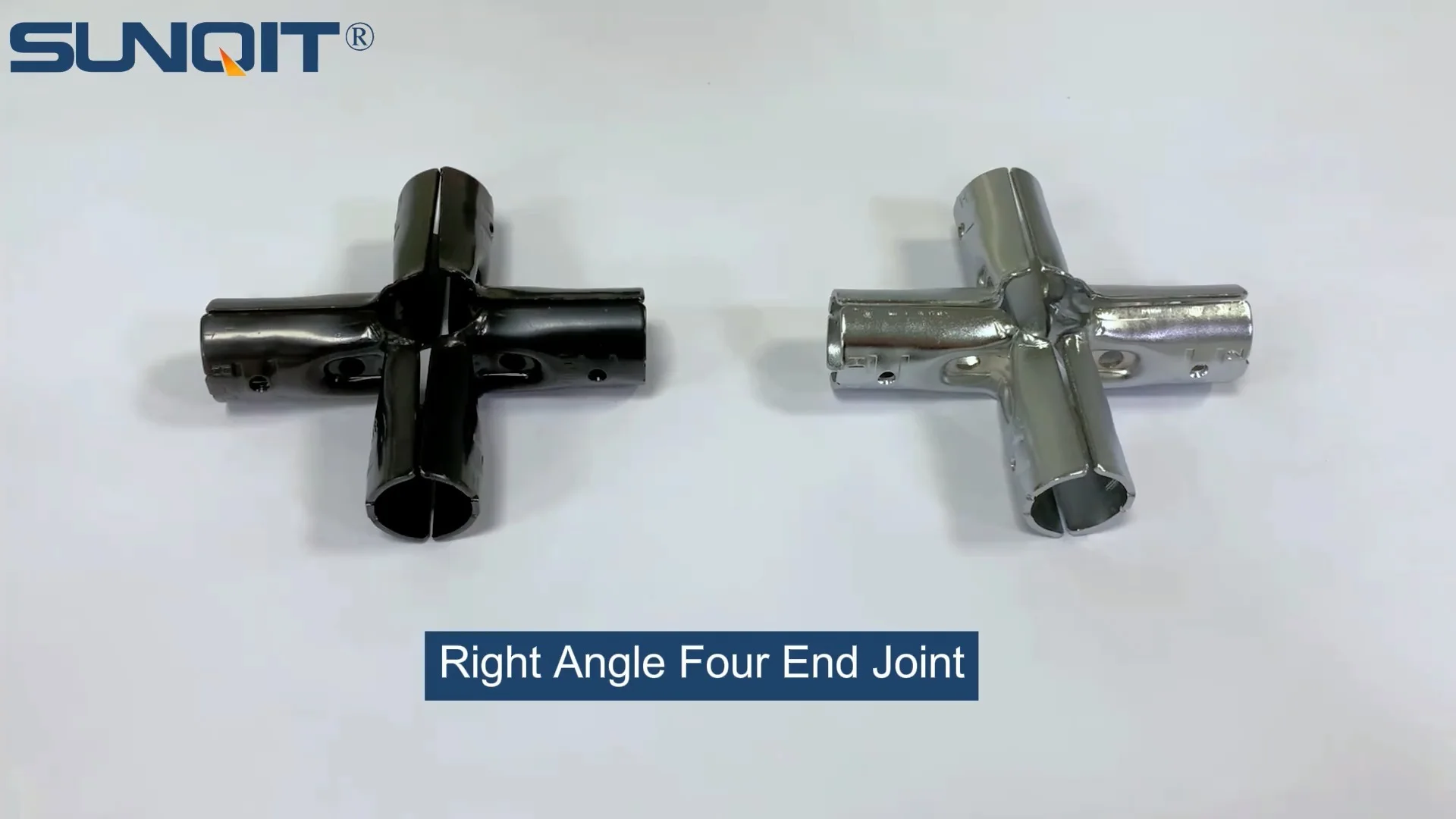
Five way straight lean pipe joint, for 5 pcs 28mm lean pipe connect in straight angle,which used widely in workbench, flow rack, hand trolley frame connection.
The Heartbeat of Production – Conveyors and Their Silent Architects
Imagine walking through a bustling manufacturing plant: the hum of machinery, the rhythmic movement of products gliding along assembly lines, and workers focused on precision tasks. At the center of this orchestrated chaos are conveyors—those unassuming systems that keep production flowing like blood through a body. But what keeps these conveyors steady, adaptable, and ready to meet the ever-changing demands of modern manufacturing? The answer lies in their support structures—and at the core of those structures, you'll often find a small but mighty component: the lean pipe joint.
Conveyors aren't just metal belts or rollers; they're complex systems that rely on sturdy, flexible support to function efficiently. Whether it's moving circuit boards in an electronics factory, car parts in an automotive plant, or packaged goods in a warehouse, a conveyor's performance hinges on how well its support structure can withstand stress, adapt to new layouts, and integrate with other production tools. And when it comes to building these structures with both strength and flexibility, few components rival the five way straight lean pipe joint.
In this article, we're going to dive deep into the world of conveyor support structures, with a special focus on the five way straight lean pipe joint. We'll explore how this unassuming piece of engineering plays a pivotal role in creating modular, durable, and cost-effective conveyor systems. By the end, you'll understand why forward-thinking manufacturers are turning to lean pipe systems and why the five way joint has become a cornerstone of their success.
Understanding Conveyor Support Structures: Beyond the Surface
Let's start with the basics: What exactly are conveyor support structures? Think of them as the skeleton that holds up the conveyor "muscles." They include everything from the vertical frames that keep the conveyor at the right height to the horizontal rails that guide rollers or belts, and the joints that connect all these pieces together. Without a solid support structure, a conveyor might wobble under heavy loads, fail to align with other equipment, or become impossible to reconfigure when production needs change.
Traditional support structures were often built with fixed materials like welded steel or rigid aluminum frames. While these are strong, they're also inflexible. If your production line needs to expand, or if you want to add a new branch to your conveyor system, you'd likely need to cut, weld, or even replace entire sections—costing time and money. That's where modular systems, built with lean pipe and versatile joints, have revolutionized the game.
Key Takeaway: Conveyor support structures aren't just about strength—they're about adaptability. In today's fast-paced manufacturing world, the ability to reconfigure a production line in hours (not days) can mean the difference between meeting a tight deadline and falling behind.
So, what makes a good support structure? Three things: durability, flexibility, and cost-effectiveness. Durability ensures it can handle the daily wear and tear of heavy loads and constant movement. Flexibility lets you adjust heights, add branches, or relocate the conveyor with minimal hassle. Cost-effectiveness means getting all this without breaking the bank—both upfront and in the long run, as you adapt and grow.

Lean Pipe Systems: The Backbone of Modern Support Structures
Before we zoom in on the five way joint, let's talk about the material that makes these modular structures possible: lean pipe. Also known as "flexible pipe" or "kitchen pipe" (a nod to its early use in Japanese kitchens to organize workflows), lean pipe is typically a steel tube coated in plastic (often PE) or stainless steel, designed to be lightweight yet strong. It's the building block of lean manufacturing systems, where the goal is to eliminate waste—including wasted time and resources spent on rigid, unchangeable equipment.
Lean pipe systems work on a simple principle: instead of welding or bolting pieces together permanently, you use joints to connect lengths of pipe. This means you can assemble, disassemble, and reassemble structures quickly, without special tools. Need to raise your conveyor by 12 inches? Swap out a short pipe for a longer one. Want to add a side rail to guide products? Just attach a new joint and pipe section. It's like building with industrial-scale Legos—only sturdier.
Lean Pipe vs. Aluminum Profile: Which to Choose?
You might be wondering: Why use lean pipe instead of aluminum profile, another popular modular material? Both have their strengths. Aluminum profile (think of those T-slot extrusions you see in workbenches or machine guards) is great for heavier loads and more permanent structures. It's sleek, corrosion-resistant, and offers precise mounting options for accessories like brackets or panels. But it's also heavier and often more expensive than lean pipe.
Lean pipe, on the other hand, shines in applications where flexibility is key. It's lighter, cheaper, and even easier to assemble—no need for specialized tools or training. For conveyor support structures that might need frequent reconfiguration (like in small-batch production or rapidly changing industries), lean pipe is often the go-to choice. And when paired with the right joints—like the five way straight lean pipe joint—it becomes even more versatile.

The Five Way Straight Lean Pipe Joint: Engineering Precision in Action
Now, let's meet the star of the show: the five way straight lean pipe joint. At first glance, it might look like a simple metal connector, but its design is cleverly engineered to solve a common problem in conveyor systems: how to connect multiple pipes in different directions without compromising strength.
A five way straight lean pipe joint does exactly what its name suggests: it allows you to connect up to five lean pipes at once, all aligned along a straight central axis. Picture a plus sign (+) with an extra line through the center—each arm of the plus (and the center line) is a connection point for a pipe. This means you can build structures with multiple horizontal or vertical branches, all radiating from a single, strong joint.
Design Features That Matter
What makes this joint so special? Let's break down its key design features:
Material: Most five way straight lean pipe joints are made from high-quality steel, coated in zinc or chrome to resist rust and corrosion. Some manufacturers also offer aluminum versions for lighter applications or environments where weight is a concern.
Connection Mechanism: Instead of welding, these joints use set screws or clamping rings to secure pipes. You simply slide a pipe into one of the joint's openings, tighten the screw, and it's locked in place. This makes assembly fast and disassembly even faster—no welding torches or heavy tools required.
Load Capacity: Don't let its small size fool you. A well-made five way joint can support impressive weights. Depending on the material and pipe diameter, a standard joint can handle 150–250kg of evenly distributed load—more than enough for most medium-duty conveyor systems.
Precision Alignment: The best five way joints are machined to ensure each connection point is perfectly aligned. This means pipes fit snugly, reducing wobble and ensuring the entire structure stays stable over time.
How It Stacks Up Against Other Joints
To truly appreciate the five way joint, let's compare it to other common lean pipe joints. Here's a quick breakdown:
| Joint Type | Connection Points | Best For | Limitations |
|---|---|---|---|
| Three Way Joint | 3 (e.g., 2 horizontal, 1 vertical) | Simple frames, basic workbenches | Can't add multiple branches in the same plane |
| Four Way Joint | 4 (e.g., 4 horizontal in a cross shape) | Cross-shaped structures, simple conveyor rails | Limited vertical/horizontal mixing; fewer connection points |
| Five Way Straight Joint | 5 (e.g., 4 horizontal, 1 vertical, or all in a straight line) | Multi-branch conveyors, complex support frames | Slightly bulkier than smaller joints; overkill for simple setups |
The five way joint's superpower is its ability to create complex, multi-directional structures without sacrificing stability. For example, imagine a conveyor system that needs to split into three separate lines at a sorting station. With a five way joint, you could connect the main conveyor line to three branch lines (using 4 horizontal points) and still have a vertical point to attach a support leg—all with one joint. With a three way joint, you'd need multiple pieces, increasing complexity and weakening the structure at each connection.

Real-World Applications: Where the Five Way Joint Shines
Enough theory—let's talk about how the five way straight lean pipe joint is used in real production environments. Here are a few examples where it makes a tangible difference:
Automotive Assembly Lines
Automotive plants are all about precision and efficiency. Conveyors here move heavy parts like engines, doors, and chassis between workstations. To keep up, support structures need to be both strong and adaptable (since car models change frequently). Five way joints are ideal for building "spider-like" conveyor frames that can branch off to different assembly stations. For instance, a main conveyor might use a five way joint to feed parts to three different workbenches (each with its own vertical support leg), all from a single central frame.
Electronics Manufacturing
In electronics factories, conveyors often carry small, delicate components that need to be routed to various testing or assembly stations. Here, space is often tight, and layouts change as new products are introduced. The five way joint's compact size and multi-directional connections make it perfect for building intricate, space-saving support structures. For example, a lean pipe frame using five way joints can support a roller track (another key conveyor component) at waist height, while also connecting to overhead storage racks and under-bench tool holders—all without cluttering the workspace.
Food and Beverage Packaging
Food packaging lines need to be hygienic, easy to clean, and flexible enough to handle different package sizes. Stainless steel lean pipe and five way joints (resistant to corrosion and easy to wipe down) are a popular choice here. A five way joint might be used to connect a main conveyor belt to three smaller roller tracks, each feeding a different packaging machine. If a new package size requires adjusting the height of one track, it's as simple as swapping out a pipe section—no welding or major overhauls needed.
The Benefits of Choosing Five Way Joints for Your Conveyor System
By now, you might be thinking: "This all sounds great, but is the five way joint really worth the investment?" Let's break down the benefits:
1. Faster Setup and Reconfiguration: With traditional welded structures, adding a new conveyor branch could take days. With five way joints, you can assemble a basic frame in hours. Need to move the conveyor? Disassemble it, move the pipes and joints, and rebuild—no special skills required.
2. Reduced Costs: Upfront, lean pipe systems are often cheaper than welded steel. Over time, the savings grow: you won't pay for expensive rework when layouts change, and you can reuse pipes and joints in new projects. It's sustainability and cost-effectiveness rolled into one.
3. Improved Safety: Wobbly, misaligned conveyors are accidents waiting to happen. Five way joints ensure pipes fit tightly and stay aligned, reducing the risk of collapse or product jams. Plus, plastic-coated lean pipe is gentler on hands than bare steel, lowering injury risks for workers.
4. Scalability: As your business grows, your conveyor system can grow with it. Add more five way joints and pipes to expand existing lines or build new ones—no need to start from scratch.
Tips for Choosing the Right Five Way Joint (and Lean Pipe Supplier)
Not all five way joints are created equal. To get the most out of your conveyor support structure, keep these tips in mind when shopping:
Look for Quality Materials: Opt for steel or stainless steel joints (for durability) or aluminum (for lightweight applications). Avoid cheap plastic joints—they won't stand up to heavy use.
Check Load Ratings: Make sure the joint's load capacity matches your conveyor's needs. A joint rated for 150kg might not work for a conveyor carrying 200kg boxes.
Choose a Reputable Supplier: A good lean pipe supplier will offer not just joints, but also pipes, roller track, casters, and other accessories—all designed to work together. They'll also provide technical support if you need help designing your structure.
Test Before Scaling: Start small. Build a simple test frame with five way joints to see how it holds up. If it works, scale up to your full conveyor system.
Conclusion: Building the Future of Production, One Joint at a Time
Conveyors are the lifeblood of modern manufacturing, but their true potential is unlocked by the support structures that hold them up. The five way straight lean pipe joint may be small, but it's a giant leap forward in creating systems that are strong, flexible, and ready for whatever the future throws at them.
Whether you're building a new conveyor system or upgrading an old one, don't overlook the power of modular lean pipe and versatile joints. They're not just tools—they're investments in efficiency, adaptability, and long-term success. So, the next time you walk through a production plant, take a closer look at the conveyor supports. Chances are, you'll spot a five way joint hard at work—quietly keeping the heartbeat of production steady and strong.