- Company Articles
- Products and Technology
- Product knowledge
- Conveyor System Support: Five Way Straight Lean Pipe Joint Applications

Conveyor System Support: Five Way Straight Lean Pipe Joint Applications
Related Product
Five Way Straight Lean Pipe Joint
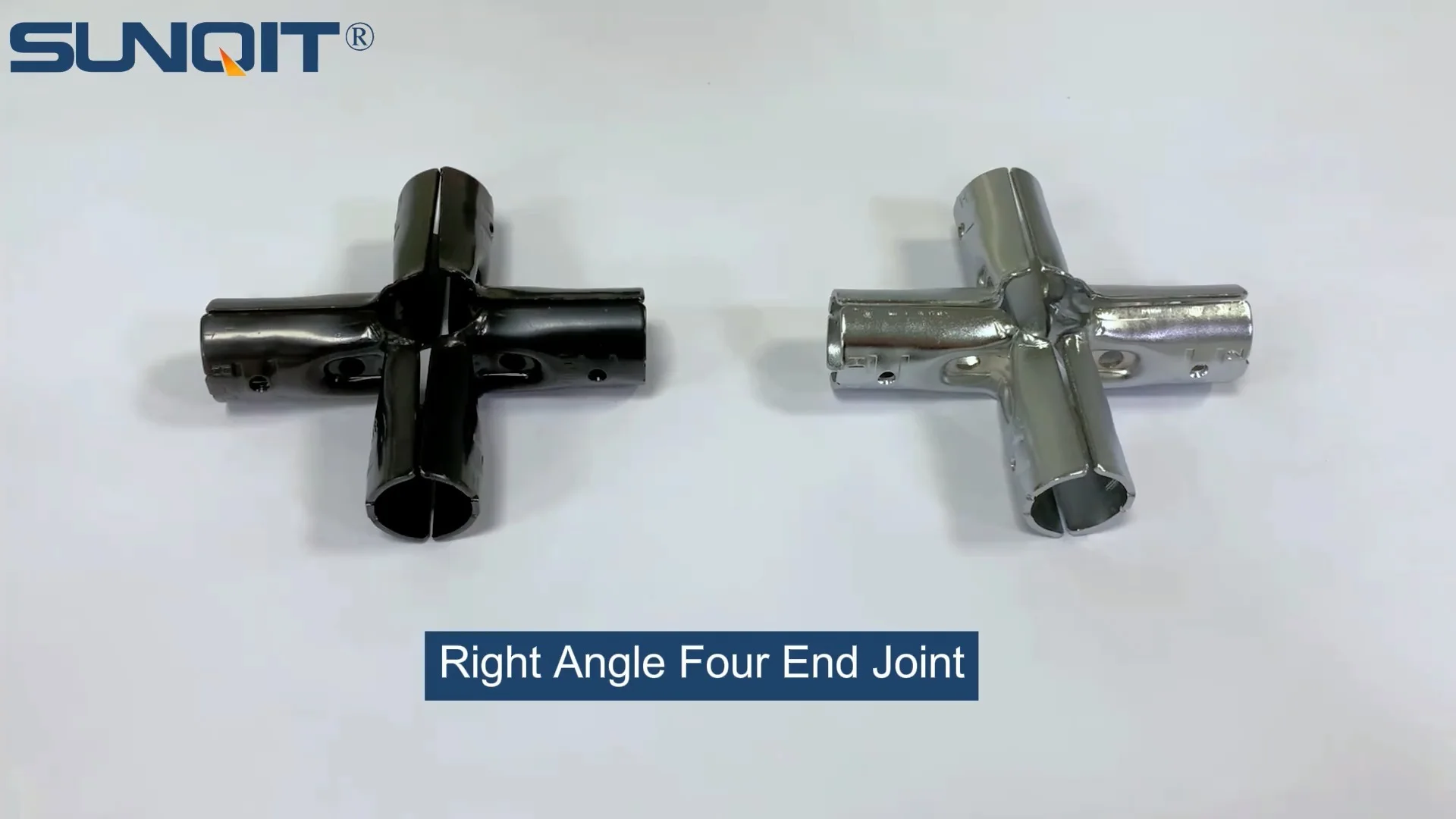
Five way straight lean pipe joint, for 5 pcs 28mm lean pipe connect in straight angle,which used widely in workbench, flow rack, hand trolley frame connection.
Conveyor System Support: Five Way Straight Lean Pipe Joint Applications
Imagine walking through a busy manufacturing plant—rows of assembly lines humming, products gliding smoothly from one station to the next, workers focused on precise tasks rather than hauling heavy materials. What makes this orchestrated chaos possible? More often than not, it's the unsung hero of modern production: the conveyor system. These systems are the arteries of factories, warehouses, and distribution centers, ensuring materials and products move efficiently, reducing delays, and cutting down on manual labor. But not all conveyor systems are created equal. Rigid, one-size-fits-all setups can become bottlenecks when production needs change, leaving manufacturers stuck with expensive, inflexible infrastructure. That's where modular lean systems step in—and at the heart of these systems lies a small but mighty component: the five way straight lean pipe joint.
Lean Manufacturing and the Rise of Modular Components
Lean manufacturing isn't just a buzzword—it's a philosophy that's transformed how businesses operate. At its core, lean is about eliminating waste, optimizing flow, and continuously improving processes. For manufacturers, this means creating systems that can adapt to shifting demands, whether that's a new product line, higher production volumes, or changes in product dimensions. Traditional conveyor systems, built with fixed metal frames and welded joints, often fail this flexibility test. Rebuilding or modifying them requires time, money, and specialized labor—precisely the kind of waste lean aims to eliminate.
Enter lean pipe systems. Also known as "flexible pipe systems," these setups use lightweight, durable pipes and modular joints to create custom workstations, material racks, and yes—conveyor systems. The magic of lean pipe systems lies in their simplicity: pipes (typically made of steel, aluminum, or plastic-coated steel) connect using joints that require no welding or drilling. This means anyone on the factory floor can assemble, disassemble, or reconfigure the system with basic tools, turning hours of work into minutes. And among the many joints available, the five way straight lean pipe joint stands out as a versatile workhorse, enabling complex, multi-directional configurations that were once impossible with traditional methods.
Meet the Five Way Straight Lean Pipe Joint: A Closer Look
At first glance, the five way straight lean pipe joint might seem unassuming—a small, often metallic component with multiple ports for connecting pipes. But don't let its size fool you. This joint is engineered to solve a common problem in conveyor design: how to connect pipes in multiple directions without compromising stability. Unlike two-way or three-way joints, which limit connections to 2 or 3 directions, the five way straight joint offers five connection points. Picture a central hub with one port pointing straight ahead, one behind, one to the left, one to the right, and one upward (or downward, depending on orientation). This allows for the creation of complex, multi-axis structures—perfect for conveyor systems that need to twist, turn, or branch off in different directions.
Most five way straight lean pipe joints are made from high-quality steel, often coated with zinc or plastic to resist corrosion. Some variants, like those used in electronics manufacturing, come with ESD (electrostatic discharge) protection to prevent static damage to sensitive components. The joints connect to lean pipes using a clamping mechanism: insert the pipe into the joint, tighten a screw or lever, and the connection is secure. This simplicity is key—no welding, no drilling, just a tool like a hex key or torque wrench to get the job done. And because the connections are reusable, you can take apart a section of your conveyor system and rebuild it elsewhere in the plant without damaging the components.
Why the Five Way Joint Matters for Conveyor Systems
Conveyor systems aren't just straight lines from Point A to Point B. Modern production lines often require materials to move up, down, around obstacles, or split into multiple paths. For example, a food packaging plant might need a conveyor that carries bottles to a labeling station, then splits into two paths: one for capping and one for quality control. A traditional welded conveyor would require custom fabrication for that split, but with a five way straight lean pipe joint, it's a matter of connecting a few extra pipes.
The five way joint's real power is in its flexibility. Let's say a car parts manufacturer needs to adjust their conveyor to accommodate a new, larger engine component. With a modular system, they can loosen the joints, reposition the pipes, and add supports using the five way joint to widen the conveyor path—all in an afternoon. Compare that to the days (or weeks) it would take to modify a welded system, and the cost savings become clear. But flexibility isn't the only benefit: these joints are also surprisingly strong. A well-made five way straight lean pipe joint can support hundreds of pounds, making it suitable for heavy-duty applications like moving metal parts or large containers.
Applications in Conveyor Systems: From Roller Tracks to Flow Racks
The five way straight lean pipe joint isn't a one-trick pony. It shines in a variety of conveyor setups, each leveraging its multi-directional connectivity to solve unique challenges. Let's explore some of the most common applications:
1. Roller Conveyors: Smooth Flow for Heavy Loads
Roller conveyors are workhorses in warehouses and manufacturing plants, using rotating rollers to move items with minimal effort. The frame that supports these rollers needs to be sturdy yet adaptable—especially if the conveyor needs to slope, turn, or split. The five way straight lean pipe joint is ideal for building these frames. For example, when creating a curved roller conveyor, the joint can connect the horizontal roller track to vertical support pipes, while also adding diagonal bracing for stability. If the conveyor needs to merge with another line, the five way joint can serve as the "hub" where the two paths meet, connecting the main track, the merging track, and support legs—all in one component.
Roller track systems often require precise alignment to ensure items glide smoothly without jamming. The five way joint's adjustable clamping mechanism allows for (fine-tuning) during assembly, so workers can tweak the angle of the rollers until the flow is perfect. And if a roller gets damaged? No problem—simply loosen the joint, remove the damaged section, and replace it. This ease of maintenance reduces downtime, keeping production on track.
2. Flow Racks: Optimizing Material Storage and Retrieval
Flow racks (also called "dynamic storage racks") are a staple in warehouses, using gravity to move materials from the back to the front of the rack. They're perfect for FIFO (first-in, first-out) inventory systems, ensuring older stock gets used before newer stock. Building a flow rack with lean pipe systems is straightforward, but the five way straight lean pipe joint takes it to the next level. These racks typically have multiple levels, each with a sloped roller track. The five way joint can connect the vertical support pipes, the horizontal beams that hold the roller tracks, and even diagonal braces to prevent swaying. For example, a three-level flow rack might use five way joints at each vertical post: one port for the post itself, one for the top beam, one for the middle beam, one for the bottom beam, and one for a diagonal brace. This creates a rigid, stable structure that can be easily adjusted if the rack needs to hold taller or shorter items.
3. Turnover Trolleys and Mobile Conveyors
Not all conveyors are fixed to the floor. Turnover trolleys—mobile carts used to move materials between workstations—often need built-in conveyor sections to slide items on and off easily. The five way straight lean pipe joint is perfect for these applications because it allows for lightweight yet strong frames. For example, a trolley might have a small roller track on top, supported by a frame made with five way joints. The joints connect the vertical legs of the trolley, the horizontal supports for the roller track, and even the caster mounts (the parts that hold the wheels). If the trolley needs to carry larger items, workers can add an extra level by connecting more pipes to the five way joints, turning a single-level trolley into a double-decker.
4. Workstation Conveyors: Bridging the Gap Between Stations
In assembly lines, workstations are often spaced a few feet apart, and materials need to move seamlessly from one to the next. A small, custom conveyor between two workstations can eliminate the need for workers to lift or carry items. The five way straight lean pipe joint makes building these mini-conveyors a breeze. For example, a electronics manufacturer might have a soldering station next to a testing station. A short roller conveyor between them, supported by a frame built with five way joints, can carry circuit boards from soldering to testing. If the testing station is moved a few inches, the joints can be loosened, the frame adjusted, and the conveyor reconnected—no tools beyond a hex key required.
Choosing the Right Lean Pipe Supplier: Quality Matters
Not all five way straight lean pipe joints are created equal. The difference between a reliable joint and a cheap knockoff can mean the difference between a conveyor that runs smoothly for years and one that wobbles, jams, or even fails. That's why choosing a reputable lean pipe supplier is critical. A good supplier will offer joints made from high-grade steel or aluminum, with precision-machined ports to ensure a tight fit with pipes. They'll also provide testing data on load capacity, corrosion resistance, and durability—important factors for industrial applications.
When vetting a supplier, look for one that offers a full range of accessories, too. The best lean pipe systems are modular, so you'll want to pair your five way joints with compatible pipes, roller track, casters, and workbench components. A supplier that stocks all these items ensures consistency in quality and compatibility, reducing the risk of mismatched parts. For example, if you need to add a roller track to your conveyor, a supplier that sells both the five way joints and the roller track will ensure the track fits perfectly with the joint's ports, avoiding frustrating gaps or loose connections.
Comparing Lean Pipe Joints: When to Choose Five Way
The five way straight lean pipe joint is versatile, but it's not always the best choice for every application. To help you decide when to use it, here's a comparison of common lean pipe joints:
| Joint Type | Number of Connections | Typical Load Capacity | Best For |
|---|---|---|---|
| Two-Way Straight | 2 (straight line) | Up to 200 lbs | Straight conveyor sections, simple frames |
| Three-Way T-Joint | 3 (one straight, one perpendicular) | Up to 250 lbs | Basic splits (e.g., conveyor branching into one path) |
| Four-Way Cross Joint | 4 (two perpendicular straight lines) | Up to 300 lbs | Grid-like structures, overhead conveyor supports |
| Five Way Straight | 5 (four directions + straight) | Up to 350 lbs | Complex splits, multi-level conveyors, diagonal bracing |
As the table shows, the five way joint excels in scenarios where you need multiple connections in different directions. For example, if you're building a conveyor that splits into two paths and needs diagonal supports to prevent swaying, the five way joint can handle all those connections in one component, reducing the number of parts and simplifying assembly.
Case Study: How a Furniture Manufacturer Cut Downtime with Five Way Joints
The Challenge: A mid-sized furniture manufacturer was struggling with their conveyor system. They produced both small items (like chair legs) and large items (like table tops), and their fixed conveyor couldn't adjust to the size differences. Switching between products required manually moving heavy guide rails, which took 2-3 hours and often led to delays. The welded frame also made it hard to add new stations as production grew.
The Solution: The manufacturer partnered with a lean pipe supplier to replace their fixed conveyor with a modular system using five way straight lean pipe joints. They built a new conveyor frame with adjustable width, using five way joints to connect the main track, side rails, and support legs. For large items, they loosened the joints, slid the side rails outward, and re-tightened—taking less than 30 minutes. They also added a branching path using five way joints to send defective items to a repair station, eliminating the need for workers to carry rejects.
The Outcome: Changeover time between products dropped from 3 hours to 25 minutes, increasing overall production by 15%. The modular design also allowed them to add two new assembly stations in a day, without hiring welders. Workers reported less fatigue, and the conveyor's flexibility made it easy to test new product layouts without major investments.
Maintaining Your Five Way Joint Conveyor System
Like any industrial equipment, modular conveyor systems need regular maintenance to stay in top shape. Fortunately, the simplicity of lean pipe systems makes upkeep easy. Here are a few tips:
- Check joint tightness monthly: Vibrations from moving materials can loosen joints over time. A quick once-over with a hex key to tighten any loose connections will prevent wobbling or misalignment.
- Clean roller tracks and joints: Dust, grease, and debris can build up on roller tracks and inside joint ports, causing jams or rust. Wipe down tracks with a damp cloth and use a small brush to clean out joint threads.
- replace worn parts promptly: If a joint starts to slip or a roller track becomes bent, replace it immediately. A reputable lean pipe supplier will stock replacement parts, so you won't have to wait long for repairs.
- Lubricate moving parts: Roller tracks and caster wheels benefit from occasional lubrication to keep them rolling smoothly. Use a light machine oil or silicone spray, avoiding heavy greases that can attract dust.
The Future of Conveyor Systems: Adaptability as Standard
Manufacturing is changing faster than ever. Customization, small-batch production, and rapid innovation are becoming the norm, and conveyor systems need to keep up. Rigid, fixed setups are no longer viable for forward-thinking businesses. Instead, the factories of tomorrow will rely on modular, adaptable systems—built with components like the five way straight lean pipe joint—that can evolve as quickly as their needs do.
Whether you're a small workshop or a large manufacturing plant, investing in modular lean systems makes sense. They're cost-effective, easy to use, and future-proof. And at the center of it all is that unassuming little joint: connecting pipes, supporting loads, and enabling the flexibility that modern production demands. So the next time you walk through a smoothly running factory, take a closer look at the conveyor system. Chances are, there's a five way straight lean pipe joint holding it all together—quietly revolutionizing how we build, move, and create.