- Company Articles
- Products and Technology
- Product knowledge
- Conveyor Systems: Lean Pipe Clamp B for Smooth Material Flow Support

Conveyor Systems: Lean Pipe Clamp B for Smooth Material Flow Support
Related Product
Lean Pipe Clamp
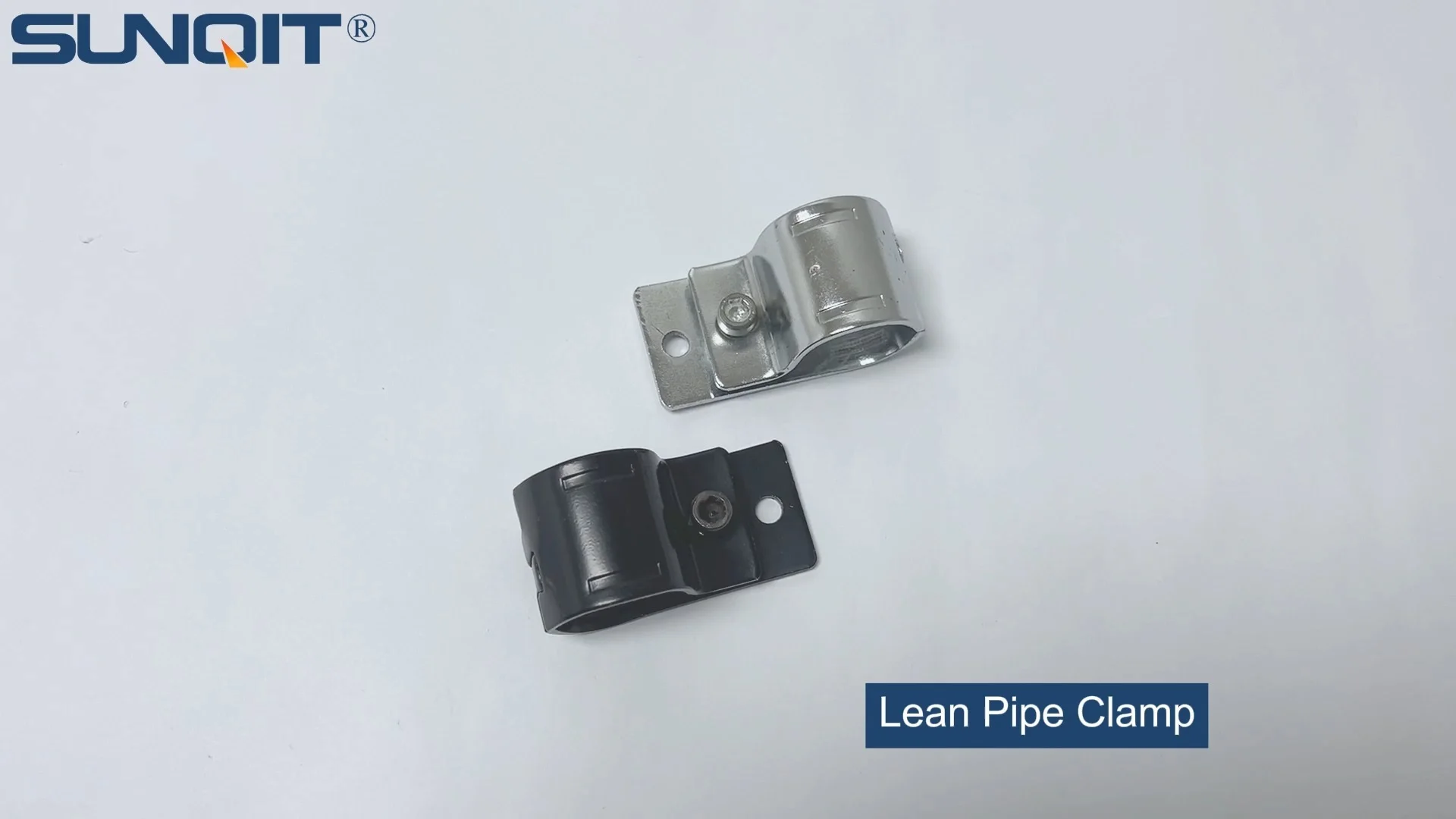
Lean pipe clamp is used for rack system hang monitor or other panel for workbenck, flowrack in production daily use.
In the rhythm of a busy factory, where every second counts and every component matters, there's an unsung force that keeps production alive: material flow. It's the quiet current that carries parts from one workstation to the next, feeds assembly lines with precision, and ensures that deadlines are met without a hitch. When this flow stutters—whether due to a misaligned roller track, a loose connection, or a wobbly support—the entire operation can feel the impact: delays, frustrated workers, and missed opportunities. That's where conveyor systems step in as the backbone of modern manufacturing, but even the best conveyors need a little help to truly shine. Enter Lean Pipe Clamp B —a small but mighty component that transforms good material flow into great, seamless, and reliable material flow.
This article dives into the world of conveyor systems, exploring how they form the circulatory system of production floors, the challenges they often face, and why Lean Pipe Clamp B has become a game-changer for businesses aiming to optimize their workflows. We'll unpack what makes this clamp unique, how it integrates with other key components like roller track and flow rack , and share real-world scenarios where it has turned inefficiency into efficiency. By the end, you'll understand why choosing the right clamp isn't just about securing pipes—it's about securing the heartbeat of your production.
The Backbone: Conveyor Systems and Their Role in Modern Manufacturing
Conveyor systems are more than just moving belts or tracks; they're the lifelines of industries ranging from automotive and electronics to food processing and logistics. Imagine a car assembly line: without conveyors, workers would spend hours manually transporting heavy chassis parts, risking delays and injuries. In electronics manufacturing, where tiny components like microchips need to be handled with care, conveyors ensure delicate items glide from inspection stations to packaging without a scratch. Even in warehouses, conveyor systems turn mountains of inventory into manageable streams, sorting packages and routing them to the right trucks with minimal human intervention.
But for all their importance, conveyor systems are surprisingly vulnerable to one critical issue: instability. A conveyor's effectiveness relies on its ability to maintain consistent alignment, support varying loads, and adapt to changing production needs. Over time, vibrations from constant use can loosen joints, heavy materials can bend supports, and frequent reconfigurations (a staple of lean manufacturing) can leave connections weak. These issues don't just cause jams—they create bottlenecks that ripple through the entire production chain. A single misaligned roller track, for example, might cause a box to tip, stopping the line and requiring workers to pause, fix the issue, and restart. Multiply that by a few times a day, and suddenly, productivity takes a significant hit.
This is where the concept of "lean material handling" comes into play. Lean manufacturing isn't just about cutting waste; it's about building systems that are flexible, durable, and responsive. Conveyors, when paired with the right accessories, become more than tools—they become partners in lean success. And that's exactly where components like Lean Pipe Clamp B enter the picture: by addressing the root cause of instability, they turn conveyor systems into reliable, adaptable, and efficient assets.
The Hidden Hero: Understanding Lean Pipe Clamp B
At first glance, a clamp might seem like a simple piece of hardware—something you tighten with a wrench and forget about. But Lean Pipe Clamp B is far from ordinary. Designed specifically for the demands of lean manufacturing environments, it's a precision-engineered connector that bridges the gap between flexibility and stability. Let's break down what makes it so special.
What Is Lean Pipe Clamp B?
Lean Pipe Clamp B is a specialized fastening device used to secure lean pipe (also known as "" in some contexts, but here referring to the durable, often powder-coated steel or aluminum tubes used in lean systems) to supports, frames, or other components like roller tracks and flow racks. Unlike generic clamps, which may prioritize either strength or adjustability but rarely both, Lean Pipe Clamp B is engineered to balance both. Its design features a robust, corrosion-resistant body (typically made from high-grade steel with a chrome or zinc coating) and a unique gripping mechanism that holds pipes firmly in place without damaging their surfaces. This combination makes it ideal for environments where frequent adjustments are needed—like factories that reconfigure workstations seasonally or adapt to new product lines.
Design and Features: Built for the Real World
What truly sets Lean Pipe Clamp B apart is its attention to the details that matter most on the factory floor:
- Adjustable Tension: The clamp's screw-driven mechanism allows for precise tightening, so workers can customize the grip based on the load. Need to secure a lightweight plastic roller track? Tighten gently. Supporting a heavy steel flow rack loaded with metal parts? Crank it down for a rock-solid hold.
- Versatile Compatibility: Lean Pipe Clamp B isn't picky about pipe sizes. It works seamlessly with standard lean pipes (often 28mm in diameter) as well as aluminum lean pipes and even some stainless steel varieties, making it a go-to choice for facilities with mixed material setups.
- Durability Under Pressure: Factories are tough places—dust, moisture, and constant vibration are par for the course. Lean Pipe Clamp B's rugged construction stands up to these conditions, resisting rust and wear even after years of daily use. Its chrome-plated finish adds an extra layer of protection, ensuring it stays functional and visually consistent in harsh environments.
- Tool-Free (or Minimal Tool) Installation: In a world where time is money, nobody wants to fumble with complex tools. Lean Pipe Clamp B often features a wing nut or quick-release lever, allowing workers to install or adjust it in seconds—no wrench required. This is a game-changer during repairs or last-minute reconfigurations.
Why It Stands Out from Other Clamps
To appreciate Lean Pipe Clamp B, it helps to compare it to other common clamps in material handling. Take the standard pipe clamp, for example: while affordable, it often lacks adjustability, making it difficult to reuse if pipe sizes change. Then there are heavy-duty industrial clamps, which offer strength but are bulky and hard to maneuver in tight spaces—like under a conveyor or between flow rack shelves. Lean Pipe Clamp B hits the sweet spot: it's strong enough to support heavy loads (up to 50kg per clamp in some models), compact enough to fit in tight gaps, and flexible enough to adapt to evolving needs. It's the Swiss Army knife of clamps for lean systems.

Integration Magic: How Lean Pipe Clamp B Enhances Conveyor Systems
A conveyor system is only as good as its weakest link. Even the most advanced belt conveyor or roller track will fail if its supports are unstable or its connections are loose. Lean Pipe Clamp B doesn't just fix these links—it strengthens them, turning individual components into a unified, high-performing system. Let's explore how it works its magic in three key areas:
Securing Roller Tracks: The Foundation of Smooth Flow
Roller tracks are the unsung stars of conveyor systems, using a series of rotating wheels to let materials glide with minimal friction. But for roller tracks to work well, they need to stay perfectly aligned. A single misaligned roller can cause a box to catch, a part to tip, or even a complete jam. This is where Lean Pipe Clamp B shines. By securing the roller track's support rails to the conveyor frame, it ensures the track stays level and straight, even when heavy items pass over it.
Consider a typical scenario in a warehouse: a flow rack loaded with turnover boxes, each weighing 20kg, sliding down a roller track to a picking station. Without proper clamping, the track might sag in the middle over time, causing boxes to slow down or get stuck. With Lean Pipe Clamp B securing the track at regular intervals (every 60-80cm, depending on load), the track remains rigid, and boxes flow consistently—no more stopping to nudge a stuck box or readjust the track. Workers can focus on picking, not fixing, and throughput increases as a result.
Connecting Flow Racks: Turning Static Storage into Dynamic Flow
Flow racks are a cornerstone of lean manufacturing, using gravity to feed materials to the front of the rack, ensuring first-in, first-out (FIFO) inventory management and easy access for workers. But to integrate flow racks with conveyor systems—so that materials can move seamlessly from the rack to the conveyor—you need sturdy, reliable connections. Lean Pipe Clamp B makes this integration effortless.
Imagine an electronics assembly line where small circuit boards are stored in a flow rack before being transported to a soldering workstation via a roller conveyor. The flow rack's exit point needs to align perfectly with the conveyor's entrance to avoid boards falling or getting damaged. By using Lean Pipe Clamp B to secure the flow rack's exit chute to the conveyor's side rails, workers can fine-tune the angle and height of the connection, ensuring a smooth transition. Even as the flow rack is loaded and unloaded (which can cause minor shifts in position), the clamp holds firm, maintaining alignment day in and day out.
Adapting to Dynamic Workbenches: Flexibility for Changing Needs
Modern factories aren't static—they evolve. A workstation that assembles smartphones today might be repurposed to assemble tablets next month, requiring new tools, different material flows, and adjusted conveyor paths. Workbenches, often paired with conveyors to create "cells" of productivity, need to adapt quickly. Lean Pipe Clamp B makes this adaptability possible.
For example, a workbench with a built-in mini conveyor (used to pass partially assembled products to the next station) might need to be repositioned 30cm to the left to make space for a new testing machine. With Lean Pipe Clamp B securing the conveyor's legs to the workbench frame, workers can simply loosen the clamps, slide the conveyor into place, and retighten—done. No drilling new holes, no replacing parts, no downtime. This flexibility is why lean manufacturers swear by Lean Pipe Clamp B: it turns fixed infrastructure into modular, reconfigurable assets that grow with the business.

Beyond the Clamp: Complementary Components for Seamless Flow
Lean Pipe Clamp B is a star, but even stars need a supporting cast. To create a truly seamless material flow system, it works hand-in-hand with other key components, each playing a unique role in keeping things moving. Let's meet the team:
Roller Track and Accessories: The Glide Masters
Roller tracks are the "runways" of conveyor systems, using rotating rollers to let materials slide with minimal effort. They come in various materials—plastic for lightweight items, steel for heavy loads, and aluminum for a balance of strength and weight. But a roller track is only as good as its installation, and that's where Lean Pipe Clamp B steps in. By securing the track's aluminum or steel rails to support frames, the clamp ensures the track stays flat and aligned, preventing rollers from binding or misaligning. Pairing Lean Pipe Clamp B with high-quality roller track accessories like roller track placon mounts (which connect tracks to aluminum profiles) creates a rock-solid foundation that handles even the busiest conveyor lines.
Flow Rack: The Organized Feeder
Flow racks are like the "pantry" of production, storing materials until they're needed and feeding them to conveyors or workstations on demand. They're designed to save space, reduce picking time, and ensure FIFO inventory rotation. But to connect a flow rack to a conveyor, you need more than just a clamp—you need a system. Lean Pipe Clamp B secures the flow rack's exit ramp to the conveyor's entrance, while lean pipe joints (like 90° fixed joints or swivel joints) allow for angle adjustments, ensuring materials flow smoothly from rack to conveyor without getting stuck. Together, these components turn a static storage unit into an active participant in the material flow ecosystem.
Lean Pipe Joints: The Flexible Connectors
If Lean Pipe Clamp B is the "fastener," lean pipe joints are the "hinges" of lean systems. These small, often metal connectors allow lean pipes to be joined at various angles (90°, 45°, 180°), creating custom frames, supports, and structures. For conveyor systems, this means you can build custom support legs, side guards, or even overhead racks to guide materials—all secured with Lean Pipe Clamp B for extra stability. For example, a conveyor that needs to navigate a corner can use 90° lean pipe joints to build a curved frame, with Lean Pipe Clamp B reinforcing the joints to prevent wobbling. It's this combination of flexibility and strength that makes lean systems so popular in dynamic manufacturing environments.
| Component | Key Role in Material Flow | How It Works with Lean Pipe Clamp B | Best For |
|---|---|---|---|
| Lean Pipe Clamp B | Secures pipes, tracks, and frames; prevents loosening | Primary fastener for all components | Stabilizing roller tracks, flow rack connections, and adjustable supports |
| Roller Track | Enables smooth sliding of materials via rotating rollers | Clamp B secures track rails to frames, maintaining alignment | Light to heavy material transport (boxes, parts, packages) |
| Flow Rack | Stores and feeds materials to conveyors/workstations | Clamp B connects rack exit ramps to conveyors | High-volume inventory, FIFO management, picking stations |
| Lean Pipe Joint | Connects pipes at angles to build custom structures | Clamp B reinforces joints for added stability | Curved conveyors, custom support frames, overhead guides |

Real-World Impact: Case Studies in Efficiency
Talk is cheap—results speak louder. Let's look at two hypothetical but realistic scenarios where Lean Pipe Clamp B transformed material flow, turning inefficiency into efficiency and frustration into productivity.
Case Study 1: Automotive Assembly Line Upgrade
A mid-sized automotive parts manufacturer was struggling with a recurring issue: their conveyor system, which transported metal brackets to the welding station, kept jamming. The culprit? A misaligned roller track that sagged under the weight of the brackets, causing them to tip and get stuck. Workers were spending 15-20 minutes per shift fixing jams, and the line was falling behind schedule. The maintenance team tried tightening the existing clamps, but they were generic, one-size-fits-all models that loosened quickly under vibration.
The solution? Upgrading to Lean Pipe Clamp B. The team replaced the old clamps with new ones, securing the roller track every 60cm along its length. The clamps' adjustable tension allowed them to tighten just enough to keep the track stable without damaging the aluminum rails. Within a week, jams dropped by 90%. Workers wasted time fixing issues, and the line caught up on its backlog. Six months later, the maintenance team reported that the clamps still held tight—no loosening, no rust, and no more jams. The ROI? The manufacturer saved approximately 120 labor hours per month, translating to $3,600 in saved wages (based on a $30/hour average) and avoided production delays worth an estimated $10,000 per month. All from a simple clamp upgrade.
Case Study 2: Electronics Manufacturing Workflow Refresh
A consumer electronics plant producing smartwatches needed to reconfigure its assembly line to accommodate a new model with different components. The existing setup used fixed workbenches and rigid conveyor supports, making it hard to adjust heights or reposition stations. Workers were bending awkwardly to reach materials, leading to fatigue and slower assembly times. The plant manager wanted a solution that was flexible, quick to install, and didn't require a complete overhaul.
The answer lay in a lean system upgrade centered around Lean Pipe Clamp B. The team installed aluminum lean pipes and used lean pipe joints to build modular workbenches and conveyor supports, secured with Lean Pipe Clamp B for stability. The clamps allowed workers to adjust the height of the conveyor tracks to match the new workbenches in minutes—no drilling, no welding, just a quick twist of the wing nut. The result? Workers reported less strain, assembly time per unit dropped by 12%, and the line was reconfigured for the new model in a single weekend instead of the projected three days. The plant now uses the same setup to switch between models seasonally, saving time and money on retooling.
Choosing the Right Components: A Buyer's Guide
Now that you understand the power of Lean Pipe Clamp B and its supporting cast, how do you choose the right components for your facility? Here are a few key questions to ask:
- What's your load capacity? Heavier materials (like automotive parts) need steel roller tracks and heavy-duty Lean Pipe Clamp B models. Lightweight items (like electronics components) can use aluminum tracks and standard clamps.
- How often do you reconfigure? If your layout changes frequently, prioritize tool-free clamps (like Lean Pipe Clamp B with wing nuts) and modular lean pipe joints for quick adjustments.
- What's your environment like? Wet or dusty facilities need corrosion-resistant components—look for chrome-plated clamps and stainless steel roller tracks. Cleanrooms might prefer aluminum for its sleek, easy-to-clean finish.
- Do you need ESD protection? Electronics manufacturing often requires electrostatic discharge (ESD) safe components. Look for ESD-rated roller tracks (like black ESD wheels) and conductive lean pipes, paired with Lean Pipe Clamp B to keep everything grounded.
When in doubt, partner with a reputable lean pipe supplier who can assess your needs and recommend the right mix of clamps, tracks, and joints. A good supplier will even provide samples or on-site consultations to ensure you're getting the best fit for your workflow.
The Future of Lean Material Handling: Innovations and Trends
As manufacturing evolves, so too do the tools that power it. The future of lean material handling is all about smarter, more connected systems—and Lean Pipe Clamp B is poised to play a role in this evolution. Emerging trends include:
- Smart Clamps with Sensors: Imagine a Lean Pipe Clamp B equipped with a tiny sensor that alerts maintenance when it starts to loosen. Early prototypes are in development, using IoT technology to monitor clamp tension and send real-time data to a central dashboard. This could prevent jams and failures before they happen.
- Eco-Friendly Materials: As sustainability becomes a priority, manufacturers are exploring recycled steel and aluminum for lean pipes and clamps, without sacrificing strength. Lean Pipe Clamp B is already ahead of the curve, with many models made from recyclable materials and designed for long lifespans to reduce waste.
- 3D-Printed Customization: For unique conveyor setups, 3D-printed Lean Pipe Clamp B variants could offer custom shapes and sizes, tailored to specific pipe diameters or load requirements. This would make lean systems even more adaptable to niche industries.
No matter the innovation, the core mission remains the same: to keep material flow smooth, reliable, and efficient. And Lean Pipe Clamp B, with its focus on simplicity, durability, and flexibility, is sure to remain a key player in that mission.
Conclusion: Empowering Production Through Smarter Connections
In the grand scheme of manufacturing, it's easy to overlook the small components—the clamps, the joints, the tracks. But as we've explored, these are the building blocks of success. Lean Pipe Clamp B may be small, but its impact is huge: it turns wobbly conveyor tracks into steady runways, rigid systems into flexible assets, and frustrating delays into smooth, efficient production days.
Whether you're running an automotive plant, an electronics factory, or a warehouse, investing in the right components—like Lean Pipe Clamp B, roller track, and flow rack—isn't just about fixing problems. It's about building a foundation for growth, adaptability, and success. It's about empowering your workers to do their best, your systems to run at their peak, and your business to thrive in a competitive world.
So the next time you walk through your facility, take a moment to appreciate the quiet heroes keeping things moving. And if you spot a loose clamp or a wobbly track, remember: sometimes, the smallest upgrade can make the biggest difference. Choose Lean Pipe Clamp B, and let your material flow shine.