- Company Articles
- Products and Technology
- Product knowledge
- Core Components of Aluminum Workbench C: Understanding Its Lean Structure

Core Components of Aluminum Workbench C: Understanding Its Lean Structure
Related Product
Aluminum Workbench C
aluminum-tube-workbench-is-more-flexible-and-durable,-compared-with-traditional-pe/abs-coated-steel-tube.-it-is-easy-to-assemble,-anti-corrosion,-rust-protection,-and-recycle-use-after-disassemble.
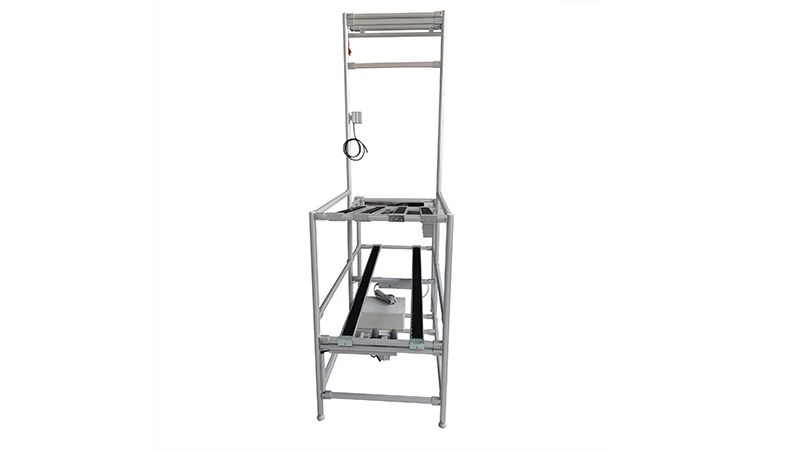
In the fast-paced world of manufacturing and production, efficiency isn't just a buzzword—it's the backbone of success. Every tool, every workspace, and every process must align to minimize waste, maximize productivity, and adapt to evolving needs. Enter the Aluminum Workbench C: a simple piece of equipment that plays a pivotal role in lean systems across industries. But what makes this workbench so effective? Let's dive into its core components, exploring how each part contributes to its reputation as a versatile, durable, and lean-friendly solution.
1. The Foundation: Aluminum Extrusion Profiles
At first glance, the Aluminum Workbench C might look like a basic metal table, but its strength lies in its skeleton: the aluminum extrusion profile. This isn't just any metal frame— it's a precision-engineered structure born from the aluminum extrusion process, a method that shapes aluminum into consistent, complex cross-sections with remarkable accuracy. For Workbench C, the star of the show is typically a high-grade aluminum extrusion profile, often made from 6063-T5 aluminum alloy. Why this material? Let's break it down.
6063-T5 aluminum is a favorite in industrial applications for good reason. It's lightweight, yet surprisingly strong—think of it as the "athlete" of metals: lean but powerful. This combination is critical for a workbench, which needs to support heavy tools, materials, and equipment without becoming a cumbersome, immovable object. On a busy production floor, where workers might need to reposition the workbench or adjust its layout, that lightweight nature translates to flexibility. No more struggling with bulky steel tables; even a single person can maneuver a properly designed aluminum workbench when needed.
But the real genius of the aluminum extrusion profile is its T-slot design. Run your hand along the edges of the profile, and you'll notice long, narrow grooves (the "T-slots") running the length of the metal. These slots are more than just a design quirk—they're the workbench's secret to adaptability. Unlike traditional workbenches with fixed holes or pre-drilled mounting points, T-slots allow accessories to be attached anywhere along the profile. Need a tool holder on the left side today and a shelf on the right tomorrow? No problem. Simply slide a T-slot nut into the groove, tighten a bolt, and you're done. This eliminates the need for welding, drilling, or modifying the frame itself, which is a game-changer for lean systems. In lean manufacturing, waste reduction is key, and being able to reconfigure the workbench without permanent changes cuts down on "overproduction" of custom fixtures or "defects" from poorly modified equipment.
For the Aluminum Workbench C, the aluminum extrusion profiles are typically sized to balance strength and versatility. Common profiles might include 3030 or 4040 series (referencing their approximate width and height in millimeters), though the exact dimensions depend on the workbench's intended load capacity. A 4040 profile, for example, offers a sturdier base for heavier tasks, while a 3030 might suffice for lighter assembly work. Regardless of size, the extrusion's uniformity ensures that components fit together seamlessly—no guesswork, no mismatched parts, just consistent performance.
2. The Connectors: Internal Rotary Aluminum Joints
If the aluminum extrusion profile is the workbench's skeleton, then the internal rotary aluminum joint is its joints—literally. These small but mighty components are what hold the profile pieces together, allowing the frame to take shape while maintaining flexibility. For Workbench C, which often requires adjustability (think of assembly lines that switch between products or workflows that evolve), the internal rotary aluminum joint is non-negotiable.
Let's start with the basics: what is an internal rotary aluminum joint? Picture a cylindrical piece of aluminum alloy with a hollow center, designed to fit snugly inside the aluminum extrusion profile. At one end, it has a rotating mechanism—usually a ball-and-socket or gear-like structure—that connects to another joint or profile piece. The magic here is in the rotation: these joints can swivel up to 360 degrees, letting you angle the workbench's legs, shelves, or extensions in almost any direction. Once you've set the angle, a simple tightening mechanism (often a hex bolt or cam lever) locks the joint in place, ensuring it stays stable even under load.
Why does rotation matter? Imagine a production line where workers alternate between standing and seated tasks. With fixed joints, the workbench height is set in stone—too low for standing, too high for sitting, leading to ergonomic strain and reduced efficiency. But with an internal rotary aluminum joint, you can adjust the leg angle to tweak the height by a few inches, making the workspace comfortable for every team member. Or consider a scenario where the workbench needs to fit into a tight corner. A rotary joint lets you angle the frame to hug the wall, maximizing floor space—a classic lean principle of optimizing resource use.
Durability is another key factor. These joints are made from high-strength aluminum alloy, treated to resist corrosion and wear. In environments where oil, coolant, or dust is common (think automotive or electronics manufacturing), that resistance ensures the joints won't seize up or degrade over time. Even after repeated adjustments—tightening, loosening, rotating—the internal components (like bearings or gears) maintain their precision, so the workbench remains stable and wobble-free.
It's also worth noting how these joints simplify assembly. Traditional steel workbenches often require welding or heavy bolts to connect frame pieces, which is time-consuming and irreversible. With internal rotary aluminum joints, assembly is a breeze: slide the joint into the profile, align the pieces, tighten the bolt, and you're ready to go. This not only speeds up setup but also makes disassembly easy for transport or storage. For small manufacturers or startups with limited space, being able to take the workbench apart and reassemble it elsewhere is a huge advantage.

3. The Workhorse: Workbench Surface (Single Deck)
A workbench is only as good as its workspace, and the Aluminum Workbench C's surface—often a single-deck design without casters, as specified in many industrial catalogs—is built to withstand the daily grind. While it might seem like a simple slab of material, the surface is carefully chosen to balance durability, functionality, and ergonomics.
For Workbench C, the go-to material is often an aluminum honeycomb panel. If you've never seen one, imagine a sheet of aluminum with a hexagonal "honeycomb" core sandwiched between two thin aluminum skins. This structure is surprisingly strong: the honeycomb design distributes weight evenly across the surface, so even heavy tools or parts won't cause warping or dents. At the same time, it's lightweight—remember, keeping the overall workbench light is key for flexibility. Unlike solid steel tops, which add unnecessary heft, aluminum honeycomb panels offer "strength without the bulk."
But strength isn't the only consideration. The surface needs to be flat—critical for precision tasks like electronics assembly or quality inspection. A warped or uneven surface could lead to misaligned parts or inaccurate measurements, which in lean terms is "defect" waste. Aluminum honeycomb panels are manufactured to tight flatness tolerances, ensuring that every inch of the workspace is level. They're also easy to clean: a quick wipe with a damp cloth removes oil, grease, or debris, which is essential in environments where cleanliness is a priority (like medical device manufacturing or food packaging).
Some versions of the Aluminum Workbench C might opt for additional surface treatments, like anodization. Anodizing is an electrochemical process that adds a protective oxide layer to the aluminum, making it more resistant to scratches, corrosion, and fading. For workbenches used in harsh conditions—say, a factory with high humidity or exposure to chemicals—this treatment extends the surface's lifespan, reducing the need for replacements (another win for lean's "waste reduction" goal).
Why a single deck without casters? While some workbenches come with casters for mobility, Workbench C's "single deck, no casters" design is intentional. In many lean setups, the workbench is a stationary hub in a cellular manufacturing layout, where materials flow to the worker rather than the worker moving to the materials. Casters can add unnecessary complexity (and cost) in these cases, as well as introduce stability issues for heavy loads. The single deck keeps things simple: a focused workspace without distractions, encouraging workers to stay organized and efficient.

4. The Enhancers: Aluminum Pipe Accessories
A bare workbench frame with a surface is useful, but it's the aluminum pipe accessories that turn it into a lean powerhouse. These are the "extras" that customize the workspace to specific tasks—think tool holders, shelves, cable management clips, or bin racks. What makes them special is how they integrate with the aluminum extrusion profile's T-slot design, turning the workbench into a modular system that grows with your needs.
Let's take a common example: a tool holder. Instead of drilling holes in the workbench frame to mount a holder, you can slide a T-slot bracket into the aluminum extrusion profile's groove, attach the holder, and position it exactly where you need it—whether that's within arm's reach of the assembly area or out of the way but still accessible. Need to add a second holder for a new tool? Just add another bracket. No drilling, no damage to the frame, no wasted time. This is "lean" in action: using resources efficiently and adapting to change without overcomplicating things.
Another essential accessory is the shelf bracket. Many workbenches need extra storage for materials or finished products, but a fixed shelf might not fit all items. With adjustable shelf brackets (connected via T-slots), you can raise or lower the shelf to accommodate tall boxes, small parts bins, or even bulky equipment. It's like having a custom storage solution that evolves with your inventory. And if you no longer need the shelf? Remove the brackets, and the workbench reverts to its original, uncluttered state.
Cable management is another area where aluminum pipe accessories shine. In today's tech-driven workplaces, workbenches are often dotted with power tools, monitors, and sensors—all with cords that can turn into a tangled mess. Cable clips, raceways, and hooks (all designed to fit T-slots) keep cords organized and out of the way, reducing trip hazards and making it easier to troubleshoot equipment issues. A neat workspace isn't just about aesthetics; it's about reducing "motion waste" (time spent untangling cords) and improving safety.
Even small accessories matter. Take the plastic roller track guide rail (available in yellow or grey, as noted in industrial catalogs). These lightweight rails can be attached to the workbench's edge using T-slot brackets, creating a mini conveyor for moving small parts from one end of the bench to another. Instead of workers reaching across the bench or walking around to pass materials, the parts glide smoothly along the rail—saving time and reducing fatigue. It's a small change, but in a high-volume production line, those seconds add up to significant efficiency gains.

5. Bringing It All Together: How Components Support Lean Systems
Now that we've explored the individual components—aluminum extrusion profiles, internal rotary aluminum joints, the workbench surface, and aluminum pipe accessories—it's time to see how they work in harmony to support lean systems. Lean manufacturing isn't just about tools; it's a philosophy centered on eliminating waste (muda), optimizing flow, and continuous improvement. The Aluminum Workbench C embodies this philosophy by design.
Let's start with waste reduction. Traditional workbenches often suffer from "overprocessing" waste—they're built with features you don't need, or they're so rigid that you have to modify them (wasting time and resources) to fit your workflow. Workbench C avoids this by being modular. The aluminum extrusion profile's T-slots and aluminum pipe accessories let you add only what you need, when you need it. No more paying for unnecessary shelves or dealing with fixed components that get in the way. And because the internal rotary joints allow for adjustments, you can repurpose the workbench for new tasks instead of buying a new one—cutting down on "inventory" waste (excess equipment) and "defect" waste (poorly adapted tools).
Flow optimization is another lean principle that Workbench C nails. In a lean setup, materials and information should flow smoothly, with minimal interruptions. The workbench's design supports this in several ways. The flat, durable surface ensures that tasks like assembly or inspection proceed without delays (no hunting for lost tools in a cluttered space). The aluminum pipe accessories, like roller tracks or bin racks, keep materials within easy reach, reducing "transport" waste (unnecessary movement of materials). Even the workbench's height, adjustable via internal rotary joints, ensures that workers can perform tasks without awkward bending or stretching—reducing "motion" waste and fatigue.
Continuous improvement is the third pillar of lean, and Workbench C is built to evolve. As your processes improve, the workbench can improve with them. Maybe you implement a new tool that requires a different holder—add an accessory. Maybe you reorganize your production line and need the workbench at a different angle—adjust the rotary joints. Maybe you expand your team and need to add a second work surface—attach another aluminum extrusion profile. This adaptability means the workbench never becomes obsolete, supporting long-term efficiency gains.
6. A Closer Look: Component Specs and Compatibility
To truly appreciate the Aluminum Workbench C, it helps to understand the specs of its core components and how they work together. Below is a table summarizing key details, from materials to load capacities, to give you a clearer picture of what makes this workbench tick.
| Component | Material | Key Features | Typical Load Capacity | Compatibility |
|---|---|---|---|---|
| Aluminum Extrusion Profile | 6063-T5 Aluminum Alloy | T-slot design, corrosion-resistant, precision-extruded | Up to 500 kg (uniformly distributed) | Works with all T-slot accessories, internal rotary joints |
| Internal Rotary Aluminum Joint | Aluminum Alloy (6061-T6) | 360° rotation, lockable via hex bolt, fits 3030/4040 profiles | Up to 150 kg per joint (when properly secured) | Compatible with same-series aluminum extrusion profiles |
| Workbench Surface (Single Deck) | Aluminum Honeycomb Panel (anodized) | Flatness tolerance ±0.5mm/m, scratch-resistant, easy to clean | Up to 300 kg (uniformly distributed) | Attaches to frame via T-slot brackets or direct clamping |
| Aluminum Pipe Accessories (Tool Holder) | Aluminum/ABS Plastic | Adjustable position via T-slot nut, lightweight, durable | Up to 10 kg per holder | Fits any T-slot profile (2020, 3030, 4040, etc.) |
This table highlights a key theme: compatibility. Every component is designed to work with the others, ensuring a seamless user experience. The aluminum extrusion profile's T-slots are standardized, so accessories from different manufacturers (or even different batches) will fit. The internal rotary joints are sized to match common profile widths, so you won't struggle with mismatched parts. This standardization reduces "waiting" waste—no more delays because a component doesn't fit—and ensures that the workbench can be repaired or upgraded with ease.
7. Conclusion: More Than a Workbench—A Lean Partner
The Aluminum Workbench C is more than just a place to work. It's a testament to how thoughtful design and quality components can transform a simple piece of equipment into a cornerstone of lean manufacturing. From the aluminum extrusion profile's T-slot versatility to the internal rotary joint's adjustability, from the durable workbench surface to the customizable aluminum pipe accessories, every component is engineered to reduce waste, optimize flow, and support continuous improvement.
In a world where efficiency is everything, the Aluminum Workbench C stands out by being both simple and smart. It doesn't rely on fancy gadgets or overcomplicated features; instead, it focuses on the basics done right: strength, flexibility, and user-centric design. Whether you're assembling electronics, inspecting parts, or managing a production cell, this workbench adapts to your needs, making it easier to do more with less.
So the next time you walk into a well-run factory or workshop, take a closer look at the workbenches. Chances are, you'll spot an Aluminum Workbench C—or one of its modular cousins—hard at work. And now, you'll know exactly why it's there: not just as a table, but as a lean partner, helping teams build better products, faster, and with less waste. That's the power of great components working together.