- Company Articles
- Products and Technology
- Product knowledge
- Core Functions of Parallel Lean Pipe Joints in Flexible Production Lines

Core Functions of Parallel Lean Pipe Joints in Flexible Production Lines
Related Product
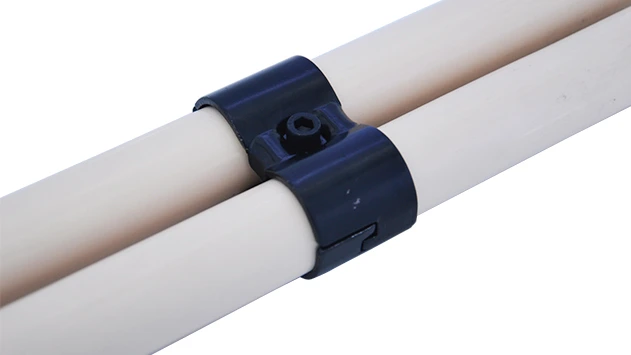
Parallel Lean Pipe Joint
Parallel lean pipe joint used for 2 pcs 28MM lean pipe connection in parallel direction to enhance frame structure, usually for heavy payload requirement for workbench. flow rack, hand trolley.
In today's fast-paced manufacturing world, the ability to adapt is no longer a luxury—it's a necessity. Production lines that once chugged along for years making the same product now need to pivot overnight to meet shifting consumer demands, shorter product lifecycles, and the rise of custom-order manufacturing. At the heart of this adaptability lies a quiet hero: modular systems. And within these systems, few components are as critical as the parallel lean pipe joint. These unassuming connectors are the glue that holds flexible production lines together, enabling everything from quick reconfigurations to long-term durability. In this article, we'll dive deep into what parallel lean pipe joints are, how they work, and most importantly, the core functions that make them indispensable in modern manufacturing.
Understanding Parallel Lean Pipe Joints: The Unsung Heroes of Modular Manufacturing
Before we jump into their functions, let's take a step back and clarify what parallel lean pipe joints actually are. Imagine (oops, scratch that—let's consider ) a typical production line: workbenches, material racks, conveyor systems, and trolleys. These structures are often built using pipes and connectors, but not all connectors are created equal. Parallel lean pipe joints are specialized components designed to connect two or more lean pipes in a parallel configuration, allowing for stable, adjustable, and reconfigurable frameworks. Unlike fixed joints that lock pipes into a permanent angle, parallel joints offer a unique blend of rigidity and flexibility—they hold pipes firmly in place when needed but can be disassembled and reassembled with minimal tools, making them perfect for dynamic environments.
Most parallel lean pipe joints are made from durable materials like aluminum, stainless steel, or coated steel, chosen for their strength, corrosion resistance, and lightweight properties. Aluminum, in particular, has become a popular choice thanks to its balance of durability and portability, often paired with aluminum profiles to create sleek, modern workstations. The design of these joints is surprisingly clever: they typically feature slots, bolts, or clamping mechanisms that grip the pipes securely, ensuring the structure can withstand the daily wear and tear of a busy factory floor—think heavy toolboxes, constant movement of materials, and the occasional bump from a forklift.
But what really sets parallel lean pipe joints apart is their versatility. They're not limited to just connecting pipes; they can integrate with a wide range of accessories, from roller tracks that move materials smoothly along a line to caster wheels that turn a static workbench into a mobile workstation. This compatibility is key to their role in flexible production lines, as it allows manufacturers to build custom solutions without starting from scratch every time.
Core Function 1: Enabling Rapid Reconfiguration for Agile Manufacturing
If there's one function that defines parallel lean pipe joints, it's their ability to enable rapid reconfiguration. In traditional manufacturing setups, changing a production line meant calling in welders, cutting metal, and spending days (or even weeks) on renovations. This rigidity often led to missed deadlines, wasted resources, and frustration when a new product required a different layout. Parallel lean pipe joints eliminate this problem by turning production lines into something closer to a set of building blocks—ones that can be taken apart and rearranged in hours, not days.
Let's take a real-world example: a small electronics manufacturer that produces both smartwatches and fitness trackers. The smartwatch assembly line requires a longer conveyor system and specialized testing stations, while the fitness tracker line is more compact, with more manual assembly steps. With traditional fixed structures, the manufacturer would need two separate lines, doubling their floor space and equipment costs. But with parallel lean pipe joints, they can reconfigure the same base framework. By detaching the roller track from the parallel joints, adjusting the height of the lean pipe workbench, and swapping out a few accessories, the line transforms from smartwatch mode to fitness tracker mode in under a day. This not only saves space but also reduces the need for duplicate equipment, cutting costs significantly.
The secret here is the joint's design: most parallel lean pipe joints use simple clamping mechanisms or hand-tightened bolts, meaning no special tools are required. A single worker with a wrench can loosen the joints, adjust the pipes, and retighten them—no welding, no cutting, no mess. This speed of reconfiguration is a game-changer for industries like automotive, where model changes happen annually, or e-commerce, where seasonal demand spikes require quick shifts in packaging lines.
Case Study: How a Automotive Supplier Cut Changeover Time by 75%
A mid-sized automotive parts supplier in Michigan was struggling with the time it took to switch between producing door handles for sedans and SUVs. Their old line used welded steel frames, and each changeover required a team of 3 workers and 2 full days to disassemble and rebuild the workstations. After switching to a modular system using parallel lean pipe joints, aluminum profiles, and roller tracks, they reduced changeover time to just 4 hours with only 1 worker. The key? The parallel joints allowed them to quickly adjust the height and width of the workbenches, while the roller track could be repositioned to match the new part dimensions. The result? They increased their production capacity by 20% and reduced labor costs associated with changeovers by nearly $50,000 annually.

Core Function 2: Modularity – Building Custom Solutions Without Starting From Scratch
Modularity is a buzzword in manufacturing, but what does it really mean? At its core, modularity is about building systems from standardized components that can be mixed and matched to create custom solutions. Parallel lean pipe joints excel here because they act as the interface between different parts of the production ecosystem. Whether you're building a lean pipe workbench, a material rack, or a mobile trolley, these joints ensure that every component works together seamlessly.
Let's break this down with a common example: the lean pipe workbench. A basic workbench might consist of four vertical pipes for legs, connected by horizontal pipes at the top and bottom, with a tabletop surface. But with parallel lean pipe joints, you can add shelves, tool holders, lighting brackets, or even integrate a roller track along the back edge to feed materials directly onto the workspace. Want to make it mobile? Add caster wheels to the bottom joints. Need to raise the height for taller workers? Swap out the vertical pipes for longer ones using the same joints. The beauty is that you're not limited to a single design—you can start with a simple bench and expand it as your needs grow, using the same parallel joints and pipes.
This modularity also extends to scalability. A small startup might begin with one workbench and a single material rack, but as they grow, they can add more workstations, connect them with roller tracks, and build a full production line—all using the same parallel lean pipe joints. This avoids the need to invest in entirely new systems as the business expands, making modular manufacturing accessible even to companies with limited budgets.
| Component | Role in Modular Systems | How Parallel Lean Pipe Joints Enable Integration |
|---|---|---|
| Lean Pipe Workbench | Core workspace for assembly, testing, or packaging | Joints connect vertical and horizontal pipes to form the bench frame; adjustable height via detachable joints |
| Roller Track | Transports materials between workstations via gravity or manual push | Joints secure roller track brackets to the workbench or rack, allowing angle adjustments for optimal material flow |
| Caster Wheel | Adds mobility to workbenches, trolleys, or racks | Joints attach caster mounts to the base of pipe frames, ensuring stable movement without compromising structure |
| Aluminum Profile | Creates rigid, lightweight frames for shelves or enclosures | Joints with T-slot compatibility connect aluminum profiles to lean pipes, merging strength with flexibility |

Core Function 3: Balancing Durability and Load-Bearing Capacity for Long-Term Reliability
Flexibility and modularity are great, but none of it matters if the system falls apart under pressure. Production lines aren't gentle environments—workbenches hold heavy tools, material racks stack boxes of components, and trolleys are pushed and pulled across factory floors daily. This is where the durability of parallel lean pipe joints truly shines. Despite their modular nature, these joints are engineered to handle significant loads, making them suitable for even the most demanding applications.
Take aluminum parallel joints, for example. Aluminum is often dismissed as "weaker" than steel, but modern aluminum alloys (especially those used in industrial applications) are surprisingly strong. A well-designed aluminum parallel joint can easily support 50-100 kg of weight per connection, depending on the pipe diameter and joint design. Stainless steel joints, on the other hand, are ideal for environments where corrosion resistance is critical—think food processing or pharmaceutical manufacturing—offering similar load capacities with added protection against moisture and chemicals.
Another factor contributing to their durability is the way they distribute weight. Parallel joints are designed to spread the load evenly across the connected pipes, reducing stress on any single point. This not only prevents the joints themselves from failing but also extends the life of the entire structure. For example, a lean pipe workbench built with parallel joints will sag less over time compared to one with flimsy connectors, ensuring it remains level and functional for years.
Of course, like any component, parallel lean pipe joints have their limits. Overloading a joint can lead to slippage or bending, which is why manufacturers often provide load charts to help users choose the right joint for the job. But when used correctly, these joints offer a remarkable balance of flexibility and strength, proving that modular systems don't have to sacrifice reliability for adaptability.
Core Function 4: Seamless Compatibility with Other Components
A production line is only as good as the sum of its parts. Even the best parallel lean pipe joints would be useless if they couldn't work with other essential components like roller tracks, caster wheels, or aluminum profiles. Fortunately, compatibility is baked into the design of these joints, making them the ultimate team players in modular manufacturing.
Let's start with roller tracks. These systems use a series of wheels or balls to move materials along a path, and they're a staple in lean manufacturing for reducing manual handling. To integrate a roller track into a production line, you need a stable frame to mount it on—and that's where parallel lean pipe joints come in. Many joints feature built-in brackets or slots that allow roller track guides (like the plastic roller track guide rail in yellow or grey) to be attached directly to the pipe framework. This means you can build a material rack with a roller track on top, using parallel joints to connect the vertical support pipes and the horizontal tracks, creating a gravity-fed system that moves parts from one workstation to the next with zero effort.
Caster wheels are another area where compatibility shines. Adding mobility to a workbench or trolley is as simple as attaching caster mounts to the base pipes using parallel joints. The joints ensure the casters are aligned properly, preventing wobbling or instability when the trolley is moving. This is especially useful for "follow-me" production lines, where workstations move alongside assembly teams, or for quickly transporting materials from storage to the line.
Aluminum profiles, with their T-slot design, are also easy to integrate with parallel lean pipe joints. Many manufacturers offer adapters that allow aluminum profiles to connect directly to lean pipes via parallel joints, combining the strength of aluminum with the flexibility of lean pipe systems. This hybrid approach is popular in industries like electronics, where clean, lightweight workstations are preferred but durability is still a must.
From Parts to Production Lines: A Holistic Approach
What makes parallel lean pipe joints truly special is their ability to bring all these components together into a cohesive system. A typical setup might look like this: a lean pipe workbench with aluminum profile shelves (connected via parallel joints), a roller track mounted along the back edge (attached with joint brackets), and caster wheels on the bottom (secured with parallel joints for stability). This workstation can be moved to any part of the factory, reconfigured with additional shelves or tracks, and even connected to other workstations via more roller tracks—all without tools beyond a simple wrench. It's this holistic compatibility that turns individual components into a fully functional, flexible production line.
Core Function 5: Cost-Effectiveness – Maximizing ROI in the Long Run
At the end of the day, manufacturing is a business, and every investment needs to deliver value. Parallel lean pipe joints excel here by offering significant cost savings over traditional fixed systems—both upfront and in the long run. Let's break down how:
Lower Initial Costs: Traditional production lines often require custom fabrication, welding, and specialized labor, which can run into the tens of thousands of dollars. Modular systems built with parallel lean pipe joints, on the other hand, use standardized components that are mass-produced, driving down costs. Pipes, joints, and accessories are available off the shelf, eliminating the need for custom manufacturing. Even better, you can start small—buying only the components you need—and add more as your business grows, avoiding large upfront investments.
Reduced Downtime: As we discussed earlier, reconfiguring a line with parallel lean pipe joints takes hours, not days. Less downtime means more time spent producing goods, which directly impacts the bottom line. For a manufacturer producing 1,000 units per day, even a single day of downtime can cost $10,000 or more in lost revenue. Parallel joints slash this risk by making reconfigurations fast and painless.
Minimal Maintenance: Durable materials like aluminum and stainless steel mean parallel lean pipe joints require little maintenance beyond occasional tightening of bolts. Unlike welded structures, which can rust or crack over time and require expensive repairs, these joints can be easily replaced if they wear out—no need to rebuild the entire structure. This reduces long-term maintenance costs and keeps the line running smoothly.
Scrap Value: When a traditional production line is retired, it often ends up in a landfill, with little to no scrap value. Modular systems, however, can be disassembled, and the pipes and parallel joints can be reused or resold. Aluminum, in particular, has a high scrap value, meaning you can recoup some of your initial investment even when upgrading to a new system.
Conclusion: Parallel Lean Pipe Joints – The Foundation of the Flexible Factory
In a world where manufacturing is defined by change, parallel lean pipe joints stand out as a critical enabler of flexibility, modularity, and cost-effectiveness. They're not just connectors—they're the building blocks that allow manufacturers to adapt, grow, and thrive in an unpredictable market. From enabling rapid reconfigurations and seamless integration with roller tracks and caster wheels to balancing durability with affordability, these unassuming components play a vital role in modern production lines.
Whether you're a small startup looking to build your first workstation or a large enterprise retooling for Industry 4.0, parallel lean pipe joints offer a path to a more agile, efficient, and sustainable manufacturing future. They prove that sometimes, the most impactful innovations aren't the flashy robots or high-tech software—but the simple, well-designed components that make everything else possible. So the next time you walk through a factory and see a production line that seems to bend and adapt like a living organism, take a closer look—chances are, parallel lean pipe joints are the reason it can do so.