- Company Articles
- Products and Technology
- Product knowledge
- Corrosion Resistance: Gusset Alp 3030's Anodized Finish for Longevity

Corrosion Resistance: Gusset Alp 3030's Anodized Finish for Longevity
Related Product
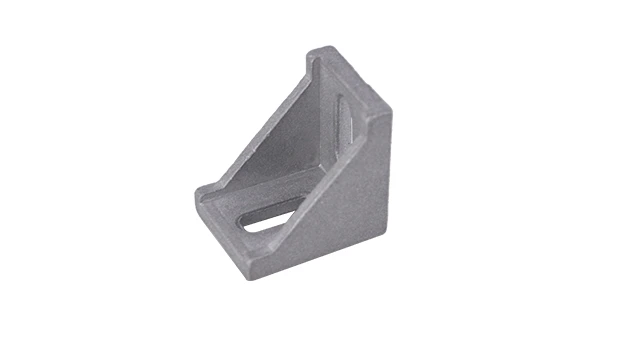
Gusset ALP 3030
The 3030 bracket/Gusset is an external fastening method that creates a 90 degree connection. 3030 means this size is used for 30 series aluminum profile with a quick connection by bolt and nut.
The Hidden Cost of Corrosion in Industrial Workspaces
Walk into any manufacturing plant, warehouse, or assembly line, and you'll notice a common silent enemy: corrosion. It starts small—maybe a tiny rust spot on a metal workbench leg, a sticky roller track that slows down material flow, or a joint that creaks because its surface has degraded. At first, these issues seem minor, easy to brush off as "part of wear and tear." But over time, they add up. A corroded caster wheel might cause a trolley to jam, halting production for 20 minutes. A rusted lean pipe joint could weaken a workstation, forcing a costly replacement. And in high-moisture environments, like food processing or electronics manufacturing, corrosion doesn't just damage equipment—it risks product quality and worker safety.
For years, businesses have tried band-aid solutions: repainting metal surfaces every few months, switching to cheaper plastic parts that warp under heavy loads, or accepting that equipment has a short lifespan and budgeting for frequent replacements. But what if there was a way to stop corrosion at its source? That's where the Gusset Alp 3030 comes in—a but powerful component that's changing how industries think about durability.
For years, businesses have tried band-aid solutions: repainting metal surfaces every few months, switching to cheaper plastic parts that warp under heavy loads, or accepting that equipment has a short lifespan and budgeting for frequent replacements. But what if there was a way to stop corrosion at its source? That's where the Gusset Alp 3030 comes in—a but powerful component that's changing how industries think about durability.
Meet Gusset Alp 3030: More Than Just an Aluminum Profile
If you're not familiar with industrial hardware, the term "gusset alp 3030" might sound like just another part number. But in reality, it's a workhorse of modern lean systems. Part of the aluminum extrusion profile family, the Gusset Alp 3030 is a specialized bracket designed to reinforce connections between aluminum pipes, profiles, and frames. Think of it as the "backbone" of structures like workbenches, flow racks, and turnover trolleys—components that keep materials moving and workers productive.
What makes the Gusset Alp 3030 stand out isn't just its shape or strength (though it's remarkably sturdy for its lightweight design). It's the finish: a hard, protective anodized layer that turns ordinary aluminum into a corrosion-resistant powerhouse. Unlike painted or plated metals, anodization isn't a surface coating that chips or peels off. It's a chemical transformation of the aluminum itself, creating a barrier that laughs off moisture, chemicals, and daily abrasion.
What makes the Gusset Alp 3030 stand out isn't just its shape or strength (though it's remarkably sturdy for its lightweight design). It's the finish: a hard, protective anodized layer that turns ordinary aluminum into a corrosion-resistant powerhouse. Unlike painted or plated metals, anodization isn't a surface coating that chips or peels off. It's a chemical transformation of the aluminum itself, creating a barrier that laughs off moisture, chemicals, and daily abrasion.

The Science Behind Anodized Finish: Why It's a Game-Changer for Longevity
Let's break down anodization in simple terms. Aluminum naturally forms a thin oxide layer when exposed to air—this is why aluminum doesn't rust like steel. But that natural layer is only a few nanometers thick, barely enough to protect against harsh environments. Anodization takes this process a step further. By submerging the aluminum in an electrolyte solution (usually sulfuric acid) and passing an electric current through it, the oxide layer grows—up to 100 times thicker than the natural version. This new layer is porous, which might sound like a weakness, but here's the trick: after anodizing, the part is sealed (often with hot water or a special chemical sealant), plugging those pores and creating a hard, non-porous surface.
The result? A finish that's integrated into the aluminum, not just stuck on top. Scratch it with a metal tool, and you won't expose bare metal—you'll just reveal more of the anodized layer. Spill a chemical solvent on it, and it won't eat through to the core. Even in humid climates or areas with frequent temperature swings, the anodized Gusset Alp 3030 holds its ground. Tests show that properly anodized aluminum can withstand 1,000+ hours of salt spray testing (a standard measure of corrosion resistance) without showing signs of degradation. For context, most painted steel fails after 200-300 hours.
The result? A finish that's integrated into the aluminum, not just stuck on top. Scratch it with a metal tool, and you won't expose bare metal—you'll just reveal more of the anodized layer. Spill a chemical solvent on it, and it won't eat through to the core. Even in humid climates or areas with frequent temperature swings, the anodized Gusset Alp 3030 holds its ground. Tests show that properly anodized aluminum can withstand 1,000+ hours of salt spray testing (a standard measure of corrosion resistance) without showing signs of degradation. For context, most painted steel fails after 200-300 hours.

Comparing Finishes: Why Anodized Aluminum Stands Out
To really appreciate the Gusset Alp 3030's anodized finish, let's compare it to other common materials and coatings used in industrial settings. Below is a side-by-side look at how it stacks up against painted steel, untreated aluminum, and stainless steel—three alternatives businesses often consider.
| Feature | Anodized Aluminum (Gusset Alp 3030) | Painted Steel | Untreated Aluminum | Stainless Steel |
|---|---|---|---|---|
| Corrosion Resistance | Excellent (resists salt, moisture, chemicals) | Poor (paint chips; steel rusts underneath) | Fair (natural oxide layer erodes in harsh environments) | Good (but prone to pitting in chloride-rich areas) |
| Durability | High (finish integrated into metal; scratch-resistant) | Low (paint peels after 6-12 months of use) | Medium (prone to scratches and dents) | High (but heavy and expensive) |
| Maintenance Needs | Minimal (wipe clean with water; no repainting) | High (repaint every 6-12 months; sand rust spots) | Medium (polish to restore shine; prone to staining) | Medium (requires regular cleaning to avoid fingerprint marks) |
| Weight | Lightweight (ideal for mobile structures like trolleys) | Heavy (adds strain to casters and joints) | Lightweight (but less strong than anodized) | Very heavy (limits design flexibility) |
| Cost Over Time | Low (long lifespan offsets initial price) | High (frequent replacements and repainting) | Medium (needs replacement sooner than anodized) | Very high (expensive upfront and hard to modify) |
The table tells a clear story: anodized aluminum, as seen in the Gusset Alp 3030, offers the best balance of corrosion resistance, durability, and cost-effectiveness. Painted steel might be cheaper upfront, but it's a ticking clock until rust takes over. Stainless steel is tough but overkill for most applications, weighing down structures and blowing budgets. Untreated aluminum, while lightweight, can't stand up to the daily grind of industrial use. The Gusset Alp 3030? It's the sweet spot—built to last, easy to maintain, and designed to keep up with the demands of modern lean systems.
Real-World Impact: How Gusset Alp 3030 Transforms Lean Systems
Let's move beyond theory and talk about how the Gusset Alp 3030 performs in actual factories. Take the example of a mid-sized electronics manufacturer in Vietnam. Two years ago, their assembly line relied on steel workbenches and plastic roller tracks. The humid climate (average 85% humidity year-round) was brutal on the steel—workbench legs rusted within months, and the plastic tracks warped, causing circuit boards to get stuck during transport. They were replacing workbenches every 18 months, at a cost of $5,000 per line.
Then they switched to aluminum extrusion profile structures, using Gusset Alp 3030 brackets to reinforce joints. Today, two years later, the workbenches look almost new. The anodized finish hasn't faded or corroded, even in the damp environment. The roller tracks, now made with aluminum guide rails and steel roller balls, glide smoothly without warping. The maintenance team estimates they've saved over $12,000 in replacement costs alone—and that doesn't include the time saved from fewer production stoppages.
Another example: a food packaging plant in Germany that needed ESD-safe workstations (to protect sensitive electronics in packaging machinery). They'd tried stainless steel workbenches, but the cost was prohibitive, and the heavy weight made it hard to reconfigure lines for new products. Switching to aluminum workbenches with Gusset Alp 3030 brackets solved both issues. The anodized finish resists the daily cleaning with sanitizing solutions, and the lightweight design lets workers rearrange the line in hours instead of days. "We used to dread line changes," said the plant manager. "Now, we can adapt to new orders without breaking a sweat—and the workstations still look brand-new after three years."
Then they switched to aluminum extrusion profile structures, using Gusset Alp 3030 brackets to reinforce joints. Today, two years later, the workbenches look almost new. The anodized finish hasn't faded or corroded, even in the damp environment. The roller tracks, now made with aluminum guide rails and steel roller balls, glide smoothly without warping. The maintenance team estimates they've saved over $12,000 in replacement costs alone—and that doesn't include the time saved from fewer production stoppages.
Another example: a food packaging plant in Germany that needed ESD-safe workstations (to protect sensitive electronics in packaging machinery). They'd tried stainless steel workbenches, but the cost was prohibitive, and the heavy weight made it hard to reconfigure lines for new products. Switching to aluminum workbenches with Gusset Alp 3030 brackets solved both issues. The anodized finish resists the daily cleaning with sanitizing solutions, and the lightweight design lets workers rearrange the line in hours instead of days. "We used to dread line changes," said the plant manager. "Now, we can adapt to new orders without breaking a sweat—and the workstations still look brand-new after three years."
Beyond Corrosion Resistance: Additional Benefits of Gusset Alp 3030
While corrosion resistance is the star feature, the Gusset Alp 3030 has other tricks up its sleeve that make it a favorite among lean system designers. For starters, it's incredibly versatile. As part of the aluminum profile accessories family, it works seamlessly with other components—aluminum pipes, roller tracks, casters, and even specialized parts like swivel roller balls. This means you can build almost anything with it: a custom workbench with integrated tool racks, a flow rack that adjusts to different box sizes, or a turnover trolley that navigates tight warehouse aisles.
Then there's the strength-to-weight ratio. Aluminum is already lighter than steel, but the Gusset Alp 3030's design—with its angled gusset plate—adds rigidity without extra bulk. This is a game-changer for mobile structures. A trolley built with aluminum profiles and Gusset Alp 3030 brackets can carry 200kg of materials but is light enough for one person to push, reducing worker fatigue. In contrast, a steel trolley with the same load capacity would require two people to move, slowing down workflows.
And let's not forget aesthetics. Anodized aluminum has a clean, modern look—no chipped paint or rust stains to mar the appearance of your workspace. This might seem like a minor point, but in industries where clients tour facilities (like automotive or aerospace manufacturing), a tidy, well-maintained line sends a message about quality. Plus, workers report feeling more motivated in environments that look cared for—another hidden benefit of choosing durable, good-looking components.
Then there's the strength-to-weight ratio. Aluminum is already lighter than steel, but the Gusset Alp 3030's design—with its angled gusset plate—adds rigidity without extra bulk. This is a game-changer for mobile structures. A trolley built with aluminum profiles and Gusset Alp 3030 brackets can carry 200kg of materials but is light enough for one person to push, reducing worker fatigue. In contrast, a steel trolley with the same load capacity would require two people to move, slowing down workflows.
And let's not forget aesthetics. Anodized aluminum has a clean, modern look—no chipped paint or rust stains to mar the appearance of your workspace. This might seem like a minor point, but in industries where clients tour facilities (like automotive or aerospace manufacturing), a tidy, well-maintained line sends a message about quality. Plus, workers report feeling more motivated in environments that look cared for—another hidden benefit of choosing durable, good-looking components.
Practical Applications: From Workbenches to Assembly Lines
The Gusset Alp 3030 isn't just for big factories—it's useful anywhere you need strong, corrosion-resistant structures. Let's break down some common applications:
Workbenches Whether it's a single-deck workbench without casters for stationary assembly or a mobile workstation with ESD protection, the Gusset Alp 3030 ensures the frame stays stable and rust-free. In labs or cleanrooms, where surfaces must be sanitized daily, the anodized finish resists harsh cleaners, so the workbench remains safe for sensitive tasks.
Flow Racks and Roller Tracks Material flow is the heart of lean manufacturing, and roller tracks are the veins. The Gusset Alp 3030 reinforces the connections between roller track guide rails (like the plastic yellow or grey ones) and aluminum profiles, preventing sagging or misalignment. Even under constant use—boxes sliding, rollers spinning—the anodized brackets hold tight, ensuring materials move smoothly from station to station.
Turnover Trolleys and Material Racks Trolleys and racks take a beating: loaded with heavy parts, pushed over uneven floors, left outside during loading/unloading. The Gusset Alp 3030's corrosion resistance means these structures survive rain, snow, or warehouse condensation without degrading. A material rack B (3 row and 3 floor) built with these brackets can hold hundreds of kilograms of inventory for years, no rusted shelves or wobbly frames.
Conveyor Systems Conveyors are the lifeline of production, and any downtime is costly. The Gusset Alp 3030 is used to mount roller tracks, guide rails, and supports, ensuring the conveyor stays aligned even when handling heavy loads. In food processing, where conveyors are washed down with high-pressure hoses, the anodized finish prevents water damage, extending the system's lifespan.
Workbenches Whether it's a single-deck workbench without casters for stationary assembly or a mobile workstation with ESD protection, the Gusset Alp 3030 ensures the frame stays stable and rust-free. In labs or cleanrooms, where surfaces must be sanitized daily, the anodized finish resists harsh cleaners, so the workbench remains safe for sensitive tasks.
Flow Racks and Roller Tracks Material flow is the heart of lean manufacturing, and roller tracks are the veins. The Gusset Alp 3030 reinforces the connections between roller track guide rails (like the plastic yellow or grey ones) and aluminum profiles, preventing sagging or misalignment. Even under constant use—boxes sliding, rollers spinning—the anodized brackets hold tight, ensuring materials move smoothly from station to station.
Turnover Trolleys and Material Racks Trolleys and racks take a beating: loaded with heavy parts, pushed over uneven floors, left outside during loading/unloading. The Gusset Alp 3030's corrosion resistance means these structures survive rain, snow, or warehouse condensation without degrading. A material rack B (3 row and 3 floor) built with these brackets can hold hundreds of kilograms of inventory for years, no rusted shelves or wobbly frames.
Conveyor Systems Conveyors are the lifeline of production, and any downtime is costly. The Gusset Alp 3030 is used to mount roller tracks, guide rails, and supports, ensuring the conveyor stays aligned even when handling heavy loads. In food processing, where conveyors are washed down with high-pressure hoses, the anodized finish prevents water damage, extending the system's lifespan.
Technical Deep Dive: What Makes Gusset Alp 3030's Anodized Finish Unique
For the detail-oriented reader, let's get into the specs that make this finish so durable. The anodization process for Gusset Alp 3030 typically results in an oxide layer thickness of 10-15 microns (for reference, a human hair is about 70 microns thick). This layer has a hardness of 300-400 HV (Vickers hardness), which is harder than most paints and even some types of steel. What does that mean in practice? A dropped tool is unlikely to scratch it, and daily wear from rubbing against other parts won't wear it down.
The finish is also non-conductive (unless specially treated for ESD applications), making it safe for use in electronics manufacturing where static electricity can damage components. And unlike plated finishes, anodization doesn't contain heavy metals like chromium, so it's more environmentally friendly—a plus for companies aiming to reduce their carbon footprint.
Perhaps most impressive is the consistency of the finish. Thanks to advanced anodizing techniques, every Gusset Alp 3030 bracket comes out with the same uniform layer, ensuring predictable performance across an entire batch. This is critical for industries where quality control is strict—you don't want one bracket corroding faster than another because of uneven coating.
The finish is also non-conductive (unless specially treated for ESD applications), making it safe for use in electronics manufacturing where static electricity can damage components. And unlike plated finishes, anodization doesn't contain heavy metals like chromium, so it's more environmentally friendly—a plus for companies aiming to reduce their carbon footprint.
Perhaps most impressive is the consistency of the finish. Thanks to advanced anodizing techniques, every Gusset Alp 3030 bracket comes out with the same uniform layer, ensuring predictable performance across an entire batch. This is critical for industries where quality control is strict—you don't want one bracket corroding faster than another because of uneven coating.
Conclusion: Investing in Longevity with Gusset Alp 3030
Corrosion might be a silent enemy, but it's not an unbeatable one. The Gusset Alp 3030—with its anodized finish—proves that durability doesn't have to come at the cost of flexibility, weight, or cost. By choosing components that resist corrosion from the start, businesses can reduce maintenance headaches, cut replacement costs, and keep production lines running smoothly for years.
Whether you're building a new lean system from scratch or upgrading old equipment, the Gusset Alp 3030 is more than just a bracket. It's an investment in your facility's future—one that pays off in saved time, reduced stress, and a workspace that's built to last. So the next time you spot a rusty joint or a warped track, remember: there's a better way. Choose anodized aluminum. Choose Gusset Alp 3030.
Whether you're building a new lean system from scratch or upgrading old equipment, the Gusset Alp 3030 is more than just a bracket. It's an investment in your facility's future—one that pays off in saved time, reduced stress, and a workspace that's built to last. So the next time you spot a rusty joint or a warped track, remember: there's a better way. Choose anodized aluminum. Choose Gusset Alp 3030.