- Company Articles
- Products and Technology
- Product knowledge
- Corrosion Resistance: Key Feature of End Support for Roller Track Placon Mount with Wheel

Corrosion Resistance: Key Feature of End Support for Roller Track Placon Mount with Wheel
Related Product
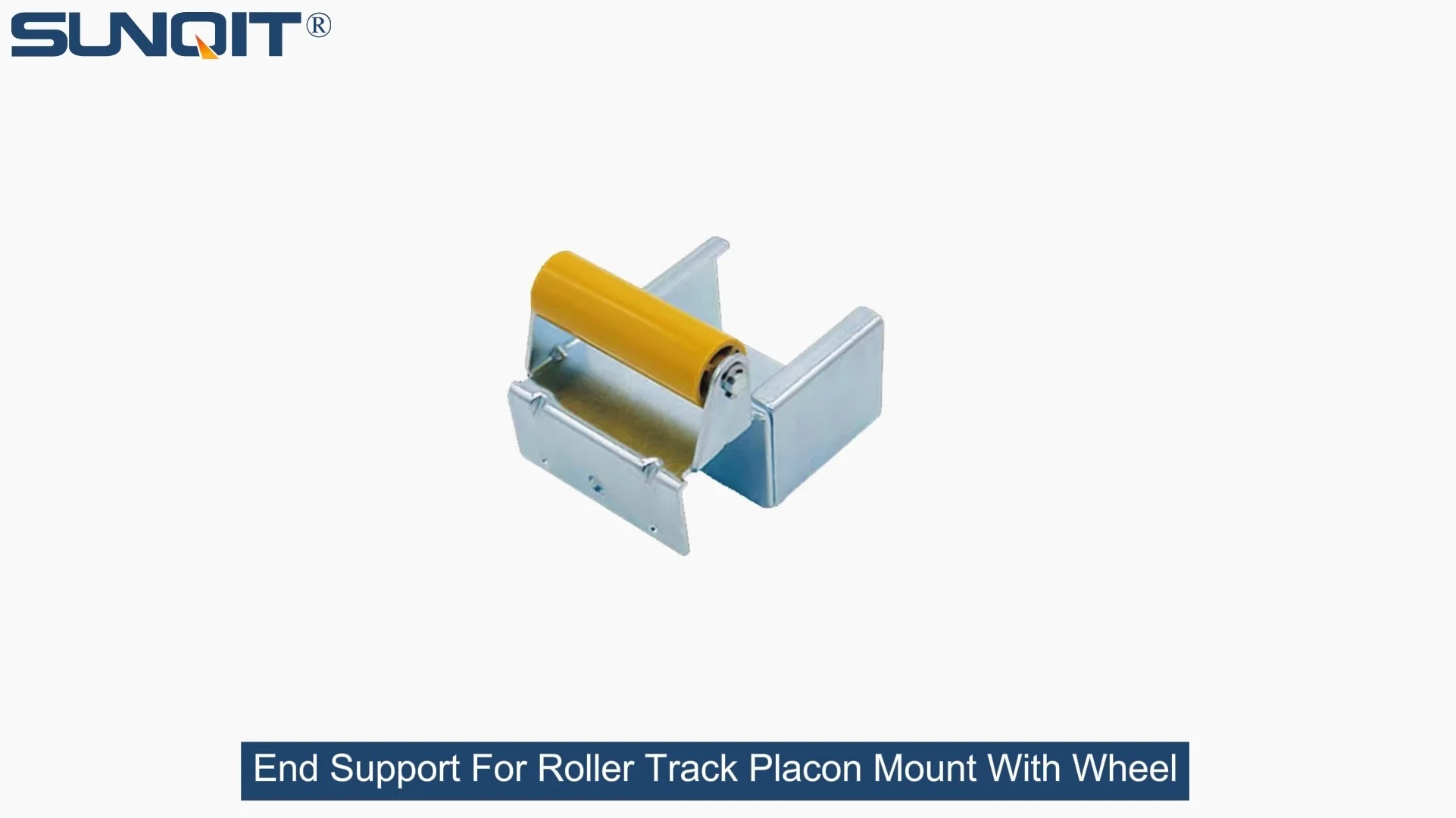
End Support for Roller Track Placon Mount with Wheel
End support for roller track placon mount with wheel,the special design with end wheel,make it with more flexible function for roller track and pipe connection and give more option for selection for building flow rack system.
How a small component's rust-resistant design keeps manufacturing lines running smoothly across industries
The Hidden Cost of Corrosion in Manufacturing
In the bustling environment of a 3C assembly plant, where circuit boards glide along conveyor belts and workers in handle delicate components, few things disrupt productivity like unexpected equipment failure. Last year, a leading smartphone manufacturer in Guangdong faced a costly halt: their main roller track system, which transported semi-finished devices between workstations, suddenly jammed. The root cause? A corroded end support bracket that had snapped under the weight of daily operation. "We lost four hours of production time that day," recalls the plant manager. "The bracket had only been installed six months prior, but constant exposure to cleaning agents and high humidity in the (workshop) had taken its toll."
This scenario is far from unique. In automotive parts factories, where oil and coolant residues coat surfaces; in medical device cleanrooms, where frequent sanitization creates moist conditions; in warehouse logistics centers, where temperature fluctuations cause condensation—corrosion quietly eats away at equipment integrity. According to industry reports, manufacturing facilities lose an average of 5% of annual productivity to corrosion-related breakdowns, with replacement parts and downtime costing billions globally each year. It's in these moments that components like the end support for roller track placon mount with wheel reveal their true value—not just as mechanical parts, but as guardians of operational continuity.
Why Corrosion Resistance Matters for Roller Track End Supports
Roller tracks are the circulatory system of modern manufacturing. They carry materials, parts, and products through every stage of production, from raw material intake to final packaging. The end support brackets, though small, bear critical responsibility: they stabilize the track ends, maintain alignment, and absorb the impact of items sliding onto or off the track. When these supports corrode, the consequences ripple outward:
- Alignment Issues: Rust weakens structural integrity, causing tracks to shift. Misaligned rollers lead to jams, damaging products (especially fragile electronics like 3C components).
- Safety Risks: A corroded bracket can collapse under load, endangering workers nearby—particularly in heavy industries like automotive manufacturing.
- Unplanned Downtime: Even minor corrosion requires inspections and replacements, pulling maintenance teams away from preventive tasks and halting production lines.
- Increased Costs: Frequent part replacements and lost productivity add up. One electronics manufacturer calculated that switching to corrosion-resistant supports reduced their annual bracket replacement costs by 62%.
For industries with strict standards, the stakes are even higher. In medical device production, corrosion can create crevices where bacteria thrive, violating sterility requirements. In aerospace component manufacturing, microscopic rust particles can compromise precision tolerances. Here, corrosion resistance isn't just about durability—it's about compliance, safety, and brand reputation.

Aluminum: The Material Behind Superior Corrosion Resistance
At the heart of effective corrosion resistance lies material science. Traditional steel supports, while strong, are prone to rust when exposed to moisture and chemicals. The solution? Aluminum —a material whose natural properties make it ideal for manufacturing environments. Unlike steel, aluminum forms a thin, protective oxide layer when exposed to air, acting as a barrier against further corrosion. This self-healing characteristic means even minor scratches repair themselves over time, maintaining long-term integrity.
The end support for roller track placon mount with wheel takes this advantage further through advanced manufacturing techniques. Each bracket undergoes anodization—a process that thickens the oxide layer, enhancing resistance to acids, alkalis, and salt spray. Tests show that anodized aluminum supports withstand 500+ hours of neutral salt spray testing (per ASTM B117 standards) with minimal degradation, compared to 200 hours for standard steel brackets.
| Material | Salt Spray Resistance (hours) | Typical Lifespan in Humid Workshop | Maintenance Frequency | Cost Over 5 Years (Part + Labor) |
|---|---|---|---|---|
| Standard Steel | 150-200 | 6-12 months | Quarterly inspections, annual replacement | $1,200 (4 replacements + labor) |
| Anodized Aluminum | 500+ | 3-5 years | Bi-annual inspections, no replacement needed | $350 (1 initial part + minimal labor) |
But material alone isn't enough. The design of the end support incorporates drainage channels to prevent water pooling, and smooth, crevice-free surfaces that resist chemical buildup. These details matter in practical use: in a coastal electronics factory in Xiamen, where salt-laden air accelerates corrosion, aluminum supports have remained functional for over four years, while previous steel versions needed replacement every eight months.

Real-World Impact: Industries Benefiting from Corrosion-Resistant Supports
Across manufacturing sectors, the shift to corrosion-resistant roller track components is transforming operations. Let's explore how specific industries are reaping the rewards:
3C Electronics Manufacturing
In 3C assembly lines (computers, communications, consumer electronics), precision is everything. Workers use alcohol-based cleaners to remove fingerprints from screens and circuit boards, creating a high-moisture, chemical-rich environment. A Shenzhen-based tablet manufacturer recently upgraded to aluminum end supports and saw immediate results: "Our old steel brackets would start showing rust spots within three months," says their production engineer. "Now, after a year, the aluminum supports look brand new. We've eliminated the weekly task of sanding and repainting brackets, freeing up our maintenance team to focus on more critical equipment checks."
Medical Device Production
Medical device manufacturing demands strict adherence to (sanitation standards). Cleanrooms require daily wiping with disinfectants, exposing equipment to harsh chemicals. A leading surgical instrument maker in Jiangsu adopted corrosion-resistant supports to meet FDA requirements: "Previously, we had to quarantine entire roller track sections if rust was spotted, fearing contamination risk," explains their quality control manager. "With aluminum supports, we've passed three consecutive audits without a single corrosion-related non-conformance. It's not just about durability—it's about patient safety."
Automotive Parts Logistics
Automotive warehouses handle heavy loads, from engine blocks to door panels, often in outdoor or semi-enclosed spaces where rain and humidity penetrate. A Shanghai auto parts distributor installed corrosion-resistant end supports on their inclined roller tracks, which transport parts to picking stations. "We used to have brackets failing under the weight of transmission components during the rainy season," notes their logistics director. "The aluminum supports have handled 50kg loads daily for two years now, with zero signs of weakness. Our on-time delivery rate improved by 8% because we no longer have to stop operations for emergency repairs."

Beyond Resistance: How Corrosion-Resistant Supports Align with Lean Manufacturing
In the world of lean manufacturing , every component must contribute to eliminating waste—whether of time, materials, or resources. Corrosion-resistant end supports embody this philosophy in three key ways:
1. Reduced Downtime = Less Waste: Lean principles prioritize continuous flow; corrosion-related breakdowns disrupt this flow, creating muda (waste). By minimizing failures, aluminum supports keep production moving, aligning with the "just-in-time" ethos.
2. Longer Lifespan = Sustainable Resource Use: The lean solution mindset emphasizes sustainability. Aluminum supports' extended lifespan reduces the need for frequent replacements, lowering material consumption and waste generation. A Guangzhou appliance manufacturer estimates their carbon footprint from bracket production has dropped by 40% since switching to longer-lasting components.
3. Predictable Maintenance = Better Planning: Corrosion introduces variability—you never know when a bracket might fail. With reliable, rust-resistant components, maintenance becomes scheduled rather than reactive, allowing for smoother production planning and resource allocation.
"Lean isn't just about efficiency; it's about building systems that adapt and endure," says a lean consultant who specializes in manufacturing optimization. "Corrosion-resistant supports are a perfect example of 'small wins' that compound into significant operational improvements. When you remove the uncertainty of component failure, you create space for continuous improvement in other areas."
Choosing the Right Support: Key Considerations for Manufacturers
When selecting end supports for roller track systems, corrosion resistance should top the checklist, but it's not the only factor. Here's what to evaluate:
- Load Capacity: Ensure the support can handle your industry's typical weights—aluminum supports are strong, but thickness and design vary by application.
- Environmental Compatibility: Consider your specific corrosive agents (chemicals, salt, moisture) and verify material certifications (e.g., ISO 9227 for corrosion testing).
- Installation Flexibility: Look for supports compatible with existing roller track systems to avoid costly retrofits. Many aluminum supports are designed as drop-in replacements for steel versions.
- Supplier Expertise: Partner with suppliers who understand manufacturing workflows. A good supplier will analyze your (workshop environment) and recommend the right surface treatment (anodization, powder coating) for your needs.
Remember: the cheapest bracket upfront may cost exponentially more in the long run. As one plant manager put it: "We used to buy steel supports for $20 each, replacing them every six months. Now we pay $45 for aluminum ones that last five years. The math speaks for itself."
Conclusion: Investing in Corrosion Resistance = Investing in Operational Excellence
In the grand scheme of manufacturing, the end support for roller track placon mount with wheel may seem like a minor detail. But as countless plant managers and engineers have discovered, it's the details that define operational success. Corrosion resistance isn't just a feature—it's a commitment to reliability, sustainability, and the people who depend on smooth-running production lines.
Whether you're assembling smartphones in a humidity-controlled cleanroom, transporting surgical tools through a sanitized medical facility, or moving auto parts in a rain-prone warehouse, the right corrosion-resistant components turn potential disruptions into non-events. They let workers focus on creating quality products, not fixing preventable failures. They let managers sleep soundly, knowing their lines will run tomorrow as smoothly as they did today. And in an industry where every second counts, that peace of mind is invaluable.
So the next time you walk through a manufacturing plant, take a moment to notice the roller tracks humming along. Behind that seamless motion lies a network of small, sturdy components—each one working quietly to keep the wheels of industry turning. And among them, the corrosion-resistant end support stands out as a unsung hero, proving that even the smallest parts can make the biggest difference.