- Company Articles
- Products and Technology
- Product knowledge
- Corrosion Resistance of 3060 National Standard Profile A in Humid Environments

Corrosion Resistance of 3060 National Standard Profile A in Humid Environments
Related Product
3060 National Standard Profile A
Workbench, production line, logistic rack, warehouse rack Industry: Manufacturer workshop, Automobile, Electronic, Assembling, logistic
Introduction: The Hidden Challenge of Humid Industrial Environments
Walk into any manufacturing plant, warehouse, or food processing facility, and you'll likely notice a silent adversary working behind the scenes: humidity. It's not just the sticky air that makes workers uncomfortable—humidity is a relentless force that can eat away at equipment, weaken structures, and even grind production to a halt. Pipes rust, metal racks develop unsightly corrosion, and once-sturdy workbenches start to degrade. For operations managers, this isn't just a maintenance headache; it's a costly problem that chips away at efficiency, safety, and bottom lines.
But what if there was a material that could stand up to this (moist) onslaught? Enter 3060 National Standard Profile A —a type of aluminum extrusion profile that's quietly becoming the go-to choice for industries battling humid conditions. In this article, we'll dive into why this specific aluminum profile is gaining traction, how it resists corrosion in damp environments, and why it might just be the solution your operation has been missing. Whether you're setting up a new production line, upgrading material racks, or simply tired of replacing rusted equipment, understanding the corrosion resistance of 3060 National Standard Profile A could save you time, money, and a lot of frustration.
But what if there was a material that could stand up to this (moist) onslaught? Enter 3060 National Standard Profile A —a type of aluminum extrusion profile that's quietly becoming the go-to choice for industries battling humid conditions. In this article, we'll dive into why this specific aluminum profile is gaining traction, how it resists corrosion in damp environments, and why it might just be the solution your operation has been missing. Whether you're setting up a new production line, upgrading material racks, or simply tired of replacing rusted equipment, understanding the corrosion resistance of 3060 National Standard Profile A could save you time, money, and a lot of frustration.
What Exactly Is 3060 National Standard Profile A?
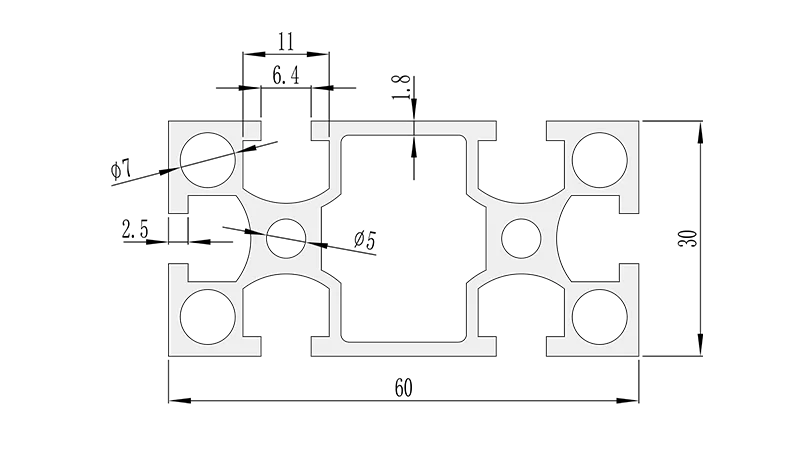
Let's start with the basics. If you're not familiar with aluminum profiles, think of them as the building blocks of industrial structures—think workbenches, material racks, conveyor frames, and even machine guards. These profiles are created through a process called extrusion, where aluminum alloy is pushed through a die to form specific cross-sectional shapes. The "3060" in the name refers to its dimensions: typically 30mm in width and 60mm in height, though exact specs can vary slightly depending on the manufacturer. The "National Standard" label means it meets strict quality and dimensional guidelines set by industry regulators, ensuring consistency and reliability across suppliers.
But 3060 National Standard Profile A isn't just any aluminum extrusion profile. It's part of a broader family of aluminum extrusion profiles designed for durability and versatility. What sets it apart? For one, its alloy composition. Most 3060 profiles are made from 6063 aluminum alloy, a material prized for its excellent corrosion resistance, lightweight nature, and ease of fabrication. Unlike steel, which relies on coatings to fend off rust, aluminum has a built-in defense mechanism: when exposed to air, it forms a thin, invisible layer of aluminum oxide on its surface. This layer acts like a shield, preventing further oxidation and corrosion. In humid environments, where moisture accelerates these chemical reactions, this natural protection becomes even more critical.
Another key feature is its design. The 3060 profile's cross-section often includes T-slots—longitudinal grooves that allow for easy attachment of aluminum profile accessories like brackets, connectors, and end caps. These accessories are typically made from compatible aluminum alloys or stainless steel, ensuring that when you build a structure with 3060 profiles, every component works together to resist corrosion. No more worrying about mismatched metals causing galvanic corrosion (that's when two different metals react electrically in the presence of moisture, speeding up rust). It's a system built to last, even when the air feels thick enough to cut.
But 3060 National Standard Profile A isn't just any aluminum extrusion profile. It's part of a broader family of aluminum extrusion profiles designed for durability and versatility. What sets it apart? For one, its alloy composition. Most 3060 profiles are made from 6063 aluminum alloy, a material prized for its excellent corrosion resistance, lightweight nature, and ease of fabrication. Unlike steel, which relies on coatings to fend off rust, aluminum has a built-in defense mechanism: when exposed to air, it forms a thin, invisible layer of aluminum oxide on its surface. This layer acts like a shield, preventing further oxidation and corrosion. In humid environments, where moisture accelerates these chemical reactions, this natural protection becomes even more critical.
Another key feature is its design. The 3060 profile's cross-section often includes T-slots—longitudinal grooves that allow for easy attachment of aluminum profile accessories like brackets, connectors, and end caps. These accessories are typically made from compatible aluminum alloys or stainless steel, ensuring that when you build a structure with 3060 profiles, every component works together to resist corrosion. No more worrying about mismatched metals causing galvanic corrosion (that's when two different metals react electrically in the presence of moisture, speeding up rust). It's a system built to last, even when the air feels thick enough to cut.
Why Humidity Is So Hard on Industrial Materials
To appreciate why 3060 National Standard Profile A is such a game-changer, let's first understand why humidity is so destructive. Humidity isn't just water vapor in the air—it's a catalyst for corrosion. When metal surfaces are exposed to high humidity, tiny water droplets form on their surface. These droplets act as electrolytes, creating a perfect environment for electrochemical reactions. Oxygen in the air dissolves into the water, and together, they react with the metal to form oxides (rust, in the case of iron and steel).
In industrial settings, humidity often teams up with other culprits. Food processing plants, for example, might have high humidity combined with acidic residues from cleaning agents or food spills. Warehouses near coastal areas deal with salt-laden air, which makes corrosion even worse. Even in "dry" industries like electronics manufacturing, air conditioning systems can create condensation, leading to moisture buildup on equipment.
Traditional materials struggle here. Steel, while strong, is prone to rust unless coated with paint or galvanized zinc—and those coatings can chip or wear off over time. Stainless steel is better, but it's heavier and more expensive, making it impractical for large-scale structures like material racks or conveyor frames. Plastic might seem like an option, but it lacks the strength needed for heavy-duty applications. So, what's left? Aluminum, and specifically profiles like 3060 National Standard Profile A, which bridge the gap between strength, cost, and corrosion resistance.
In industrial settings, humidity often teams up with other culprits. Food processing plants, for example, might have high humidity combined with acidic residues from cleaning agents or food spills. Warehouses near coastal areas deal with salt-laden air, which makes corrosion even worse. Even in "dry" industries like electronics manufacturing, air conditioning systems can create condensation, leading to moisture buildup on equipment.
Traditional materials struggle here. Steel, while strong, is prone to rust unless coated with paint or galvanized zinc—and those coatings can chip or wear off over time. Stainless steel is better, but it's heavier and more expensive, making it impractical for large-scale structures like material racks or conveyor frames. Plastic might seem like an option, but it lacks the strength needed for heavy-duty applications. So, what's left? Aluminum, and specifically profiles like 3060 National Standard Profile A, which bridge the gap between strength, cost, and corrosion resistance.
How 3060 National Standard Profile A Fights Corrosion
Let's get technical—without the jargon. The secret to 3060 National Standard Profile A's corrosion resistance lies in three key factors: its alloy makeup, the extrusion process, and its natural oxide layer.
1. The Alloy Advantage: As mentioned earlier, most 3060 profiles use 6063 aluminum alloy. This alloy is rich in magnesium and silicon, which not only make it strong but also enhance its ability to form that protective oxide layer. When exposed to moisture, the aluminum atoms at the surface react with oxygen to create Al₂O₃—aluminum oxide. Unlike rust, which flakes off and exposes fresh metal, this oxide layer is tightly bonded to the surface, acting as a permanent barrier. Even if the layer is scratched, it quickly reforms, self-healing to prevent further damage.
2. Extrusion: A Smooth, Uniform Structure: The extrusion process itself contributes to corrosion resistance. When aluminum is extruded, it's forced through a die under high pressure, creating a uniform, dense structure with few pores or weak points. This means there are fewer tiny crevices where moisture can hide and start corrosion. Compare that to welded steel structures, where welds often become corrosion hotspots because of uneven heating and cooling during fabrication. With 3060 profiles, the surface is smooth and consistent, leaving little room for humidity to take hold.
3. Complementary Accessories: Remember those aluminum profile accessories we talked about? They're not just for convenience—they're part of the corrosion resistance strategy. Brackets, connectors, and end caps for 3060 profiles are usually made from the same or compatible alloys. This avoids galvanic corrosion, a common issue when dissimilar metals (like steel and aluminum) are in contact in moist environments. For example, using an aluminum connector with a 3060 aluminum profile ensures there's no electrical current between metals, eliminating the risk of accelerated corrosion. Even the T-slot design helps: by allowing for secure, tight connections, there's less space for water to seep in and cause problems.
1. The Alloy Advantage: As mentioned earlier, most 3060 profiles use 6063 aluminum alloy. This alloy is rich in magnesium and silicon, which not only make it strong but also enhance its ability to form that protective oxide layer. When exposed to moisture, the aluminum atoms at the surface react with oxygen to create Al₂O₃—aluminum oxide. Unlike rust, which flakes off and exposes fresh metal, this oxide layer is tightly bonded to the surface, acting as a permanent barrier. Even if the layer is scratched, it quickly reforms, self-healing to prevent further damage.
2. Extrusion: A Smooth, Uniform Structure: The extrusion process itself contributes to corrosion resistance. When aluminum is extruded, it's forced through a die under high pressure, creating a uniform, dense structure with few pores or weak points. This means there are fewer tiny crevices where moisture can hide and start corrosion. Compare that to welded steel structures, where welds often become corrosion hotspots because of uneven heating and cooling during fabrication. With 3060 profiles, the surface is smooth and consistent, leaving little room for humidity to take hold.
3. Complementary Accessories: Remember those aluminum profile accessories we talked about? They're not just for convenience—they're part of the corrosion resistance strategy. Brackets, connectors, and end caps for 3060 profiles are usually made from the same or compatible alloys. This avoids galvanic corrosion, a common issue when dissimilar metals (like steel and aluminum) are in contact in moist environments. For example, using an aluminum connector with a 3060 aluminum profile ensures there's no electrical current between metals, eliminating the risk of accelerated corrosion. Even the T-slot design helps: by allowing for secure, tight connections, there's less space for water to seep in and cause problems.
Real-World Performance: 3060 Profile in Action
Numbers and chemistry are great, but nothing beats real-world results. Let's look at a few case studies where 3060 National Standard Profile A has proven its mettle in humid environments.
Case Study 1: A Coastal Food Processing Plant
A seafood processing facility in a coastal town in Southeast Asia was struggling with constant corrosion. Their old steel material racks would start rusting within months, even with regular painting. The high humidity (often above 85%) combined with salt air from the nearby ocean made maintenance a full-time job. After switching to 3060 National Standard Profile A for their material racks and workbenches, the results were striking. Five years later, the racks show no signs of corrosion—just a slight dulling of the surface finish. The plant manager reported saving over $20,000 annually on replacement racks and maintenance labor.
Case Study 2: A Pharmaceutical Warehouse
Pharmaceuticals require strict temperature and humidity control, often maintaining 60-70% humidity to prevent product degradation. A warehouse storing medical supplies was using wooden shelving, which warped and became moldy, and steel racks that corroded despite being galvanized. They replaced both with 3060 profile-based shelving. Not only did the aluminum profiles resist mold and corrosion, but their lightweight nature made it easier to reconfigure the warehouse layout as inventory needs changed. Three years in, there's zero visible corrosion, and the shelves still look brand new.
Case Study 3: A Car Wash Equipment Manufacturer
If there's a humid environment, it's a car wash. Constant water spray, soap, and chemicals make this a nightmare for metal components. A manufacturer of car wash conveyors was using stainless steel frames, but the cost was eating into profits. They switched to 3060 National Standard Profile A for the conveyor frames, paired with corrosion-resistant aluminum profile accessories. After two years of testing, the aluminum frames showed no signs of pitting or corrosion, even when exposed to harsh detergents. The switch cut material costs by 30% without sacrificing durability.
Case Study 1: A Coastal Food Processing Plant
A seafood processing facility in a coastal town in Southeast Asia was struggling with constant corrosion. Their old steel material racks would start rusting within months, even with regular painting. The high humidity (often above 85%) combined with salt air from the nearby ocean made maintenance a full-time job. After switching to 3060 National Standard Profile A for their material racks and workbenches, the results were striking. Five years later, the racks show no signs of corrosion—just a slight dulling of the surface finish. The plant manager reported saving over $20,000 annually on replacement racks and maintenance labor.
Case Study 2: A Pharmaceutical Warehouse
Pharmaceuticals require strict temperature and humidity control, often maintaining 60-70% humidity to prevent product degradation. A warehouse storing medical supplies was using wooden shelving, which warped and became moldy, and steel racks that corroded despite being galvanized. They replaced both with 3060 profile-based shelving. Not only did the aluminum profiles resist mold and corrosion, but their lightweight nature made it easier to reconfigure the warehouse layout as inventory needs changed. Three years in, there's zero visible corrosion, and the shelves still look brand new.
Case Study 3: A Car Wash Equipment Manufacturer
If there's a humid environment, it's a car wash. Constant water spray, soap, and chemicals make this a nightmare for metal components. A manufacturer of car wash conveyors was using stainless steel frames, but the cost was eating into profits. They switched to 3060 National Standard Profile A for the conveyor frames, paired with corrosion-resistant aluminum profile accessories. After two years of testing, the aluminum frames showed no signs of pitting or corrosion, even when exposed to harsh detergents. The switch cut material costs by 30% without sacrificing durability.
Comparing 3060 Profile to Other Materials: A Practical Table
Still on the fence? Let's compare 3060 National Standard Profile A to two common alternatives: stainless steel pipe series and 2020 National Standard Profile (a smaller aluminum extrusion profile). This table breaks down key factors like corrosion resistance, cost, weight, and best uses—so you can see why 3060 stands out.
| Material | Corrosion Resistance in Humidity | Cost (Relative) | Weight (kg/m) | Best For | Limitations |
|---|---|---|---|---|---|
| 3060 National Standard Profile A | Excellent – self-healing oxide layer; resists salt, moisture, and mild chemicals | Moderate – more affordable than stainless steel, slightly higher than 2020 profile | ~1.5-2.0 | Material racks, workbenches, conveyor frames, heavy-duty shelving | Not ideal for extremely high-load applications (e.g., crane rails) |
| Stainless Steel Pipe Series | Very Good – but prone to pitting in chloride-rich environments (e.g., coastal areas) | High – 2-3x the cost of 3060 profile | ~3.0-4.5 | High-chemical environments (e.g., industrial cleaning) | Heavy, expensive, difficult to modify on-site |
| 2020 National Standard Profile | Good – same oxide layer as 3060, but smaller cross-section | Low – most affordable aluminum profile option | ~0.8-1.2 | Light-duty shelving, small workbenches, DIY projects | Not strong enough for heavy loads or large structures |
The table tells the story: 3060 National Standard Profile A hits the sweet spot. It offers corrosion resistance nearly on par with stainless steel but at a fraction of the cost and weight. While 2020 profiles are cheaper, they lack the strength for industrial-grade applications. For most humid environments—from warehouses to food processing plants—3060 profile is the practical, cost-effective choice.
Beyond Corrosion: How 3060 Profile Supports Lean Systems
Corrosion resistance is a big win, but 3060 National Standard Profile A offers more than just durability—it's a boon for
lean systems
. Lean manufacturing is all about minimizing waste, maximizing efficiency, and adapting quickly to change. 3060 profiles align perfectly with these goals.
For starters, their modular design makes reconfiguration a breeze. Thanks to those T-slots and compatible aluminum profile accessories, you can easily adjust the height of a material rack, add a shelf to a workbench, or rework a conveyor frame without cutting or welding. In a lean setup, where production lines might need to shift to new products overnight, this flexibility is invaluable. No more waiting for custom steel fabrication—just loosen a few bolts, rearrange the profiles, and you're back in business.
They're also lightweight, which reduces the effort needed to move or reposition equipment. A team of two can easily disassemble and reassemble a 3060 profile material rack, saving time and labor. And because they resist corrosion, you won't have to replace components as often, reducing waste and keeping your lean system running smoothly.
Take, for example, a electronics assembly plant using lean principles. Their production lines need to be reconfigured weekly to accommodate new device models. With 3060 profile workbenches and material racks, they can quickly adjust layouts, add ESD-safe accessories (though ESD isn't our focus here), and keep production flowing—all without worrying about corrosion from the plant's humidity-controlled environment. It's a material that doesn't just endure the conditions; it enhances the very systems that make operations efficient.
For starters, their modular design makes reconfiguration a breeze. Thanks to those T-slots and compatible aluminum profile accessories, you can easily adjust the height of a material rack, add a shelf to a workbench, or rework a conveyor frame without cutting or welding. In a lean setup, where production lines might need to shift to new products overnight, this flexibility is invaluable. No more waiting for custom steel fabrication—just loosen a few bolts, rearrange the profiles, and you're back in business.
They're also lightweight, which reduces the effort needed to move or reposition equipment. A team of two can easily disassemble and reassemble a 3060 profile material rack, saving time and labor. And because they resist corrosion, you won't have to replace components as often, reducing waste and keeping your lean system running smoothly.
Take, for example, a electronics assembly plant using lean principles. Their production lines need to be reconfigured weekly to accommodate new device models. With 3060 profile workbenches and material racks, they can quickly adjust layouts, add ESD-safe accessories (though ESD isn't our focus here), and keep production flowing—all without worrying about corrosion from the plant's humidity-controlled environment. It's a material that doesn't just endure the conditions; it enhances the very systems that make operations efficient.
Maintenance Tips: Keeping Your 3060 Profile in Top Shape
Even the most corrosion-resistant materials need a little TLC. Here's how to ensure your 3060 National Standard Profile A structures stay strong and rust-free for years, even in humid environments:
1. Regular Cleaning: Dust, dirt, and chemical residues can trap moisture against the surface, so wipe down profiles with a soft cloth and mild detergent (avoid abrasive cleaners or bleach). For tough grime, a solution of warm water and dish soap works wonders.
2. Inspect Accessories: Check connectors, brackets, and end caps periodically to ensure they're tight. Loose accessories can create gaps where moisture might collect. Tighten any loose bolts and replace any damaged accessories—remember, the system is only as strong as its weakest link.
3. Avoid Galvanic Corrosion: While 3060 profiles are compatible with most aluminum accessories, avoid mixing them with dissimilar metals like uncoated steel. If you must use steel components, opt for stainless steel or zinc-plated versions to minimize reaction risks.
4. Address Scratches Promptly: While the oxide layer self-heals, deep scratches can expose more metal. For cosmetic purposes, you can apply a clear aluminum sealant to scratched areas, though it's not strictly necessary for corrosion resistance.
Follow these simple steps, and your 3060 profile structures will outlast even the most humid conditions.
1. Regular Cleaning: Dust, dirt, and chemical residues can trap moisture against the surface, so wipe down profiles with a soft cloth and mild detergent (avoid abrasive cleaners or bleach). For tough grime, a solution of warm water and dish soap works wonders.
2. Inspect Accessories: Check connectors, brackets, and end caps periodically to ensure they're tight. Loose accessories can create gaps where moisture might collect. Tighten any loose bolts and replace any damaged accessories—remember, the system is only as strong as its weakest link.
3. Avoid Galvanic Corrosion: While 3060 profiles are compatible with most aluminum accessories, avoid mixing them with dissimilar metals like uncoated steel. If you must use steel components, opt for stainless steel or zinc-plated versions to minimize reaction risks.
4. Address Scratches Promptly: While the oxide layer self-heals, deep scratches can expose more metal. For cosmetic purposes, you can apply a clear aluminum sealant to scratched areas, though it's not strictly necessary for corrosion resistance.
Follow these simple steps, and your 3060 profile structures will outlast even the most humid conditions.
Conclusion: 3060 Profile—Your Humidity-Proof Investment
Humidity doesn't have to be the enemy of your industrial operation. With 3060 National Standard Profile A, you get a material that's built to resist corrosion, support lean systems, and adapt to your changing needs. It's not just a profile—it's an investment in durability, efficiency, and peace of mind.
From coastal warehouses to food processing plants, from pharmaceutical storage to electronics manufacturing, 3060 profile has proven itself in the toughest humid environments. Its combination of alloy strength, extrusion precision, and natural oxide protection makes it a reliable choice for anyone tired of fighting corrosion. And when paired with compatible aluminum profile accessories, it becomes a modular, flexible solution that grows with your business.
So, the next time you're evaluating materials for your next project, ask yourself: Can this stand up to five years of humidity? Will it support my lean goals? If the answer is "no," it might be time to consider 3060 National Standard Profile A. Your equipment, your team, and your bottom line will thank you.
From coastal warehouses to food processing plants, from pharmaceutical storage to electronics manufacturing, 3060 profile has proven itself in the toughest humid environments. Its combination of alloy strength, extrusion precision, and natural oxide protection makes it a reliable choice for anyone tired of fighting corrosion. And when paired with compatible aluminum profile accessories, it becomes a modular, flexible solution that grows with your business.
So, the next time you're evaluating materials for your next project, ask yourself: Can this stand up to five years of humidity? Will it support my lean goals? If the answer is "no," it might be time to consider 3060 National Standard Profile A. Your equipment, your team, and your bottom line will thank you.