- Company Articles
- Products and Technology
- Product knowledge
- Corrosion Resistance of Lean Pipe Clamp B: Suitable for Factory Environments

Corrosion Resistance of Lean Pipe Clamp B: Suitable for Factory Environments
Related Product
Lean Pipe Clamp
Lean pipe clamp is used for rack system hang monitor or other panel for workbenck, flowrack in production daily use.
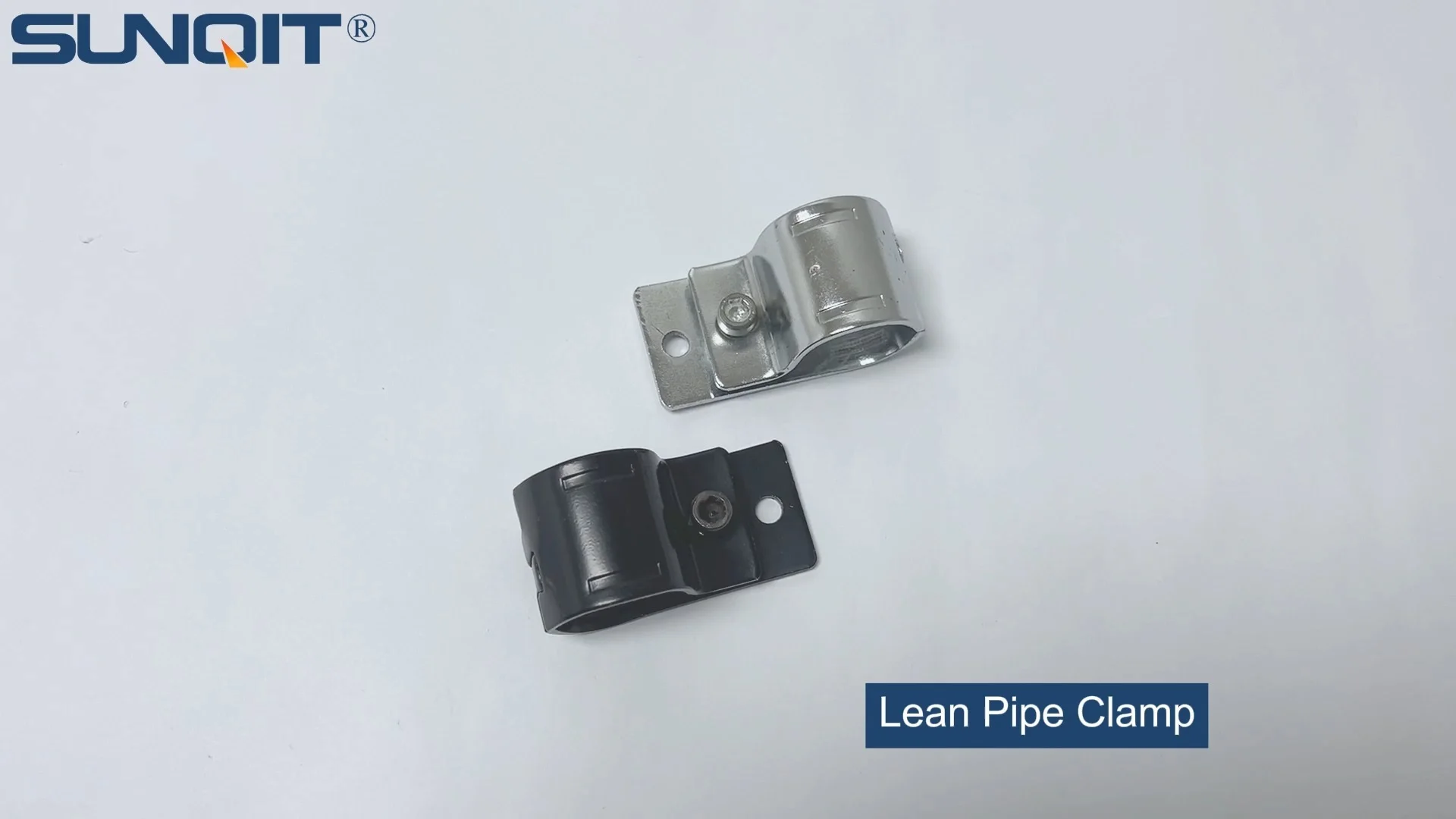
Walk into any busy factory, and you'll quickly notice the unsung heroes keeping operations running smoothly: the structures that hold everything together. From the workbenches where assembly line workers piece together products to the material racks storing components, every part of the setup relies on stability and durability. But in the harsh realities of a factory floor—where moisture lingers, chemicals splash, and temperatures swing—even the sturdiest equipment can start to falter. One of the biggest enemies? Corrosion. Rust, oxidation, and degradation don't just look unsightly; they weaken structures, compromise safety, and force teams to waste time and money on replacements. That's where lean pipe clamp B comes in. Designed with corrosion resistance at its core, this small but mighty component is changing the game for factories looking to build lean, long-lasting systems. Let's dive into why corrosion matters in factory environments, how lean pipe clamp B combats it, and why it's become a go-to choice for manufacturers worldwide.
The Hidden Cost of Corrosion in Factory Settings
To understand why corrosion resistance matters, let's first paint a picture of a typical factory environment. Imagine a automotive parts plant: metal shavings float in the air, coolants and lubricants drip onto work surfaces, and high-pressure washdowns are routine to keep machinery clean. Or a food processing facility, where humidity levels soar and acidic cleaning agents are used daily to meet hygiene standards. In both cases, the air and surfaces are filled with elements that love to attack metal: water vapor, salts, acids, and even oxygen. Over time, these elements eat away at unprotected metal, turning shiny components into flaky, weakened shells.
Corrosion isn't just a cosmetic issue. For factory managers, it's a silent budget drain and a safety hazard. Consider a simple scenario: a material rack held together by standard steel clamps. After six months of exposure to moisture and chemicals, the clamps start to rust. At first, it's just a few spots, but soon, the rust spreads, weakening the clamp's grip. One day, a heavy box is placed on the rack, and the corroded clamp gives way—crashing the box to the floor, damaging parts, and potentially injuring a worker nearby. That's downtime for cleanup, replacement parts, and possibly even an OSHA investigation. Multiply that by dozens of clamps across a factory, and the costs add up fast: replacement clamps, lost productivity, damaged inventory, and increased labor for maintenance. It's no wonder that forward-thinking factories are prioritizing corrosion resistance in every component they choose—starting with the connectors that hold their lean systems together.
Lean manufacturing, after all, is about eliminating waste. And what's more wasteful than replacing parts that should last for years? Lean pipe joint and clamps are the backbone of lean systems, allowing teams to build flexible workbenches, flow racks, and material trolleys that adapt to changing production needs. But if those joints and clamps corrode, the entire system becomes unstable, forcing teams to either rebuild from scratch or risk catastrophic failure. That's why choosing the right clamp—one designed to stand up to the factory's unique challenges—is so critical. And for many, that clamp is lean pipe clamp B.
What Is Lean Pipe Clamp B, Anyway?
Before we dive into its corrosion-fighting superpowers, let's get clear on what lean pipe clamp B is. In the world of lean manufacturing, "lean pipes" are lightweight, modular tubes used to build everything from workbenches to conveyor systems. They're paired with joints and clamps to create custom structures that can be easily adjusted or reconfigured as production needs change. Lean pipe clamp B is a specific type of clamp designed to secure these pipes together, forming strong, stable connections without the need for welding or drilling. Think of it as the "glue" of lean systems—quietly holding everything in place while allowing for quick modifications.
What sets lean pipe clamp B apart from other clamps? For starters, its design is all about versatility. It's compatible with a range of pipe sizes, including the popular aluminum lean pipe and stainless steel pipe series , making it a flexible choice for different applications. But what really makes it stand out is its focus on durability—especially when it comes to fighting corrosion. Unlike generic steel clamps that rust at the first sign of moisture, lean pipe clamp B is engineered with materials and finishes that shrug off the elements, even in the toughest factory environments.
Let's break down its key features. Most lean pipe clamp B models are made from high-grade stainless steel or aluminum alloys, both of which are naturally resistant to corrosion. Stainless steel contains chromium, which forms a thin, invisible layer of chromium oxide on the surface when exposed to oxygen. This layer acts like a shield, preventing further oxidation (rust) from taking hold. Aluminum, on the other hand, develops a similar protective layer of aluminum oxide, which is even more resistant to acids and salts. Some models also feature additional coatings, like zinc plating or powder coating, to add an extra barrier against chemicals and moisture. Combine that with a precision-engineered design—tight tolerances, smooth edges, and secure locking mechanisms—and you have a clamp that not only resists corrosion but also maintains its grip over time.
But why "B"? In the world of lean pipe accessories, clamps often come in different "types" or "series" to suit specific needs. Lean pipe clamp B is typically designed for heavy-duty applications, where the clamp needs to support more weight or withstand more stress. That means thicker walls, stronger locking mechanisms, and—you guessed it—enhanced corrosion resistance. It's the clamp you reach for when you need reliability in a high-stakes environment.

The Corrosion-Resistant Design of Lean Pipe Clamp B
So, what exactly makes lean pipe clamp B so good at fighting corrosion? Let's start with the materials. As mentioned, most lean pipe clamp B models are crafted from either stainless steel (often 304 or 316 grade) or aluminum alloys. Both materials are known for their corrosion resistance, but they each have unique strengths that make them ideal for different factory settings.
Stainless steel 304 is the workhorse of the industry. It contains 18% chromium and 8% nickel, which together create that protective oxide layer we talked about. This makes it resistant to most forms of corrosion, including rust from moisture and mild acids. It's a great choice for factories with moderate exposure to chemicals, like general manufacturing or electronics assembly. For harsher environments—think coastal factories with salt air or chemical plants where acids are present—stainless steel 316 is the upgrade. It adds molybdenum to the mix, which boosts resistance to chloride corrosion (like saltwater or salt-based deicers) and sulfuric acid. That's why you'll often find 316-grade lean pipe clamp B in marine manufacturing or pharmaceutical facilities, where corrosion risks are off the charts.
Aluminum alloy clamps, on the other hand, are lightweight and naturally resistant to oxidation. Aluminum forms a protective oxide layer almost instantly when exposed to air, and this layer is self-healing—if it gets scratched, it reforms quickly to prevent further damage. Aluminum is also non-magnetic and non-sparking, making it a safe choice for factories with electrical components or flammable materials. While aluminum isn't as strong as stainless steel, it's often paired with aluminum lean pipe to create lightweight, corrosion-resistant systems—perfect for workbenches or material trolleys that need to be moved around the factory floor.
But materials are just part of the story. The design of lean pipe clamp B also plays a big role in its corrosion resistance. Unlike cheap, generic clamps with gaps and crevices where moisture can hide, lean pipe clamp B is engineered with smooth, seamless surfaces. This minimizes areas where water, dirt, or chemicals can collect and start eating away at the metal. Many models also feature rounded edges, which prevent water from pooling—another common culprit for corrosion. Even the locking mechanisms are designed with corrosion in mind: instead of exposed springs or screws that can rust, lean pipe clamp B often uses stainless steel fasteners or coated components to keep everything moving smoothly, even after years of exposure.
Let's compare this to a standard steel clamp. A basic steel clamp might be galvanized to resist rust, but galvanization is a thin layer—if it chips or scratches, the steel underneath is immediately vulnerable. Over time, galvanized clamps in wet environments will start to rust, especially at the joints where the coating is thinnest. Lean pipe clamp B, by contrast, is made from corrosion-resistant materials through and through. There's no "coating" to wear off—just solid stainless steel or aluminum that stands up to the elements day in and day out.

Stainless Steel vs. Aluminum: Which Material Is Right for Your Factory?
Choosing between stainless steel and aluminum lean pipe clamp B depends on your factory's specific conditions. To help you decide, let's break down their corrosion resistance, strength, and best-use scenarios in a side-by-side comparison:
| Feature | Stainless Steel Lean Pipe Clamp B (304/316) | Aluminum Alloy Lean Pipe Clamp B |
|---|---|---|
| Corrosion Resistance | Excellent resistance to moisture, mild acids, and salt (316 grade adds chloride resistance). | High resistance to oxidation and fresh water; less resistant to strong acids or saltwater. |
| Strength | High tensile strength; ideal for heavy loads (e.g., material racks holding 500+ lbs). | Moderate strength; better for lightweight systems (e.g., mobile workbenches). |
| Weight | Heavier (adds stability but makes systems harder to move). | Lightweight (easier to reconfigure and transport). |
| Best For | Chemical plants, coastal factories, food processing (high moisture/chemicals). | Electronics assembly, cleanrooms, or systems needing frequent repositioning. |
| Cost | Higher upfront cost (but longer lifespan offsets it). | More budget-friendly for low-corrosion environments. |
As you can see, both options have their place. For most general manufacturing environments—where moisture is present but not extreme—either will work well. But if your factory deals with salt, heavy chemicals, or high humidity, stainless steel (especially 316 grade) is the safer bet. For lightweight, mobile systems like assembly line workbenches, aluminum lean pipe clamp B pairs perfectly with aluminum lean pipe to keep the entire setup easy to move and resistant to everyday wear.

Real-World Applications: Where Lean Pipe Clamp B Shines
To truly understand the impact of lean pipe clamp B's corrosion resistance, let's look at a real-world example. Take ABC Manufacturing, a mid-sized electronics plant in the Midwest. A few years ago, their assembly line workbenches were held together with standard steel clamps. The plant used water-based cleaning solutions daily to keep dust and static at bay, and over time, the clamps started to rust. At first, maintenance teams would sand off the rust and repaint the clamps, but the problem kept coming back. Within a year, nearly 40% of the clamps needed replacement. The workbenches became wobbly, leading to slower assembly times as workers adjusted for instability. worst of all, a rusted clamp on a material rack failed, causing a bin of circuit boards to crash—costing the company $10,000 in damaged parts.
That's when ABC Manufacturing switched to stainless steel lean pipe clamp B. They replaced all their old clamps with 304-grade stainless steel models and paired them with stainless steel pipe series for the workbench frames. The results were dramatic. After two years, the clamps still looked brand new—no rust, no flaking, and no loss of grip. The workbenches stayed stable, reducing assembly errors and speeding up production. Maintenance costs dropped by 75%, and the team hasn't had a single clamp failure since. "It was a small investment that paid off tenfold," says Maria, the plant's operations manager. "We used to spend a full day each month replacing rusted clamps; now, we barely think about them. The lean pipe clamp B just works, even with all the cleaning and moisture in here."
Another example is XYZ Food Processing, a facility that produces canned soups. In food processing, hygiene is non-negotiable, so the plant uses high-temperature steam and acidic cleaning agents daily to sanitize equipment. Their old aluminum clamps (not the corrosion-resistant alloy kind) started to corrode within months, leaving white, powdery oxide on the surfaces. Not only was this unsightly, but it also risked contaminating food products if flakes fell off. XYZ switched to 316-grade stainless steel lean pipe clamp B, and the difference was night and day. The clamps withstood the steam and acids without a hint of corrosion, and the plant passed its next FDA inspection with flying colors. "We can't afford to take chances with contamination," says Raj, the plant engineer. "Lean pipe clamp B gives us peace of mind that our material racks and workbenches are safe and durable, even in our tough environment."
These stories highlight a key point: lean pipe clamp B isn't just a "better clamp"—it's a solution that adapts to the unique challenges of each factory. Whether you're building a workbench in a humid electronics plant or a material rack in a chemical facility, its corrosion resistance ensures that your lean system stays strong, safe, and cost-effective for years to come.
Beyond Corrosion: Other Benefits of Lean Pipe Clamp B
While corrosion resistance is the star of the show, lean pipe clamp B has other features that make it a favorite among factory teams. For starters, it's incredibly easy to install and reconfigure. Unlike welded joints or bolted clamps that require tools and time to adjust, lean pipe clamp B uses a simple tightening mechanism—often a hand knob or hex key—that allows workers to loosen, reposition, and retighten the clamp in minutes. This flexibility is at the heart of lean manufacturing, where adaptability is key. Need to add a shelf to a workbench? Just loosen the clamps, adjust the pipes, and retighten. No need to call in a maintenance crew or wait for a welder.
Durability is another win. Even beyond corrosion resistance, lean pipe clamp B is built to withstand the bumps and knocks of factory life. The materials—stainless steel and aluminum—are tough enough to handle accidental impacts from forklifts or heavy tools without bending or breaking. And because the clamps create a tight, secure grip on the pipes, there's no wobbling or shifting, even under heavy loads. This stability is crucial for precision work, like assembling small electronics or medical devices, where a shaky workbench can lead to errors.
Cost-effectiveness is also a big plus. While lean pipe clamp B may cost more upfront than a generic steel clamp, its lifespan more than makes up for it. A standard steel clamp might last 6–12 months in a harsh environment; a stainless steel lean pipe clamp B can last 5–10 years or more. When you factor in the cost of replacing cheap clamps repeatedly, the stainless steel option is actually the more budget-friendly choice in the long run. Plus, because it's compatible with a wide range of pipes and accessories—like lean pipe and accessories such as joints, casters, and brackets—you can build a fully customized system without being locked into a single brand or size.
Maintenance Tips to Maximize Your Lean Pipe Clamp B's Lifespan
Even the most corrosion-resistant clamps need a little care to stay in top shape. Here are some simple maintenance tips to ensure your lean pipe clamp B lasts as long as possible:
- Regular Cleaning: Wipe down the clamps with a damp cloth to remove dirt, grease, or chemical residues. For stainless steel, use a mild detergent if needed—avoid abrasive cleaners that can scratch the surface (scratches create spots for corrosion to start). For aluminum, avoid acidic cleaners, which can damage the protective oxide layer.
- Lubricate Moving Parts: If your clamp has a locking knob or hinge, apply a small amount of corrosion-resistant lubricant (like silicone spray) every 6 months. This keeps the mechanism moving smoothly and prevents seizing.
- Inspect for Damage: During routine checks, look for signs of wear: bent components, stripped threads, or (in rare cases) early corrosion. Catching issues early means you can replace a single clamp instead of waiting for a system failure.
- Avoid Mixing Metals: If using stainless steel clamps, pair them with stainless steel pipes; if using aluminum, stick with aluminum pipes. Mixing metals (e.g., stainless steel clamp with carbon steel pipe) can cause galvanic corrosion, where the two metals react and accelerate rusting.
These steps take just minutes per month but can extend your clamp's lifespan by years. And when you consider how little time and money they require, it's a no-brainer for any factory focused on lean efficiency.
Why Lean Pipe Clamp B Is the Future of Factory Systems
In a world where factories are under pressure to do more with less—faster production, lower costs, higher quality—every component matters. Corrosion-resistant tools and equipment aren't just "nice to have"; they're essential for staying competitive. Lean pipe clamp B embodies this philosophy: it's a small component with a big impact, designed to eliminate waste (in the form of replacements, downtime, and repairs) and keep systems running smoothly for years.
Whether you're building a new lean system or upgrading an existing one, choosing the right clamp is a decision that will pay off for years. With its focus on corrosion resistance, durability, and flexibility, lean pipe clamp B isn't just a clamp—it's an investment in your factory's future. It's the kind of component that fades into the background, quietly doing its job so your team can focus on what really matters: making great products, safely and efficiently.
So, the next time you walk through your factory, take a look at the clamps holding your workbenches and racks together. Are they rusted? Wobbly? Costing you time and money? If so, maybe it's time to make the switch to lean pipe clamp B. Your team, your budget, and your peace of mind will thank you.