- Company Articles
- Products and Technology
- Product knowledge
- Corrosion-Resistant Castor Install Base: Ideal for Pharmaceutical Warehouse Racks

Corrosion-Resistant Castor Install Base: Ideal for Pharmaceutical Warehouse Racks
Related Product
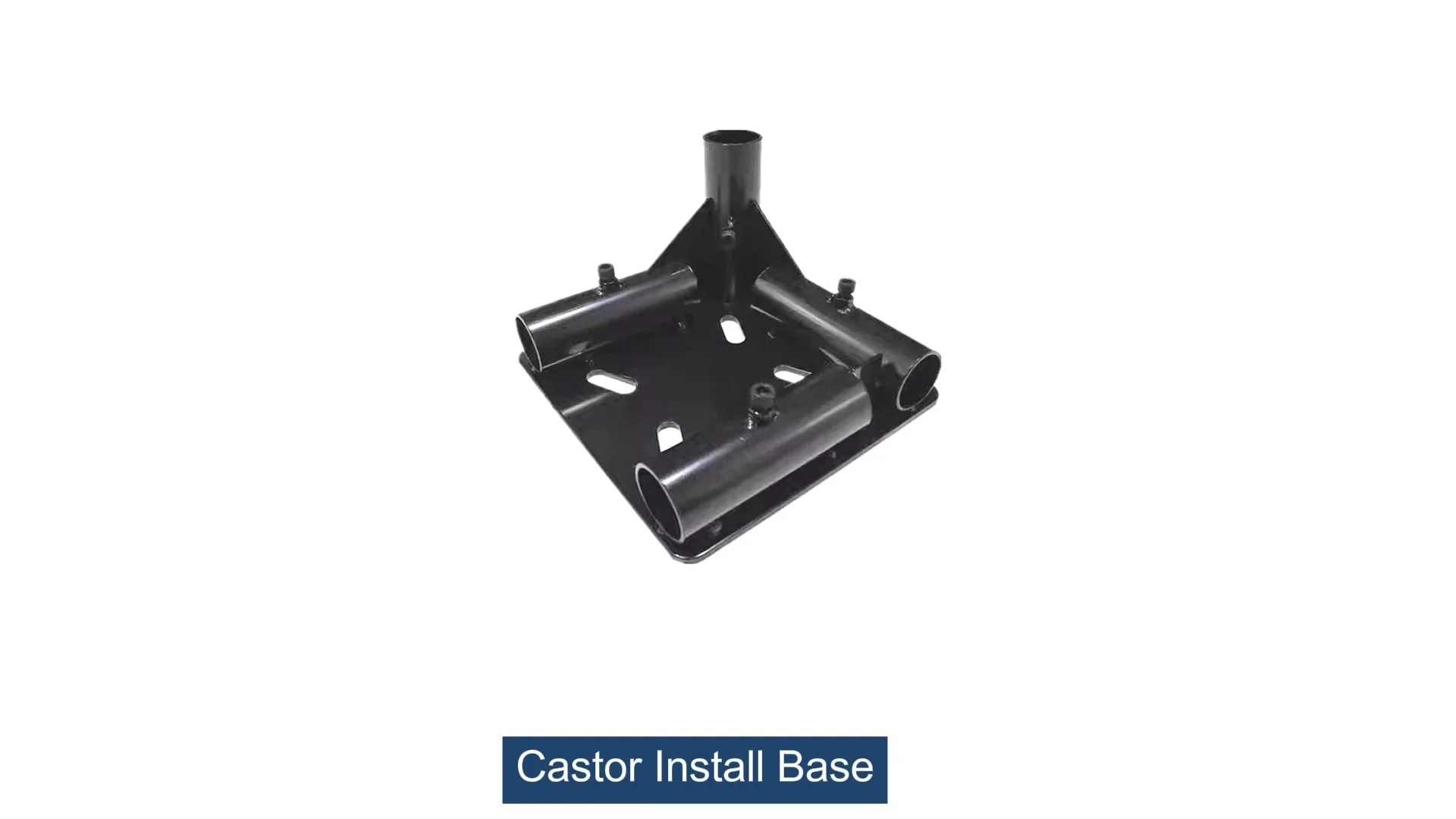
Castor Install Base
Castor install base, used for connection between pipe and castor, it can connect 4 pcs pipe by 1 pcs castor base, to make the structure strong and stable.
Walk into any pharmaceutical warehouse, and you'll immediately sense the precision in the air. Every shelf is aligned, every label is crisp, and every piece of equipment seems to hum with a quiet efficiency. But behind that order lies a constant battle—one that's invisible to the untrained eye but critical to product safety: the fight against corrosion. In an industry where even the smallest speck of rust can trigger a chain reaction of contamination risks, compliance headaches, and costly downtime, the tools that keep warehouses running must be built to withstand the harshest conditions. That's where the
corrosion-resistant castor install base
comes in—a humble yet transformative component that's redefining how pharmaceutical facilities approach material handling, storage, and long-term durability.
The Hidden Threat: Why Corrosion Spells Disaster in Pharma Warehouses
Pharmaceutical warehouses aren't just storage spaces—they're tightly regulated environments where compliance with FDA, EMA, and GMP standards is non-negotiable. These regulations don't just focus on the products themselves; they extend to every surface, tool, and piece of equipment that might come into contact with them. Corrosion, unfortunately, is a silent violator of these standards. When metal components like racking, workbenches, or material carts start to rust, they don't just look worn—they become potential sources of contamination. A single flake of rust from a corroded caster mount could fall into a batch of medical supplies, leading to product recalls, regulatory fines, or worse, compromising patient safety.
Beyond contamination, corrosion eats away at structural integrity. A rusted castor install base, for example, might fail to support a loaded material rack b (3 row and 3 floor) , causing the rack to tip or collapse. This isn't just a safety hazard for workers; it disrupts operations, leading to downtime as teams scramble to replace damaged equipment, reorganize inventory, and conduct safety audits. In an industry where every minute of downtime costs thousands, corrosion isn't just a maintenance issue—it's a bottom-line problem.
The challenge is compounded by the unique conditions of pharmaceutical warehouses. Many use high-pressure washers, disinfectants, or humidity-controlled environments to maintain sterility—all of which accelerate corrosion in standard steel components. Traditional castor mounts, made from untreated steel, might last a year or two under these conditions before showing signs of wear. For facilities aiming for long-term reliability, this cycle of replacement is both unsustainable and unnecessary.
Beyond contamination, corrosion eats away at structural integrity. A rusted castor install base, for example, might fail to support a loaded material rack b (3 row and 3 floor) , causing the rack to tip or collapse. This isn't just a safety hazard for workers; it disrupts operations, leading to downtime as teams scramble to replace damaged equipment, reorganize inventory, and conduct safety audits. In an industry where every minute of downtime costs thousands, corrosion isn't just a maintenance issue—it's a bottom-line problem.
The challenge is compounded by the unique conditions of pharmaceutical warehouses. Many use high-pressure washers, disinfectants, or humidity-controlled environments to maintain sterility—all of which accelerate corrosion in standard steel components. Traditional castor mounts, made from untreated steel, might last a year or two under these conditions before showing signs of wear. For facilities aiming for long-term reliability, this cycle of replacement is both unsustainable and unnecessary.
A Game-Changer: The Corrosion-Resistant Castor Install Base
Enter the corrosion-resistant castor install base—a component engineered specifically to thrive in the demanding world of pharmaceutical warehousing. At first glance, it might look similar to standard castor mounts, but its design and materials set it apart. Built with precision, it serves as the critical link between mobile equipment (like carts, racks, and workbenches) and the casters that make them movable. But unlike its conventional counterparts, it's built to resist the very elements that cause corrosion: moisture, chemicals, and constant cleaning.
What makes this base so effective? Let's break it down. First, the material selection is intentional. Many corrosion-resistant castor install bases are crafted from high-grade stainless steel pipe series components, known for their chromium-rich composition that forms a protective oxide layer, preventing rust from taking hold. Others leverage aluminum profile alloys, which naturally resist corrosion and are lightweight enough to keep equipment maneuverable without sacrificing strength. These materials aren't just "corrosion-resistant"—they're "corrosion-defiant," standing up to daily exposure to disinfectants, steam, and humidity without breaking a sweat.
But material alone isn't enough. The design of the castor install base also plays a role. Many models feature sealed joints, smooth surfaces, and minimal crevices—details that prevent water, dirt, or cleaning agents from pooling and causing damage. This attention to detail makes them easy to sanitize, a must for facilities adhering to strict GMP cleaning protocols. Whether paired with caster wheel systems designed for heavy loads or lightweight maneuverability, these bases ensure that mobility doesn't come at the cost of durability.
What makes this base so effective? Let's break it down. First, the material selection is intentional. Many corrosion-resistant castor install bases are crafted from high-grade stainless steel pipe series components, known for their chromium-rich composition that forms a protective oxide layer, preventing rust from taking hold. Others leverage aluminum profile alloys, which naturally resist corrosion and are lightweight enough to keep equipment maneuverable without sacrificing strength. These materials aren't just "corrosion-resistant"—they're "corrosion-defiant," standing up to daily exposure to disinfectants, steam, and humidity without breaking a sweat.
But material alone isn't enough. The design of the castor install base also plays a role. Many models feature sealed joints, smooth surfaces, and minimal crevices—details that prevent water, dirt, or cleaning agents from pooling and causing damage. This attention to detail makes them easy to sanitize, a must for facilities adhering to strict GMP cleaning protocols. Whether paired with caster wheel systems designed for heavy loads or lightweight maneuverability, these bases ensure that mobility doesn't come at the cost of durability.

Materials Matter: Why Stainless Steel and Aluminum Lead the Charge
When it comes to corrosion resistance, not all metals are created equal. Let's take a closer look at the two heavyweights in this space: stainless steel and aluminum. Both are staples in the
stainless steel pipe series
and
aluminum profile
lines, and for good reason.
Stainless Steel: The Workhorse of Corrosion Resistance
Stainless steel is a no-brainer for pharmaceutical applications, and for good reason. Alloys like 304 and 316 stainless steel contain chromium (at least 10.5%) and nickel, which react with oxygen to form a thin, invisible layer of chromium oxide. This layer acts as a shield, self-healing if scratched or damaged, and preventing rust from forming underneath. For castor install bases, this means they can withstand repeated exposure to harsh cleaning agents—think bleach, alcohol, or acidic disinfectants—without pitting or corroding. Stainless steel also offers impressive load capacity, making it ideal for heavy-duty applications like supporting a fully loaded material rack b (3 row and 3 floor) stacked with bulk pharmaceuticals.
Aluminum: Lightweight Strength with Natural Resistance
Aluminum, often used in aluminum profile systems, takes a different approach to corrosion resistance. Unlike stainless steel, aluminum doesn't rely on added alloys—it naturally forms a protective layer of aluminum oxide when exposed to air. This layer is thin but incredibly tough, preventing further oxidation. What makes aluminum stand out is its weight-to-strength ratio. A castor install base made from aluminum is significantly lighter than steel, making it easier to install, reposition, or integrate into mobile workstations. This is a huge plus in dynamic warehouses where layouts change frequently to adapt to new inventory or production needs. Aluminum also conducts heat well, which can be beneficial in temperature-controlled environments, ensuring the base doesn't trap moisture or bacteria in cold storage areas.
Stainless Steel: The Workhorse of Corrosion Resistance
Stainless steel is a no-brainer for pharmaceutical applications, and for good reason. Alloys like 304 and 316 stainless steel contain chromium (at least 10.5%) and nickel, which react with oxygen to form a thin, invisible layer of chromium oxide. This layer acts as a shield, self-healing if scratched or damaged, and preventing rust from forming underneath. For castor install bases, this means they can withstand repeated exposure to harsh cleaning agents—think bleach, alcohol, or acidic disinfectants—without pitting or corroding. Stainless steel also offers impressive load capacity, making it ideal for heavy-duty applications like supporting a fully loaded material rack b (3 row and 3 floor) stacked with bulk pharmaceuticals.
Aluminum: Lightweight Strength with Natural Resistance
Aluminum, often used in aluminum profile systems, takes a different approach to corrosion resistance. Unlike stainless steel, aluminum doesn't rely on added alloys—it naturally forms a protective layer of aluminum oxide when exposed to air. This layer is thin but incredibly tough, preventing further oxidation. What makes aluminum stand out is its weight-to-strength ratio. A castor install base made from aluminum is significantly lighter than steel, making it easier to install, reposition, or integrate into mobile workstations. This is a huge plus in dynamic warehouses where layouts change frequently to adapt to new inventory or production needs. Aluminum also conducts heat well, which can be beneficial in temperature-controlled environments, ensuring the base doesn't trap moisture or bacteria in cold storage areas.

Beyond Corrosion: How Castor Install Bases Elevate Warehouse Efficiency
While corrosion resistance is the star feature, the castor install base brings more to the table than just durability. Let's explore how it integrates with other warehouse essentials to create a more efficient, compliant, and adaptable workspace.
Seamless Integration with Material Racks and Workbenches
Imagine a material rack b (3 row and 3 floor) loaded with vials, syringes, and packaging materials. In a traditional setup, this rack might be fixed to the floor, limiting flexibility. But with a corrosion-resistant castor install base, the same rack becomes mobile. Workers can easily roll it to the packing station during peak hours, then return it to storage when not in use—no heavy lifting, no wasted time. The base's design ensures a secure fit with standard casters, so even when fully loaded, the rack moves smoothly without wobbling or tipping.
The same logic applies to workbench setups. A workbench e (single deck-without caster) is a staple for assembly or inspection tasks, but adding a castor install base transforms it into a mobile workstation. Need to move the workbench closer to a conveyor line? No problem. Want to sanitize the floor underneath? Simply roll it out of the way. This flexibility isn't just convenient—it reduces the need for multiple fixed workbenches, saving space and cutting costs.
Compatibility with Caster Systems and Accessories
The best castor install bases are designed to work with a range of caster wheel and caster accessories , from heavy-duty locking casters for stability to swivel casters for tight turns. This versatility means facilities can customize their setup based on specific needs. For example, a material rack b (3 row and 3 floor) storing fragile glassware might use soft rubber caster wheels to absorb shocks, while a workbench in a high-traffic area could use dual-lock casters to prevent accidental movement during tasks. The base acts as the foundation, ensuring that whatever caster system is chosen, it's secure, corrosion-resistant, and built to last.
Seamless Integration with Material Racks and Workbenches
Imagine a material rack b (3 row and 3 floor) loaded with vials, syringes, and packaging materials. In a traditional setup, this rack might be fixed to the floor, limiting flexibility. But with a corrosion-resistant castor install base, the same rack becomes mobile. Workers can easily roll it to the packing station during peak hours, then return it to storage when not in use—no heavy lifting, no wasted time. The base's design ensures a secure fit with standard casters, so even when fully loaded, the rack moves smoothly without wobbling or tipping.
The same logic applies to workbench setups. A workbench e (single deck-without caster) is a staple for assembly or inspection tasks, but adding a castor install base transforms it into a mobile workstation. Need to move the workbench closer to a conveyor line? No problem. Want to sanitize the floor underneath? Simply roll it out of the way. This flexibility isn't just convenient—it reduces the need for multiple fixed workbenches, saving space and cutting costs.
Compatibility with Caster Systems and Accessories
The best castor install bases are designed to work with a range of caster wheel and caster accessories , from heavy-duty locking casters for stability to swivel casters for tight turns. This versatility means facilities can customize their setup based on specific needs. For example, a material rack b (3 row and 3 floor) storing fragile glassware might use soft rubber caster wheels to absorb shocks, while a workbench in a high-traffic area could use dual-lock casters to prevent accidental movement during tasks. The base acts as the foundation, ensuring that whatever caster system is chosen, it's secure, corrosion-resistant, and built to last.

Comparing the Options: Which Material is Right for Your Warehouse?
Choosing between stainless steel and aluminum for your castor install base depends on your facility's unique needs. To help you decide, here's a side-by-side comparison:
| Feature | Stainless Steel (Stainless Steel Pipe Series) | Aluminum (Aluminum Profile) | Standard Steel (Traditional Bases) |
|---|---|---|---|
| Corrosion Resistance | Excellent (resists chemicals, moisture, and high humidity) | Very Good (natural oxide layer; less resistant to strong acids than stainless steel) | Poor (rusts quickly in damp or chemical-exposed environments) |
| Load Capacity | High (ideal for heavy racks like material rack b) | Moderate to High (lighter than steel but still supports most warehouse loads) | High, but decreases as corrosion weakens the material |
| Weight | Heavy (more stable but harder to reposition) | Lightweight (easy to install and move) | Heavy (similar to stainless steel but prone to rust-related weakening) |
| Maintenance | Low (only requires regular cleaning; no rust treatment needed) | Low (natural resistance; occasional cleaning to remove debris) | High (requires regular painting, rust treatment, and replacement) |
| Ideal Environment | High-moisture, chemical-heavy areas (e.g., cold storage, cleaning zones) | General warehouse use, dynamic layouts, lightweight applications | Dry, low-humidity areas (not recommended for pharma) |
For most pharmaceutical warehouses, the choice will lean toward either stainless steel or aluminum. If your facility deals with frequent high-pressure washing or harsh disinfectants, stainless steel is the safer bet. If you prioritize mobility and frequent layout changes, aluminum's lightweight design will shine. Either way, both options outperform standard steel by miles in terms of longevity and compliance.
Real-World Impact: A Day in the Life with Corrosion-Resistant Bases
Let's paint a picture of how a corrosion-resistant castor install base transforms daily operations. Meet Maria, a warehouse manager at a mid-sized pharmaceutical distributor. A year ago, her team was replacing rusted castor mounts on their
material rack b (3 row and 3 floor)
units every six months. Each replacement meant taking the rack offline, reorganizing inventory, and scheduling maintenance during off-hours to avoid disrupting daytime operations. The cost added up—new mounts, labor, and lost productivity.
Then, Maria switched to stainless steel castor install bases. Today, those same racks look as good as new. During weekly deep cleans, the pressure washers blast away grime without leaving a single spot of rust. The racks glide smoothly on their casters, even when fully loaded, making it easy for workers to move them to packing stations or loading docks. Maria estimates the switch has saved her team 20+ hours of maintenance per month and reduced equipment replacement costs by 70%. "It's not just about the money," she says. "It's the peace of mind. I no longer worry about rust flakes in our inventory or failing inspections. These bases let us focus on what matters—getting life-saving products to where they need to be."
Maria's story isn't unique. Across the industry, facilities that invest in corrosion-resistant components report similar benefits: fewer compliance scares, lower maintenance costs, and happier, more productive teams.
Then, Maria switched to stainless steel castor install bases. Today, those same racks look as good as new. During weekly deep cleans, the pressure washers blast away grime without leaving a single spot of rust. The racks glide smoothly on their casters, even when fully loaded, making it easy for workers to move them to packing stations or loading docks. Maria estimates the switch has saved her team 20+ hours of maintenance per month and reduced equipment replacement costs by 70%. "It's not just about the money," she says. "It's the peace of mind. I no longer worry about rust flakes in our inventory or failing inspections. These bases let us focus on what matters—getting life-saving products to where they need to be."
Maria's story isn't unique. Across the industry, facilities that invest in corrosion-resistant components report similar benefits: fewer compliance scares, lower maintenance costs, and happier, more productive teams.
Conclusion: Building a Warehouse That Lasts—One Base at a Time
In the high-stakes world of pharmaceutical warehousing, every detail counts. The
corrosion-resistant castor install base
may seem like a small component, but its impact is anything but minor. By standing up to moisture, chemicals, and the rigors of daily use, it ensures that critical equipment like
material rack b (3 row and 3 floor)
units, workbenches, and mobile carts remain safe, compliant, and operational for years. Whether crafted from
stainless steel pipe series
components for maximum durability or
aluminum profile
for lightweight flexibility, these bases are more than just hardware—they're investments in the future of your facility.
So, the next time you walk through a pharmaceutical warehouse, take a moment to look down. The castor install base holding up that rack or cart might be out of sight, but its work—keeping products safe, operations efficient, and compliance in check—is always front and center. In an industry where precision and reliability are everything, that's a foundation worth building on.
So, the next time you walk through a pharmaceutical warehouse, take a moment to look down. The castor install base holding up that rack or cart might be out of sight, but its work—keeping products safe, operations efficient, and compliance in check—is always front and center. In an industry where precision and reliability are everything, that's a foundation worth building on.