- Company Articles
- Products and Technology
- Product knowledge
- Corrosion-Resistant Flat Swivel Castor Wheel with Brake for Harsh Industrial Settings

Corrosion-Resistant Flat Swivel Castor Wheel with Brake for Harsh Industrial Settings
Related Product
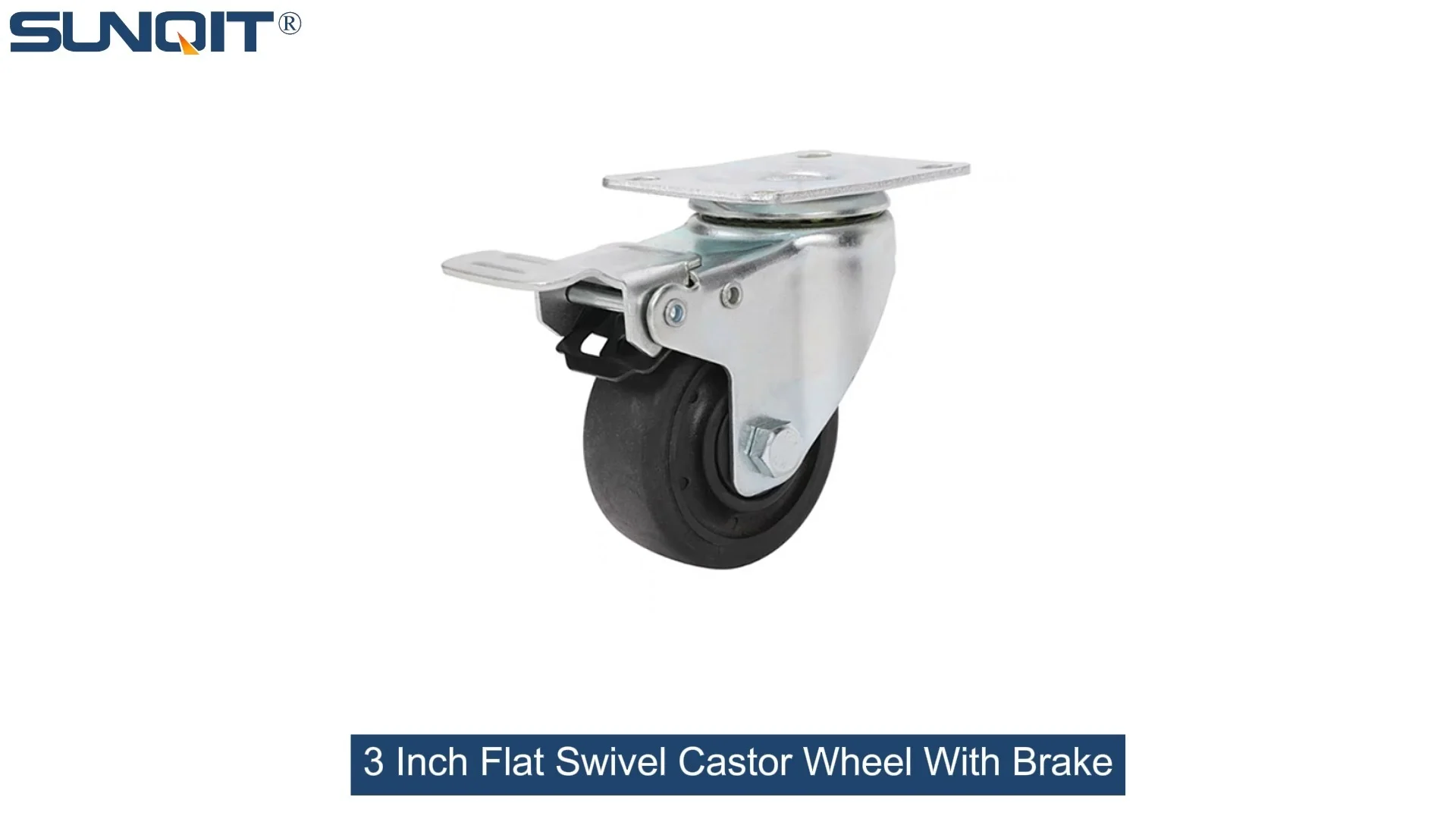
Flat Swivel Castor Wheel With Brake
Chair Casters Ball Bearing Wheels Rubber Base with brake design. Resistant to abrasion, impact and corrosion. Heavy payload can hold 70Kgs per pcs,which can make it works at a stable and smooth status.
The Hidden Hero of Industrial Mobility
In the bustling world of manufacturing plants, warehouses, and industrial facilities, there's a silent workhorse that keeps operations moving—literally. It's not the high-tech machinery or the cutting-edge software, though those play their part. It's the humble caster wheel. Tucked under workbenches, tool carts, and material racks, casters are the unsung heroes of mobility, enabling teams to shift heavy loads, reconfigure workspaces, and maintain the relentless pace of modern production. But in harsh industrial settings—where moisture, chemicals, debris, and constant wear are part of the daily grind—standard casters often fail, turning from helpers into headaches.
Imagine a food processing plant where daily washdowns with caustic sanitizers eat away at metal components. Or an automotive factory floor, slick with oils and lubricants, where rusted caster joints seize up mid-shift. In these environments, a caster that can't stand up to the elements isn't just an inconvenience—it's a bottleneck. Downtime spent replacing corroded wheels, jamming brakes, or repairing seized swivel mechanisms eats into productivity, inflates maintenance costs, and even risks workplace injuries when unstable carts tip or brakes fail.
This is where the corrosion-resistant flat swivel castor wheel with brake steps in. Designed to thrive where standard casters crumble, this specialized component isn't just a "better wheel"—it's a solution to the unique challenges of harsh industrial settings. Let's dive into why this caster matters, how it's built to resist the worst conditions, and why it's becoming a game-changer for facilities aiming to boost efficiency, reduce downtime, and keep their teams moving safely.
The Challenge of Harsh Industrial Settings: Why Standard Casters Fall Short
To understand why a specialized caster is necessary, let's first paint a picture of the environments it's built to conquer. Harsh industrial settings come in many forms, but they all share one thing in common: they're tough on equipment. Let's break down the biggest culprits:
Moisture and Humidity: The Rust Enemy
Warehouses in coastal regions, food processing facilities with daily washdowns, and even indoor plants with poor ventilation often battle high humidity. For standard steel casters, this moisture is a death sentence. Over time, water seeps into swivel joints, wheel bearings, and brake mechanisms, triggering rust. Rust doesn't just look bad—it weakens metal, causes parts to seize, and turns smooth rotation into a jerky, noisy struggle. A caster that once rolled effortlessly becomes a chore to move, forcing workers to exert extra effort and increasing the risk of strains.
Chemicals and Corrosives: From Cleaners to Coolants
Many industries rely on strong chemicals to keep operations running. Food plants use sanitizing agents like chlorine or peracetic acid; automotive facilities deal with oils, greases, and degreasers; pharmaceutical labs use alcohol-based cleaners; and manufacturing plants might use solvents or coolants. Standard casters, with their uncoated steel frames or plastic components, stand little chance against these substances. Chemicals can eat through plastic wheels, degrade rubber treads, or corrode metal parts, leading to premature failure.
Debris and Impact: The Wear-and-Tear Toll
Industrial floors are rarely smooth. Metal shavings, gravel, food particles, or packaging debris can get trapped in caster wheels or swivel joints, causing jams or uneven wear. Add to that the constant impact of carts being loaded, unloaded, and rolled over uneven surfaces—sudden drops off curbs, collisions with racks—and standard casters quickly show signs of fatigue. Weak brakes, cracked wheels, or bent axles become common, turning "mobile" equipment into stationary liabilities.
The Cost of Failure: Beyond Broken Wheels
When a standard caster fails in these environments, the costs add up fast. There's the direct expense of replacing the caster itself, but that's just the start. Downtime while a cart is out of commission can halt a production line or delay a shipment. Maintenance teams spend hours troubleshooting and swapping parts instead of focusing on more critical tasks. And perhaps most concerning, a faulty caster—like a stuck brake or wobbly wheel—increases the risk of accidents. A cart that rolls unexpectedly because the brake failed could a worker or damage expensive equipment. In short, cutting corners on casters in harsh settings isn't just penny-wise—it's pound-foolish.
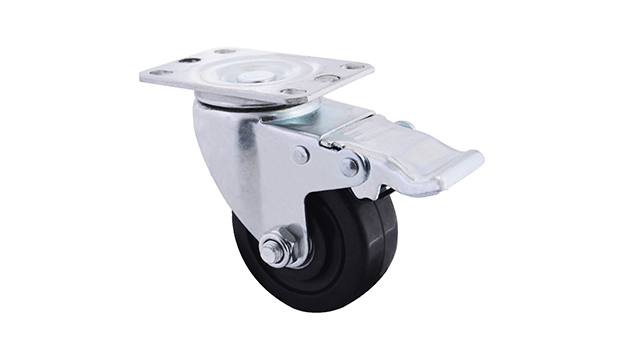
Meet the Solution: Corrosion-Resistant Flat Swivel Castor Wheel with Brake
Enter the corrosion-resistant flat swivel castor wheel with brake—a caster engineered from the ground up to tackle these challenges. Let's start with the basics: what makes this caster different from the ones you might find on a office chair or a lightweight utility cart?
Flat Swivel Design: Stability Meets Maneuverability
First, the "flat" in its name refers to the low-profile mounting plate, which sits close to the ground. This design lowers the center of gravity of whatever it's attached to—whether it's a workbench, a material cart, or a tool trolley—making it more stable, even when loaded with heavy items. In busy industrial settings, where carts are often pushed around corners or over uneven floors, stability is non-negotiable. The "swivel" feature, meanwhile, allows 360-degree rotation, making it easy to navigate tight spaces without having to lift or pivot the cart manually. This combination of stability and maneuverability is a game-changer for workers who need to move heavy loads with precision.
Built for Corrosion Resistance: Materials That Fight Back
The star of the show, though, is its corrosion resistance. Unlike standard casters, which might use plain steel or low-grade alloys, this caster is built with materials that laugh in the face of moisture, chemicals, and rust. Let's break down the key components:
- Stainless Steel Frame and Forks: The structural parts—like the mounting plate, fork, and axle—are often made from 304 or 316 stainless steel. 304 is great for general corrosion resistance, while 316 (sometimes called "marine-grade") adds molybdenum, making it even more resistant to saltwater, acids, and harsh chemicals. This ensures the frame won't rust or weaken, even with daily exposure to moisture.
- Sealed Bearings: Wheel bearings are a common entry point for moisture and debris. These casters use sealed, maintenance-free bearings (often with rubber or Teflon seals) to keep water, dirt, and chemicals out, ensuring smooth rotation for longer.
- Non-Metallic Wheels: The wheel itself is often made from materials like polyurethane, nylon, or rubber, all of which resist corrosion and chemical damage. Polyurethane, in particular, is a favorite for industrial use—it's tough enough to handle heavy loads, provides good traction on slippery floors, and won't degrade when exposed to oils or solvents.
- Coated Brake Components: Even the brake mechanism gets special treatment. Brake pedals and levers are often coated with corrosion-resistant finishes like zinc plating or powder coating, ensuring the brake engages reliably, even after months of exposure to the elements.
The Brake: More Than Just a Stop Button
In industrial settings, a caster's brake isn't just for parking—it's a safety feature. Imagine a loaded cart sitting on a slight incline in a warehouse; a weak brake could let it roll away, causing damage or injury. The brake on this caster is designed to be robust: a foot-operated lever that engages a pad or clamp against the wheel, locking it securely in place. What sets it apart is its resistance to jamming. Unlike standard brakes, which can seize up when rust or debris builds up, this brake's components are sealed and corrosion-resistant, ensuring it engages smoothly every time—even after a week of rain in a poorly ventilated facility or a daily dousing with sanitizer.

Breaking Down the Features: What Makes This Caster Stand Out
To truly appreciate this caster, let's dive deeper into its standout features. It's not just about "corrosion resistance"—it's about how every part works together to create a durable, reliable, and user-friendly solution for harsh environments.
Load Capacity: Built to Haul Heavy
Industrial settings demand casters that can handle serious weight. A typical corrosion-resistant flat swivel caster with brake is rated for loads ranging from 200 to 800 pounds per wheel, depending on size and design. This means a cart with four casters could easily carry 800 to 3,200 pounds—more than enough for stacks of raw materials, heavy tools, or assembled products. The secret? Reinforced forks, thick-gauge stainless steel mounting plates, and high-strength wheel bearings that distribute weight evenly, preventing bending or warping under pressure.
Smooth Rotation, Even Under Stress
Anyone who's pushed a cart with a seized swivel joint knows how frustrating it can be. This caster's swivel mechanism is engineered for smoothness, even when loaded to capacity. Precision ball bearings in the swivel head reduce friction, allowing the caster to rotate with minimal effort. And because those bearings are sealed, dirt, moisture, and debris can't get in to gum up the works. The result? A cart that glides around corners, navigates tight aisles, and responds easily to even light pushes—reducing worker fatigue and making every movement more efficient.
Floor Protection: Gentle on Surfaces, Tough on Wear
Industrial floors take a beating, but that doesn't mean casters should make it worse. The non-metallic wheels on this caster—often made of polyurethane or rubber—are designed to be gentle on concrete, tile, or epoxy floors, preventing scratches, dents, or marks. At the same time, they're tough enough to handle rough surfaces, like cracked concrete or floors covered in debris. It's a balance that matters: no one wants to replace a caster and a floor.
Easy Maintenance: Less Time Fixing, More Time Working
In busy facilities, maintenance teams don't have time to fuss over finicky casters. That's why this caster is built for low maintenance. Sealed bearings mean no need for regular lubrication (though a quick wipe-down with a dry cloth is always a good idea). The corrosion-resistant materials resist rust and degradation, so you won't be replacing parts every few months. And if something does wear out—like the wheel tread or brake pad—replacement is straightforward, with standardized parts that fit easily. For overworked maintenance crews, this translates to less time on repairs and more time on critical tasks.

Caster Accessories: Enhancing Performance and Longevity
A great caster is even better when paired with the right accessories. Caster accessories might not get the same attention as the wheel itself, but they play a key role in adapting the caster to specific needs, extending its lifespan, and ensuring it works seamlessly with your existing equipment. Let's look at a few must-have accessories for anyone using corrosion-resistant flat swivel casters with brakes in harsh settings:
Replacement Brake Pads and Levers
Even the toughest brake components wear out over time, especially if the caster is used heavily. Replacement brake pads and levers are inexpensive insurance against brake failure. Made from the same corrosion-resistant materials as the original parts, these accessories let you swap out worn components quickly, ensuring the brake continues to engage reliably.
Mounting Plates and Adapters
Not all carts or workbenches are built the same. Mounting plates and adapters allow you to attach the caster to different frame types, from aluminum profile frames (a common choice in lean manufacturing setups) to wooden workbenches or steel tool carts. For example, if your facility uses aluminum profile workstations, an adapter plate with pre-drilled holes can make installation a breeze, ensuring a secure fit that won't loosen over time.
Bearing Protectors and Covers
While the caster's bearings are already sealed, adding an extra layer of protection—like a bearing cover or dust shield—can extend their life in extremely dirty or wet environments. These accessories act as a barrier, keeping out fine debris, excess moisture, or chemical splashes that might eventually wear down the seals.
Lubricants for Extreme Conditions
Though sealed bearings reduce the need for lubrication, occasional maintenance with a high-quality, corrosion-resistant lubricant can keep swivel joints and brake mechanisms moving smoothly. Look for lubricants designed for industrial use, like silicone-based or PTFE-infused formulas, which resist water, chemicals, and high temperatures.
By investing in these accessories, you're not just maintaining your casters—you're customizing them to your facility's unique challenges, ensuring they perform at their best for years to come.
Applications: Where This Caster Shines
Now that we've explored its features, let's look at real-world scenarios where the corrosion-resistant flat swivel castor wheel with brake truly shines. From food processing to automotive manufacturing, this caster is transforming how teams move, work, and thrive in tough environments.
Workbenches: Mobile Workstations That Keep Up with Change
Modern manufacturing thrives on flexibility. Production lines reconfigure overnight, new products require new workflows, and teams need workspaces that adapt quickly. Enter the mobile workbench—equipped with corrosion-resistant casters, it can be rolled to wherever it's needed, then locked in place with the brake. In a medical device factory, for example, a workbench with these casters might start the day assembling components, then be moved to a testing area in the afternoon, all without worrying about rust from cleaning protocols or damage from disinfectant sprays. The flat design keeps the workbench stable, even when loaded with tools and parts, while the brake ensures it stays put during use.
Lean System Carts: Supporting Just-In-Time Manufacturing
Lean manufacturing principles—focused on reducing waste and improving efficiency—rely heavily on just-in-time delivery of materials. That means carts loaded with parts need to move quickly, safely, and reliably from storage areas to assembly lines. In a lean system, a stuck or broken caster isn't just a delay—it disrupts the entire workflow. Corrosion-resistant casters ensure these carts keep rolling, even in environments where standard casters would fail. For example, in a beverage bottling plant, a lean system cart carrying empty bottles might be exposed to spills, humidity, and cleaning chemicals daily. With these casters, the cart remains mobile, reducing downtime and keeping the production line on track.
Food and Beverage Processing: Cleanliness and Durability Combined
Food and beverage facilities face some of the harshest conditions: daily washdowns with high-pressure hoses and sanitizing chemicals (like chlorine or peracetic acid), strict hygiene standards, and often high humidity. Standard casters here rust quickly, and plastic components can degrade when exposed to cleaning agents. The corrosion-resistant flat swivel caster with brake, however, thrives. Its stainless steel frame and non-metallic wheels resist chemical damage, while the sealed bearings prevent water from seeping in. Whether it's a cart carrying ingredients to a mixing station or a mobile workbench used for packaging, these casters ensure equipment stays clean, mobile, and compliant with food safety regulations.
Automotive and Aerospace: Oils, Greases, and Heavy Loads
Automotive and aerospace factories are messy places. Oils, lubricants, coolants, and metal shavings coat the floor, and carts often carry heavy loads—like engine parts or tool chests. Standard casters here can gum up with grease, rust in humid corners, or fail under the weight. The corrosion-resistant caster's polyurethane wheels stand up to oils and lubricants without degrading, while its high load capacity handles heavy tools and components with ease. The brake, too, remains reliable, even when coated in grime, ensuring carts stay put during assembly or maintenance work.
How It Compares: A Closer Look at the Competition
To truly understand the value of the corrosion-resistant flat swivel castor wheel with brake, it helps to compare it to other common caster types. Let's see how it stacks up against standard steel casters, plastic casters, and even other "corrosion-resistant" models:
| Feature | Standard Steel Caster | Basic Plastic Caster | Generic "Corrosion-Resistant" Caster | Our Corrosion-Resistant Flat Swivel Caster with Brake |
|---|---|---|---|---|
| Corrosion Resistance | Poor—rusts quickly in moisture/chemicals | Good for chemicals, but plastic weakens in sunlight/heat | Fair—often has coated steel but unprotected joints | Excellent—stainless steel frame, sealed bearings, non-metallic wheels |
| Load Capacity | High (300–1000 lbs/wheel) | Low (50–200 lbs/wheel) | Medium (200–500 lbs/wheel) | High (200–800 lbs/wheel) |
| Brake Reliability | Poor—brake components rust and seize | Fair—plastic brakes wear quickly under heavy loads | Fair—brake levers may corrode; pads wear fast | Excellent—corrosion-resistant brake parts, durable pads |
| Swivel Smoothness | Good initially, but seizes with rust/debris | Good, but plastic swivel joints wear quickly | Good, but bearings may lack proper sealing | Excellent—precision sealed bearings, minimal friction |
| Floor Protection | Poor—steel wheels scratch floors | Good—soft plastic/rubber wheels | Fair—may use hard plastic wheels that mark floors | Excellent—polyurethane/rubber wheels prevent scratches |
| Maintenance Needs | High—regular cleaning, lubrication, part replacement | Medium—replace wheels when worn; no rust issues | Medium—occasional bearing lubrication, brake adjustments | Low—sealed components, minimal cleaning needed |
As the table shows, our caster combines the best of durability, load capacity, and corrosion resistance, making it the clear choice for harsh industrial settings. While it may have a higher upfront cost than standard casters, the savings in maintenance, downtime, and replacement parts quickly offset the investment.
Installation and Maintenance: Keeping Your Casters Rolling
Even the best caster won't perform well if it's installed incorrectly or neglected. Here's a step-by-step guide to installing and maintaining your corrosion-resistant flat swivel casters with brakes, ensuring they last for years:
Installation: Getting It Right the First Time
1. Check the Mounting Surface: Ensure the surface where you'll attach the caster is flat, clean, and strong enough to support the load. For aluminum profile frames (common in lean systems), use adapter plates if needed to distribute weight evenly.
2. Align and Secure: Position the caster so the mounting plate is centered and parallel to the frame. Use the provided bolts (or ones rated for your load) and tighten them evenly—over-tightening can warp the plate, while under-tightening can lead to loosening over time.
3. Test the Swivel and Brake: After installation, give the caster a spin to ensure it swivels smoothly. Test the brake by pressing the lever down firmly— the wheel should lock in place and not move, even when pushed gently. If the brake feels loose or the swivel is stiff, double-check the mounting bolts and adjust as needed.
Maintenance: Simple Steps for Longevity
1. Regular Cleaning: Wipe down the caster with a damp cloth to remove debris, dirt, or chemical splashes. In very dirty environments, use a soft brush to clean out swivel joints or wheel wells.
2. Inspect for Wear: Check the wheel tread for cracks, the brake pad for thinning, and the swivel joint for signs of rust or damage. replace worn parts immediately to prevent further issues.
3. Lubricate When Needed: If the swivel joint starts to feel stiff, apply a small amount of corrosion-resistant lubricant to the joint (avoid over-lubricating, as this can attract dirt).
4. Adjust the Brake: Over time, brake pads may wear down, causing the brake to engage less securely. Most casters have an adjustment screw on the brake lever—tighten it slightly to restore brake performance.
By following these steps, you'll keep your casters in top shape, ensuring they continue to perform reliably even in the toughest conditions.
Real-World Success: From Frustration to Reliability
To bring this all to life, let's hear from a fictional but realistic example: Maria, a plant manager at a mid-sized food processing facility in coastal North Carolina. For years, her team struggled with standard steel casters on their mobile workbenches and ingredient carts. "We'd replace casters every 3–4 months," she recalls. "The salt air and daily washdowns with sanitizer would eat through the metal—wheels would rust, brakes would seize, and carts would get stuck mid-shift. Our maintenance crew was spending hours swapping out parts, and workers were complaining about how hard it was to move the carts around."
After switching to corrosion-resistant flat swivel casters with brakes, Maria saw an immediate change. "It's been a year, and we haven't replaced a single caster," she says. "The carts roll smoothly, the brakes lock every time, and even after washdowns, there's no sign of rust. Our maintenance team is freed up to work on other projects, and the workers are happier because they're not fighting with stuck wheels anymore. It's one of those small changes that made a huge difference in our daily operations."
Stories like Maria's are becoming more common as facilities realize the value of investing in specialized equipment for harsh environments. The corrosion-resistant flat swivel castor wheel with brake isn't just a wheel—it's a tool that transforms frustration into efficiency, downtime into productivity, and liability into safety.
Conclusion: Investing in Mobility That Lasts
In the fast-paced world of industrial operations, every component matters—even the ones you can't see at first glance. The corrosion-resistant flat swivel castor wheel with brake is a testament to this truth. By combining durability, corrosion resistance, and user-friendly design, it solves the unique challenges of harsh environments, from food processing plants to automotive factories, and everything in between.
Whether you're looking to reduce maintenance costs, boost productivity, or simply make your team's daily work easier, this caster delivers. It's a reminder that sometimes, the most impactful innovations aren't the flashy ones—they're the ones that quietly get the job done, day in and day out, no matter what the environment throws at them.
So the next time you're pushing a cart through a busy factory floor or repositioning a workbench in a humid warehouse, take a moment to appreciate the casters underneath. And if they're not holding up to the challenge, consider making the switch. Your team, your bottom line, and your peace of mind will thank you.