- Company Articles
- Products and Technology
- Solution
- Corrugated Aluminum Pipe Custom Solutions: Tailoring to 3C Industry Needs

Corrugated Aluminum Pipe Custom Solutions: Tailoring to 3C Industry Needs
Related Product
Corrugated Aluminum Pipe
Product Description The slot side is 10mm which can work with a T sliding block for connection accessories Quick Detail Product name Corrugated Aluminum pipe model GLT28-T-3010A Material Science 6005-T6 thickness 1.7mm surface treatment anodic oxidat
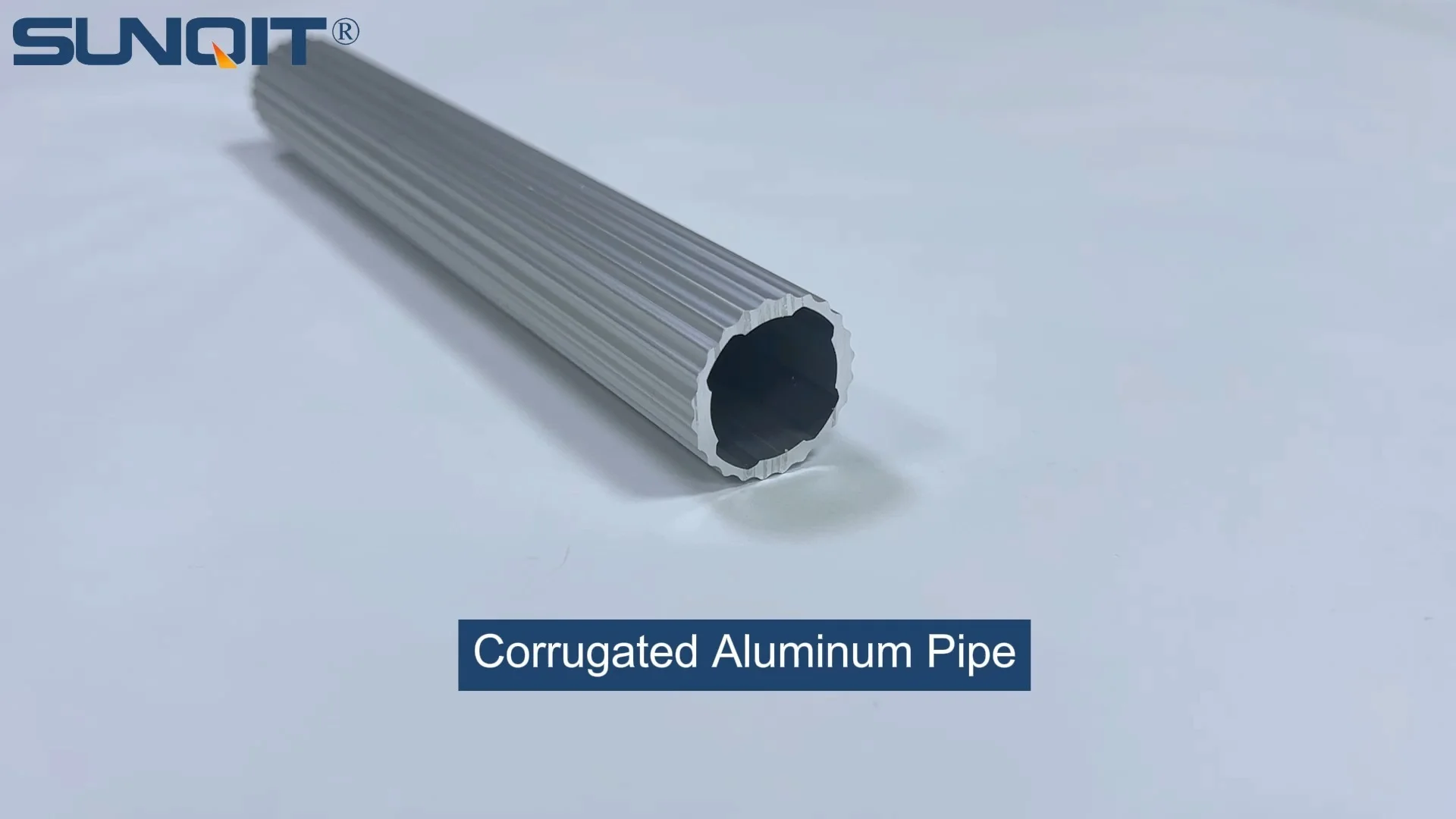
In the fast-paced world of 3C manufacturing—where "computers, communications, and consumer electronics" evolve at breakneck speed—every component in the production line matters. From the tiniest microchip to the largest assembly workbench, the tools and infrastructure that power these factories are the unsung heroes behind our favorite gadgets. Among these, one material has quietly become a cornerstone of modern 3C production: corrugated aluminum pipe. More than just a "pipe," it's a flexible, durable, and highly customizable solution that addresses the unique challenges of building sleek smartphones, powerful laptops, and cutting-edge wearables. Let's dive into why corrugated aluminum pipe is becoming indispensable, how it integrates with systems like aluminum extrusion profiles and lean manufacturing, and how it's reshaping the way 3C factories operate.
The 3C Industry: Where Precision Meets Pressure
Walk into any 3C manufacturing plant, and you'll feel the energy: conveyor belts hum, robotic arms glide, and workers in antistatic suits move with purpose. But beneath this orchestrated chaos lie three critical challenges that keep production managers up at night: miniaturization, speed, and adaptability.
First, miniaturization . Today's smartphones pack more computing power than early supercomputers, yet they're slimmer than a credit card. This means components like circuit boards, batteries, and displays are getting smaller and more delicate. Handling these fragile parts requires infrastructure that's gentle yet precise—no room for rough edges or jolts that could damage a $100 chip.
Second, speed . With new models launching every 6–12 months, 3C brands can't afford slow production lines. Factories need to churn out thousands of units daily, which demands material handling systems that move parts quickly without sacrificing accuracy. A delay in one station can ripple through the entire line, costing millions in missed deadlines.
Third, adaptability . When a new phone model hits the drawing board, the production line must pivot—fast. Old workbenches, racks, and roller tracks might not fit the new component sizes or assembly steps. Replacing entire systems isn't feasible; instead, factories need modular tools that can be reconfigured in days, not weeks.
Enter corrugated aluminum pipe. Unlike rigid steel pipes or flimsy plastic tubes, this material was designed with 3C's demands in mind. Its unique structure—lightweight yet strong, flexible yet stable—checks all the boxes. But to understand why, we first need to appreciate aluminum itself as a manufacturing material.
Aluminum: The Unsung Workhorse of 3C Manufacturing
Aluminum has been a staple in industrial settings for decades, but its role in 3C manufacturing is particularly noteworthy. Why? Let's break it down:
Lightweight, but strong : Aluminum weighs roughly 1/3 of steel, making it ideal for tools that need to be moved—like adjustable workbenches or mobile material racks. A 10-foot corrugated aluminum pipe might weigh 5 pounds, compared to 15 pounds for a steel pipe of the same size. This lightness reduces worker fatigue and makes reconfiguring lines faster (no need for forklifts to move a single bench!).
Corrosion-resistant : 3C factories are often clean rooms with controlled humidity, but even small amounts of moisture or chemicals can damage equipment. Aluminum's natural oxide layer acts as a barrier, preventing rust and ensuring longevity. Unlike steel, which needs frequent painting or coating, aluminum pipe stays functional for years with minimal maintenance.
Thermally efficient : Electronics generate heat, and in tight production spaces, excess heat can warp components or slow down machinery. Aluminum conducts heat 3x better than steel, helping dissipate warmth from workbenches or roller tracks that house heat-sensitive parts like lithium-ion batteries.
Customizable via extrusion : Here's where aluminum truly shines. Through aluminum extrusion—a process where molten aluminum is forced through a die—manufacturers can create complex shapes with precision. This is how we get aluminum extrusion profiles: the "building blocks" of modular systems. From T-slots that let you attach accessories (like roller track connectors) to hollow tubes that route cables, extrusion makes aluminum infinitely adaptable.
But what makes corrugated aluminum pipe stand out from its smooth counterparts? Let's explore that next.

Corrugated Design: Strength in the "Waves"
Imagine a standard smooth aluminum pipe. It's strong, but bend it too far, and it kinks. drop a heavy part on it, and it dents. Now, add a series of parallel "waves" along its length—the corrugated pattern. Suddenly, that pipe becomes a engineering marvel.
Strength without weight : The corrugations act like tiny beams, distributing stress evenly across the pipe's surface. This means a corrugated pipe can support the same weight as a thicker smooth pipe but with less material. For 3C factories, this translates to lighter workbenches that still hold heavy assembly tools, or roller tracks that carry pallets of components without sagging.
Flexibility for tight spaces : 3C production lines are often cramped, with machinery packed closely to maximize floor space. Corrugated aluminum pipe bends slightly without cracking, making it perfect for routing around obstacles—like fitting a roller track around a robotic arm or shaping a material rack to fit in a corner. Smooth pipes would need joints or elbows, adding complexity and weak points; corrugated pipes adapt on the fly.
Shock absorption : When a fragile component (like a glass phone screen) is transported along a roller track, even a small bump can cause damage. The corrugated pattern acts as a "shock absorber," cushioning impacts and reducing vibration. In tests, corrugated aluminum pipes have been shown to reduce material damage by up to 30% compared to rigid steel tracks in 3C assembly lines.
Easy to clean and sanitize : 3C factories demand strict cleanliness to prevent dust or debris from ruining electronics. The smooth, non-porous surface of aluminum, combined with the corrugated pattern's gentle ridges, makes cleaning a breeze. A quick wipe with a disinfectant cloth removes oils or particles—no hidden crevices for grime to build up.
Custom Solutions: Built for 3C's Unique Needs
No two 3C factories are the same. A plant making smartwatches has different needs than one assembling gaming laptops. That's why corrugated aluminum pipe isn't a "one-size-fits-all" product—it's a canvas for customization. Let's look at how suppliers tailor it to specific 3C workflows.
1. Sizing: From "Micro" to "Macro"
3C components range from 0.5mm microchips to 15-inch laptop screens, so corrugated pipes must match these scales. Suppliers offer pipes in diameters as small as 10mm (for routing delicate wires in circuit board assembly) up to 100mm (for heavy-duty material racks). Lengths are customizable too—from 1-foot segments for tight workbench corners to 20-foot runs for long conveyor systems. Wall thickness is another variable: thinner walls (0.8mm) for lightweight applications like mobile trolleys, thicker walls (2.0mm) for stationary racks holding hundreds of pounds of inventory.
2. Coatings: ESD Protection and Beyond
Static electricity is the bane of 3C manufacturing. A single static discharge can fry a semiconductor, rendering an entire batch of phones useless. To combat this, corrugated aluminum pipes can be coated with ESD-safe materials—like the "38 aluminum roller track black esd" finish seen in many factories. These coatings have a surface resistance of 10^6–10^9 ohms, safely grounding static charges without interfering with sensitive electronics. For food-grade electronics (yes, some smart appliances fall here!), pipes can even be coated with FDA-approved plastics to prevent contamination.
3. Integration with Aluminum Extrusion Profiles
The magic of corrugated aluminum pipe lies in how it plays well with others—specifically, aluminum extrusion profiles. These profiles, with their T-slots and grooves, act as the "skeleton" of modular systems, while corrugated pipes add the "muscle." For example:
- Workbenches : An aluminum extrusion profile frame supports a corrugated aluminum pipe top. The T-slots let you attach ESD wristband holders, tool hooks, or even small roller tracks for sliding components across the bench.
- Material racks : Vertical aluminum extrusion posts connect to horizontal corrugated pipes, creating shelves that adjust in height. Need to store taller phone boxes? Loosen the T-slot bolts, move the pipe up, and retighten—no drilling or cutting required.
- Roller tracks : Corrugated aluminum pipes form the rails of roller tracks, with plastic or steel rollers (like "swivel roller balls 1 inch") snapped into place via T-slot connectors. This modularity means you can add or remove rollers to adjust for different component sizes.
4. Lean Manufacturing: Reducing Waste, Boosting Efficiency
3C factories live and die by lean principles—eliminating waste (muda), streamlining processes (kaizen), and keeping lines flexible. Corrugated aluminum pipe fits perfectly into this mindset. Unlike fixed steel infrastructure, which is expensive to replace, corrugated pipe systems are "lean by design." For example:
A factory making smart speakers might switch from a 4-inch to a 5-inch speaker driver. With a traditional steel workbench, this would mean buying a new bench. With a corrugated aluminum pipe bench built on aluminum extrusion profiles? Simply adjust the height of the pipe shelves, swap out the roller track guides, and you're ready—all in an hour, not a week. This reduces "waste of waiting" and "waste of inventory" (no need to stockpile extra benches).
Real-World Applications: How 3C Factories Use Corrugated Aluminum Pipe
Let's ground this in examples. Here are three scenarios where corrugated aluminum pipe is making a tangible difference in 3C production:
Case 1: Smartphone Assembly Workbenches
A leading phone manufacturer was struggling with workbench ergonomics. Their old steel benches were heavy, so workers couldn't adjust heights to match their posture, leading to back pain and slowdowns. They switched to workbenches framed with aluminum extrusion profiles and topped with 38mm corrugated aluminum pipe (lightweight, ESD-coated). The result? Workers could now adjust bench heights in 2 minutes using T-slot levers, reducing fatigue-related errors by 15%. Plus, the corrugated surface prevented small screws and washers from rolling off—saving 2 hours per shift in lost part retrieval.
Case 2: Laptop Battery Roller Tracks
Lithium-ion batteries are delicate—dropping or jostling them can cause thermal runaway. A laptop factory needed a roller track that moved batteries smoothly from the charging station to assembly. They chose corrugated aluminum pipes with "swivel roller balls 0.5 inch"—small, soft rollers that glided the batteries along without jarring. The corrugated pipe's shock absorption reduced battery damage by 40%, and the ESD coating prevented static from igniting battery fumes. Best of all, the modular design let them add a "buffer zone" (extra track length) during peak production—no need to rebuild the entire system.
Case 3: Wearable Device Material Racks
Wearables like fitness trackers come in dozens of sizes and colors, so storage racks need to be hyper-flexible. A wearable factory replaced its fixed plastic racks with aluminum extrusion profiles and corrugated aluminum pipe shelves. Each shelf could be moved up/down in 1-inch increments, and the pipes' light weight meant workers could rearrange racks daily to match production schedules. This reduced "waste of space"—the factory now stores 30% more inventory in the same floor area—and cut changeover time between product models from 8 hours to 2.
Corrugated Aluminum vs. the Competition: A Comparison
Still not convinced corrugated aluminum pipe is the right fit? Let's stack it against two common alternatives: steel pipe and plastic pipe. The table below compares key metrics for a 10-foot length of pipe used in 3C workbenches:
| Metric | Steel Pipe (1.5mm wall) | Plastic Pipe (PVC, 2.0mm wall) | Corrugated Aluminum Pipe (1.2mm wall) |
|---|---|---|---|
| Weight | 18 lbs | 7 lbs | 6 lbs |
| Tensile Strength | 450 MPa | 50 MPa | 300 MPa |
| ESD Resistant? | No (needs coating) | Yes (with additives) | Yes (coated or anodized) |
| Customization | Limited (hard to bend, cut) | Moderate (easy to cut, limited shapes) | High (extruded, bent, coated) |
| Cost (per 10ft) | $45 (high) | $20 (low) | $30 (medium) |
| Expected Lifespan | 15–20 years (with maintenance) | 3–5 years (prone to cracking) | 10–15 years (low maintenance) |
The verdict? Steel is strong but heavy and expensive. Plastic is cheap but weak and short-lived. Corrugated aluminum strikes the perfect balance—lightweight, strong, customizable, and cost-effective. For 3C factories, it's not just a material choice; it's an investment in agility.
Looking Ahead: The Future of Corrugated Aluminum Pipe in 3C
As 3C devices get even smaller, smarter, and more connected, the demands on production infrastructure will only grow. We're already seeing innovations like "internal rotatary aluminum joints" that let corrugated pipes swivel 360 degrees, or "multi-angle fixed aluminum joints" for complex, space-saving configurations. Suppliers are also experimenting with recycled aluminum to reduce carbon footprints—a priority for eco-conscious brands like Apple and Samsung.
But perhaps the biggest trend is integration with Industry 4.0. Imagine corrugated aluminum pipe workbenches with embedded sensors that track tool usage or alert managers when a roller track needs lubrication. Or pipes with RFID tags that sync with inventory systems, automatically updating stock levels as components move through the line. The future isn't just about pipes that hold things—it's about pipes that communicate .
Final Thoughts: More Than a Pipe—A Partner in Innovation
At the end of the day, corrugated aluminum pipe is more than a "component" in 3C manufacturing. It's a partner that helps factories keep up with the relentless pace of innovation. It's the reason a worker can adjust their bench height in 2 minutes instead of 2 hours. It's why a production line can switch from making a 6-inch phone to a 7-inch tablet in a day. It's how 3C brands turn blueprints into products that fit in our pockets, connect us globally, and redefine what technology can do.
So the next time you unbox a new smartphone or fire up your laptop, take a moment to appreciate the infrastructure behind it. Chances are, somewhere in that factory, a corrugated aluminum pipe played a role in bringing your device to life. And as 3C technology evolves, you can bet that pipe will evolve right along with it—stronger, smarter, and more customizable than ever.