- Company Articles
- Products and Technology
- Product knowledge
- Corrugated Aluminum Pipe for Automated Production Cells: Flexibility and Adaptability

Corrugated Aluminum Pipe for Automated Production Cells: Flexibility and Adaptability
Related Product
Corrugated Aluminum Pipe
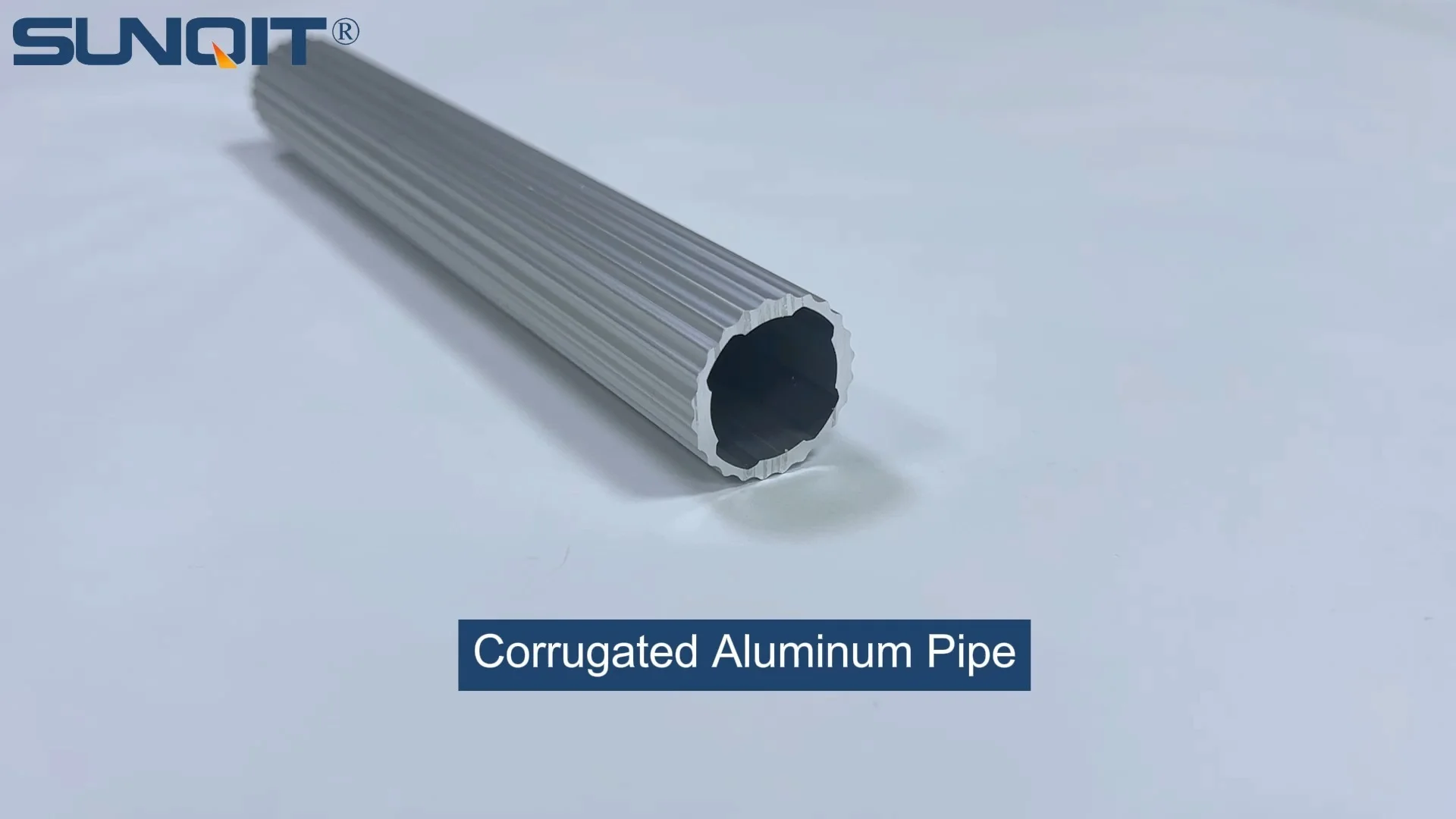
Product Description The slot side is 10mm which can work with a T sliding block for connection accessories Quick Detail Product name Corrugated Aluminum pipe model GLT28-T-3010A Material Science 6005-T6 thickness 1.7mm surface treatment anodic oxidat
In the fast-paced world of modern manufacturing, where product lifecycles shrink and customization demands grow, the ability to adapt is no longer a luxury—it's a necessity. Automated production cells, once static and rigid, now need to pivot quickly to meet changing workflows, new product lines, and evolving efficiency standards. At the heart of this transformation lies a humble yet revolutionary component: corrugated aluminum pipe. More than just a structural element, it's a catalyst for flexibility, enabling factories to reimagine how they build, modify, and optimize their production environments. Let's dive into why corrugated aluminum pipe has become the unsung hero of adaptive manufacturing, and how it's reshaping the future of automated production cells.
What Sets Corrugated Aluminum Pipe Apart?
First, let's clarify what we mean by "corrugated aluminum pipe." Unlike smooth-walled pipes, corrugated variants feature a series of ridges and grooves along their length, a design that marries strength with versatility. Made from high-grade aluminum—often through the aluminum extrusion profile process—these pipes leverage the material's natural advantages: lightweight yet robust, corrosion-resistant, and infinitely recyclable. But it's the corrugation that elevates their utility. Those ridges aren't just for show; they enhance structural integrity, allowing the pipe to bear more weight without bending, while also providing grip points for accessories and connectors. This unique combination makes corrugated aluminum pipe ideal for the dynamic demands of automated production cells, where stability and adaptability are equally critical.
To understand its impact, consider traditional production setups. For decades, factories relied on steel pipes or fixed metal frames to build workbenches, material racks, and conveyor supports. While durable, these systems were heavy, time-consuming to install, and nearly impossible to reconfigure without cutting, welding, or replacing entire sections. A single change in workflow—say, adding a new assembly step or rearranging a production line—could mean days of downtime and significant costs. Corrugated aluminum pipe flips this script. Its lightweight nature makes it easy to handle (no heavy lifting equipment required), and its modular design allows for tool-free adjustments. Need to raise a workbench by a few inches? Swap out a connector. Want to extend a roller track to accommodate longer parts? Add a new pipe segment. It's manufacturing on-demand, and it's changing the game.
Flexibility in Action: Building for Change
Modular Design Meets Real-World Needs
The true power of corrugated aluminum pipe lies in its modularity, made possible by a ecosystem of aluminum profile accessories . From joints and brackets to clamps and end caps, these components turn pipes into building blocks that can be assembled, disassembled, and reassembled in countless configurations. Imagine a child's building set, but for adults building production lines: snap-fit connectors allow pipes to be joined at angles, T-junctions, or straight runs in minutes, without the need for specialized tools or skills. This modularity is a game-changer for manufacturers facing tight deadlines or frequent workflow shifts.
Case Study: A Tier-1 Automotive Supplier's Transformation
Consider a mid-sized automotive parts supplier that recently switched to corrugated aluminum pipe for its assembly cells. Previously, their workbenches and material racks were built with steel frames, bolted to the floor and welded in place. When the company landed a contract for a new electric vehicle component, they needed to reconfigure three production lines to accommodate the larger parts. The old setup would have required cutting the steel frames, welding new supports, and repainting—taking an estimated 40 hours of downtime per line. With corrugated aluminum pipe, the process was entirely different. Using pre-cut pipes and quick-connect joints, their team disassembled the existing racks, reconfigured the frames to the new dimensions, and reinstalled everything in just 8 hours per line. Total downtime? Three days instead of two weeks. The savings in labor and lost production? Over $100,000. And when the next product change comes? They'll be ready in a fraction of the time.
Seamless Integration with Lean Systems
In today's manufacturing landscape, lean system principles—eliminating waste, streamlining workflows, and continuous improvement—are the backbone of efficiency. Corrugated aluminum pipe aligns perfectly with these goals, acting as a physical enabler of lean practices. For example, 5S methodology (Sort, Set in Order, Shine, Standardize, Sustain) relies on visual organization and easy access to tools and materials. Corrugated aluminum pipe workbenches can be customized with built-in tool holders, label slots, and color-coded sections, making it clear where everything belongs. When workflows change, the bench can be reorganized to reflect the new standard, ensuring 5S practices remain intact even as production evolves.
Another lean staple is "just-in-time" (JIT) production, which minimizes inventory by delivering materials exactly when they're needed. Corrugated aluminum pipe excels here, too. Its lightweight nature makes it ideal for building mobile material carts or adjustable roller track systems that transport parts directly to the assembly line. Unlike fixed conveyor belts, roller tracks built with corrugated pipe can be extended, shortened, or rerouted as production schedules shift. For instance, if a sudden surge in demand requires adding a second assembly station, a roller track can be quickly extended to feed parts to the new station—no need for expensive conveyor upgrades or permanent infrastructure changes. It's lean manufacturing in motion, quite literally.

Beyond Pipes: The Ecosystem of Adaptability
Corrugated aluminum pipe doesn't work alone. Its versatility is amplified by the wide range of accessories designed to work with it, turning simple pipes into complete production solutions. Let's explore a few key components that make this ecosystem so powerful:
- Joints and Connectors: These are the glue of the system. From 90-degree elbows to T-junctions and swivel joints, they allow pipes to be arranged in 3D configurations. Many are designed for tool-free assembly—twist, lock, and you're done—making reconfiguration a one-person job.
- Workbench Tops and Panels: Corrugated aluminum pipes form the frame, but adding a durable work surface (like aluminum honeycomb panels or anti-static ESD tops) turns them into functional workbenches. These tops are often reversible or replaceable, extending the bench's lifespan as needs change.
- Roller Track Inserts: For material handling, roller tracks snap into corrugated pipes, creating gravity-fed lanes for parts. Whether moving small components or heavy assemblies, these tracks reduce manual lifting and speed up material flow.
- Casters and Leveling Feet: Adding casters to a pipe frame transforms it into a mobile cart; swapping them for leveling feet anchors it in place. This duality means the same structure can serve as a stationary workbench one day and a transport trolley the next.
The beauty of this ecosystem is that it's open-ended. Manufacturers aren't locked into a single supplier's proprietary parts; most aluminum profile accessories are standardized, meaning components from different brands can work together. This interoperability reduces costs and ensures that factories can mix and match to create exactly what they need, without vendor lock-in.
Comparing Traditional vs. Corrugated Aluminum Solutions
To truly grasp the benefits, let's put corrugated aluminum pipe head-to-head with traditional materials like steel and fixed aluminum profiles. The table below breaks down key factors that matter most to production managers: cost, installation time, reconfigurability, and durability.
| Criteria | Steel Pipes/Frames | Fixed Aluminum Profiles | Corrugated Aluminum Pipe |
|---|---|---|---|
| Weight | Heavy (requires equipment for installation) | Moderate (lighter than steel but still rigid) | Lightweight (easily handled by 1-2 people) |
| Installation Time | Long (welding, bolting, painting required) | Moderate (cutting and drilling needed for customization) | Short (tool-free assembly; modular components) |
| Reconfigurability | Very Low (requires cutting/welding to modify) | Low (fixed lengths; difficult to adjust without replacement) | Very High (disassemble and rebuild in minutes/hours) |
| Durability | High (but prone to rust in humid environments) | High (corrosion-resistant but rigid) | High (corrosion-resistant, corrugation adds structural strength) |
| Long-Term Cost | High (installation labor, downtime for changes, maintenance) | Moderate (lower maintenance than steel but limited adaptability) | Low (quick installation, minimal downtime, reusable components) |
The data speaks for itself. While steel and fixed aluminum have their place in static environments, corrugated aluminum pipe dominates when adaptability is key. Its lower long-term cost—driven by reduced installation time, minimal downtime for reconfigurations, and reusable components—often offsets any slight premium in initial material costs. For factories focused on agility, the choice is clear.
Real-World Applications: Where Corrugated Aluminum Shines
Corrugated aluminum pipe isn't just a theoretical improvement; it's making a tangible difference across industries. Let's explore a few sectors where it's proving indispensable:
Electronics Manufacturing: Precision and ESD Safety
In electronics production, where static electricity can damage sensitive components, ESD (electrostatic discharge) workbenches are a must. Corrugated aluminum pipe frames, paired with anti-static work surfaces and grounding accessories, create ESD-safe zones that are easy to reconfigure. For example, a smartphone manufacturer might need to adjust bench heights to accommodate workers of different statures or rearrange tool positions for a new model's assembly steps. With corrugated pipe, these changes take minutes, not days, ensuring production stays on track.
Food and Beverage: Hygiene and Cleanability
Food processing plants demand strict hygiene standards, and corrugated aluminum pipe delivers here, too. Aluminum's corrosion resistance means it stands up to frequent washdowns with harsh chemicals, and its smooth, non-porous surface leaves no crevices for bacteria to hide. Unlike steel, which can rust over time, aluminum maintains its integrity even in wet environments. And when production lines need to switch from processing meat to vegetables (or vice versa), the modular pipe systems can be disassembled, sanitized, and reassembled to meet the new product's requirements—critical for compliance with food safety regulations.
Aerospace: Lightweight Strength for Large Assemblies
Aerospace manufacturers work with large, heavy components, but they also need to move tooling and assemblies efficiently. Corrugated aluminum pipe's high strength-to-weight ratio makes it ideal for building jigs, fixtures, and material racks that can support aircraft parts without adding unnecessary bulk. For example, a wing assembly fixture might need to be adjusted slightly for a new aircraft model; with corrugated pipe, engineers can modify the frame without rebuilding it from scratch, saving time and ensuring precision.
The Future: Corrugated Aluminum Pipe in Industry 4.0
As manufacturing marches toward Industry 4.0—smart factories, IoT integration, and data-driven production—corrugated aluminum pipe is poised to play an even bigger role. Here's why:
Adaptability for Smart Systems: Smart factories rely on sensors, cameras, and automated guided vehicles (AGVs) to optimize workflows. Corrugated aluminum pipe frames can easily integrate these technologies: sensor mounts clip onto pipes, cable management channels hide wiring, and AGV paths can be reconfigured by adjusting roller tracks or material racks. As new technologies are added, the pipe system evolves with them, avoiding costly overhauls.
Sustainability Goals: With pressure to reduce carbon footprints, aluminum's recyclability is a major plus. Unlike steel, which loses strength when recycled, aluminum can be melted down and reused indefinitely without quality loss. Corrugated aluminum pipe systems also generate less waste; since they're reconfigurable, fewer components end up in landfills when workflows change. For companies aiming for net-zero, this is a tangible step toward sustainability.
Scalability for Small and Medium Manufacturers: Industry 4.0 often feels out of reach for smaller factories, but corrugated aluminum pipe democratizes adaptability. It's affordable, easy to install, and doesn't require specialized training to maintain. A small contract manufacturer can start with a few workbenches and expand incrementally as business grows, without taking on debt for fixed infrastructure.
Conclusion: Building the Factories of Tomorrow, Today
In a world where change is the only constant, corrugated aluminum pipe offers something rare: stability amid flux. It's not just a material; it's a mindset—one that says, "We don't have to accept rigid systems that hold us back." By combining the strength of aluminum, the flexibility of modular design, and the practicality of aluminum profile accessories , it empowers manufacturers to build production cells that grow, adapt, and thrive. Whether you're running a small workshop or a large automotive plant, the message is clear: to stay competitive, you need systems that can change as fast as your business does. Corrugated aluminum pipe isn't just keeping up with the pace of manufacturing—it's setting it.
So, the next time you walk through a factory and see a workbench that looks a little different than last month, or a roller track that's been extended to handle new parts, take a closer look. Chances are, there's a corrugated aluminum pipe at its core, quietly enabling the future of manufacturing—one adaptive step at a time.