- Company Articles
- Products and Technology
- Application Cases
- Corrugated Aluminum Pipe in Home Appliance Production: Assembly Line Design

Corrugated Aluminum Pipe in Home Appliance Production: Assembly Line Design
Related Product
Corrugated Aluminum Pipe
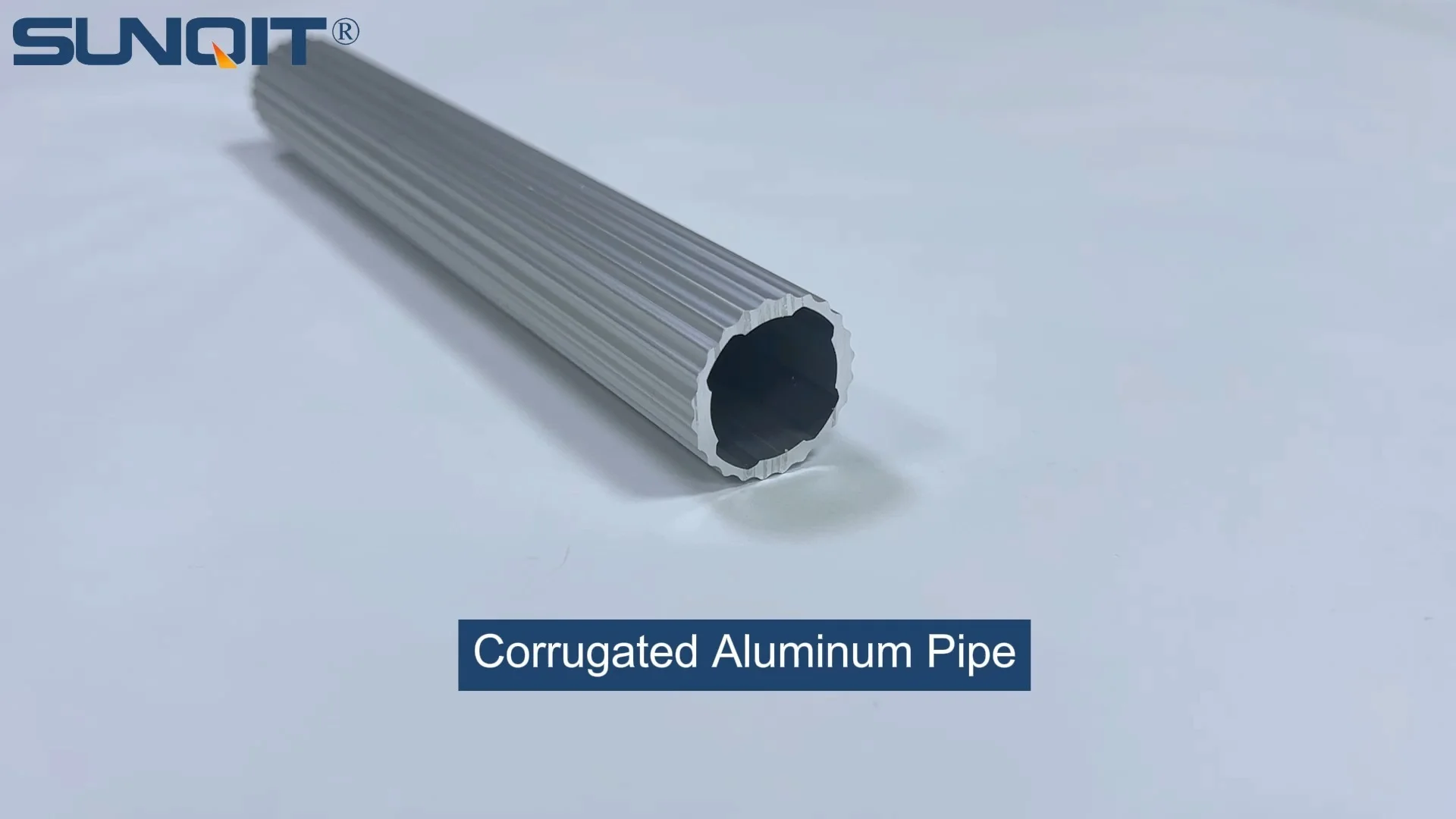
Product Description The slot side is 10mm which can work with a T sliding block for connection accessories Quick Detail Product name Corrugated Aluminum pipe model GLT28-T-3010A Material Science 6005-T6 thickness 1.7mm surface treatment anodic oxidat
The Heartbeat of Home Appliance Factories: Why Assembly Lines Matter
Walk into any home appliance factory—whether it's churning out refrigerators, washing machines, or microwaves—and you'll quickly realize one thing: the assembly line is the pulse of the operation. Every component, from a tiny screw to a large metal panel, needs to move seamlessly from station to station, where workers or machines add their piece to the puzzle. A single hiccup—a jammed conveyor, a wobbly workbench, or a rigid structure that can't adapt to a new product model—can throw off timelines, increase costs, and leave workers frustrated. In an industry where consumer demand shifts faster than ever, and production targets grow tighter by the quarter, the assembly line's design isn't just a "nice-to-have"—it's the difference between thriving and falling behind.
For decades, factories relied on heavy steel pipes and fixed structures to build these lines. They were sturdy, sure, but they came with a cost: they were hard to move, expensive to reconfigure, and weighed down the production floor like a lead anchor. Then, something changed. As lean manufacturing principles took hold—emphasizing flexibility, waste reduction, and adaptability—manufacturers started searching for materials that could keep up. That's where corrugated aluminum pipe stepped in, quietly transforming assembly lines from rigid monoliths into agile, worker-friendly systems that feel almost alive.
The Problem with "Old-School" Assembly Lines: Rigidity in a Fast-Paced World
Let's take a step back. Imagine a factory floor from the early 2000s. The assembly lines are built with thick steel pipes welded together to form workbenches, conveyors, and material racks. They're built to last "forever," but "forever" in manufacturing terms is rarely more than a few years. When a new appliance model is introduced—say, a slimmer refrigerator with a different internal layout—the old steel structure can't just be "tweaked." It often needs to be completely dismantled and rebuilt, costing weeks of downtime and tens of thousands of dollars. Workers, meanwhile, struggle with heavy, unyielding workbenches that don't adjust to their height, leading to fatigue and even injuries over time.
Then there's the issue of weight. Steel pipes add unnecessary heft to conveyors and trolleys, making them harder to move and increasing wear and tear on motors and casters. In a lean system—where every second and every ounce counts—this waste adds up. Material flow slows down, energy costs rise, and the factory's ability to quickly pivot to new production needs is crippled. It's no wonder that by the 2010s, manufacturers were asking:
There has to be a better way.

Corrugated Aluminum Pipe: The Lightweight Revolution
What Makes Corrugated Aluminum Pipe Different?
Enter corrugated aluminum pipe—a material that sounds simple on paper but has become a game-changer for assembly line design. Unlike smooth steel pipes, corrugated aluminum pipe has a series of ridges (corrugations) along its length, which might seem like a small detail until you realize what they do: they add strength without adding weight. Aluminum itself is already 30% lighter than steel, but the corrugated design takes it a step further, making the pipe rigid enough to support heavy loads (like stacks of metal sheets for oven doors) while remaining light enough for a single worker to carry and install.
But it's not just about weight. Corrugated aluminum pipe is also incredibly flexible—both literally and figuratively. Thanks to its lightweight nature and compatibility with modular joints (often made from aluminum extrusion profile), it can be assembled into almost any shape: a U-shaped conveyor for parts sorting, a height-adjustable workbench for assembling delicate electronics, or a mobile trolley for moving finished components to packaging. And when production needs change? No welding, no cutting, no waiting for a team of engineers. Workers can disassemble and reconfigure the pipe in hours, not days, using basic tools. It's like building with industrial-grade Legos—strong, versatile, and surprisingly intuitive.
From Raw Material to Assembly Line: The Aluminum Extrusion Profile Process
To truly appreciate corrugated aluminum pipe, it helps to understand how it's made. Most corrugated aluminum pipes start as aluminum extrusion profiles—a process where heated aluminum billets are pushed through a die (a custom-shaped tool) to create long, uniform sections with specific cross-sectional designs (like the corrugations we mentioned). This method is efficient, cost-effective, and allows for endless customization. Need a pipe with extra-wide corrugations for added grip? Or a thinner wall for lighter applications? The extrusion process can adapt, making it easy to tailor the pipe to a factory's exact needs.
What's more, aluminum extrusion profiles are inherently precise. Each pipe comes out of the die with consistent dimensions, ensuring that joints and accessories (like clamps or brackets) fit perfectly every time. This precision cuts down on installation errors and ensures that the assembly line remains stable, even when supporting heavy loads or vibrating machinery. For home appliance factories, where consistency is key to quality control, this level of reliability is priceless.
Corrugated Aluminum Pipe and the Lean System: A Match Made in Manufacturing Heaven
Lean manufacturing isn't just a buzzword—it's a philosophy centered on eliminating waste, whether that's time, materials, or unnecessary effort. Corrugated aluminum pipe embodies this philosophy in every way, making it a cornerstone of modern lean systems. Let's break down how:
Waste Reduction: Less Time, Less Money, Less Frustration
Traditional steel assembly lines are full of waste. Remember that downtime we mentioned earlier when reconfiguring for a new product? With corrugated aluminum pipe, that waste disappears. A team of two workers can reconfigure a 50-foot conveyor line in a single shift, compared to a full week with steel. That's weeks of production saved over a year, which translates directly to more appliances rolling off the line and more revenue in the bank.
Then there's material waste. Aluminum is 100% recyclable, and because corrugated aluminum pipe is modular, damaged sections can be swapped out individually instead of replacing an entire structure. No more cutting up perfectly good steel pipes just to fix a single bent section. Even better, aluminum extrusion profiles generate minimal scrap during production, making the entire process more sustainable—a win for both the factory and the planet.
Flexibility: Adapting to the "New Normal" of Production
Home appliance trends change faster than ever. One year, consumers want smart refrigerators with touchscreens; the next, they're demanding energy-efficient washing machines with smaller footprints. A lean system needs to adapt to these shifts quickly, and corrugated aluminum pipe makes that possible. For example, if a factory switches from assembling large-capacity dryers to compact models, the workbenches and conveyors can be shortened or repositioned in a day. No need to invest in entirely new equipment—just reimagine the existing system.
This flexibility also extends to worker needs. Ergonomics is a growing focus in manufacturing, as factories strive to reduce injuries and improve job satisfaction. Corrugated aluminum pipe workbenches can be adjusted to different heights, allowing tall and short workers to stand comfortably. Conveyors can be tilted to reduce bending, and material racks can be positioned closer to workstations to cut down on walking time. When workers feel supported, they're more productive—and that's a win for everyone.
Putting It All Together: Corrugated Aluminum Pipe in Action
Conveyors: The Backbone of Material Flow
Conveyors are the arteries of the assembly line, moving parts from one station to the next. In home appliance production, where parts range from small screws to large metal panels, conveyors need to be strong, smooth, and adaptable. Corrugated aluminum pipe excels here, often paired with roller tracks (another modular component) to create custom conveyor systems. The lightweight pipe reduces strain on conveyor motors, extending their lifespan, while the corrugations provide extra traction, preventing parts from slipping or jamming—even at high speeds.
Take, for example, a conveyor line for dishwasher doors. The doors are heavy (often 20-30 pounds each) and need to move gently to avoid damaging the glass panels. A corrugated aluminum pipe frame, fitted with soft rubber rollers, provides the perfect balance of strength and cushioning. If the factory starts producing larger doors for a new model, the frame can be widened by adding extra pipe sections—no need to replace the entire conveyor. It's this kind of adaptability that makes corrugated aluminum pipe indispensable.
Workbenches: Where Precision Meets Comfort
If conveyors are the arteries, workbenches are the heart of the assembly line—the place where workers spend most of their day, piecing together components with painstaking precision. A good workbench should be stable, adjustable, and organized; a bad one leads to mistakes, fatigue, and frustration. Corrugated aluminum pipe workbenches check all these boxes. They're lightweight enough to move (with the addition of casters) but sturdy enough to support tools, parts bins, and even small machinery like drills or screwdrivers. The modular design lets factories add shelves, tool hooks, or LED lights exactly where workers need them, turning a generic bench into a personalized workstation.
Consider a workbench for assembling microwave control panels—delicate electronics that require steady hands and good lighting. A corrugated aluminum pipe frame can be fitted with an adjustable-height top (using telescoping pipe sections), a built-in LED light strip (mounted via aluminum extrusion profile brackets), and a small parts bin rack underneath. If a worker prefers to sit, the bench can be lowered; if they need more space, a side shelf can be added in minutes. It's a workstation that adapts to the worker, not the other way around.
Corrugated Aluminum Pipe vs. Traditional Materials: A Side-by-Side Comparison
Still not convinced that corrugated aluminum pipe is worth the switch? Let's put it head-to-head with traditional steel pipe and even smooth aluminum pipe (non-corrugated) to see how it stacks up. The table below compares key factors like weight, cost, and flexibility—all critical for home appliance assembly lines.
| Factor | Traditional Steel Pipe | Smooth Aluminum Pipe | Corrugated Aluminum Pipe (with Aluminum Extrusion Profile) |
|---|---|---|---|
| Weight (per meter) | 15-20 kg | 5-7 kg | 4-6 kg (lighter due to corrugations) |
| Installation Time | 2-3 days (requires welding) | 1 day (modular, but less rigid) | 4-6 hours (modular joints, no welding) |
| Flexibility (Reconfiguration) | Low (requires cutting/welding) | Medium (can be disassembled, but limited strength) | High (reconfigurable in hours with basic tools) |
| Cost (Initial + Long-Term) | Low initial cost, high long-term (maintenance, reconfiguration) | Medium initial cost, medium long-term | Medium initial cost, low long-term (durable, recyclable, minimal maintenance) |
| Worker Ergonomics | Poor (heavy, hard to adjust) | Good (lightweight, but less stable) | Excellent (lightweight, adjustable, stable) |
As the table shows, corrugated aluminum pipe isn't just "better" than steel—it's smarter. While steel might have a lower upfront cost, the long-term savings in downtime, labor, and reconfiguration make corrugated aluminum pipe a more cost-effective choice for factories that value agility. And compared to smooth aluminum pipe, the corrugated design adds the rigidity needed for heavy-duty applications, without sacrificing the material's natural lightness. It's the best of both worlds.
Case Study: How ABC Appliances Cut Downtime by 40% with Corrugated Aluminum Pipe
Let's bring this to life with a real-world example (names changed for privacy). ABC Appliances, a mid-sized factory in Ohio, specializes in producing small kitchen appliances like blenders and toasters. In 2022, they faced a problem: their steel assembly lines were struggling to keep up with demand for new, compact blender models. Every time they switched production from a standard blender to a mini version, they had to shut down the line for 3 days to rebuild the steel workbenches and conveyors. By the end of the year, downtime had cost them over $100,000 in lost production.
That's when they decided to test corrugated aluminum pipe. They started small: replacing the steel frame of one conveyor line and two workbenches with corrugated aluminum pipe and aluminum extrusion profile joints. The results were immediate. Installation took just 6 hours (instead of 3 days), and when they needed to switch to the mini blender model a month later, the team reconfigured the line in
2 hours
—no welding, no outside contractors. Workers reported less fatigue, too; the lighter workbenches were easier to adjust, and the smoother conveyor flow reduced errors.
Encouraged, ABC Appliances rolled out corrugated aluminum pipe across their entire factory over the next six months. By the end of 2023, downtime was down by 40%, worker productivity was up by 15%, and they'd saved over $200,000 in reconfiguration costs alone. "It's like night and day," said Maria Gonzalez, the factory floor manager. "We used to dread product launches because of the downtime. Now? We can pivot in a morning and be back to full production by lunch. The workers love it, and the bottom line shows it."
The Future of Assembly Lines: Corrugated Aluminum Pipe and Smart Manufacturing
As home appliance factories move toward smart manufacturing—think IoT sensors, AI-driven production tracking, and fully connected lines—corrugated aluminum pipe is poised to play an even bigger role. Its modular design makes it easy to integrate with smart tools: sensors can be mounted directly onto the pipe to monitor conveyor speed or detect jams, while QR codes on joints can help track inventory of spare parts. And because it's lightweight, it pairs well with automated guided vehicles (AGVs), which can move modular workstations around the floor as needed.
Sustainability is another key trend, and corrugated aluminum pipe delivers here, too. Aluminum is 100% recyclable, and unlike steel, it doesn't rust or corrode, meaning it has a longer lifespan. When a pipe finally reaches the end of its useful life, it can be melted down and reused, reducing waste and lowering a factory's carbon footprint. For brands that are increasingly marketing their eco-friendly credentials, this is a powerful selling point.
Perhaps most exciting, though, is the potential for corrugated aluminum pipe to make factories more human-centric. As automation takes over repetitive tasks, workers will focus more on problem-solving, creativity, and quality control. A flexible, adaptable assembly line built with corrugated aluminum pipe gives them the space and tools to do that—turning the factory floor from a place of drudgery into a place of innovation.
Final Thoughts: More Than a Pipe—A Partner in Production
Corrugated aluminum pipe might seem like a simple material, but its impact on home appliance assembly lines is profound. It's not just about building a conveyor or a workbench—it's about building a factory that can keep up with the future: one that's flexible enough to adapt to new products, efficient enough to reduce waste, and worker-friendly enough to retain talent. When paired with aluminum extrusion profile joints, lean system principles, and smart manufacturing tools, it becomes more than a component of the assembly line; it's a partner in production.
For home appliance manufacturers looking to stay competitive in a fast-changing market, the message is clear: rigid, heavy assembly lines belong in the past. The future is lightweight, flexible, and human-centered—and it's built on corrugated aluminum pipe.