- Company Articles
- Products and Technology
- Product knowledge
- Corrugated Aluminum Pipe Load-Bearing Capacity: Testing and Safety Limits

Corrugated Aluminum Pipe Load-Bearing Capacity: Testing and Safety Limits
Related Product
Corrugated Aluminum Pipe
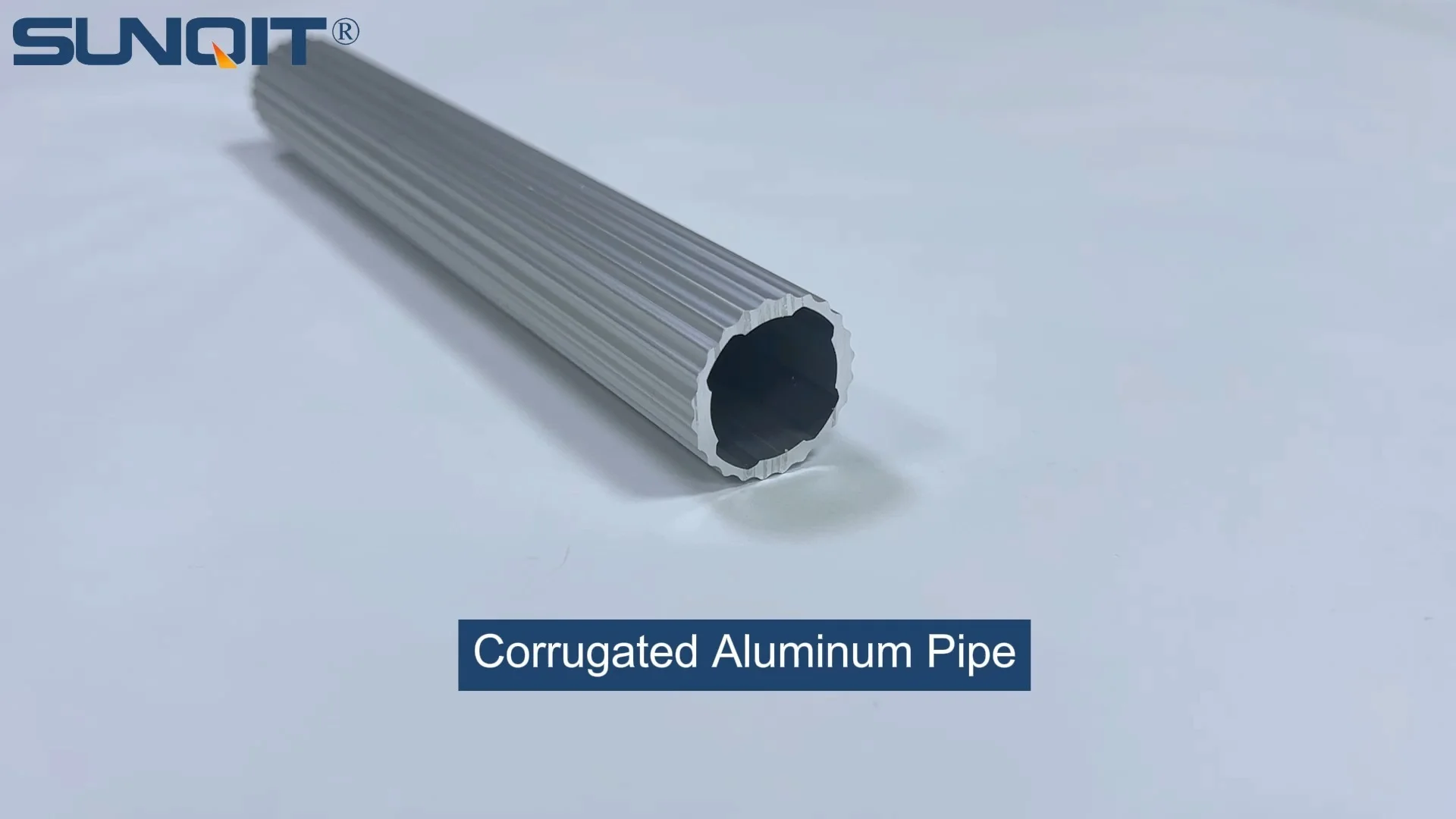
Product Description The slot side is 10mm which can work with a T sliding block for connection accessories Quick Detail Product name Corrugated Aluminum pipe model GLT28-T-3010A Material Science 6005-T6 thickness 1.7mm surface treatment anodic oxidat
In the bustling world of manufacturing and industrial operations, every component has a role to play—some quietly, others as workhorses that keep workflows moving. Among these unsung heroes is the corrugated aluminum pipe, a material that's become indispensable in building lean systems, sturdy workbenches, and efficient material handling setups. Its popularity stems from a simple yet powerful combination: it's lightweight enough to be flexible, yet strong enough to bear significant weight. But here's the thing: when you're relying on it to support tools, parts, or even entire workstations, knowing its load-bearing capacity isn't just a technical detail—it's the foundation of safety, efficiency, and trust in your operations.
Imagine a busy assembly line where a workbench built with corrugated aluminum pipe holds sensitive electronics. If that bench can't bear the weight of the equipment, the consequences range from delayed production to damaged goods, or worse, workplace injuries. That's why understanding how much weight corrugated aluminum pipe can safely carry, how to test it, and where its limits lie is non-negotiable for anyone building or maintaining industrial setups. In this article, we'll dive into the nitty-gritty of corrugated aluminum pipe's load-bearing capacity, the factors that shape it, the tests that verify it, and the safety standards that keep everyone—and everything—secure.
What Makes Corrugated Aluminum Pipe Unique?
Before we talk about load-bearing, let's get to know the star of the show: corrugated aluminum pipe. At first glance, it might look like just another metal tube, but its secret lies in its shape. Unlike smooth aluminum pipes, corrugated versions have a series of ridges (corrugations) running along their length—think of the texture of a cardboard box, but in metal. These ridges aren't just for show; they're engineered to boost strength. By adding these waves, the pipe gains rigidity without adding excessive weight, making it far more resistant to bending or buckling under load than a smooth pipe of the same thickness.
Most corrugated aluminum pipes start as aluminum extrusion profiles, a manufacturing process where aluminum alloy is forced through a die to create a specific cross-sectional shape. This process ensures consistency in the corrugations, which is critical for predictable performance. The choice of aluminum alloy matters too—alloys like 6061 or 6063 are common because they offer a balance of strength, corrosion resistance, and machinability. This means the pipe can handle humid factory floors, occasional spills, and the wear and tear of daily use without rusting or weakening over time.
Another key advantage? Its versatility. Corrugated aluminum pipe isn't just a standalone product; it's part of a larger ecosystem. Pair it with aluminum pipe accessories like joints, clamps, or brackets, and you can build everything from simple material racks to complex lean system setups. For example, a Material Rack B (3 row and 3 floor) might use corrugated aluminum pipe for its shelves, leveraging the pipe's strength to hold boxes of parts without sagging. Or a Workbench E (single deck-without caster) could rely on it as a sturdy frame, supporting tools and assembly tasks day in and day out.
Factors That Shape Load-Bearing Capacity
So, how much weight can a corrugated aluminum pipe actually hold? The answer isn't one-size-fits-all. Load-bearing capacity depends on a mix of design choices and real-world conditions. Let's break down the most critical factors:
1. Material Thickness
Thickness is the first thing to check. A pipe with a wall thickness of 1.5mm will almost always carry more weight than a 1.0mm pipe of the same length and corrugation design. Manufacturers often list thickness options (like 0.8mm, 1.2mm, 1.5mm, or 2.0mm) to suit different needs—thinner pipes for lightweight applications, thicker ones for heavy-duty use.
2. Corrugation Design
The size and spacing of the corrugations matter too. Deeper ridges (say, 5mm vs. 3mm) or closer spacing can increase the pipe's stiffness, allowing it to distribute weight more evenly. Think of it like how a corrugated roof holds snow better than a flat one—the waves help spread the load across a larger area.
3. Pipe Length and Support Spacing
Even the strongest pipe will sag if it's too long without support. A 2-meter pipe supported at both ends might hold 50kg, but the same pipe stretched to 4 meters with no extra supports could fail at 30kg. That's why lean system designers pay close attention to support spacing—adding brackets or mounting the pipe to aluminum profiles at regular intervals to prevent over-bending.
4. Alloy Strength
Not all aluminum is created equal. Alloys with higher tensile strength (like 6061-T6) can withstand more stress before deforming compared to softer alloys. If your application involves heavy, static loads, a stronger alloy is worth the investment.
5. Environmental Conditions
Heat, cold, and moisture can affect performance too. Aluminum handles temperature extremes better than some metals, but prolonged exposure to high heat (above 100°C) can weaken its structure over time. Similarly, while aluminum is corrosion-resistant, constant exposure to saltwater or chemicals might require extra coatings or stainless steel accessories to avoid degradation.

Testing Load-Bearing Capacity: How Engineers Verify Strength
Claims about load capacity are one thing—proving them is another. To ensure corrugated aluminum pipes perform as promised, manufacturers and third-party labs run rigorous tests. Here's a look at the most common methods:
Static Load Testing
This is the most basic test: how much weight can the pipe hold when the load is applied slowly and stays in place (static). Engineers mount a sample pipe between two supports (mimicking real-world installation) and gradually add weights (like steel plates) to the center. They measure how much the pipe bends (deflection) and note when it starts to permanently deform (yield) or break. For example, a 1.5mm thick corrugated pipe might pass a static test by holding 100kg for 24 hours with less than 2mm of deflection.
Dynamic Load Testing
Real-world loads aren't always static. Think of a workbench where parts are constantly being placed and removed, or a conveyor where boxes slide across the pipe. Dynamic testing simulates this by applying repeated or sudden loads. Engineers might use a machine to drop a weight onto the pipe (impact test) or cycle a load up and down (fatigue test) to see how it holds up over time. A pipe that passes static testing might fail dynamic testing if the corrugations crack under repeated stress.
Bending Strength Testing
This test focuses on how much the pipe can bend before breaking. Using a hydraulic press, engineers apply force to the middle of a supported pipe until it bends 10°, 20°, or more. The goal is to find the "breaking point"—the force needed to snap the pipe. This is critical for applications where the pipe might be used in a cantilever setup (like a shelf extending from a wall) where bending forces are high.
Compression Testing
While pipes are often loaded from above (tension), some setups require them to bear weight from the sides (compression), like in the legs of a workbench. Compression testing involves squeezing the pipe along its length to see how much force it can take before collapsing. For example, a pipe used as a table leg might need to handle 200kg of compression without buckling.
One real-world example: a leading lean pipe supplier recently tested a batch of 1.2mm corrugated aluminum pipes for a client building Material Rack B (3 row and 3 floor). The static load test showed each pipe could hold 80kg without permanent deformation, while dynamic testing (simulating parts being slid onto the rack) confirmed it could handle 60kg repeated loads over 10,000 cycles. These results gave the client confidence that the rack would safely support their daily operations.
Safety Limits: Knowing When to Stop
Even the strongest pipe has a breaking point, which is why safety limits exist. These limits aren't arbitrary—they're based on testing data and industry standards to ensure there's a buffer between "safe to use" and "risk of failure." Here's what you need to know:
Safe Working Load (SWL)
The SWL is the maximum weight the pipe should carry under normal conditions. It's usually calculated as a fraction of the "ultimate breaking load" (the weight that causes the pipe to snap). A common rule of thumb is a safety factor of 1.5 to 2—meaning if a pipe breaks at 100kg, its SWL would be 50-67kg. This buffer accounts for unexpected stresses, like a sudden impact or minor defects in the pipe.
Industry Standards
Reputable suppliers follow standards set by organizations like ISO (International Organization for Standardization) or ASTM (American Society for Testing and Materials). For example, ASTM B221 covers aluminum extrusion profiles, including guidelines for testing mechanical properties. When choosing a supplier, ask for test reports that reference these standards—if they can't provide them, it's a red flag.
Signs of Overloading
Even with SWL in mind, it's important to watch for warning signs of overloading. These include: visible bending or warping of the pipe, cracks in the corrugations, or looseness in joints/accessories. If you notice any of these, stop using the setup immediately—continuing could lead to catastrophic failure.
Real-World Applications: Where Load Capacity Matters Most
To see why load-bearing capacity is so critical, let's look at a few common applications where corrugated aluminum pipe shines—and where cutting corners on capacity could spell trouble:
Workbenches
A Workbench E (single deck-without caster) is a staple in assembly lines, labs, and workshops. If the corrugated aluminum pipe frame is underrated for the tools and materials placed on it, the deck could sag, making it hard to work on or even causing tools to slide off. A properly sized pipe (say, 1.5mm thickness with 5mm corrugations) ensures the bench stays level and stable, even with 50kg of equipment on top.
Material Racks
Material Rack B (3 row and 3 floor) is designed to hold boxes, bins, or pallets of parts. Each shelf might need to support 100kg or more. Using corrugated aluminum pipe with a high SWL ensures the shelves don't bow under the weight, preventing boxes from tipping or the rack from collapsing. In one factory we worked with, upgrading from 1.0mm to 1.2mm pipes on their racks increased shelf capacity by 40%, allowing them to store more parts in the same space.
Lean System Conveyors
Lean systems often use corrugated aluminum pipe in roller tracks or conveyor components, where parts slide or roll along the pipe. If the pipe can't handle the dynamic load of moving parts, it might flex, causing jams or uneven movement. For example, a roller track with 1-inch swivel roller balls relies on the underlying pipe to stay rigid—any bending could slow down production or damage delicate parts.
| Pipe Specification | Max Static Load (kg) | Safe Working Load (kg) | Recommended Support Spacing (m) | Common Applications |
|---|---|---|---|---|
| 1.0mm thickness, 3mm corrugations | 60 | 30-40 | 0.5-1.0 | Light tool holders, small workbench frames |
| 1.2mm thickness, 4mm corrugations | 90 | 45-60 | 1.0-1.5 | Medium workbenches, single-level material racks |
| 1.5mm thickness, 5mm corrugations | 150 | 75-100 | 1.5-2.0 | Multi-level racks (Material Rack B), heavy workbenches |
| 2.0mm thickness, 6mm corrugations | 220 | 110-145 | 2.0-2.5 | Industrial conveyor frames, heavy-duty storage racks |
Choosing the Right Pipe: Tips for Buyers
With so many options, how do you pick the right corrugated aluminum pipe for your needs? Start by asking these questions:
1. What's the maximum load you need to support?
Be honest—don't guess. Calculate the weight of tools, parts, or equipment that will rest on the pipe, then add 20% to account for unexpected loads (like someone leaning on a workbench). Use this number to compare against the SWL of different pipe specs.
2. How will the pipe be supported?
Will it be mounted to aluminum profiles every meter, or span 3 meters between supports? The more supports you have, the higher the effective load capacity. Work with your supplier to design a support layout that matches the pipe's limits.
3. What's the environment like?
Humid? Hot? Exposed to chemicals? If so, opt for thicker pipes or corrosion-resistant alloys. For example, a factory near the coast might choose a 1.5mm pipe with a protective coating to avoid saltwater damage.
4. Does the supplier provide test data?
A reputable lean pipe supplier should be able to share static and dynamic load test reports for their corrugated aluminum pipes. If they can't, or if the data seems vague, look elsewhere—your safety depends on it.
Final Thoughts: Strength You Can Trust
Corrugated aluminum pipe is more than just a piece of metal—it's a building block for safe, efficient, and reliable industrial setups. Its load-bearing capacity isn't just a number on a spec sheet; it's the difference between a workstation that runs smoothly for years and one that fails when you need it most. By understanding the factors that shape its strength, the tests that verify it, and the safety limits that protect you, you can choose the right pipe for your needs and build systems that stand up to the demands of daily operation.
Whether you're assembling a Workbench E, a Material Rack B, or an entire lean system, remember: when it comes to load capacity, there's no substitute for quality and precision. Invest in the right pipe, test it thoroughly, and never push it beyond its limits. Your team, your production line, and your bottom line will thank you.