- Company Articles
- Products and Technology
- Product knowledge
- Corrugated Aluminum Pipe vs PVC Pipe: Strength and Flexibility Comparison

Corrugated Aluminum Pipe vs PVC Pipe: Strength and Flexibility Comparison
Related Product
Corrugated Aluminum Pipe
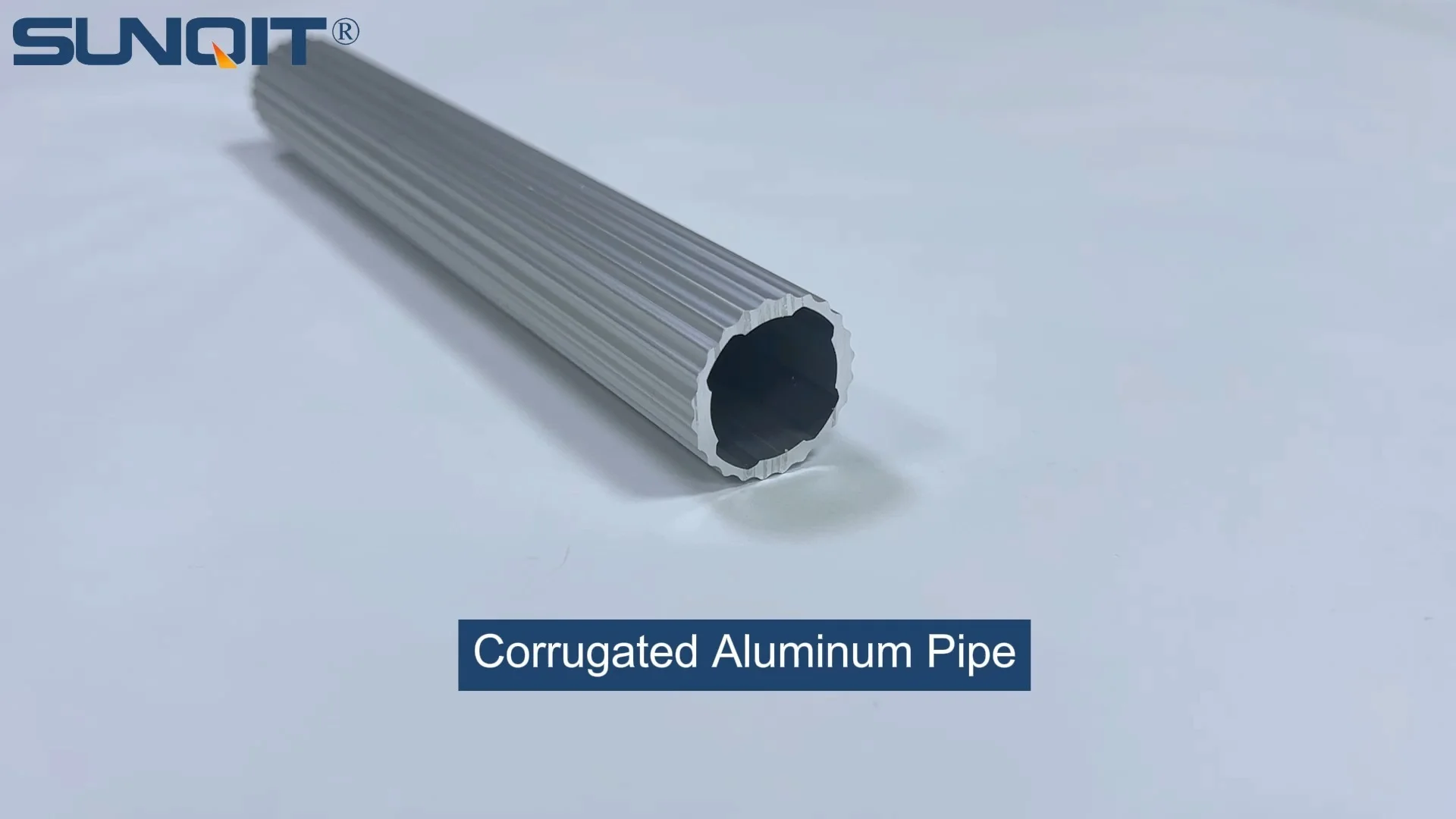
Product Description The slot side is 10mm which can work with a T sliding block for connection accessories Quick Detail Product name Corrugated Aluminum pipe model GLT28-T-3010A Material Science 6005-T6 thickness 1.7mm surface treatment anodic oxidat
Let's set the scene: You're standing in the middle of your workshop, clipboard in hand, staring at a blueprint. Your goal? To build a material handling system that can keep up with your team's pace—something sturdy enough to support heavy toolboxes, flexible enough to navigate around that awkwardly placed pillar, and durable enough to withstand the daily hustle of grease, spills, and occasional bumps. The options on the table? Corrugated aluminum pipe and PVC pipe. Both promise to get the job done, but which one truly delivers when it comes to strength and flexibility? That's the question we're diving into today. Whether you're a small business owner outfitting a new production line, a DIY enthusiast building a garage organizer, or just someone curious about the best materials for the job, let's break down the pros and cons in plain, relatable terms.
Understanding the Contenders: What Are We Actually Comparing?
Before we jump into strength and flexibility, let's make sure we're on the same page about what these pipes are. First up:
corrugated aluminum pipe
. Picture a pipe made from lightweight aluminum alloy, but with a twist—the surface isn't smooth. Instead, it has a series of ridges (corrugations) running along its length. Those ridges aren't just for show; they're engineered to add flexibility without sacrificing strength. It's like the difference between a flat ruler and a corrugated cardboard sheet—one bends easily, the other snaps. Aluminum pipe, by nature, is already known for being strong yet lightweight, and the corrugated design takes that versatility up a notch. Plus, when you pair it with
aluminum pipe accessories
like joints, clamps, or brackets, you can build everything from simple shelving to complex conveyor systems.
Then there's PVC pipe—short for polyvinyl chloride. You've probably seen it under sinks, in irrigation systems, or even as part of homemade furniture. It's a rigid plastic pipe, usually white or gray, that's cheap, lightweight, and easy to cut with a hacksaw. PVC is everywhere because it's affordable and works well for low-stress jobs. But here's the thing: while it can flex a little, it's not designed for heavy-duty bending or weight. Think of it as the "everyday" pipe—great for simple tasks, but maybe not the best when the going gets tough.
Strength: When the Going Gets Heavy, Which Holds Up?
Let's start with the big one: strength. At the end of the day, your pipe needs to hold weight, resist impacts, and not bend or break when put to the test. Let's break this down into real-world terms.
Tensile Strength: Can It Handle the Pull?
Tensile strength is all about how much pulling force a material can take before stretching or breaking. Imagine hanging a heavy tool bag from a pipe—you don't want it to snap under the weight. Corrugated aluminum pipe, made from aluminum alloys (often mixed with magnesium or silicon for extra strength), has a tensile strength of around 200-300 MPa (megapascals). For context, that's strong enough to support the weight of a small car without stretching. PVC, on the other hand, maxes out around 40-50 MPa. That's like comparing a climbing rope to a garden hose—one is built for tension, the other for light-duty use.
Tensile strength is all about how much pulling force a material can take before stretching or breaking. Imagine hanging a heavy tool bag from a pipe—you don't want it to snap under the weight. Corrugated aluminum pipe, made from aluminum alloys (often mixed with magnesium or silicon for extra strength), has a tensile strength of around 200-300 MPa (megapascals). For context, that's strong enough to support the weight of a small car without stretching. PVC, on the other hand, maxes out around 40-50 MPa. That's like comparing a climbing rope to a garden hose—one is built for tension, the other for light-duty use.
Real-Life Test:
A local bakery owner once told me about a time they used PVC pipes to build a shelf for flour sacks. After stacking three 50-pound sacks, the PVC started to bow in the middle. A week later, they swapped in corrugated aluminum pipe (with the help of some
aluminum pipe accessories
like angle brackets) and stacked six sacks—no bowing, no sagging. "It was like night and day," they said. "The aluminum just didn't budge."
Impact Resistance: What Happens When Things Get Bumpy?
Let's talk about accidents. In any busy space, pipes are going to get hit—whether it's a forklift backing up too quickly, a toolbox slipping off a shelf, or a kid (if we're talking home use) running into it. How do our two contenders react?
Let's talk about accidents. In any busy space, pipes are going to get hit—whether it's a forklift backing up too quickly, a toolbox slipping off a shelf, or a kid (if we're talking home use) running into it. How do our two contenders react?
Aluminum is ductile, which is a fancy way of saying it bends before it breaks. If something slams into a corrugated aluminum pipe, it might dent or flex, but it's unlikely to crack or shatter. PVC, though, is brittle—especially in cold weather. A hard impact can cause it to split or snap, leaving you with a broken pipe and a mess to clean up. I once watched a friend try to install PVC pipe in his garage during winter; when he accidentally dropped a wrench on it, the pipe cracked cleanly in half. He switched to aluminum the next day.
Compressive Strength: Can It Support the Load?
Compressive strength is about how much weight a pipe can handle when pressure is applied from above—think of a shelf where the pipes are the supports. Corrugated aluminum pipe, thanks to its metal composition and corrugated design (those ridges add structural integrity), can support significantly more weight than PVC. A 2-inch diameter corrugated aluminum pipe, for example, can easily hold 500+ pounds when properly supported. PVC of the same size? Maybe 100-200 pounds before it starts to buckle. If you're building something that needs to carry heavy materials—like a workbench or a material rack—aluminum is the clear winner here.
Compressive strength is about how much weight a pipe can handle when pressure is applied from above—think of a shelf where the pipes are the supports. Corrugated aluminum pipe, thanks to its metal composition and corrugated design (those ridges add structural integrity), can support significantly more weight than PVC. A 2-inch diameter corrugated aluminum pipe, for example, can easily hold 500+ pounds when properly supported. PVC of the same size? Maybe 100-200 pounds before it starts to buckle. If you're building something that needs to carry heavy materials—like a workbench or a material rack—aluminum is the clear winner here.
Flexibility: When "Straight" Isn't an Option
Strength is crucial, but what if your project isn't a straight line? Most spaces have obstacles—walls, pillars, equipment—that require pipes to bend or curve. That's where flexibility comes in. And here's where the corrugated design of aluminum pipe really shines.
Corrugated Aluminum: Bend Without Breaking
The ridges (corrugations) on aluminum pipe act like tiny hinges. They allow the pipe to bend up to 30-45 degrees (depending on length and diameter) without cracking or weakening. This is a game-changer for tight spaces. Imagine you need to run a pipe from one corner of the room to another, but there's a pillar in the way. With corrugated aluminum, you can gently bend the pipe around the pillar, no extra joints or elbows needed. It's like having a pipe that can "go with the flow" of your space.
The ridges (corrugations) on aluminum pipe act like tiny hinges. They allow the pipe to bend up to 30-45 degrees (depending on length and diameter) without cracking or weakening. This is a game-changer for tight spaces. Imagine you need to run a pipe from one corner of the room to another, but there's a pillar in the way. With corrugated aluminum, you can gently bend the pipe around the pillar, no extra joints or elbows needed. It's like having a pipe that can "go with the flow" of your space.
Scenario:
Maria, a small-scale manufacturer, needed to install a roller track (sound familiar?) for moving boxes from her assembly line to the shipping area. The problem? Her workshop has a low ceiling beam that dips down right in the middle of the path. With PVC, she would have needed to cut the pipe into sections and add elbow joints to go up and over the beam—extra work, extra parts, and a bumpy transition for the boxes. Instead, she used corrugated aluminum pipe, bent it slightly to follow the beam's curve, and the boxes glided smoothly. "It saved me hours of work and made the whole system look cleaner," she said.
PVC: Rigid, With Limits
PVC pipe is rigid by design. It can flex a little—say, a few degrees—if you apply pressure, but push it too far, and it will crack. Think of it like a plastic ruler: bend it gently, and it springs back; bend it sharply, and it snaps. This rigidity makes PVC great for straight-line projects (like a simple shelf or a fixed irrigation line), but it's a hassle when you need to navigate obstacles. You'll end up buying more fittings (elbows, tees, couplings) to create angles, which adds cost and complexity. And let's not forget: every joint is a potential weak spot.
PVC pipe is rigid by design. It can flex a little—say, a few degrees—if you apply pressure, but push it too far, and it will crack. Think of it like a plastic ruler: bend it gently, and it springs back; bend it sharply, and it snaps. This rigidity makes PVC great for straight-line projects (like a simple shelf or a fixed irrigation line), but it's a hassle when you need to navigate obstacles. You'll end up buying more fittings (elbows, tees, couplings) to create angles, which adds cost and complexity. And let's not forget: every joint is a potential weak spot.
Durability: When "Built to Last" Matters
Strength and flexibility are important, but what about the long haul? A pipe that works great today but falls apart in a year isn't worth the investment. Let's talk about durability—how these pipes hold up against corrosion, temperature, and everyday wear and tear.
Corrosion Resistance: Fighting Rust and Moisture
Aluminum is naturally corrosion-resistant. When exposed to air, it forms a thin layer of aluminum oxide on its surface, which acts like a shield against rust and moisture. That makes corrugated aluminum pipe ideal for damp environments—think garages, workshops with spills, or even outdoor projects. I've seen aluminum pipes used in car washes, where they're constantly sprayed with water and soap, and they still look new after years.
Aluminum is naturally corrosion-resistant. When exposed to air, it forms a thin layer of aluminum oxide on its surface, which acts like a shield against rust and moisture. That makes corrugated aluminum pipe ideal for damp environments—think garages, workshops with spills, or even outdoor projects. I've seen aluminum pipes used in car washes, where they're constantly sprayed with water and soap, and they still look new after years.
PVC, on the other hand, doesn't rust (it's plastic, after all), but it's not immune to damage. UV rays from sunlight can break down its structure over time, making it brittle and prone to cracking. If you're using PVC outdoors, you'll need to paint it or cover it to protect it from the sun. Indoors, it holds up better, but it can still degrade if exposed to harsh chemicals (like strong solvents or oils). I once had a PVC shelf in my garage that sat near a can of degreaser; over time, the pipe near the can started to soften and warp. Oops.
Temperature Extremes: Hot, Cold, and Everything In Between
Let's talk about temperature. Aluminum handles heat and cold like a champ. It can withstand temperatures from -40°F to 250°F (-40°C to 120°C) without losing strength. That means it won't melt in a hot workshop or become brittle in a freezing garage. PVC? Not so much. In cold weather, it gets stiff and cracks easily. In hot weather, it softens and can warp under weight. Leave a PVC pipe in a car on a summer day, and you'll come back to a bent, misshapen mess. For anyone in a climate with extreme temperatures, aluminum is the safer bet.
Let's talk about temperature. Aluminum handles heat and cold like a champ. It can withstand temperatures from -40°F to 250°F (-40°C to 120°C) without losing strength. That means it won't melt in a hot workshop or become brittle in a freezing garage. PVC? Not so much. In cold weather, it gets stiff and cracks easily. In hot weather, it softens and can warp under weight. Leave a PVC pipe in a car on a summer day, and you'll come back to a bent, misshapen mess. For anyone in a climate with extreme temperatures, aluminum is the safer bet.
The Comparison Table: At a Glance
| Feature | Corrugated Aluminum Pipe | PVC Pipe |
|---|---|---|
| Tensile Strength | 200-300 MPa (high; resists stretching/breaking) | 40-50 MPa (low; may stretch under heavy loads) |
| Impact Resistance | High (bends, doesn't crack; ideal for busy spaces) | Low (brittle; prone to cracking on hard impacts) |
| Compressive Strength | High (supports 500+ lbs with proper support) | Low (supports 100-200 lbs before buckling) |
| Flexibility | High (corrugated design bends 30-45° without damage) | Low (flexes slightly; cracks if bent sharply) |
| Corrosion Resistance | High (naturally resists rust/moisture; great for damp areas) | Moderate (resists rust but degrades in UV light/chemicals) |
| Cost (Initial) | Higher (but offset by durability/versatility) | Lower (but requires more fittings; higher long-term cost) |
When to Choose Which? The Practical Guide
So, when should you reach for corrugated aluminum pipe, and when is PVC the better pick? Let's simplify:
Choose Corrugated Aluminum Pipe If…
- You need strength: Supporting heavy loads (shelves, workbenches, material racks).
- Flexibility matters: Your project has obstacles (pillars, uneven walls) that require bending.
- Durability is key: You're working in a damp, hot, cold, or high-traffic environment.
- You want to minimize joints: Fewer fittings mean fewer weak spots and easier installation.
- You're using aluminum pipe accessories : Brackets, joints, and connectors that enhance functionality (many are designed specifically for aluminum systems).
- You need strength: Supporting heavy loads (shelves, workbenches, material racks).
- Flexibility matters: Your project has obstacles (pillars, uneven walls) that require bending.
- Durability is key: You're working in a damp, hot, cold, or high-traffic environment.
- You want to minimize joints: Fewer fittings mean fewer weak spots and easier installation.
- You're using aluminum pipe accessories : Brackets, joints, and connectors that enhance functionality (many are designed specifically for aluminum systems).
Choose PVC Pipe If…
- Your project is simple and straight: A basic shelf, a fixed irrigation line, or a lightweight organizer.
- Budget is your top priority: You need something cheap and don't mind replacing it sooner.
- You're working indoors, away from extreme temperatures and chemicals.
- You don't need to bend the pipe: Straight lines only, no obstacles.
- Your project is simple and straight: A basic shelf, a fixed irrigation line, or a lightweight organizer.
- Budget is your top priority: You need something cheap and don't mind replacing it sooner.
- You're working indoors, away from extreme temperatures and chemicals.
- You don't need to bend the pipe: Straight lines only, no obstacles.
Final Thoughts: It's About Your Project's Needs
At the end of the day, there's no "one size fits all" answer—but there is a "best fit for your project" answer. Corrugated aluminum pipe shines when strength, flexibility, and durability are non-negotiable. It's the pipe you choose when you want to build something that can keep up with your team, adapt to your space, and last for years. And when paired with the right
aluminum pipe accessories
, it becomes a versatile system that grows with your needs.
PVC pipe, on the other hand, is a solid choice for simple, low-stress projects where cost and ease of installation (for straight lines) are top priorities. Just don't ask it to do more than it's built for.
So, back to that workshop scenario we started with: Which pipe would you choose? If you're like most people who've weighed the options, you'll probably reach for the corrugated aluminum. It's not just a pipe—it's an investment in a system that works as hard as you do.