- Company Articles
- Products and Technology
- Product knowledge
- Corrugated Aluminum Pipe Weight Capacity: What You Need to Know

Corrugated Aluminum Pipe Weight Capacity: What You Need to Know
Related Product
Corrugated Aluminum Pipe
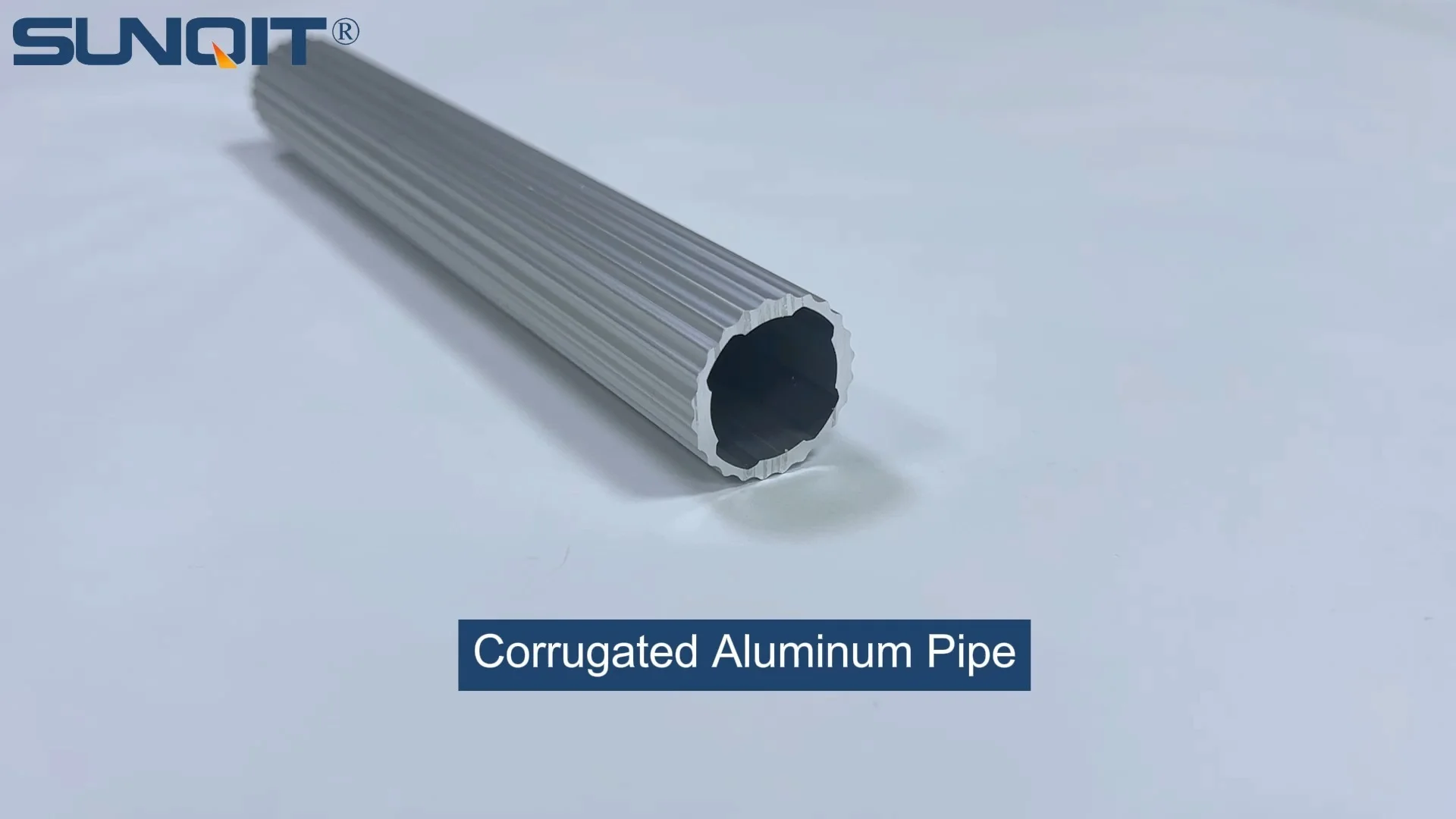
Product Description The slot side is 10mm which can work with a T sliding block for connection accessories Quick Detail Product name Corrugated Aluminum pipe model GLT28-T-3010A Material Science 6005-T6 thickness 1.7mm surface treatment anodic oxidat
In the fast-paced world of manufacturing, warehousing, and lean system design, every component counts. Corrugated aluminum pipes have emerged as a go-to solution for building flexible, durable structures—from workbenches to material racks. But to truly leverage their potential, understanding their weight capacity is key. Let's dive into the details that matter for your facility's efficiency, safety, and bottom line.
What Are Corrugated Aluminum Pipes, Anyway?
Before we get into weight limits, let's make sure we're all on the same page. Corrugated aluminum pipes are lightweight tubes made from aluminum alloy, characterized by their distinctive wave-like ridges (corrugations) along the length. These ridges aren't just for show—they're engineering genius. By adding corrugations, manufacturers boost the pipe's rigidity and strength without significantly increasing its weight. Think of it like how a corrugated cardboard box can hold more weight than a flat sheet of cardboard of the same thickness.
You'll find these pipes in all sorts of lean system setups: supporting workbenches where assemblers put together electronics, forming the backbone of flow racks that keep materials moving, or even as part of conveyor systems that transport goods across the factory floor. Their popularity stems from three big advantages: they're lightweight (easy to install and reconfigure), resistant to corrosion (thanks to aluminum's natural oxide layer), and highly adaptable (paired with aluminum pipe accessories like joints and clamps, they can be shaped into almost any structure).
But here's the catch: not all corrugated aluminum pipes are created equal. Thickness, diameter, corrugation design, and even the quality of aluminum pipe accessories used to connect them can drastically affect how much weight they can safely hold. That's why "winging it" with weight estimates is a risky move—one wrong calculation could lead to collapsed racks, damaged materials, or worse, workplace injuries.
Key Factors That Influence Weight Capacity
Imagine you're building a shelf with corrugated aluminum pipes. How much can you stack on it? The answer depends on a handful of critical factors. Let's break them down one by one.
1. Pipe Thickness (Wall Thickness)
Thickness is the most obvious factor, but it's worth emphasizing: thicker pipes generally handle more weight. Most corrugated aluminum pipes come in thicknesses ranging from 0.8mm to 2.0mm. A 0.8mm pipe might be great for light-duty tasks like holding small tools, but a 2.0mm pipe is the workhorse for heavy loads, like stacks of metal parts or industrial equipment.
Why does thickness matter? Thicker walls resist bending and buckling under pressure. Think of it as the difference between a thin soda can and a thick-walled water bottle—squeeze both, and the thinner one collapses first. For example, a 1.2mm thick pipe can typically support 30-50% more weight than a 0.8mm pipe of the same diameter.
2. Outer Diameter
Diameter (the width of the pipe) plays a huge role in weight capacity, especially for horizontal structures like overhead racks or conveyor rails. A pipe with a larger diameter has a greater "moment of inertia," which is a fancy way of saying it's stiffer and less likely to bend under load. For instance, a 40mm diameter pipe will outperform a 30mm pipe of the same thickness when spanning gaps between supports.
Common diameters for industrial use range from 20mm (mini pipes for lightweight frames) up to 60mm (heavy-duty applications). When planning your structure, ask: How far apart will the supports be? The longer the span, the larger the diameter you'll need to prevent sagging.
3. Corrugation Design
Not all corrugations are created equal. The depth of the ridges, the spacing between them, and their shape (sharp vs. rounded waves) all impact strength. Deeper, closely spaced corrugations distribute weight more evenly across the pipe's surface, reducing stress points. For example, a pipe with 5mm deep corrugations spaced 10mm apart might handle 15-20% more weight than a pipe with 3mm corrugations spaced 15mm apart, even if both have the same thickness and diameter.
Manufacturers often optimize corrugation patterns for specific uses. Some are designed for flexibility (great for adjustable workbenches), while others prioritize raw strength (ideal for fixed material racks).
4. Installation: Supports and Joints
Even the strongest pipe will fail if installed poorly. The spacing between supports (like brackets or aluminum pipe clamps) and the type of joints used are critical. For horizontal pipes, the golden rule is: the closer the supports, the higher the weight capacity. A pipe spanning 2 feet between supports can hold nearly twice as much weight as the same pipe spanning 4 feet.
Joints matter too. Using high-quality aluminum pipe accessories—like internal rotatary aluminum joints or parallel fixation aluminum pipe joints—ensures a secure connection that doesn't weaken under load. Cheap or ill-fitting joints can create "weak links" where stress concentrates, leading to premature failure.
5. Load Direction: Vertical vs. Horizontal
How the weight is applied makes a big difference. Vertical loads (like a pipe holding up a workbench from below) are easier for the pipe to handle because aluminum is strong in compression. Horizontal loads (like a pipe acting as a shelf, holding weight from above) are trickier because the pipe has to resist bending. As a general rule, a pipe's vertical weight capacity is 2-3 times higher than its horizontal capacity for the same span.
For example, a 1.5mm thick, 40mm diameter pipe might safely support 800 lbs vertically but only 300 lbs horizontally when supported every 3 feet.
6. Environmental Conditions
Don't overlook the environment. Extreme temperatures, moisture, and chemical exposure can all affect aluminum's strength over time. In humid or corrosive environments (like food processing plants), even aluminum can degrade if not properly maintained. While aluminum is naturally corrosion-resistant, scratches or dents in the surface can create entry points for rust, weakening the pipe. Similarly, repeated temperature swings (common in outdoor or uninsulated facilities) can cause the pipe to expand and contract, loosening joints and reducing stability.

Typical Weight Capacity: A Handy Reference Table
To make things concrete, let's look at real-world numbers. Below is a table of common corrugated aluminum pipe specifications and their estimated weight capacities under ideal conditions (dry environment, proper installation with supports every 2 feet, and vertical/horizontal orientation as noted). These values are based on industry standards and data from leading aluminum pipe suppliers.
| Pipe Thickness (mm) | Outer Diameter (mm) | Corrugation Depth (mm) | Max Vertical Load (lbs) | Max Horizontal Load (lbs) @ 2ft Supports |
|---|---|---|---|---|
| 0.8mm | 20mm | 3mm | 200 | 80 |
| 1.0mm | 30mm | 4mm | 450 | 180 |
| 1.2mm | 40mm | 5mm | 700 | 300 |
| 1.5mm | 40mm | 5mm | 900 | 400 |
| 2.0mm | 60mm | 6mm | 1,500 | 650 |
Note: These are general estimates. Always consult your pipe supplier for load-testing data specific to their products and your installation setup.
Let's put these numbers in context. A 1.2mm, 40mm diameter pipe with 5mm corrugations can hold 300 lbs horizontally over 2 feet—enough for a shelf stacked with 15-20 heavy toolboxes. Vertically, that same pipe can support 700 lbs, which is like holding up a small workbench with a operator and equipment on top. For heavier loads, step up to a 2.0mm, 60mm pipe: 650 lbs horizontally (think pallets of parts) or 1,500 lbs vertically (supporting a large assembly station).
Real-World Applications: Where Weight Capacity Matters Most
Understanding weight capacity isn't just about numbers—it's about keeping your facility running smoothly. Let's look at three common applications where getting the capacity right is make-or-break.
1. Workbenches: The Heart of Production
Workbenches are where the magic happens—assemblers, technicians, and operators spend hours here, surrounded by tools, parts, and equipment. A typical workbench might have a wooden or aluminum honeycomb panel top, supported by a frame of corrugated aluminum pipes. If the pipes can't handle the weight of the top, tools, and the operator leaning on it, the bench could sag or collapse.
Take the "workbench e (single deck-without caster)" from many lean system catalogs. This simple, fixed workbench relies on four vertical corrugated aluminum pipes for support. If the pipes are 1.2mm thick and 40mm in diameter, they can easily handle the 300-400 lbs of a typical setup (top + tools + operator weight). But if someone tries to use 0.8mm pipes here? The bench might start sagging within months, leading to wobbly work surfaces and frustrated employees.
2. Material Racks: Keeping Inventory Organized
Material racks—like the popular "material rack b (3 row and 3 floor)"—are workhorses in warehouses and distribution centers. These racks use corrugated aluminum pipes to create shelves that hold boxes, bins, or even heavy components. Each shelf is a horizontal span of pipes, so spacing between supports is critical.
Imagine a 3-row, 3-floor rack where each shelf is 4 feet long. Using 1.5mm thick, 40mm diameter pipes with supports every 2 feet (so two supports per 4-foot shelf) ensures each shelf can hold 400 lbs. That's enough for 20-25 boxes of electronics components. But if the supports are spaced 4 feet apart (only one support in the middle), the capacity drops to 200 lbs per shelf—meaning you can only stack half as much. For a busy warehouse, that's lost storage space and inefficiency.
3. Conveyor Systems: Moving Materials Smoothly
Conveyors rely on corrugated aluminum pipes to support roller tracks, which in turn move products along the line. Whether it's a gravity-fed roller track or a powered belt conveyor, the pipes underneath must handle the weight of the track, the products, and the constant vibration of movement.
For example, a plastic roller track guide rail (yellow or grey) might be mounted on corrugated aluminum pipes. If the pipes are too thin, the track could sag, causing products to get stuck or tip over. A 1.5mm thick, 40mm diameter pipe is a safe bet here, supporting the track and the 100-200 lbs of products moving across it per linear foot.
Corrugated Aluminum vs. Other Pipes: How Does It Stack Up?
You might be wondering: Why not use stainless steel pipe or regular aluminum profile instead? Let's compare corrugated aluminum pipes to these alternatives to see where they shine (and where they don't).
Corrugated Aluminum vs. Stainless Steel Pipe Series
Stainless steel pipes are strong—there's no denying that. A 1.5mm stainless steel pipe can hold more weight than a corrugated aluminum pipe of the same thickness. But stainless steel is heavy (about 3 times denser than aluminum), which makes it harder to install and reconfigure. For lean systems that need frequent adjustments (like reconfiguring a workbench layout), the weight of stainless steel becomes a liability.
Corrugated aluminum offers a better strength-to-weight ratio. It's light enough for one person to carry and install, yet strong enough for most industrial loads. Plus, aluminum is cheaper than stainless steel, making it a budget-friendly choice for large projects.
Corrugated Aluminum vs. Aluminum Profile (Extruded Profile)
Aluminum profile (like T-slot aluminum pipe) is another popular option. These rigid, rectangular or square tubes are great for fixed structures where precision is key, like machine frames. But they lack the flexibility of corrugated pipes. Corrugated pipes, with their round shape and compatible aluminum pipe accessories, are easier to bend into curves or adjust on the fly. They're also lighter than solid aluminum profile of the same size, making them better for mobile structures like turnover trolleys.
When it comes to weight capacity per pound of material, corrugated aluminum pipes often win. Their corrugations add strength without adding much weight, whereas solid aluminum profile carries extra mass that doesn't contribute to strength.
Pro Tips to Maximize Weight Capacity (and Safety)
Now that you know what affects weight capacity, here are some practical steps to ensure your corrugated aluminum pipe structures are safe and efficient:
- Overengineer a little. If your calculations say you need a 1.2mm pipe, consider stepping up to 1.5mm. It adds a small cost but prevents headaches later.
- Check supports and joints regularly. Tighten loose aluminum pipe clamps or replace worn joints. A quarterly inspection can catch issues before they become failures.
- Avoid dynamic loads when possible. Dropping heavy objects on a corrugated aluminum pipe shelf creates impact loads that are harder to handle than static loads. Train employees to place items gently.
- Use load ratings as guidelines, not guarantees. Always factor in "worst-case scenarios"—like a shelf being overloaded during peak season or a workbench supporting an extra-heavy tool.
- Work with a reputable supplier. A reliable lean pipe supplier will provide detailed load-testing data for their corrugated aluminum pipes and aluminum pipe accessories. They can also help you choose the right specs for your project.
Final Thoughts: Invest in Knowledge, Avoid Disaster
Corrugated aluminum pipes are versatile, cost-effective, and integral to modern lean systems. But their true value lies in using them correctly—and that starts with understanding weight capacity. By considering thickness, diameter, corrugation design, installation, and load direction, you can build structures that are safe, durable, and efficient.
Remember: a failed pipe isn't just a repair cost—it's lost productivity, damaged inventory, and potential safety risks. Take the time to calculate, choose quality aluminum pipe accessories, and consult with your supplier. Your facility (and your peace of mind) will thank you.
So, the next time you're designing a workbench, building a material rack, or setting up a conveyor, ask: "What's the weight capacity of these corrugated aluminum pipes?" With the insights here, you'll have the answer.