- Company Articles
- Products and Technology
- Product knowledge
- Cost Analysis: 3060 Aluminum Angle Yards for Long-Term Manufacturing

Cost Analysis: 3060 Aluminum Angle Yards for Long-Term Manufacturing
Related Product
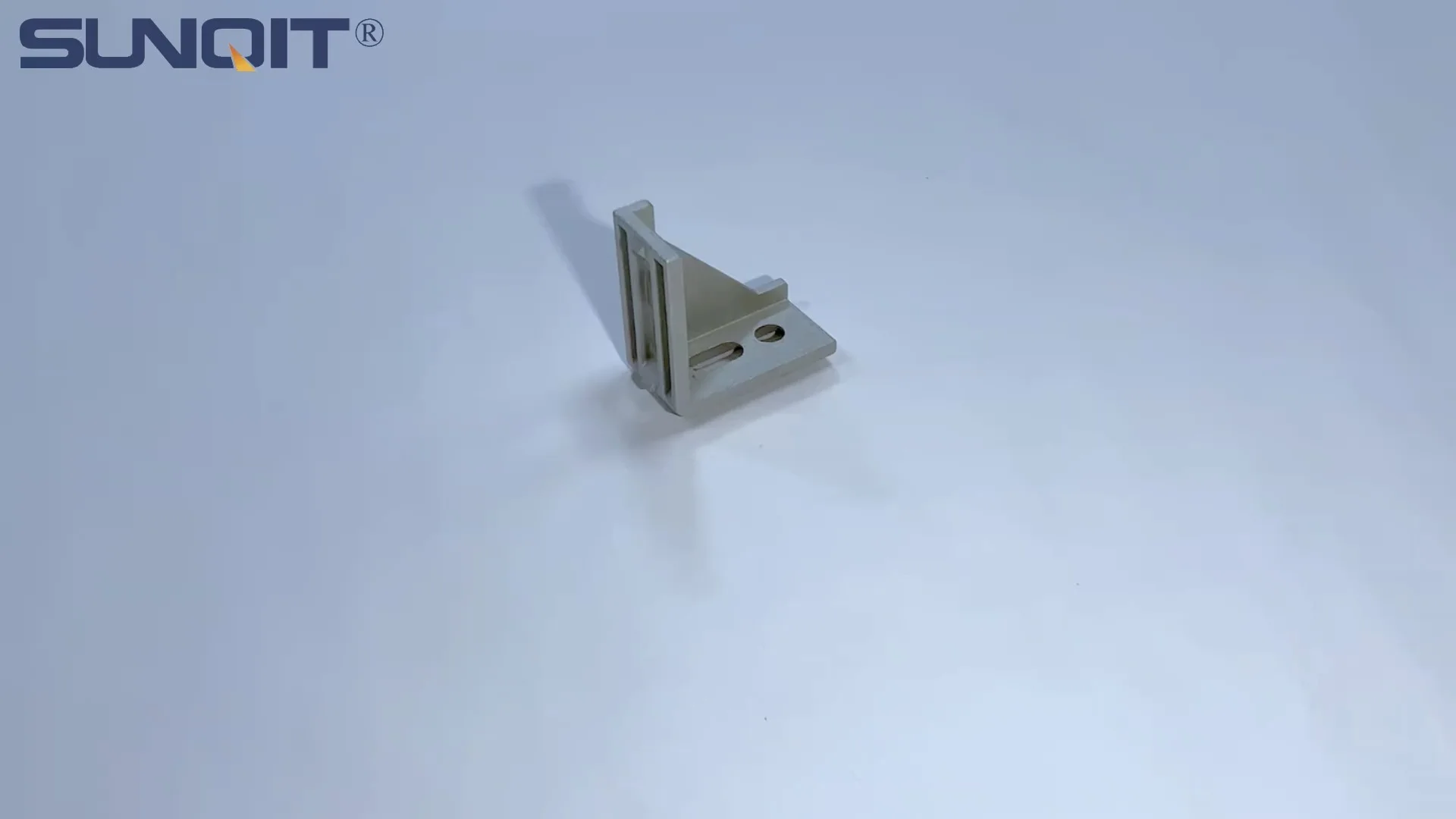
3060 Aluminum Angle Yards
It used for 90° flat connection for 20 series aluminum profile.
In the fast-paced world of manufacturing, every decision—from production workflows to material choices—ripples through the bottom line. For plant managers, operations directors, and small business owners alike, the pressure to balance quality, efficiency, and cost is constant. One material that's quietly reshaping this equation is the 3060 aluminum angle yard. Often overlooked in favor of cheaper steel or bulkier plastic, this aluminum profile has emerged as a long-term cost-saver for manufacturers willing to look beyond upfront price tags. In this article, we'll break down why 3060 aluminum angle yards deserve a spot in your facility, exploring their initial costs, durability, integration with lean systems, and real-world savings that add up over time.
What Are 3060 Aluminum Angle Yards, Anyway?
Before diving into costs, let's get clear on what we're talking about. 3060 aluminum angle yards are a type of aluminum extrusion profile—meaning they're formed by pushing molten aluminum through a die to create a consistent, angular shape. The "3060" refers to their dimensions: 30mm in one leg and 60mm in the other, forming a right angle (90 degrees) that's both sturdy and versatile. Think of them as the building blocks of your facility's infrastructure: workbenches, material racks, assembly lines, and even turnover trolleys all rely on these unassuming pieces of metal.
What sets them apart from other materials? Aluminum's natural properties: it's lightweight (about 1/3 the weight of steel), corrosion-resistant, and infinitely recyclable. But the 3060 size specifically hits a sweet spot. It's strong enough to support heavy equipment or stacked materials, yet slim enough to keep workstations compact. Unlike rigid steel angles, which require welding or heavy tools to modify, 3060 aluminum angle yards use simple aluminum profile accessories—brackets, connectors, and end caps—to assemble and reconfigure. This modularity isn't just convenient; it's a cornerstone of their long-term value.
The Upfront Investment: Is Aluminum "Too Expensive"?
Let's address the elephant in the room: initial cost. There's no denying it—3060 aluminum angle yards cost more per meter than standard steel angle iron. At current market rates, you might pay $15–$25 per meter for 3060 aluminum, compared to $8–$12 for steel. For a small manufacturer building a single workbench, that difference might sting. But manufacturing isn't about single workbenches; it's about scaling, adapting, and lasting through years of production cycles. To judge aluminum fairly, we need to zoom out.
Consider this: steel, while cheaper upfront, comes with hidden costs. It's heavy, so shipping fees are higher. It rusts, so you'll need to paint or coat it every 1–2 years to prevent corrosion—a process that takes equipment offline and adds labor costs. And if you ever need to reconfigure a steel structure (say, to accommodate a new product line), you'll need welders, grinders, and hours of downtime. Aluminum? It arrives ready to use, no painting required. Its lightweight nature slashes shipping costs, and those aluminum profile accessories—think T-slot connectors or end caps—let you disassemble and rebuild a workstation in hours, not days.

Durability: When "Built to Last" Translates to Savings
Manufacturing floors are tough environments. Chemical spills, constant foot traffic, and heavy machinery take a toll on equipment. Here's where 3060 aluminum angle yards shine: they're built to outlast the competition. Unlike steel, which succumbs to rust when coatings chip, aluminum forms a natural oxide layer that resists corrosion. Even in humid facilities or those handling liquids (like automotive or food processing plants), aluminum profiles stay intact for decades.
Let's put this in numbers. A steel angle yard might last 5–7 years in a busy facility before rust weakens its structure or cosmetic damage makes it unsafe. An aluminum profile, by contrast, can easily hit 15–20 years with minimal wear. That means instead of replacing steel racks or workbenches every half-decade, you're investing once and reaping the benefits for three times as long. For a facility with 20 workstations, that's avoiding 2–3 replacement cycles over 20 years—a savings that dwarfs the initial price difference.
And when it does come time to retire an aluminum structure? Aluminum is 100% recyclable, so you can often sell scrap metal back to suppliers, adding a small but welcome credit to your budget. Steel, too, is recyclable, but its lower scrap value and heavier weight mean the return is minimal compared to aluminum.

Lean Systems Integration: Waste Less, Save More
Lean manufacturing isn't just a buzzword—it's a philosophy centered on eliminating waste, from excess inventory to inefficient workflows. 3060 aluminum angle yards are a lean manager's dream. Their modular design aligns perfectly with core lean principles, letting you adapt your space as needs change. Need to reconfigure a production line to accommodate a new product? Swap out a few aluminum profile accessories, and your material rack goes from holding 3-row components to 5-row in an afternoon. No need for custom fabrication or expensive contractors.
Take, for example, a electronics assembly plant that previously used fixed steel workbenches. When they switched to a new circuit board design, the old workbenches were too short to accommodate taller component bins. With steel, they'd have to order new benches or weld on extensions—costing time and money. With 3060 aluminum angle yards, they simply adjusted the height using adjustable feet (another handy aluminum profile accessory) and added side brackets to hold the new bins. Downtime? Less than a day. Cost? A few hundred dollars in accessories, versus thousands for new steel setups.
This flexibility also reduces waste from overbuilding. Instead of investing in oversized steel structures "just in case," you can start small with aluminum and expand as production grows. Add a shelf here, extend a rack there—all without scrapping the original framework. That's lean thinking in action, and it adds up to serious savings over time.

Workbench Applications: A Real-World Example
Let's ground this in a concrete scenario: the humble workbench. A staple in every manufacturing facility, workbenches take daily abuse—from tool drops to heavy part assemblies. Let's compare a steel workbench to one built with 3060 aluminum angle yards, tracking costs over 10 years.
Steel Workbench: Initial cost: $800 (including materials and welding). Annual maintenance: $150 (painting, rust treatment, tightening loose welds). Lifespan: 6 years. After 6 years, you'll need to replace it, costing another $800. Total cost over 10 years: $800 (first bench) + ($150 x 6) + $800 (replacement) + ($150 x 4, for the second bench's first 4 years) = $800 + $900 + $800 + $600 = $3,100.
Aluminum Workbench: Initial cost: $1,200 (including 3060 aluminum angle yards, aluminum profile accessories like casters and end caps). Annual maintenance: $20 (occasional tightening of connectors). Lifespan: 15+ years. No replacement needed in 10 years. Total cost over 10 years: $1,200 + ($20 x 10) = $1,400.
That's a $1,700 difference over a decade—and that's just for one workbench. Multiply that by 10, 20, or 50 workstations, and the savings become impossible to ignore. Plus, the aluminum workbench offers perks the steel one can't: it's lighter, so employees can reposition it without forklifts; it's customizable, so you can add tool hooks or LED lighting via T-slot accessories; and it never rusts, keeping your facility looking professional and safe.
Comparing Costs: Aluminum vs. Steel vs. Plastic
Still on the fence? Let's expand the comparison. Below is a cost breakdown of 3060 aluminum angle yards versus two common alternatives: steel angle iron and plastic extrusions. All figures are based on industry averages for a 5-year period in a medium-sized manufacturing facility.
| Material | Initial Cost per Meter | Estimated Lifespan (Years) | Annual Maintenance Cost | Total Cost Over 5 Years* |
|---|---|---|---|---|
| 3060 Aluminum Angle Yard | $20 | 15–20 | $5 | $20 (initial) + ($5 x 5) = $45 |
| Steel Angle Iron | $10 | 5–7 | $30 | $10 (initial) + ($30 x 5) = $160 |
| Plastic Extrusion | $15 | 3–4 | $10 | $15 (initial) + ($10 x 3) + $15 (replacement) + ($10 x 2) = $15 + $30 + $15 + $20 = $80 |
*Based on 1 meter of material used in a standard workstation. Does not include labor for assembly/replacement.
The table tells a clear story: aluminum has a higher upfront cost, but its minimal maintenance and long lifespan make it the cheapest option over 5 years. Steel, despite its low initial price, gets overtaken by maintenance and replacement costs. Plastic? It's a middle ground, but its short lifespan means frequent replacements, eroding any savings.
Accessories: The "Secret Sauce" of Aluminum's Versatility
What truly makes 3060 aluminum angle yards indispensable is their ecosystem of aluminum profile accessories. These small, often overlooked components—like T-slot connectors, roller track guides, or caster wheels—turn a basic aluminum profile into a fully customized solution. Need to add a shelf to your workbench? Slide a bracket into the T-slot and tighten a screw. Want to make a material rack mobile? Bolt on casters. No drilling, no welding, no hassle.
This versatility means you're not just buying a material—you're investing in a system that grows with your business. A 3060 aluminum angle yard used in a material rack today can be repurposed into a conveyor guide tomorrow, or a tool cart next year. This adaptability reduces the need to buy new equipment, cutting down on waste and keeping capital expenses in check.
Consider the alternative: a steel rack, welded into a fixed shape. If your production needs shift, that rack becomes dead weight—taking up space and tying up funds that could be better spent elsewhere. With aluminum, you're never stuck. Those aluminum profile accessories turn "what if" into "let's do it," and that flexibility is priceless in a dynamic manufacturing environment.
Environmental Benefits: Green Savings, Too
Sustainability isn't just good for the planet—it's increasingly good for business. Customers, investors, and regulators are demanding eco-friendly practices, and 3060 aluminum angle yards deliver here, too. Aluminum is the most recycled material on the planet, with 75% of all aluminum ever produced still in use today. Recycling aluminum uses 95% less energy than producing new aluminum, reducing your facility's carbon footprint.
For manufacturers aiming for LEED certification or green business credentials, switching to aluminum profiles can help meet sustainability goals. And while "going green" might not seem directly tied to cost, it often opens doors to tax incentives, grants, or preferential contracts with eco-conscious clients. In short, aluminum's environmental benefits are another layer of long-term value.
Conclusion: Investing in the Future
At first glance, 3060 aluminum angle yards might seem like a splurge. But manufacturing isn't about quick fixes—it's about building systems that stand the test of time. When you factor in durability, low maintenance, lean system integration, and the ability to adapt, aluminum profiles prove themselves as a smart, cost-effective choice for long-term success.
Whether you're a small shop looking to upgrade a few workbenches or a large plant overhauling production lines, 3060 aluminum angle yards offer a rare combination: quality that doesn't compromise on cost, and flexibility that grows with your business. So the next time you're comparing material quotes, remember: the cheapest option today might cost you twice as much tomorrow. For manufacturers ready to invest in their future, aluminum is the clear choice.