- Company Articles
- Products and Technology
- Product knowledge
- Cost Analysis: 4040F EU Standard Aluminum Profile vs Traditional Steel Profiles

Cost Analysis: 4040F EU Standard Aluminum Profile vs Traditional Steel Profiles
Related Product
4040F EU Standard Aluminum Profile
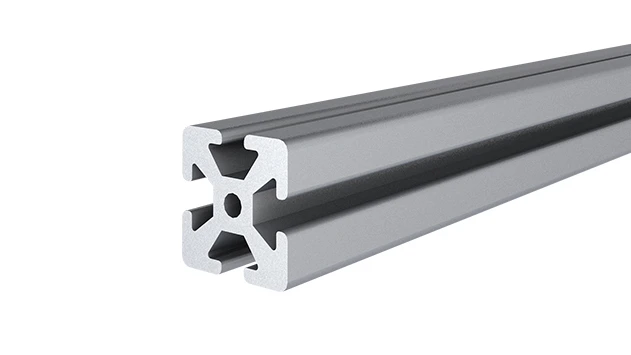
4040F is a 4.00x4.00 CM fractional 40 series square extrusion T-slot profile with four side open T-slots, each side with 4.00cm face. The profile has align-a-grooves to assist in aligning connecting profiles.
In today's fast-paced manufacturing world, every decision on the production floor carries weight—especially when it comes to choosing materials that balance durability, efficiency, and cost. For years, traditional steel profiles have been the go-to for building workbenches, material racks, and conveyor systems. But in recent years, a new contender has emerged: the 4040F EU Standard Aluminum Profile. This lightweight, modular solution is gaining traction, but is it truly a better investment than steel? Let's dive into a detailed cost analysis to find out.
Understanding the Contenders
What is the 4040F EU Standard Aluminum Profile?
The 4040F EU Standard Aluminum Profile is a type of aluminum extrusion profile—meaning it's shaped by forcing heated aluminum through a die to create a consistent cross-section. Its "4040" designation refers to its dimensions (40mm x 40mm), making it a versatile choice for everything from workbenches to machine guards. What sets it apart is its modularity: it pairs seamlessly with aluminum profile accessories like joints, brackets, and end caps, allowing for quick assembly and reconfiguration without welding or heavy tools.
Traditional Steel Profiles: The Old Reliable
Traditional steel profiles, often part of the stainless steel pipe series, have long been favored for their raw strength. Made from carbon steel or stainless steel, these profiles are rigid, heavy, and typically require welding, drilling, or bolting to assemble. They're common in industrial settings where heavy loads or high heat resistance are priorities, such as automotive manufacturing or metalworking shops.
Initial Cost: Sticker Shock vs. Long-Term Vision
Let's start with the most obvious factor: upfront cost. At first glance, steel often seems cheaper. A meter of standard stainless steel pipe series might cost $15–$25, while the 4040F aluminum extrusion profile could run $20–$35 per meter. That's a 25–40% higher initial price for aluminum. But here's the catch: initial cost alone rarely tells the whole story. To truly compare, we need to factor in what happens after you unload the materials onto the factory floor.

Installation & Labor Costs: Time is Money
Steel's weight is both a strength and a weakness. A 40mm x 40mm steel profile weighs roughly 5–7 kg per meter, while the same size aluminum extrusion profile weighs just 2–3 kg. That difference matters when it comes to (, but in English: handling) and installation. Steel often requires forklifts, cranes, or multiple workers to maneuver, while aluminum can be carried and assembled by one or two people with basic tools.
Then there's the assembly process itself. Steel profiles typically need welding, which demands skilled labor (at $30–$50 per hour) and specialized equipment. Even bolt-together steel systems require precise drilling and alignment, adding hours to project timelines. Aluminum extrusion profiles, on the other hand, use aluminum profile accessories like T-slot nuts, brackets, and internal rotatory joints. These snap or screw into place, cutting assembly time by 50–70%. For example, building a simple workbench with steel might take 4–6 hours; with aluminum, the same job could be done in 1–2 hours. Over a large project, those labor savings add up fast.
Maintenance Costs: Rust, Repairs, and Replacement
Steel's Achilles' heel? Corrosion. Unless it's stainless steel (which costs 30–50% more than carbon steel), traditional steel profiles are prone to rust when exposed to moisture, chemicals, or even humidity. To combat this, manufacturers often paint or coat steel, adding $5–$10 per meter in upfront treatment costs. And even then, scratches or chips can lead to rust, requiring regular touch-ups or replacements. A rusted material rack, for instance, might need to be replaced every 3–5 years.
Aluminum, by contrast, naturally forms a protective oxide layer that resists corrosion. It doesn't need painting or coating, and even if scratched, the oxide layer reforms quickly. This means aluminum extrusion profiles often last 10–15 years with minimal maintenance—no repainting, no rust removal, no unexpected replacement costs. Over time, that durability translates to significant savings.
Flexibility & Adaptability: The Lean System Advantage
In today's manufacturing landscape, agility is key. Production lines change, product sizes shift, and workflows evolve. A lean system—one that minimizes waste and adapts quickly—can't afford rigid, one-and-done infrastructure. This is where aluminum truly shines.
Thanks to its modular aluminum profile accessories, the 4040F aluminum extrusion profile can be disassembled and reconfigured in hours. Need to adjust a workbench height? Swap out a few brackets. Repurpose a material rack for a new product line? Unbolt the joints and rearrange the profiles. Steel, however, is often permanent. Welded structures are difficult to modify, and cutting or rewelding steel to adapt to changes can cost as much as building a new system from scratch. For example, a manufacturer that retools its production line twice a year might save $5,000–$10,000 annually by using aluminum instead of steel, simply by avoiding the cost of rebuilding rigid steel structures.
Long-Term Cost Breakdown: A 5-Year Comparison
To put this all together, let's compare the total cost of ownership for a typical setup: a 5-meter workbench with shelves, used in a medium-duty manufacturing environment. Here's how the numbers stack up over 5 years:
| Cost Category | 4040F Aluminum Extrusion Profile | Traditional Steel Profile (Stainless Steel Pipe Series) |
|---|---|---|
| Initial Material Cost | $175 (5m x $35/m) | $125 (5m x $25/m) |
| Accessories/Hardware | $80 (aluminum profile accessories: joints, brackets) | $50 (welding rods, bolts, paint) |
| Installation Labor | $200 (2 hours x $100/hour) | $600 (6 hours x $100/hour) |
| Maintenance (5 years) | $0 (no rust treatment, minimal repairs) | $300 (annual painting, rust removal, minor part replacement) |
| Reconfiguration/Adaptation (2 changes) | $100 (1 hour per change x $100/hour) | $800 (rebuilding/re-welding per change) |
| Total 5-Year Cost | $555 | $1,875 |
Over five years, the aluminum setup costs just 29.6% of the steel setup. That's a savings of $1,320—more than enough to offset the higher initial material cost. And as the timeline extends to 10 years, the gap widens further, with aluminum's modularity and low maintenance continuing to pay dividends.
Real-World Example: A Case Study
Consider a small electronics manufacturer in Germany that recently switched from steel to aluminum extrusion profiles for its assembly line workbenches. The company had 10 workbenches, each requiring annual reconfiguration to accommodate new product sizes. With steel, each reconfiguration took 8 hours of welding and cost $800 per workbench—$8,000 total annually. After switching to 4040F aluminum extrusion profiles with aluminum profile accessories, reconfiguring a workbench took just 1 hour, costing $100 per bench—$1,000 annually. Over three years, the company saved $21,000, not including maintenance costs or reduced downtime during reconfigurations.
Conclusion: Aluminum as an Investment, Not an Expense
At first glance, the 4040F EU Standard Aluminum Profile may seem pricier than traditional steel. But when you factor in installation labor, maintenance, and the ability to adapt to changing needs, it's clear that aluminum offers superior long-term value. For manufacturers prioritizing a lean system, agility, and cost efficiency, the 4040F aluminum extrusion profile isn't just a material choice—it's an investment in the future of their operations.
So, is aluminum worth the upfront cost? For most modern manufacturing environments, the answer is a resounding yes. Steel may have been the old reliable, but aluminum is the new standard for smart, sustainable, and cost-effective industrial infrastructure.