- Company Articles
- Products and Technology
- Product knowledge
- Cost Analysis: Internal Straight Aluminum Joints vs. Traditional Fasteners

Cost Analysis: Internal Straight Aluminum Joints vs. Traditional Fasteners
Related Product
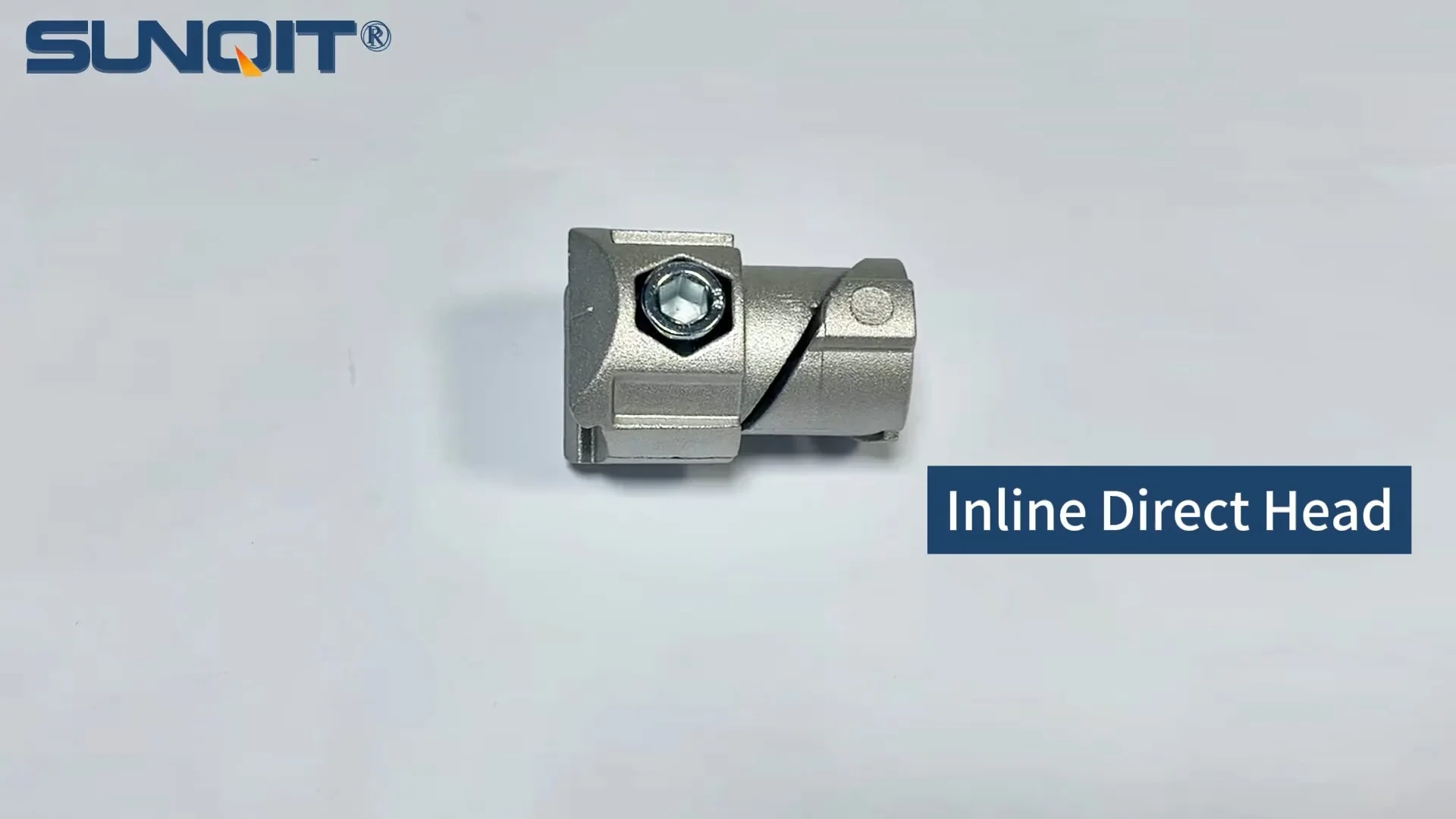
Internal straight aluminum joint
Aluminum pipe joint inside connection used for two pcs 28pcs aluminum pipe connection in straight angle,it connects two pcs pipe from inside.
In the world of manufacturing and warehouse operations, every decision—no matter how small—ripples through the bottom line. From the machinery on the floor to the tools in workers' hands, each component plays a role in efficiency, productivity, and ultimately, cost. Today, we're zooming in on a pair of unsung heroes (and occasional villains) in this ecosystem: internal straight aluminum joints and traditional fasteners. These unassuming pieces might seem trivial, but when scaled across workbenches, roller tracks, and material racks, their impact on your budget can be massive. Let's dive into a detailed cost analysis to see which option truly delivers long-term value, especially in the context of modern lean systems and modular workflows.
Understanding the Contenders
Before we crunch numbers, let's get clear on what we're comparing. On one side, we have internal straight aluminum joints—modern, modular connectors designed for aluminum profiles, a staple in contemporary workbenches, material racks, and lean pipe systems. On the other side, traditional fasteners: the tried-and-true bolts, nuts, screws, and rivets that have held structures together for decades. Both serve the same basic purpose—securing components—but their design, installation, and lifecycle costs couldn't be more different.
Internal straight aluminum joints are engineered for simplicity and adaptability. They fit snugly into the T-slot or hollow channels of aluminum profiles, creating a clean, flush connection without protruding parts. Think of them as the building blocks of modular setups: easy to assemble, disassemble, and reconfigure. They're often part of a broader ecosystem of aluminum pipe accessories, including clamps, brackets, and end caps, which makes scaling or modifying structures a breeze.
Traditional fasteners, by contrast, are fixed by design. Bolts require drilling holes, nuts need tightening, and screws risk stripping—all of which lock a structure into place. They're reliable for permanent setups, but that permanence is a double-edged sword. When your production line needs to shift, or a workbench needs to be repurposed, traditional fasteners become obstacles rather than assets.
Initial Cost Breakdown: The Upfront Investment
Let's start with the most obvious factor: how much do these components cost to buy? At first glance, traditional fasteners seem like the budget-friendly choice. A box of 100 steel bolts might cost $20, while a single internal straight aluminum joint could set you back $5–$8. But here's the catch: quantity matters. Aluminum joints often replace multiple traditional fasteners, and their design reduces the need for additional hardware like washers or spacers.
To illustrate, let's consider a common scenario: building a basic workbench (a staple in any workshop or production floor). A typical workbench using aluminum profiles might need 12 internal straight aluminum joints to connect the frame, shelves, and legs. At $6 per joint, that's $72 upfront. For the same workbench using traditional fasteners, you'd need bolts, nuts, and washers at each connection point—easily 36 fasteners (3 per joint equivalent) at $0.20 each, totaling $7.20. On paper, traditional fasteners are cheaper here. But this is just the first chapter in the cost story.
| Factor | Internal Straight Aluminum Joints | Traditional Fasteners (Bolts/Nuts) |
|---|---|---|
| Cost per Unit | $5–$8 | $0.10–$0.30 |
| Quantity for 1 Workbench | 12 joints | 36 fasteners (3 per joint equivalent) |
| Total Initial Hardware Cost | $72 (at $6/joint) | $7.20 (at $0.20/fastener) |
| Additional Tools Needed | None (hand-tightened) | Drill, wrench, screwdriver ($150+ initial tool cost) |
Notice the "Additional Tools Needed" row? Traditional fasteners require drilling holes, which means investing in drills, drill bits, wrenches, and possibly taps for threading. A basic set of these tools can cost $150–$300, a one-time expense but a significant one if you're just starting out. Internal straight aluminum joints, however, often require no tools—they slot into place and lock with a simple twist or clamp, eliminating this upfront tool cost entirely.

Installation Time and Labor: The Hidden Cost of "Cheap" Fasteners
Time is money, and nowhere is that truer than on the factory floor. The faster you can assemble (or reconfigure) a workbench, roller track, or material rack, the sooner it starts contributing to production. Let's break down the labor costs for our workbench example, assuming an average labor rate of $50 per hour.
Installing internal straight aluminum joints is a breeze. With no drilling or tightening required, a worker can assemble the workbench frame in about 30 minutes. Even if they're new to the system, the intuitive design cuts training time—most people can master the basics in 10 minutes. Total labor cost: 0.5 hours × $50 = $25.
Traditional fasteners tell a different story. First, you need to measure and mark where to drill holes—15 minutes. Then, drilling 36 holes (one for each fastener) takes another 45 minutes (assuming 1.5 minutes per hole, accounting for precision). Next, inserting bolts, securing nuts, and tightening them adds another 30 minutes. Total time: 1.5 hours. Labor cost: 1.5 hours × $50 = $75. That's three times the labor cost of aluminum joints, and we haven't even factored in mistakes—drilling a hole in the wrong spot means wasted material and more time.
Scale this up to a larger project, like installing a 20-foot roller track for material handling. A roller track using aluminum profiles and internal straight joints might need 24 joints, taking 2 hours to assemble ($100 labor). The same roller track with traditional fasteners? 72 fasteners, 6 hours of labor ($300). Over 10 such roller tracks, that's a $2,000 difference in labor costs alone—more than enough to offset the higher upfront cost of aluminum joints.

Durability and Maintenance: Pay Now or Pay Later
Upfront and labor costs are just the beginning. Over time, maintenance and replacement costs can turn a "cheap" initial choice into a budget drain. Let's compare the lifespans and upkeep of both options in a typical warehouse environment—think humidity, occasional impacts, and daily wear.
Internal straight aluminum joints are built to last. Aluminum is naturally corrosion-resistant, so even in damp conditions, they won't rust or degrade. The joints themselves are designed for repeated assembly and disassembly—their locking mechanisms don't wear out easily, and the material holds its shape under stress. Most manufacturers warranty these joints for 5–7 years, but in practice, they can last a decade or more with minimal maintenance. The only upkeep needed? An occasional wipe with a cloth to remove dust.
Traditional steel fasteners, on the other hand, are prone to rust. Even with coatings, exposure to moisture (common in warehouses) causes them to corrode over time. A rusted bolt can seize up, making disassembly impossible—or worse, weaken the structure, risking accidents. Replacing rusted fasteners every 1–2 years is standard, and each replacement means more labor hours: removing the old fastener (often with a hacksaw if it's seized), drilling new holes, and installing new hardware. For our workbench, that's 36 fasteners replaced every 2 years at $0.20 each ($7.20) plus 1 hour of labor ($50), totaling $57.20 every 2 years. Over a decade, that's $286 in maintenance costs for traditional fasteners alone.
Aluminum joints? Maybe $0 in maintenance over the same period. Even if one joint wears out (unlikely), replacing it takes 5 minutes and $6—no labor, no additional hardware. For the workbench, that's $6 over 10 years vs. $286 for traditional fasteners. The math here is clear: durability and low maintenance make aluminum joints a long-term winner.
Scalability and Flexibility: Adapting to Change Without Breaking the Bank
Modern manufacturing thrives on adaptability. Product lines change, order volumes fluctuate, and workflows evolve—and your infrastructure needs to keep up. This is where internal straight aluminum joints truly shine, thanks to their modular design. Let's say your workbench needs an extra shelf six months down the line. With aluminum joints, you simply add a new profile section and two more joints—10 minutes of work, $12 in parts, and no downtime. The structure remains strong, and the addition looks seamless.
With traditional fasteners, adding a shelf means drilling new holes in the existing frame—risking damage to the aluminum profile (or wood, if that's your material). If the holes don't align, you're stuck with a wobbly shelf or wasted material. Worse, if you need to relocate the workbench entirely, disassembling traditional fasteners often results in bent bolts or stripped threads—meaning you'll need to buy new fasteners for reassembly. That's more time, more money, and more frustration.
Consider a lean pipe system, a common setup in lean manufacturing environments where minimizing waste and maximizing flow is key. A lean pipe system using aluminum profiles and internal straight joints can be reconfigured in hours to accommodate a new production line. Traditional fasteners would require days of work, with workers spending hours unbolting, drilling, and rebolting—all while the line is idle. In a facility running two shifts, that downtime could cost $10,000 or more in lost productivity. Aluminum joints turn adaptation from a costly headache into a routine task.
Real-World Case Study: A Small Manufacturer's Experience
To put this all into perspective, let's look at a real example: a small electronics manufacturer in Ohio with 15 employees. Three years ago, they relied on traditional fasteners for all their workbenches and material racks. When they decided to expand their production line, they faced a choice: stick with what they knew or switch to modular aluminum profiles with internal straight aluminum joints. They opted for a hybrid approach—replacing half their workbenches with the new system—to test the waters.
The results were eye-opening. The initial cost for the 5 new aluminum workbenches was $3,600 (including profiles, joints, and accessories), compared to $360 for traditional fastener-based workbenches. But labor costs for assembly dropped by 70% (from 15 hours to 4.5 hours total). Over the next two years, they reported:
- No maintenance costs for the aluminum workbenches, vs. $800 in fastener replacements and labor for the traditional ones.
- Three reconfigurations of the aluminum workbenches (to accommodate new equipment) done in under a day, vs. two days of downtime for the traditional workbenches (costing $4,000 in lost production).
- Higher worker satisfaction—employees noted the aluminum workbenches were sturdier and easier to keep organized, reducing errors in assembly.
Today, the manufacturer has replaced all traditional workbenches with aluminum modular systems. Their operations manager summed it up: "The upfront cost stung a little, but we're saving money every month now. We can adapt faster, our maintenance crew isn't wasting time on rusted bolts, and the workbenches just… last. It was the best operational decision we made."
Hidden Costs: The Domino Effect of Fastener Choice
Beyond the obvious costs, there are hidden dominoes that fall when you choose traditional fasteners. Storage, for example: traditional fasteners come in dozens of sizes, requiring bins, labels, and inventory management. A small warehouse might stock 50+ types of bolts, nuts, and screws—taking up valuable space and requiring staff time to track. Aluminum joints, by contrast, are standardized. Most setups use just 3–4 joint types, reducing storage needs to a single shelf and eliminating inventory headaches.
Waste is another factor. Traditional fasteners often result in scrap: bent bolts, stripped screws, or misdrilled holes. In a year, that scrap can add up to hundreds of dollars in wasted materials. Aluminum joints, being reusable and error-resistant, generate almost no waste. Even if a joint is damaged, it can be recycled, adding a small return on investment.
Finally, safety. Protruding bolts from traditional fasteners can catch on clothing, tools, or materials, causing injuries or damage. Internal straight aluminum joints create a flush, smooth surface, reducing accident risks. Fewer accidents mean lower workers' compensation costs and fewer disruptions to production—another hidden saving that rarely makes it into initial cost calculations.
Conclusion: Looking Beyond the Price Tag
At first glance, traditional fasteners seem cheaper—after all, $7.20 beats $72 for a workbench's hardware. But when you factor in labor, maintenance, scalability, and hidden costs, the narrative flips. Internal straight aluminum joints aren't just a purchase; they're an investment in efficiency, adaptability, and long-term savings.
For businesses stuck in the "cheaper upfront" mindset, it's time to rethink. The modern manufacturing floor demands flexibility, and traditional fasteners are a relic of rigid, one-size-fits-all production. Aluminum joints, paired with aluminum profiles and lean pipe systems, offer a path to lower long-term costs, happier workers, and a production line that can keep up with the pace of change.
So, the next time you're building a workbench, installing a roller track, or designing a material rack, ask yourself: What's the true cost of "cheap"? When it comes to fasteners and joints, the answer might surprise you. Sometimes, spending a little more now saves you a lot more later—and that's a principle that never goes out of style.