- Company Articles
- Products and Technology
- Procurement Guidelines
- Cost Analysis: Investing in 40 Roller Track Placon Mount Flat vs. Traditional Conveyors

Cost Analysis: Investing in 40 Roller Track Placon Mount Flat vs. Traditional Conveyors
Related Product
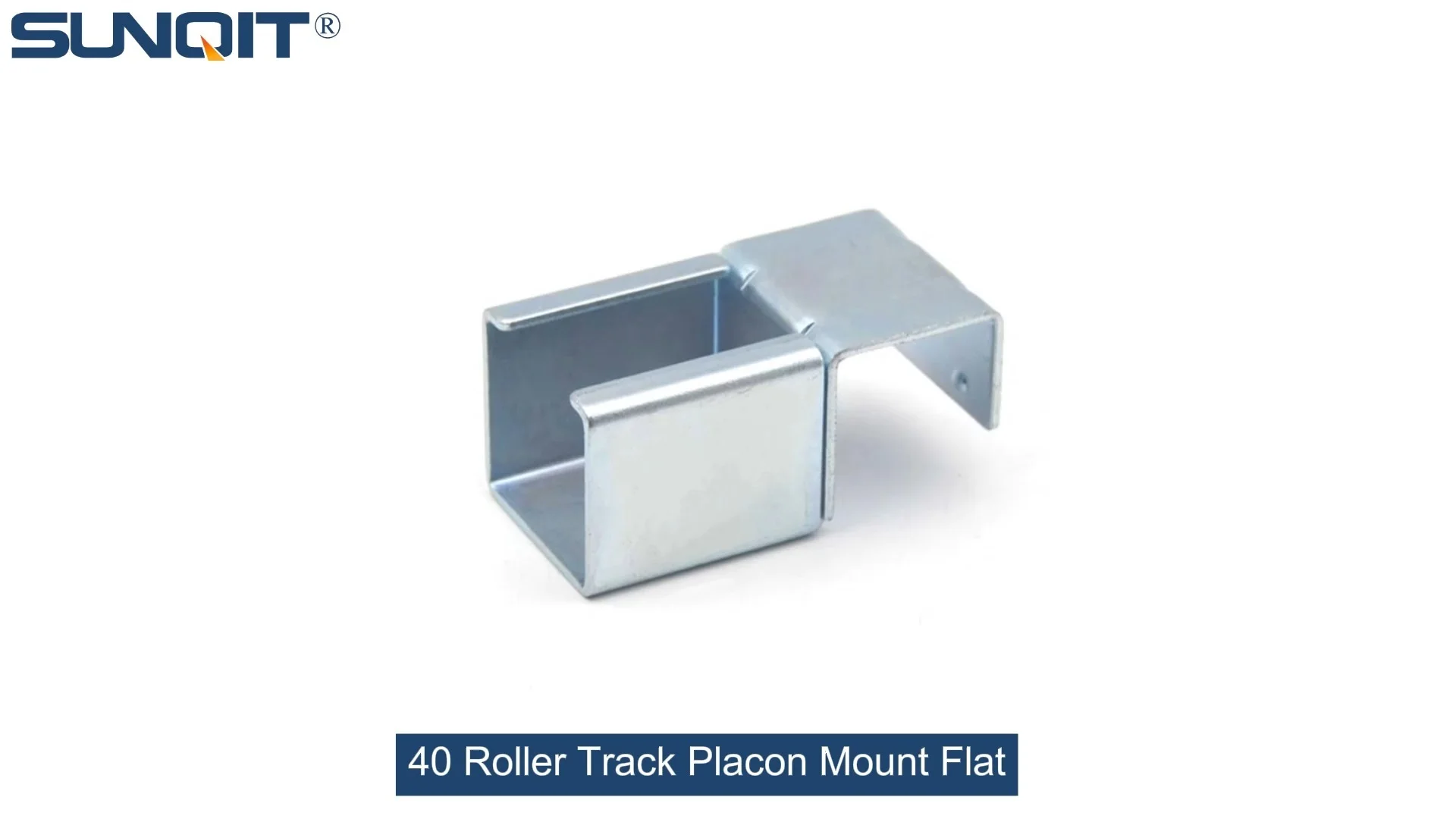
40 Roller Track Placon Mount Flat
Roller track placon mount work as a connector for roller track and pipe or aluminum profile in rack syetem, it is a necessary parts in rack system which widely used in industrial plant and logistic,warehouse storage.
Let's talk about the backbone of any manufacturing line—the equipment that keeps parts moving, assembly lines flowing, and orders shipping on time. If you're in operations, you know conveyor systems aren't just "nice to have"—they're the difference between meeting production targets and scrambling to catch up. But here's the question that keeps plant managers up at night: when it's time to upgrade or install new conveyors, which option actually saves you money in the long run? Today, we're diving deep into two popular choices: the 40 Roller Track Placon Mount Flat (a modular, lean-friendly solution) and traditional conveyors (think belt-driven or chain-driven systems with fixed designs). This isn't just a specs comparison—it's a cost breakdown that could shape your production budget for years to come.
First Things First: What Are We Actually Comparing?
Before we crunch numbers, let's make sure we're on the same page about the products. The 40 Roller Track Placon Mount Flat is part of the modern lean manufacturing toolkit. Picture this: aluminum tracks with precision-machined rollers, mounted on placon brackets that attach directly to aluminum profiles. It's modular—meaning you can snap sections together, add or remove rollers, or reconfigure the track layout in hours, not weeks. It's designed for lean systems, where flexibility and repeatability are king. Think of it as building blocks for your production line.
On the other side, traditional conveyors are the workhorses many of us grew up with. Belt conveyors with rubber or PVC belts, chain conveyors with metal links, or roller conveyors with fixed steel frames. They're built to do one job, in one place, and they do it reliably—until you need to change that job. Then, you're looking at cutting frames, rewiring motors, or even replacing entire sections. They're sturdy, but they're not exactly "go with the flow" when your production needs shift.
Initial Cost: The Price Tag That Jumps Out First
Let's start with the most obvious number: how much do they cost to buy and install? At first glance, traditional conveyors might seem cheaper. A basic belt conveyor for a 10-meter line could run you $8,000–$12,000, depending on the brand. But hold that thought—initial cost isn't just the equipment itself. Let's break it down:
| Cost Component | 40 Roller Track Placon Mount Flat (10m Line) | Traditional Belt Conveyor (10m Line) |
|---|---|---|
| Equipment (Track/Rollers/Brackets vs. Belt/Frame/Motor) | $10,000–$14,000 | $8,000–$12,000 |
| Installation (Labor + Tools) | $1,500–$2,500 (Modular snap-together design) | $3,000–$5,000 (Requires welding, motor wiring, alignment) |
| Customization (Bends, Stops, Guides) | $500–$1,000 (Add pre-made brackets/guides) | $2,000–$4,000 (Fabricate custom frames/motor adjustments) |
| Shipping & Handling | $300–$600 (Lightweight aluminum, modular packaging) | $800–$1,200 (Heavy steel frames, bulkier shipments) |
| Total Initial Cost | $12,300–$18,100 | $13,800–$22,200 |
Wait a minute—suddenly the "cheaper" traditional conveyor isn't looking so cheap. The 40 Roller Track's modular design cuts installation labor by half, and those pre-made accessories (like side guides or end stops) mean you're not paying a fabricator to weld custom parts. Plus, aluminum is lighter than steel, so shipping costs drop. For a 10-meter line, the 40 Roller Track could actually be less expensive upfront, depending on customization needs. And if you need a longer line or more complex layout? The gap widens. Traditional conveyors with multiple bends or elevation changes can spike to $30,000+, while the roller track's modular pieces keep customization costs predictable.

Long-Term Costs: When "Cheap Now" Turns Into "Expensive Later"
Initial cost is just the down payment. The real cost of ownership hits you month after month, year after year. Let's talk about what happens after the conveyor is up and running.
Maintenance: The Hidden Drain on Your Budget
Traditional conveyors have moving parts—lots of them. Belts wear out, motors burn out, chains need lubrication, and alignment drifts over time. A typical belt conveyor might need a new belt every 6–12 months (cost: $800–$1,500 per belt). Motors? They can last 3–5 years, but replacing one costs $1,200–$2,500, plus labor. And don't forget regular maintenance: lubricating chains, tightening bolts, realigning tracks—all of which take your maintenance team 2–4 hours per month, at $50–$80/hour. That's $1,200–$3,840 per year in maintenance alone.
Now the 40 Roller Track: it's simpler. No motors, no belts, no chains. Just aluminum tracks and plastic/steel rollers. Rollers might need replacing every 2–3 years (cost: $20–$40 per roller, and a 10m line has ~50 rollers—so $1,000–$2,000 total, spread over years). The aluminum tracks? They're corrosion-resistant and scratch-tough, so they last 10+ years. Maintenance? Maybe 30 minutes per month to check for loose brackets. Total annual maintenance? $100–$300. That's a difference of thousands per year.
Energy Bills: Conveyors That Eat (or Save) Electricity
Traditional conveyors need power to run—motors that stay on 8–10 hours a day, 5 days a week. A 10m belt conveyor might use a 0.5HP motor, which draws about 373 watts. At $0.15/kWh, that's 373W x 10h/day x 250 days/year = 932.5 kWh/year → ~$140/year. Doesn't sound like much? Multiply by 5 conveyors in your plant, and that's $700/year. Now, if you have larger conveyors or run them longer, it climbs fast.
The 40 Roller Track? It's gravity-fed or manually pushed (for lighter loads) or uses minimal power with optional electric rollers (but even then, only when needed). For most lean setups, it's passive—no motor, no electricity. That's $0/year in energy costs. Over 5 years, that's $700 saved per conveyor. Add that to maintenance savings, and the gap grows.
Replacement: When "Old Reliable" Becomes "Old and Costly"
Even the best equipment wears out. Traditional conveyors have a lifespan of 5–7 years before major components (like the frame or motor) need replacing. Replacing a 10m conveyor? You're looking at $8,000–$15,000 again, plus installation. The 40 Roller Track? Because it's modular, you rarely replace the whole thing. If a section gets damaged, swap out just that 1m track and 5 rollers—$200–$500. The system as a whole? 15–20 year lifespan. So over 10 years, you might replace one traditional conveyor entirely ($15k) vs. minor repairs on the roller track ($1k). That's a $14k difference.

Flexibility: The Cost No One Talks About Until It Hurts
Here's the wildcard in manufacturing: your production needs change. Maybe you switch from making small parts to larger assemblies. Maybe you need to add a new work cell. Maybe you have to rearrange the entire line to fit a new machine. Traditional conveyors? They're fixed in place. To move a 10m belt conveyor, you'd have to cut it apart, re-weld it, rewire the motor, and realign everything. Cost? $4,000–$7,000 per move. If you rearrange once every 2 years, that's $2,000–$3,500 per year in "reconfiguration tax."
The 40 Roller Track was built for change. Need to move it 5 meters left? Unclip the brackets, carry the sections (they're light—one person can lift a 1m track), and snap them back into place. Need a 90-degree bend? Add a pre-made corner bracket. Need to extend it by 2m? Order 2 more track sections and 10 rollers, snap them on in 30 minutes. Total cost for reconfiguration? $0–$500 (if adding new parts). That's the beauty of lean system design—adaptability without the price tag.

Real-World Example: A Auto Parts Plant's 2-Year Cost Breakdown
Let's put this all together with a real scenario. Imagine a mid-sized auto parts plant that needs 3 conveyors (10m each) for their assembly line. They're choosing between traditional belt conveyors and 40 Roller Track Placon Mount Flat. Here's how the numbers play out over 2 years:
| Cost Type | 3 Traditional Conveyors | 3 40 Roller Tracks | Cost Difference (Track - Traditional) |
|---|---|---|---|
| Initial Cost (Equipment + Installation + Customization + Shipping) | 3 x ($12k + $4k + $3k + $1k) = $60,000 | 3 x ($12k + $2k + $0.7k + $0.5k) = $45,600 | -$14,400 (Track is cheaper upfront!) |
| Maintenance (2 Years) | 3 x ($2,500/year x 2) = $15,000 | 3 x ($200/year x 2) = $1,200 | -$13,800 |
| Energy (2 Years) | 3 x ($140/year x 2) = $840 | 3 x $0 = $0 | -$840 |
| Reconfiguration (1 Move in 2 Years) | 3 x $5,000 = $15,000 | 3 x $0 = $0 | -$15,000 |
| Total 2-Year Cost | $90,840 | $46,800 | -$44,040 (Track saves $44k!) |
That's not a typo—over just 2 years, the plant would save $44,040 by choosing 40 Roller Track. And the longer they use the equipment, the bigger the gap gets. By year 5, the savings could top $100k. Your choice here isn't just about buying a conveyor—it's about avoiding hidden costs that chip away at your profit margin.
ROI: When Does the Roller Track Start Paying You Back?
Let's talk return on investment (ROI). Even if the 40 Roller Track costs a bit more upfront (which, in our example, it didn't), when does the savings offset that initial outlay? For the auto parts plant above, the 40 Roller Track had lower initial cost, so ROI was immediate. But let's say you have a scenario where the initial cost is equal: traditional conveyor total initial cost $60k, roller track $60k. Then, annual savings from maintenance ($15k - $1.2k = $13.8k), energy ($840), and reconfiguration ($15k) would be $29,640/year. ROI would be $60k / $29,640 ≈ 2 years. After that, every year is pure savings.
Traditional conveyors, on the other hand, never really "pay you back"—they just keep costing more. That's the difference between a one-time expense and a long-term asset that keeps giving.
Beyond the Numbers: Why Lean Matters for Your Bottom Line
At the end of the day, this isn't just about conveyors—it's about lean manufacturing. The 40 Roller Track isn't a standalone product; it's part of a lean system that emphasizes "reduce waste, increase flexibility, and improve continuously." Every time you avoid a $5,000 reconfiguration or skip a $2,000 maintenance bill, you're putting that money back into your business—hiring more workers, upgrading tools, or expanding production. Traditional conveyors, with their fixed designs and high upkeep, lock you into waste: waste of time, waste of money, waste of potential.
And let's not forget the intangibles. A line that can adapt quickly means you can take on new orders faster, pivot to trending products, and keep up with customer demand. That agility? It's priceless in today's fast-moving manufacturing world.
Final Verdict: Invest in Conveyors That Grow With You
So, should you choose 40 Roller Track Placon Mount Flat over traditional conveyors? If you value long-term savings, flexibility, and minimal hassle, the answer is clear. Yes, traditional conveyors might seem cheaper at first glance, but when you factor in installation, maintenance, energy, and reconfiguration costs, they end up costing you far more over time. The 40 Roller Track is an investment in your plant's future—one that pays dividends in lower costs, higher adaptability, and a production line that works for you, not against you.
Remember: in manufacturing, the best equipment isn't the one with the lowest sticker price. It's the one that helps you make more, spend less, and stay ready for whatever comes next. And when it comes to conveyors, the 40 Roller Track Placon Mount Flat checks all those boxes.