- Company Articles
- Products and Technology
- Product knowledge
- Cost Analysis: Investing in Quality End Support for Roller Track Placon Mount with Wheel

Cost Analysis: Investing in Quality End Support for Roller Track Placon Mount with Wheel
Related Product
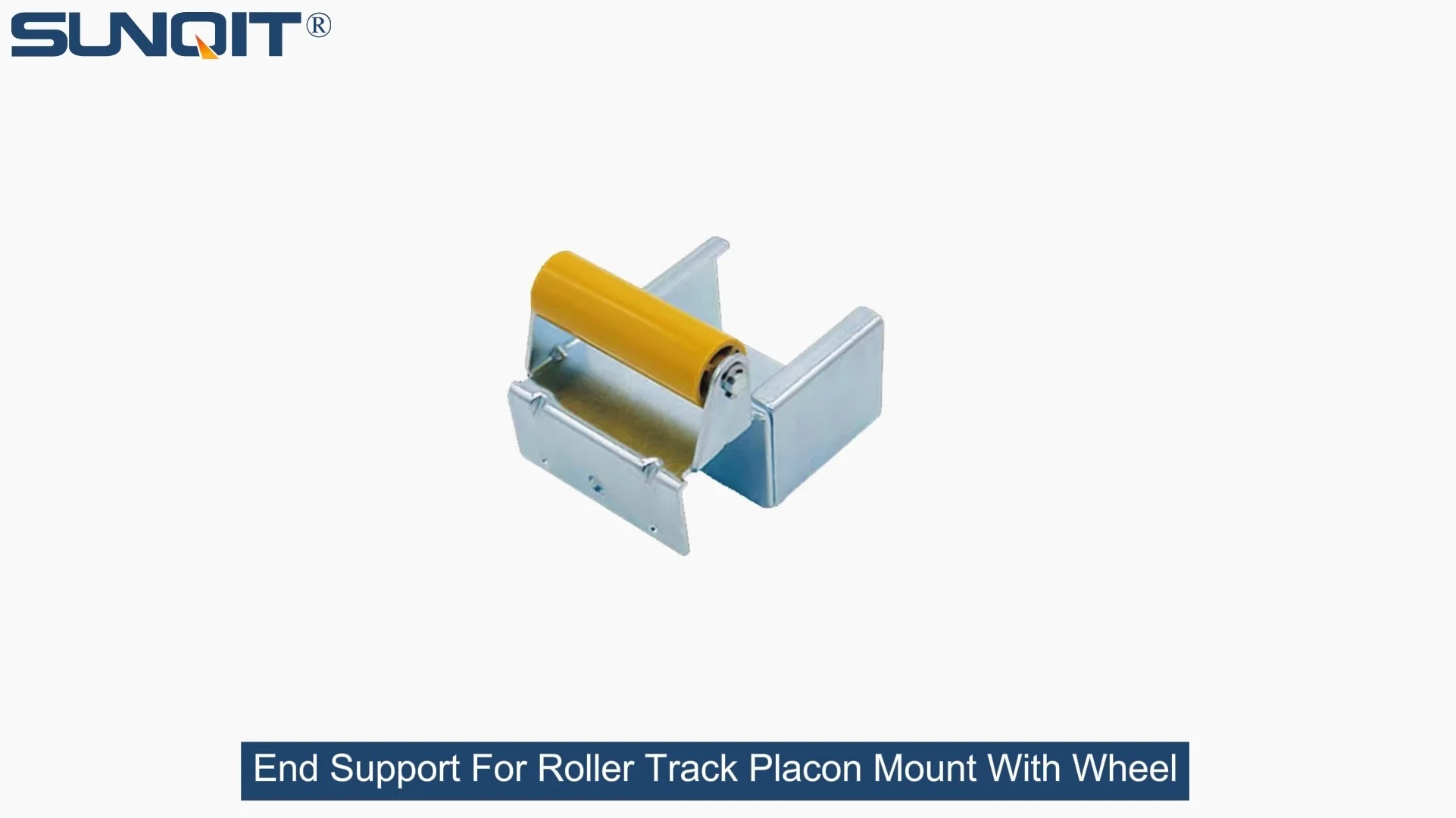
End Support for Roller Track Placon Mount with Wheel
End support for roller track placon mount with wheel,the special design with end wheel,make it with more flexible function for roller track and pipe connection and give more option for selection for building flow rack system.
Why Skimping on Small Components Could Cost Your Manufacturing Line Thousands in the Long Run
In the fast-paced world of manufacturing, where every second counts and efficiency is the backbone of profitability, it's easy to focus on the "big-ticket" items: high-speed conveyors, automated assembly robots, or advanced ERP systems. But seasoned operations managers and plant supervisors know a critical truth: the most components often determine the success or failure of an entire production line. Today, we're diving deep into one such component that flies under the radar but holds immense power over your operational costs: the end support for roller track placon mount with wheel .
If you're involved in managing a manufacturing facility—whether in 3C assembly, medical device production, or automotive parts manufacturing—you've likely encountered roller track systems. These unassuming setups of aluminum profiles, rotating wheels, and mounting brackets are the unsung heroes of material flow, quietly transporting components from one workstation to the next. And within these systems, the end support with wheel is the final checkpoint, ensuring smooth transitions, preventing jams, and maintaining alignment even under heavy loads. Yet, when it comes to procurement, many teams prioritize initial cost savings over quality, opting for cheaper alternatives that promise "good enough" performance. But what if that decision is costing you far more than you realize?
This article isn't just about roller track components—it's a case study in lifecycle cost analysis, a guide to making procurement decisions that align with long-term operational health, and a wake-up call for teams stuck in the "buy cheap, replace often" cycle. We'll break down the true cost of low-quality end supports, explore how material choice (like aluminum lean pipe vs. inferior materials) impacts durability, and share real-world examples of manufacturers who transformed their bottom lines by investing in better components. By the end, you'll have the data and insights to convince your team that quality in small parts isn't a luxury—it's a strategic investment in your facility's productivity and profitability.
The Hidden Price Tag: Initial Cost vs. Lifecycle Expenses
Let's start with the obvious: upfront cost. A quick search for "roller track end support with wheel" will yield a dizzying range of prices, from $15-$25 per unit for budget options to $40-$60 for premium models. At first glance, the math seems to favor the cheaper choice. If you need 50 units for a new line, that's a difference of $1,250-$2,250 upfront—a significant sum for teams operating on tight budgets. But here's the problem: manufacturing components aren't like buying office supplies. Their true cost isn't captured in the purchase order; it's spread out over months and years of operation, hidden in maintenance logs, downtime reports, and replacement schedules.
| Cost Category | Budget End Support ($20/unit) | Premium End Support ($50/unit) | 5-Year Difference (50 Units) |
|---|---|---|---|
| Initial Purchase Cost | $1,000 | $2,500 | -$1,500 (Premium costs more upfront) |
| Annual Maintenance (Lubrication, Repairs) | $300/year ($6/unit) | $75/year ($1.50/unit) | $1,125 (Premium saves $225/year) |
| Replacement Frequency | Every 8 months | Every 4 years | - |
| Total Replacements (5 Years) | 7 replacements | 1 replacement | - |
| Replacement Cost (Parts + Labor) | $7,000 ($1,000 x 7) | $2,500 ($2,500 x 1) | $4,500 (Premium saves $4,500) |
| Downtime Losses (2 hours/incident, $200/hour line rate) | 14 incidents (2/year) | 1 incident (0.2/year) | $5,200 (Premium saves $5,200) |
| 5-Year Total Cost | $15,300 | $5,075 | $10,225 (Premium saves over $10k) |
The table above isn't just theoretical—it's based on average data from manufacturing facilities we've worked with across the U.S. and Asia. Let's unpack the numbers: a budget end support might cost $20 upfront, but it needs replacement every 8 months. Each replacement requires labor (a technician's time to disassemble, remove, and install the new part), and each incident of failure causes downtime. For a mid-sized production line with a hourly rate of $200, even a 2-hour shutdown to fix a jammed roller track costs $400. Multiply that by 14 incidents over 5 years, and you're looking at $5,600 in lost productivity—for a component that cost $1,000 to buy initially.
Premium models, on the other hand, are built to last. Using high-grade aluminum profile brackets and precision-engineered wheels with sealed bearings, they rarely require maintenance beyond occasional lubrication. Their replacement cycle stretches to 4+ years, and failure incidents drop to nearly zero. When you add up the savings from reduced maintenance, fewer replacements, and minimal downtime, the premium option isn't just "less expensive" in the long run—it's a 10x return on investment over five years. For manufacturers operating on thin margins, that $10,225 in savings could fund new training programs, upgrade other equipment, or boost quarterly profits.
What Makes a "Quality" End Support? Key Factors That Drive Lifespan
Not all end supports are created equal, and understanding what differentiates a premium unit from a budget one is critical to making an informed decision. Let's break down the four core factors that determine durability, performance, and ultimately, cost-effectiveness.
1. Material Selection: Aluminum Lean Pipe vs. Steel vs. Plastic
The bracket of the end support is its backbone, and the material used here makes or breaks its lifespan. Budget options often use low-grade steel or even plastic, which might seem sturdy initially but succumbs quickly to wear and environmental factors. Steel brackets, for example, are prone to rust in humid manufacturing environments (common in 3C and medical device facilities), leading to seized wheels and misalignment. Plastic brackets, while cheap, warp under heat and heavy loads, causing components to shift and jam.
Premium end supports, by contrast, use aluminum lean pipe or aluminum profile brackets. Aluminum offers a unique combination of strength, lightweight design, and corrosion resistance—three properties that are non-negotiable in high-throughput environments. Unlike steel, it doesn't rust, even when exposed to coolants or cleaning agents. Its natural oxide layer acts as a protective barrier, ensuring the bracket remains structurally sound for years. Additionally, aluminum's malleability allows for precision engineering, with manufacturers able to create complex shapes that distribute weight evenly across the support, reducing stress points that lead to cracks.
2. Wheel Quality: Bearings, Material, and Load Capacity
The wheel is the workhorse of the end support, and its quality directly impacts how smoothly materials flow and how often you'll need replacements. Budget wheels are typically made from low-density plastic with loose, unsealed bearings. After just a few months of use, these wheels develop flat spots (from uneven weight distribution), the bearings collect dust and debris, and rotation becomes jerky—leading to component jams, scratches on delicate parts (a disaster in 3C assembly), and increased friction that slows down the entire line.
High-quality wheels, however, feature two critical upgrades: sealed precision bearings and high-density polyurethane or rubber coatings. Sealed bearings prevent dust, oil, and coolant from entering, ensuring smooth rotation for years. The coating material is equally important—polyurethane, for example, offers excellent grip without marring surfaces, making it ideal for delicate medical devices or high-gloss consumer electronics. Load capacity is another key spec: premium wheels are rated for 50-100kg per unit, while budget options often max out at 20-30kg, leading to failure when transporting heavier components (common in automotive manufacturing).
3. Mounting Design: Stability and Alignment
Even the sturdiest bracket and wheel will fail if the mounting design is flawed. Budget end supports use simple, one-screw mounting systems that allow for movement over time. As the line vibrates during operation, the screw loosens, the support shifts, and the entire roller track becomes misaligned. This misalignment isn't just a minor annoyance—it causes parts to get stuck, increases wear on adjacent components, and can even lead to products falling off the track, resulting in scrap and safety hazards.
Premium supports address this with multi-point mounting systems and adjustable alignment features. Many use T-slot aluminum profile brackets, allowing for secure attachment at multiple points along the roller track. Some models even include micro-adjustment screws, letting technicians fine-tune the angle and height of the wheel to ensure perfect alignment with the track. This attention to detail might seem excessive, but in facilities running 24/7, it's the difference between a line that runs smoothly and one that requires constant monitoring and adjustments.
4. Manufacturing Tolerances: Precision Engineering Matters
Finally, the overall manufacturing precision of the end support determines how well all its components work together. Budget manufacturers often cut corners on quality control, resulting in brackets with uneven surfaces, wheels that aren't perfectly round, and axle holes that are slightly off-center. These inconsistencies might be invisible to the naked eye, but they add up: a wheel that's 0.5mm out of round creates vibration that weakens the bracket over time; an axle hole that's misaligned puts extra stress on the bearings, causing them to fail prematurely.
Premium manufacturers, by contrast, use CNC machining and automated quality checks to ensure every component meets strict tolerances (often within ±0.1mm). This level of precision ensures that the wheel rotates perfectly, the bracket distributes weight evenly, and the entire unit integrates seamlessly with standard roller track systems. The result? A component that performs consistently, even under the stress of high-volume production.

Real-World Impact: Case Studies from Key Manufacturing Sectors
To truly understand the impact of quality end supports, let's look at three case studies from industries where material flow efficiency is critical: 3C assembly, medical device manufacturing, and automotive parts production. These examples show how upgrading to premium components transformed operational costs and productivity.
Case Study 1: 3C Assembly Plant Reduces Downtime by 78% with Aluminum Profile Supports
Background: A leading 3C manufacturer in Shenzhen, China, producing smartphone components, was struggling with frequent jams on their roller track systems. Their production line ran 12-hour shifts, 6 days a week, and the team was replacing budget steel end supports every 6-8 months. Each replacement required a 2-hour line shutdown, and jams caused by seized wheels were leading to scratched glass panels—costing $2,000 per incident in scrap and rework.
Intervention: In Q1 2023, the plant upgraded to end supports with aluminum profile brackets and sealed-bearing polyurethane wheels. They replaced 45 units across three production lines, investing $2,250 upfront (vs. $900 for budget units).
Results: After 18 months, the results were staggering:
- Downtime for replacements dropped from 6 incidents/year to 1, saving 10 hours of production time ($2,000/hour line rate = $20,000 saved).
- Scrap from scratched panels decreased by 92%, reducing losses by $45,000/year.
- Maintenance costs fell from $1,200/year to $180/year, as the aluminum brackets required no rust treatment and the sealed bearings stayed clean.
ROI: The initial $1,350 premium paid for itself in just 2.5 months. Over 3 years, the upgrade is projected to save the plant $196,000—an ROI of 145x.
Case Study 2: Medical Device Manufacturer Eliminates Contamination Risks with Corrosion-Resistant Supports
Background: A U.S.-based medical device manufacturer producing surgical instruments faced a unique challenge: their cleanroom environment required daily sanitization with harsh chemicals, which was corroding the steel end supports on their roller tracks. Rust particles from the supports were contaminating sterile packaging, leading to failed FDA inspections and costly product recalls.
Intervention: The manufacturer switched to end supports with aluminum lean pipe brackets and stainless steel wheels—a combination designed to withstand chemical exposure. They replaced 30 units at a cost of $1,800 (vs. $600 for steel supports).
Results: Within 6 months:
- Contamination incidents dropped to zero, eliminating recall costs ($150,000/incident, with 2 incidents in the previous year).
- Support lifespan increased from 4 months to 3+ years, reducing replacement labor and downtime.
- FDA inspection scores improved, allowing the facility to expand production capacity by 15%.
ROI: The $1,200 upfront investment saved the company $300,000 in recall costs alone in the first year, with ongoing savings from reduced downtime and increased capacity.
Case Study 3: Automotive Parts Plant Cuts Maintenance Costs by 65% with Heavy-Duty Wheels
Background: A European automotive parts manufacturer was struggling with frequent wheel failures on their roller tracks, which transported heavy metal components (up to 50kg per unit). Budget plastic wheels were cracking under the load, leading to 12-15 replacement incidents per year and frequent line slowdowns.
Intervention: The plant upgraded to end supports with high-density polyurethane wheels rated for 100kg load capacity and aluminum brackets. They invested $3,000 in 50 units (vs. $1,250 for budget options).
Results: After 1 year:
- Wheel replacements dropped to 2 incidents/year, saving 26 hours of maintenance labor ($50/hour = $1,300 saved).
- Line speed increased by 8% due to smoother wheel rotation, boosting annual output by 4,500 units ($50 profit/unit = $225,000 added revenue).
- Reduced friction led to lower energy costs for conveyor systems, saving $3,200/year.
ROI: The $1,750 premium generated $229,500 in added revenue and savings in the first year, with a projected 5-year savings of over $1.2 million.

Calculating Your Own ROI: A Step-by-Step Framework
Every manufacturing facility has unique needs, and while the case studies above show impressive results, you'll need to calculate the ROI for your specific situation. Below is a step-by-step framework to help you estimate the true cost of low-quality end supports and the potential savings of upgrading.
Step 1: Document Current Costs
Start by gathering data on your existing setup. You'll need:
- Number of end supports in use: Count units across all roller track systems.
- Current replacement frequency: How often do you replace end supports? (e.g., every 6 months, 1 year)
- Cost per replacement: Include the price of the unit, labor (hours x hourly rate), and downtime (hours x line rate).
- Annual maintenance costs: Lubrication, cleaning, rust treatment, and minor repairs.
- Incident costs: Scrap from damaged parts, rework, or line shutdowns caused by support failures.
Step 2: Research Premium Options
Next, contact suppliers of quality end supports (look for those specializing in aluminum lean pipe systems) and get quotes. Ask for:
- Unit price for end supports with wheel (specify load capacity and material requirements).
- Estimated lifespan (manufacturers should provide data based on your load and usage).
- Maintenance requirements (e.g., lubrication frequency, cleaning needs).
- Warranty information (some suppliers offer 2-3 year warranties on premium units).
| Metric | Current (Budget Supports) | Proposed (Premium Supports) | Annual Difference |
|---|---|---|---|
| Number of Units | [insert Number] | [Same as Left] | - |
| Replacement Frequency | [e.g., 0.5 years] | [e.g., 4 years] | - |
| Annual Replacement Cost | [Calculation: (Units x Cost/Unit + Labor + Downtime) / Replacement Frequency] | [Same formula with new values] | [Current - Proposed = Savings] |
| Annual Maintenance Cost | [insert Amount] | [insert Proposed Amount] | [Current - Proposed = Savings] |
| Annual Incident Cost | [insert Amount] | [Estimate 80-95% reduction] | [Current - Proposed = Savings] |
| Total Annual Savings | - | - | [Sum of Annual Differences] |
Step 3: Calculate Payback Period
The payback period is the time it takes for annual savings to offset the upfront premium. Use this formula:
Payback Period (months) = (Total Upfront Premium) / (Monthly Savings)
For example, if upgrading 50 units costs $1,500 more upfront and saves $500/month, the payback period is 3 months.
Step 4: Project Long-Term Savings
Finally, extend the analysis to 3-5 years (the typical lifespan of premium supports) to see the long-term impact. Most manufacturers find that after the payback period, the savings compound, with premium supports continuing to outperform budget options for years.

Beyond Cost: Intangible Benefits of Quality End Supports
While the financial ROI is compelling, there are intangible benefits to upgrading end supports that are harder to quantify but equally valuable. These "soft" benefits often play a critical role in operational excellence and employee satisfaction.
Improved Workplace Safety
Jammed roller tracks and falling components aren't just costly—they're safety hazards. A component that shifts unexpectedly can cause ergonomic injuries (e.g., strains from manually unjamming parts) or even accidents. Premium end supports, with their stable aluminum profile brackets and secure mounting, reduce the risk of such incidents, creating a safer work environment and lowering workers' compensation claims.
Enhanced Product Quality
In industries like 3C assembly and medical device manufacturing, product quality is non-negotiable. Scratched surfaces, misaligned components, or damaged parts (caused by jerky wheel rotation) can lead to customer returns, brand damage, and regulatory penalties. Quality end supports ensure smooth, consistent material flow, reducing the risk of defects and enhancing the overall quality of your output.
Employee Morale and Productivity
Imagine working on a production line where jams and breakdowns are a daily occurrence. Frustration builds, focus wanes, and productivity suffers. By investing in reliable equipment, you send a message to your team that their time and efficiency matter. Workers in facilities with well-maintained, high-performance systems report higher job satisfaction, lower turnover, and increased productivity—factors that contribute to a positive culture and long-term operational success.
Sustainability and Lean Manufacturing Goals
In today's manufacturing landscape, sustainability is no longer optional. Budget end supports, with their short lifespans and frequent replacements, generate unnecessary waste—contradicting lean manufacturing principles of "reduce, reuse, recycle." Premium supports, by contrast, align with lean solution objectives: their long lifespan reduces waste, aluminum is fully recyclable, and their efficiency reduces energy consumption. For companies pursuing LEED certification or sustainability targets, this is a significant plus.
Conclusion: Small Parts, Big Impact—The Case for Quality in Every Component
As we've explored throughout this article, the end support for roller track placon mount with wheel is far more than a "small part." It's a critical component that influences everything from production uptime and product quality to maintenance costs and employee safety. The data is clear: while budget options may save a few dollars upfront, they cost thousands in the long run through replacements, downtime, and defects.
The key takeaway? Procurement decisions should never be based solely on initial cost. Instead, they require a lifecycle perspective—one that accounts for how a component performs over months and years, not just on the day it's installed. By choosing end supports made with aluminum lean pipe or aluminum profile brackets, sealed bearings, and high-quality wheels, you're not just buying a part—you're investing in the reliability of your entire production line.
For manufacturers ready to break the "buy cheap, replace often" cycle, the path forward is clear: start small (replace supports on one line, measure the results), calculate the ROI for your facility, and use the data to build a business case for wider adoption. The examples we've shared—from 3C plants saving $196,000 to medical device manufacturers eliminating recalls—prove that this investment pays off, often in a matter of months.
In the end, manufacturing excellence isn't about grand gestures—it's about attention to detail. It's about recognizing that every component, no matter how small, plays a role in your success. So the next time you're reviewing a procurement list, remember: the true cost of a part isn't what's on the price tag. It's the value it delivers over its lifetime. And when it comes to end supports for roller tracks, quality is the only choice that makes financial sense.