- Company Articles
- Products and Technology
- Procurement Guidelines
- Cost-Benefit Analysis: Investing in 40 Aluminum Roller Track Grey vs. Disposable Tracks

Cost-Benefit Analysis: Investing in 40 Aluminum Roller Track Grey vs. Disposable Tracks
Related Product
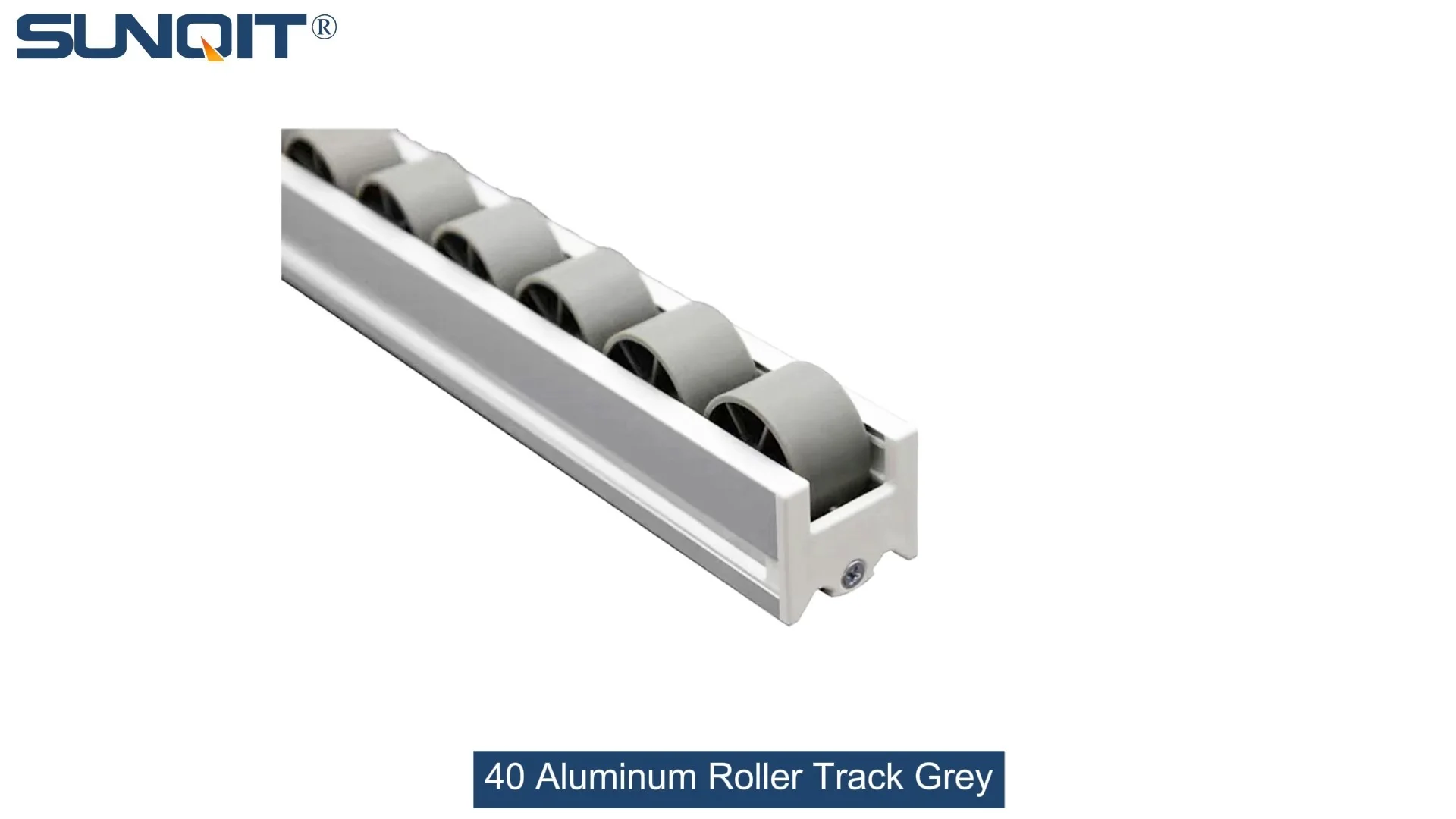
40 Aluminum Roller Track Grey
Durable and smooth-running modular roller rails. The system is fully assembled. The roller rail profile contains plastic rollers mounted on steel axles. Aluminum frame with plastic wheel make it anti corrosion,and material convey more smooth.
Walk into any manufacturing plant, warehouse, or assembly line, and you'll spot them—quietly doing the heavy lifting, day in and day out. Roller tracks are the unsung heroes of production efficiency, ensuring materials glide from point A to B without a hitch. But here's the thing: not all roller tracks are created equal. For years, many operations have leaned on "disposable" tracks—cheap, quick-to-install options that seem like a budget-friendly win. But if you've ever found yourself replacing bent rails, jamming rollers, or dealing with unexpected downtime, you know the truth: the "cheap" choice often comes with hidden costs. Today, we're diving into a head-to-head comparison that matters for your bottom line, your team's productivity, and your long-term operational health: 40 Aluminum Roller Track Grey versus disposable tracks. Let's cut through the noise and figure out which one truly delivers value.
The Initial Investment: Sticker Shock vs. Smart Spending
Let's start with the elephant in the room: upfront cost. Disposable tracks—often made from thin plastic, low-grade steel, or flimsy aluminum—have a way of catching your eye with their "too good to be true" price tags. A 10-foot section might set you back $20-$30, and if you're outfitting a small line, that total seems manageable. It's easy to think, "Why spend more?" But here's where the story shifts: 40 Aluminum Roller Track Grey isn't just a track—it's an investment in your operation's backbone.
Aluminum roller tracks, especially the 40-series (named for their 40mm width, a standard in industrial settings), are built from aluminum extrusion profile —a material known for its strength-to-weight ratio and resistance to corrosion. This isn't the flimsy aluminum you find in soda cans; it's precision-engineered, with a smooth, consistent finish that ensures materials glide without snags. And let's not forget the accessories: things like roller track placon mount for aluminum profile flat , which secure the track to your existing aluminum frames, or end caps that prevent material damage. These parts aren't afterthoughts—they're designed to make installation seamless and long-lasting. So yes, a 10-foot section of 40 Aluminum Roller Track Grey might cost $80-$120 upfront. That's 3-4x the price of a disposable track. But before you write it off as "too expensive," let's talk about what happens after that initial purchase.
Durability: When "Temporary" Becomes a Permanent Headache
Disposable tracks live up to their name—they're built to be used, not reused. Let's say you install a plastic disposable track in a busy electronics assembly line. The first month goes great. The second month, you notice a few rollers sticking. By month three, a section has bent under the weight of a heavy component bin, and you're patching it with zip ties. By month six? You're ordering a whole new set. Sound familiar? That's because disposable tracks aren't designed for the daily grind: plastic warps under heat, low-grade steel rusts in humid environments, and thin materials can't handle repeated impacts from loading and unloading.
Now, contrast that with 40 Aluminum Roller Track Grey. Aluminum is naturally resistant to rust and corrosion, so even in damp warehouses or factories with temperature fluctuations, it holds up. The extrusion process creates a uniform structure, meaning no weak spots that bend or crack under pressure. I've talked to production managers who've had the same aluminum tracks in place for 5+ years—with only minor part replacements (like a worn roller here or there). One manager at a automotive parts plant told me, "We used to replace our plastic tracks every quarter. Now, with the aluminum ones, we haven't touched them in two years. The initial cost hurt, but the peace of mind? Priceless."
And let's not overlook the little things. Disposable tracks often come with cheap plastic connectors that snap or loosen over time, leading to misaligned sections that jam materials. 40 Aluminum Roller Track Grey, on the other hand, uses aluminum profile accessories like metal brackets and screws that stay tight, even with constant vibration. It's the difference between a track that "works for now" and one that works reliably for years.

Maintenance: Time Is Money (and Disposable Tracks Waste Both)
Here's a cost no one talks about enough: maintenance time. When a disposable track breaks, someone has to stop what they're doing, hunt down a replacement, and install it. Let's say that takes 2 hours of a technician's time (at $30/hour) and costs $30 for the new track. That's $90 per incident. If it happens once a month, that's $1,080 a year. And that's per track section. If you have 10 sections in your line? You're looking at over $10,000 in annual maintenance and replacement costs.
Aluminum tracks? Maintenance is minimal. Maybe once a year, you'll need to tighten a loose screw or replace a worn roller (which costs $5-$10 and takes 10 minutes to install). The roller track placon mount for aluminum profile flat and other accessories are built to last, so you won't be replacing brackets or connectors regularly. One logistics supervisor I spoke with calculated that switching to aluminum tracks cut their maintenance time by 80%. "Our team used to spend half a day each week fixing tracks," he said. "Now, they check them once a month, and that's it. They're back to doing the work that actually moves the needle."

Operational Efficiency: When Smooth Flow Means Faster Production
Disposable tracks don't just cost money—they cost time. A bent section or sticky roller can bring a production line to a halt while someone troubleshoots. Even small delays add up. Let's say a jam occurs once a week, causing a 15-minute line stop. In a facility running two 8-hour shifts, that's 130 hours of lost production per year. At an average output of $500 per hour, that's $65,000 in lost revenue—all because of a "cheap" track.
40 Aluminum Roller Track Grey, with its smooth, consistent glide, eliminates these headaches. Materials move at a steady pace, reducing bottlenecks and keeping your lean system on track (pun intended). Lean manufacturing is all about eliminating waste—including the waste of waiting. When your tracks work reliably, your team can focus on assembling, packing, or shipping, not fixing equipment. It's a ripple effect: smoother flow means happier employees (no more frustration with jams), faster turnaround times, and happier customers who get their orders on time.

The Numbers: A 5-Year Cost-Benefit Breakdown
Let's put this all together with a real-world example. Imagine a small production line with 5 track sections, each 10 feet long. Here's how the costs stack up over 5 years:
| Cost Factor | Disposable Tracks | 40 Aluminum Roller Track Grey |
|---|---|---|
| Initial Cost (5 sections) | $5 sections x $30 = $150 | $5 sections x $100 = $500 |
| Annual Replacement Cost (2x/year) | $150 x 2 x 5 years = $1,500 | $0 (no full replacements needed) |
| Annual Maintenance Time (2 hours/incident, 12 incidents/year) | 12 incidents x $30/hour x 5 years = $1,800 | 2 incidents/year x $30/hour x 5 years = $300 |
| Lost Production (15 min/week line stops) | 130 hours/year x $500/hour x 5 years = $325,000 | 5 hours/year x $500/hour x 5 years = $12,500 |
| Total 5-Year Cost | $328,450 | $13,300 |
The numbers speak for themselves: over 5 years, disposable tracks cost nearly $330,000, while 40 Aluminum Roller Track Grey costs just $13,300. That's a savings of over $315,000. Suddenly, that initial $500 investment doesn't seem so steep, does it?
Beyond the Bottom Line: Sustainability and Team Morale
There's more to this decision than dollars and cents. Disposable tracks create mountains of waste—plastic and metal that end up in landfills, contributing to your company's carbon footprint. Aluminum, on the other hand, is 100% recyclable, and because it lasts longer, you're sending less waste to the dump. More and more customers and employees care about sustainability, and choosing durable, reusable equipment is a tangible way to show you're committed to responsible business practices.
Then there's team morale. No one likes working with equipment that breaks constantly. It's frustrating, demoralizing, and makes employees feel undervalued. When you invest in tools that work—like reliable aluminum tracks—you're telling your team, "I respect your time and your work." And happy, motivated teams are more productive, period.
So, Which One Should You Choose?
If you're running a one-time project with minimal material flow, disposable tracks might make sense. But for any ongoing operation—whether it's a factory, warehouse, or assembly line—40 Aluminum Roller Track Grey is the clear winner. It's an investment that pays for itself in months, saves you time and frustration, and supports a more efficient, sustainable workplace.
Think of it this way: Your production line is only as strong as its weakest link. If that link is a flimsy, disposable track, you're holding back your entire operation. But with 40 Aluminum Roller Track Grey—backed by quality materials, durable aluminum profile accessories , and a design built for the long haul—you're building a foundation that can grow with your business. So the next time you're tempted by the low price of disposable tracks, remember: cheap upfront rarely means cheap in the end. Sometimes, the best "deal" is the one that lasts.