- Company Articles
- Products and Technology
- Product knowledge
- Cost-Benefit Analysis: Investing in High-Quality 60 Steel Roller Track Small Wheels

Cost-Benefit Analysis: Investing in High-Quality 60 Steel Roller Track Small Wheels
Related Product
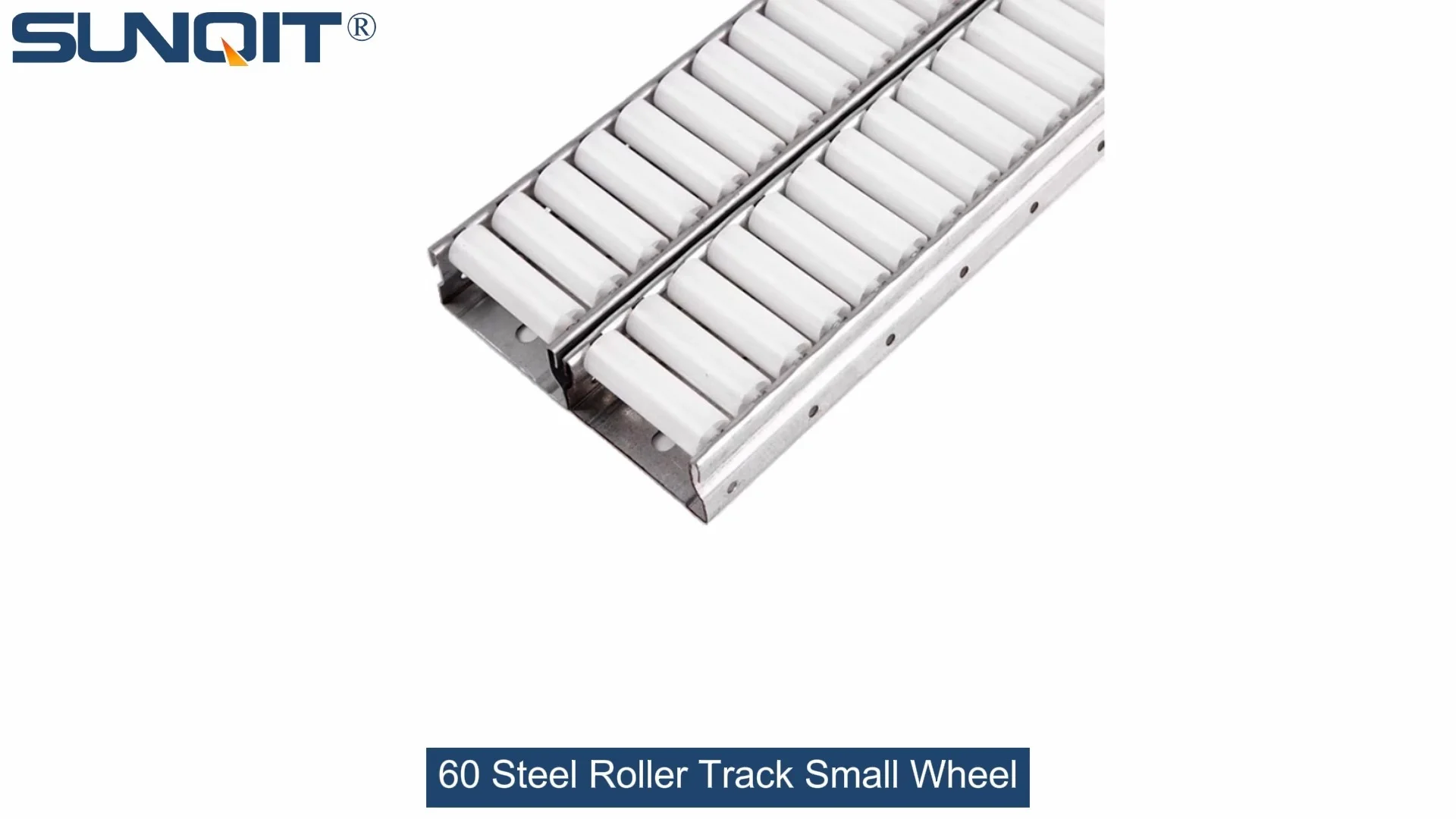
60 Steel Roller Track Small Wheel
Modular system roller tracks aluminum gravity roller tracks are an excellent solution for transporting materials within industrial environments, warehouses and distribution centres.
Cost-Benefit Analysis: Investing in High-Quality 60 Steel Roller Track Small Wheels
If you've ever worked in a warehouse, production line, or any space where materials move from point A to point B, you know how much of a difference small components can make. A stuck wheel, a bent roller, or a worn-out bearing can bring an entire workflow to a grinding halt—costing time, money, and frustration. Today, we're diving deep into one such component: the 60 steel roller track small wheel. We'll break down why choosing high-quality versions of these wheels isn't just an expense—it's a strategic investment that pays off in the long run.
First, let's get clear on what these wheels are. The 60 steel roller track small wheel is a compact, durable component designed to fit into roller tracks, flow racks, and conveyors. Made from hardened 60-grade steel, these wheels are built to handle heavy loads, resist wear and tear, and provide smooth, consistent movement for carts, bins, and other material handling equipment. They're not just any wheels—they're the unsung heroes of efficient material flow in industries like 3C assembly, medical device manufacturing, and warehouse logistics.
The Hidden Costs of Cutting Corners on Roller Wheels
Many businesses opt for cheap, low-quality roller wheels to save a few dollars upfront. But what they don't realize is that these "budget" choices come with a host of hidden costs that add up far beyond the initial price tag. Let's take a closer look at these costs:
1. Downtime: The Silent Profit Killer
Downtime is one of the most expensive costs a business can face. When a low-quality wheel breaks or jams, the entire line or rack stops working. For example, let's say you run a 3C assembly plant where a conveyor line uses cheap plastic wheels. One wheel jams, and the line stops for 2 hours. If your plant produces 150 units per hour with a profit margin of $15 per unit, that's 2*150*$15 = $4,500 in lost profit right there. Add in the cost of a technician to fix the issue (say $60 per hour, 2 hours = $120) and the cost of the replacement wheel ($12), and you're looking at a total loss of $4,632 for a single incident.
Now, if this happens once a month (a common occurrence with cheap wheels), that's $4,632 *12 = $55,584 per year. That's a huge chunk of revenue gone—all because you chose a $12 wheel over a higher-quality alternative.
2. Frequent Replacements: A Cycle of Waste
Low-quality wheels are designed to be disposable. They wear out quickly, bend under heavy loads, or break after a Few months of use. Let's do the math: if a cheap wheel costs $15 and needs replacement every 3 months, that's $60 per wheel per year. If you have 100 wheels in your facility, that's $6,000 per year in replacement costs alone. Compare that to a high-quality 60 steel wheel that costs $35 but lasts 5 years—$7 per wheel per year. For 100 wheels, that's $700 per year. The difference? $5,300 saved annually.
But it's not just the cost of the wheels. Each replacement takes time: a technician has to stop their current task, find the replacement part, and install it. If each replacement takes 30 minutes (and that's optimistic), 100 wheels replaced every 3 months mean 50 hours of labor—at $50 per hour, that's $2,500 per quarter, or $10,000 per year. High-quality wheels reduce this labor cost to almost zero over their lifespan.
3. Product Damage: When Wheels Cost You More Than Money
Stuck or uneven wheels can cause products to shift, fall, or get damaged. For example, if you're moving delicate medical device components on a cart with faulty wheels, a sudden jam could send those components crashing to the floor. A single damaged component worth $300 could cover the cost of 8-10 high-quality wheels. Multiply that by a few incidents per year, and the cost becomes staggering.
In the consumer electronics industry, even a small scratch on a smartphone screen can render it unsellable. If a cart with stuck wheels causes 5 such scratches per month (each costing $200 to replace), that's $12,000 per year in product damage—again, all avoidable with better wheels.
4. Safety Risks: The Cost of Injuries
Cheap wheels are a safety hazard. A wheel that breaks under a heavy load can cause a cart to tip over, injuring workers. The cost of workers' compensation, medical bills, and downtime for safety investigations can easily run into tens of thousands of dollars. For example, a worker injured by a tipping cart might require $10,000 in medical care and take 4 weeks off work. The lost productivity (4 weeks * $1,000 per week = $4,000) plus the workers' comp cost adds up to $14,000—far more than the cost of replacing all the wheels in your facility with high-quality ones.
The Long-Term Benefits of High-Quality 60 Steel Roller Track Small Wheels
Now that we've covered the hidden costs of low-quality wheels, let's turn to the bright side: the benefits of investing in high-quality 60 steel roller track small wheels. These benefits go far beyond just saving money—they improve efficiency, safety, and overall workflow.
1. Durability: Built to Last
High-quality 60 steel wheels are made from hardened steel, which means they can withstand heavy loads (up to 50kg per wheel) and resist wear and tear. The bearings are precision-engineered to reduce friction, so they don't wear out quickly. Many of these wheels come with a 5-year warranty, which is a testament to their durability. When you invest in these wheels, you're not just buying a component—you're buying peace of mind knowing that they won't break down when you need them most.
2. Smooth Operation: Boosting Productivity
The smooth operation of high-quality wheels can have a huge impact on productivity. When carts and bins glide easily along the track, workers spend less time pushing heavy loads and more time on value-added tasks. For example, if a worker spends 10 minutes per hour pushing a cart with stuck wheels, that's 10 minutes of lost productivity per hour. Over an 8-hour shift, that's 80 minutes of lost time per worker. If you have 20 workers, that's 1600 minutes (26.67 hours) of lost productivity per day—equivalent to 3.3 full-time workers. With smooth wheels, this time is saved, and workers can focus on tasks that actually contribute to your bottom line.
3. Compatibility with Lean Systems: Reducing Waste
Lean systems are all about reducing waste and improving efficiency. High-quality 60 steel wheels align perfectly with this philosophy. Since they last long and are reusable, they reduce waste from frequent replacements. They also fit seamlessly into flow racks and conveyors, which are key components of lean systems. For example, a flow rack equipped with high-quality wheels ensures that materials move smoothly from one station to the next, eliminating bottlenecks and reducing the need for excess inventory. This aligns with the lean principle of "just-in-time" production, where materials are delivered exactly when they're needed.
Many businesses that use lean solutions rely on high-quality components like these wheels to keep their systems running efficiently. A reliable flow rack supplier or conveyor supplier will always recommend high-quality wheels as part of their solutions, as they know that the long-term benefits far outweigh the initial cost.
4. Cost Savings Over Time: Calculating the ROI
Let's put all these benefits together to calculate the return on investment (ROI) of high-quality wheels. Let's take a hypothetical example of a warehouse that switches from cheap wheels to high-quality 60 steel wheels:
| Cost/Benefit Category | Before (Cheap Wheels) | After (High-Quality Wheels) | Annual Savings |
|---|---|---|---|
| Replacement Costs | $6,000/year | $700/year | $5,300 |
| Labor for Replacements | $10,000/year | $500/year | $9,500 |
| Downtime Losses | $55,584/year | $1,000/year | $54,584 |
| Product Damage | $12,000/year | $1,200/year | $10,800 |
| Safety Costs | $14,000/year (average) | $0/year (no incidents) | $14,000 |
| Total Annual Savings | - | - | $94,184 |
In this example, the warehouse spends $3,500 upfront to replace 100 cheap wheels with high-quality ones (100 wheels * $35 each). The annual savings are $94,184—meaning the ROI is achieved in just over 2 days (3500 / (94184/365) ≈2.7 days). That's an incredible return on a small initial investment.
Real-World Case Study: How a 3C Assembly Plant Benefited from High-Quality Wheels
To make this analysis more concrete, let's look at a real-world example. XYZ Electronics is a 3C assembly plant that produces smartphones and tablets. They were using cheap plastic wheels on their flow racks and conveyors, and they were facing constant issues: frequent jams, product damage, and downtime.
Before the Switch
- Downtime: 3-4 incidents per month, totaling 8 hours of lost production.
- Replacement costs: $8,000 per year for wheels and labor.
- Product damage: $15,000 per year from fallen components.
- Safety incidents: 2 minor injuries per year, costing $12,000 in workers' comp.
The Solution: Switching to 60 Steel Roller Track Small Wheels
XYZ Electronics decided to switch to high-quality 60 steel roller track small wheels from a reputable conveyor supplier. They replaced all 150 wheels in their facility, costing $5,250 upfront (150 wheels * $35 each).
After the Switch (6 Months Later)
- Downtime: 0 incidents—no jams or broken wheels.
- Replacement costs: $0—no wheels needed replacement.
- Product damage: $1,500 per year (a 90% reduction).
- Safety incidents: 0—no tipping carts or injured workers.
The results were staggering. In just 6 months, XYZ Electronics saved $4,000 in replacement costs, $7,500 in product damage, and $6,000 in safety costs—total savings of $17,500. The upfront cost of $5,250 was recovered in less than 2 months. Over a year, the savings are expected to reach $35,000—far more than the initial investment.
Moreover, the smooth operation of the wheels reduced worker fatigue, leading to a 10% increase in productivity. This translated to an additional $50,000 in annual revenue—making the total benefit of the switch over $85,000 per year.
How to Choose the Right Roller Wheels for Your Business
Now that you understand the benefits of high-quality wheels, you might be wondering how to choose the right ones for your business. Here are a few key factors to consider:
1. Material
Steel wheels are the best choice for heavy loads and high-traffic areas. 60-grade steel is particularly durable, as it's hardened to resist wear and tear. Avoid plastic wheels unless you're dealing with very light loads (under 10kg).
2. Load Capacity
Make sure the wheels can handle the maximum load you'll be moving. For example, if your carts carry up to 200kg, choose wheels with a load capacity of at least 50kg each (4 wheels per cart).
3. Compatibility
Ensure the wheels fit your existing flow racks, conveyors, or carts. A good supplier will provide detailed specifications and help you choose the right size and type for your system.
4. Supplier Reputation
Choose a reputable supplier with experience in your industry. Look for suppliers that offer warranties and custom solutions—this indicates they stand behind their products and can adapt to your specific needs. For example, a supplier that specializes in lean solutions will understand how to integrate high-quality wheels into your lean system to maximize efficiency.
Conclusion: Investing in Quality Pays Off
The 60 steel roller track small wheel might seem like a minor component, but it has a huge impact on your business's bottom line. Choosing low-quality wheels to save a few dollars upfront is a false economy—you'll end up paying far more in downtime, replacements, product damage, and safety costs.
On the other hand, investing in high-quality wheels is a strategic decision that brings long-term benefits: reduced costs, improved productivity, better safety, and alignment with lean principles. The ROI is quick—often achieved in just a few days or weeks—and the savings continue for years.
So, if you're tired of dealing with the headaches of cheap wheels, it's time to make the switch. Choose high-quality 60 steel roller track small wheels from a trusted supplier, and watch your business become more efficient, safer, and more profitable.