- Company Articles
- Products and Technology
- Product knowledge
- Cost-Benefit Analysis: Investing in Lean Pipe Clamp B Chrome for Long-Term Use

Cost-Benefit Analysis: Investing in Lean Pipe Clamp B Chrome for Long-Term Use
Related Product
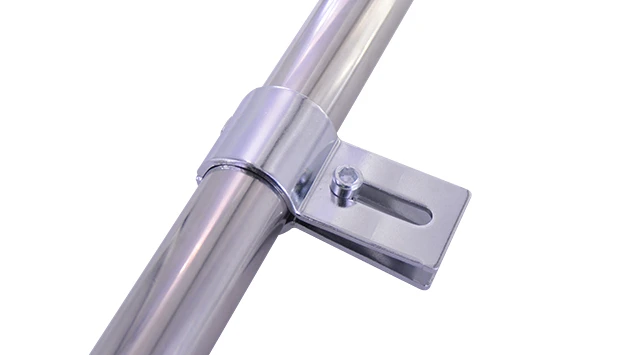
Lean Pipe Clamp B Chrome
Lean pipe clamp is used for turnover trolley, workbench, flowrack adjust the frame or fix some accessory.
If you've ever stood in the middle of a busy production floor, you know the difference between a smooth operation and a chaotic one often comes down to the smallest details. A loose workbench, a wobbly flow rack, or a joint that keeps slipping—these aren't just minor annoyances. They're productivity killers. They steal time from your team, force unexpected maintenance stops, and quietly eat into your budget year after year. But what if there was a component that could turn those daily headaches into afterthoughts? That's where the Lean Pipe Clamp B Chrome comes in. It's not the flashiest tool in your workshop, but this unassuming little clamp might just be the key to unlocking long-term efficiency, durability, and cost savings for your business. Let's dive into why this small investment could deliver big returns over time.
What Exactly Is a Lean Pipe Clamp B Chrome?
Before we get into the numbers, let's make sure we're all on the same page about what a Lean Pipe Clamp B Chrome actually is. At its core, it's a type of lean pipe joint —a hardware component designed to connect and secure lean pipes, aluminum profiles, and other structural elements in industrial setups. But what sets this particular clamp apart is its build quality and design.
Most standard clamps are made from basic plastic or uncoated steel. Plastic clamps are cheap upfront, but they crack under pressure, warp in heat, and degrade quickly with regular use. Uncoated steel clamps rust, especially in humid or messy environments like manufacturing plants where oil, coolant, or moisture are common. The Lean Pipe Clamp B Chrome, though? It's built to outlast both. It starts with a robust steel core for strength, then gets a thick chrome plating that acts as a shield against corrosion, scratches, and wear. The "B" in its name refers to its specific design—typically a two-piece clamp with a tightening mechanism that creates a rock-solid grip when secured, even under heavy loads.
Think of it like the difference between a disposable plastic fork and a stainless steel utensil. One works for a quick meal, but the other lasts years, handles more use, and never leaves you scrambling for a replacement. That's the mindset shift here: this clamp isn't just a part—it's a long-term building block for your workspace.
The Cost Factor: Short-Term Outlay vs. Long-Term Gains
Let's talk money—the part that really matters for your bottom line. At first glance, a Lean Pipe Clamp B Chrome might make you pause. Depending on the supplier, you're looking at roughly $12–$15 per unit, compared to $5–$8 for a basic plastic clamp or $8–$10 for a standard steel clamp. "Why pay more upfront?" you might ask. The answer lies in what happens after that initial purchase. Let's break it down with real numbers.
| Clamp Type | Initial Cost Per Unit | Expected Lifespan | Replacements Needed (5 Years) | Total Material Cost (5 Years) | Annual Maintenance Time |
|---|---|---|---|---|---|
| Basic Plastic Clamp | $5 | 6–8 months | 7–10 units | $35–$50 | 10–15 hours (tightening, replacing broken clamps) |
| Standard Steel Clamp (Uncoated) | $9 | 1–2 years | 3–5 units | $27–$45 | 5–8 hours (removing rust, tightening, replacing corroded parts) |
| Lean Pipe Clamp B Chrome | $14 | 5+ years | 0–1 units (likely 0) | $14–$28 | 1–2 hours (occasional tightening, no replacements) |
Let's unpack this. Take a small workshop with 50 clamps in use—say, holding together workbenches, flow racks, and material carts. With plastic clamps, you're replacing nearly 10 units a year, costing $50 annually. Over five years, that's $250. Plus, your team is spending 10+ hours a year just dealing with loose or broken clamps—time that could be spent assembling products, packing orders, or maintaining machines. At an average labor cost of $25/hour, that's $250/year in wasted labor, or $1,250 over five years. Total 5-year cost? $1,500.
Standard steel clamps are better, but not by much. You'll replace 3–5 units every two years, so around $45 total for materials over five years. Maintenance drops to 5 hours/year, but rust still means occasional replacements and cleanup. Total labor cost? $625 over five years. Total 5-year cost: $670.
Now the Lean Pipe Clamp B Chrome: $14 per unit, 50 clamps = $700 upfront. But over five years, you might replace 1–2 units at most (if any). Material cost: $728. Maintenance? Maybe 1 hour/year to check tightness, since chrome doesn't rust and the grip stays strong. Labor cost: $125 over five years. Total 5-year cost? $853. Wait—that's higher than steel, but lower than plastic. But here's the kicker: the lifespan of the Chrome clamp isn't just 5 years. Most users report them lasting 7–10 years with proper care. Extend that to 10 years, and the math flips dramatically: plastic clamps would cost $3,000+, steel $1,340, and Chrome? Still under $1,000. That's the long-term win.
Beyond Cost: The Hidden Benefits of Durability
Money isn't the only factor here. The real value of the Lean Pipe Clamp B Chrome shows up in the daily rhythm of your operation—in the things that don't happen when you use it. Let's talk about those hidden benefits.
1. No More Downtime for Repairs
Imagine this: It's 2 PM on a Tuesday, and your assembly line is running full tilt to meet a deadline. Suddenly, a clamp on the workbench holding your most critical tooling gives way. The shelf tilts, tools crash to the floor, and your team has to stop production to clean up, hunt for a replacement clamp, and rebuild the shelf. That 30-minute delay? It might cost you 10 units of output, or even risk missing a shipment. With Chrome clamps, those moments become rare. Their tight grip and durability mean you're not stopping production for "quick fixes" every other week.
2. Flexibility to Adapt (Without Starting Over)
Manufacturing needs change. Maybe you switch product lines, add a new machine, or reorganize your floor plan to improve workflow. With cheap clamps, reconfiguring a flow rack or workbench means breaking half the clamps in the process—plastic cracks, rusted steel seizes up. You end up buying new parts anyway. The Lean Pipe Clamp B Chrome? It's designed to be taken apart and reassembled repeatedly. The chrome plating doesn't chip when you loosen and retighten the bolts, and the steel core stays strong. So when you need to move a rack from the left side of the floor to the right, or add a shelf to a workbench, you can do it without wasting clamps or time. It's like having a modular workspace that grows with your business, instead of a fixed setup that becomes obsolete.
3. Compatibility with Your Existing Setup
You don't have to tear out your entire workshop to switch to these clamps. They're designed to work with standard lean pipes (often 28mm or 30mm diameter) and most aluminum profile systems—the same ones you probably already have. That means you can upgrade incrementally: start with the clamps on your most problematic workbench, then replace others as old ones fail. No need for a massive upfront overhaul, just steady improvement.
"We run a small electronics assembly shop, and for years, we used plastic clamps on our testing workbenches. Every time we moved a bench or added a shelf, half the clamps would snap. Six months ago, we switched to Lean Pipe Clamp B Chrome on one bench as a test. Today, that bench still looks brand new, and we're replacing all our clamps with them. The time we've saved not fixing wobbly shelves? It's like adding an extra half-day of production each week." – Maria, Production Manager at a mid-sized electronics firm
Real-World Applications: Where This Clamp Shines
You might be wondering, "Is this clamp really worth it for my specific setup?" Let's look at a few common scenarios where the Lean Pipe Clamp B Chrome proves its value day in and day out.
Workbenches: The Backbone of Your Workshop
Your workbench is where the magic happens—assembly, inspection, packaging. It needs to be stable, even when someone leans on it, drops a heavy part, or bumps into it with a cart. Cheap clamps mean the bench wobbles, tools slide, and precision work suffers. With Chrome clamps, the bench stays rigid. The chrome plating resists scratches from tools and parts, so it still looks professional years later. Plus, if you need to add a pegboard, a light, or a tool holder to the bench, the clamps make it easy to attach and reposition without damage.
Flow Racks: Keeping Materials Moving
Flow racks are all about efficiency—parts roll down from the back to the front, so pickers don't waste time reaching. But if the rack's frame isn't secure, the roller tracks misalign, parts get stuck, and suddenly your "lean" setup becomes a bottleneck. Chrome clamps keep the rack's vertical and horizontal pipes locked in place, even when loaded with heavy boxes or components. No more sagging shelves or misaligned tracks—just smooth, consistent flow.
Turnover Trolleys and Material Carts
Trolleys take a beating. They're pushed, pulled, loaded, unloaded, and sometimes even dropped off curbs or bumped into walls. Plastic clamps on a trolley? They'll crack within months. Chrome clamps? They absorb the impact, stay tight, and keep the trolley from falling apart. Whether you're moving raw materials from the warehouse to the line or finished products to shipping, a sturdy trolley with reliable clamps means fewer damaged goods and fewer trips to fix a broken cart.
Why Chrome-Plated? The Science of Longevity
You might be thinking, "Couldn't I just use a regular steel clamp and paint it?" Nope—paint chips, and once it does, rust sets in. Chrome plating is different. It's an electrochemical process that bonds a thin layer of chromium to the steel, creating a barrier that's both hard and corrosion-resistant. Chromium doesn't react with oxygen or moisture, so it won't rust. It's also harder than steel, so it resists scratches from tools, parts, or accidental impacts. In humid environments, near water, or around chemicals, this matters. A Chrome clamp in a food processing plant (where washdowns are daily) or an auto shop (where oil and grease are everywhere) will outlast any painted or plastic alternative.
Plus, chrome is easy to clean. A quick wipe with a damp cloth removes grime, so your workshop stays looking neat—not like a cluttered mess of rusted, broken parts. That might seem like a small thing, but a clean, organized workspace boosts team morale and efficiency. When your tools and setups look professional, your team feels professional—and that translates to better work.
The Verdict: Is It Worth the Investment?
Let's cut to the chase: Should you invest in Lean Pipe Clamp B Chrome for your operation? If you're in it for the long haul—if you want to build a workspace that grows with you, minimizes headaches, and saves money over time—then yes. This clamp isn't for businesses that plan to close shop next year or those that replace their entire setup every 12 months. But for the rest of us—manufacturers, workshops, warehouses, and small businesses that need their equipment to last—this is a no-brainer.
Think of it this way: Every time you replace a broken plastic clamp, every hour your team spends fixing a wobbly shelf, every dollar you spend on emergency replacements—those are all hidden costs eating into your profit. The Lean Pipe Clamp B Chrome eliminates those costs. It's a small investment today that pays back in saved time, reduced frustration, and lower long-term expenses tomorrow.
So the next time you're ordering parts for your workshop, skip the cheap clamps. Spend a little more upfront, and let the Chrome clamps do the heavy lifting—for years to come.