- Company Articles
- Products and Technology
- Procurement Guidelines
- Cost-Benefit Analysis: One Way Rotatory Straight Lean Pipe Joint Investments

Cost-Benefit Analysis: One Way Rotatory Straight Lean Pipe Joint Investments
Related Product
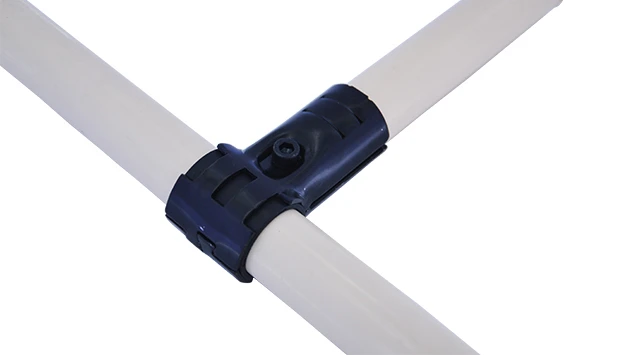
One Way Rotatory Straight Lean Pipe Joint
Two way lean pipe joint for 2 pcs 28MM lean pipe connection in straight angle with rotatory fucntion, which used widely in workbench, flow rack, hand trolley frame connection.
Introduction: The Unsung Hero of Lean Manufacturing
Every manufacturing floor has its workhorses—machines that hum day in and day out, conveyors that move materials like clockwork, and workbenches where skilled hands assemble products. But what if the key to unlocking greater efficiency isn't a flashy new machine, but a small, unassuming component that connects it all? Enter the
one way rotatory straight lean pipe joint
—a quiet innovator in the world of lean manufacturing. For plant managers, operations directors, and anyone tasked with optimizing production workflows, understanding the true value of this component isn't just about buying parts; it's about investing in a system that grows with your needs, cuts waste, and turns chaos into a well-oiled process.
At first glance, a lean pipe joint might seem trivial. It's a metal or plastic connector that links
lean pipe
(those modular tubes that form the backbone of workbenches, flow racks, and material trolleys) into structured systems. But the one way rotatory straight variant is different. Unlike fixed joints that lock pipes into rigid angles or two-way rotatory joints that spin freely (and sometimes unpredictably), this joint allows controlled, one-directional rotation—think of it as a hinge that only swings forward, preventing backtracking and keeping workflows moving in the right direction. For assembly lines, packaging stations, or material handling areas where precision and speed matter, this small feature can be the difference between a bottleneck and a smooth, continuous flow.
In this article, we'll dive deep into the cost-benefit equation of investing in one way rotatory straight lean pipe joints. We'll break down the upfront costs, weigh them against long-term savings, and explore how this component fits into broader
lean system
strategies. Whether you're running a small workshop or a large-scale production facility, the goal is simple: to help you decide if this investment isn't just a purchase, but a smart business move.
What Is a One Way Rotatory Straight Lean Pipe Joint, Anyway?
Let's start with the basics. A one way rotatory straight lean pipe joint is a specialized connector designed to join lean pipes (also called "lean tubes") in a straight line while allowing rotation in one direction only. Picture this: you're building a flow rack for moving boxes from a storage area to an assembly station. The rack's rollers need to guide boxes forward, but if they roll backward, they could collide with incoming materials, causing jams or damage. A one way rotatory joint ensures the rollers only spin in the direction of the workflow—forward—eliminating the risk of reverse movement.
These joints are part of a broader ecosystem of
lean pipe and accessories
, which includes everything from the pipes themselves (often made of steel, aluminum, or plastic-coated materials) to casters, connectors, and workbench components. What makes the one way rotatory straight joint unique is its mechanical design: inside the joint, a spring-loaded mechanism or ratchet system locks rotation in one direction, while allowing smooth movement in the other. This isn't just about preventing mistakes; it's about enforcing consistency in how materials flow through your facility.
Common materials for these joints include zinc-plated steel (durable and cost-effective), stainless steel (ideal for cleanrooms or food-grade environments), and aluminum (lightweight and corrosion-resistant). The choice of material depends on your workspace—for example, a automotive plant with high humidity might opt for stainless steel, while an electronics assembly line (which values lightweight systems) could prefer aluminum. Regardless of material, the core function remains the same: to connect, rotate, and restrict—all in service of a more efficient workflow.

The Upfront Investment: What You'll Pay Today
Let's talk numbers. No cost-benefit analysis is complete without understanding the initial outlay. For one way rotatory straight lean pipe joints, costs can vary based on material, quantity, and your
lean pipe supplier
. Here's a breakdown of what you might expect:
1. Unit Cost of the Joints
On average, a single one way rotatory straight lean pipe joint costs between $8 and $15. This range depends on:
- Material: Zinc-plated steel joints are at the lower end ($8–$10), while stainless steel or aluminum joints can cost $12–$15.
- Brand/Quality: Reputable suppliers with strict quality control (think ISO-certified manufacturers) may charge 10–15% more than generic brands, but often include warranties (1–3 years) that lower long-term risk.
- Quantity: Buy in bulk, and suppliers typically offer discounts. For example, purchasing 100+ joints might bring the unit cost down by 10–20%.
2. Additional Materials: Pipes, Accessories, and Tools
Joints don't work alone—you'll need lean pipes, other connectors (like T-joints or elbows), and possibly tools to assemble the system. Let's assume you're building a small flow rack for a packaging station. Here's a sample cost breakdown for a basic setup:
| Component | Quantity | Unit Cost | Total Cost |
|---|---|---|---|
| One Way Rotatory Straight Lean Pipe Joints (zinc-plated steel) | 20 | $9 | $180 |
| Lean Pipe (1.5mm PE-coated steel, 2m length) | 10 | $12 | $120 |
| 90° Fixed Lean Pipe Joints (for corners) | 8 | $6 | $48 |
| Roller Track (plastic, 1m length) | 5 | $25 | $125 |
| Assembly Tools (hex keys, pipe cutter) | 1 set | $50 | $50 |
| Total Initial Investment | – | – | $523 |
This example is for a small flow rack, but scale up to a larger system (say, a production line with 10 workstations and 5 flow racks), and the initial investment could range from $5,000 to $10,000. That might seem steep, but remember: this is a one-time cost for a system designed to last 5–7 years (or longer, with proper maintenance).
3. Supplier Selection: Why It Matters for Costs
Your choice of
lean pipe supplier
can significantly impact upfront costs. Local suppliers may charge more but offer faster delivery and easier returns, while international suppliers (e.g., from Asia) might have lower unit costs but higher shipping fees and longer lead times. For example, a U.S.-based supplier might quote $10 per one way rotatory joint, while a Chinese supplier could offer $7—but add $300 in shipping for a bulk order. It's a trade-off between cost, speed, and reliability.
Pro tip: Look for suppliers that specialize in lean manufacturing components, not just general hardware stores. They'll have better expertise in pairing joints with the right pipes and accessories, reducing the risk of compatibility issues (which can lead to costly do-overs). Many also offer custom quotes for large orders, so don't hesitate to negotiate—especially if you're planning to scale up in the future.

The Hidden Savings: How One Way Rotatory Joints Cut Costs Long-Term
Upfront costs tell only part of the story. The real value of one way rotatory straight lean pipe joints lies in how they reduce waste and improve efficiency over time. Let's break down the long-term savings:
1. Reduced Labor Costs: Time Is Money
In manufacturing, labor is often the single largest expense. One way rotatory joints cut labor time in two ways: first, by speeding up assembly of the lean system itself. Unlike welded or glued joints, these connectors are modular—no special skills required. A team of two workers can assemble a basic flow rack in 2–3 hours, compared to 4–5 hours for a welded system. Over 10 racks, that's 20–30 hours saved, translating to $300–$450 (assuming $15/hour labor cost).
More importantly, they reduce labor time during daily operations. Imagine an assembly line where workers previously had to manually push boxes up a non-rotatory flow rack—straining their backs and slowing down the process. With one way rotatory joints, the rollers move boxes forward effortlessly, cutting handling time by 30%. For a team of 5 workers, each spending 2 hours/day on material handling, that's 30 hours saved per week—or $2,250 per month (at $15/hour). Over a year, that's $27,000 in labor savings alone.
2. Durability: Less Replacement, More ROI
Cheap joints might save you money today, but they'll cost you tomorrow. One way rotatory straight lean pipe joints, when made from high-quality materials (like stainless steel or heavy-duty zinc-plated steel), are built to withstand constant use. A well-maintained joint can last 7–10 years, compared to 2–3 years for flimsy plastic or low-grade steel alternatives. This means fewer replacements: instead of buying new joints every 2 years, you're investing once and reaping the benefits for a decade.
For example, if you replace 20 low-quality joints ($5 each) every 2 years, that's $500 over 10 years. A single set of high-quality joints ($10 each) lasts 10 years, costing $200—saving $300 over the same period. Multiply that by 100 joints across your facility, and you're looking at $30,000 in replacement cost savings.
3. Adaptability: Future-Proofing Your Facility
Manufacturing needs change—product lines evolve, order volumes fluctuate, and new technologies emerge. A rigid system (like welded metal racks) can't keep up; you'd have to tear it down and rebuild from scratch. One way rotatory joints, however, are modular. Need to reconfigure a workbench to fit a new product? Disassemble the joints, adjust the pipes, and reassemble—no cutting or welding required. This adaptability saves on renovation costs. For example, reconfiguring a welded rack might cost $1,000 (labor + materials), while reconfiguring a lean system with rotatory joints costs $100 (just labor for disassembly/reassembly). Over 5 reconfigurations, that's $4,500 saved.
Case Study: How a Electronics Plant Saved $45,000 in 18 Months
Background: Bottlenecks at PrecisionTech Electronics
PrecisionTech Electronics, a mid-sized manufacturer of circuit boards, was struggling with bottlenecks in their assembly line. Their old material handling system used fixed metal racks with no rotation, requiring workers to manually lift and slide components onto workbenches. This led to:
- Slow material flow: Parts took 15 minutes to move from storage to assembly (vs. the target 5 minutes).
- High labor costs: 3 full-time workers dedicated to material handling.
- Frequent errors: Backward-rolling parts caused 5–10 jams per day, leading to 30 minutes of downtime daily.
The Solution: One Way Rotatory Straight Lean Pipe Joints
In January 2023, PrecisionTech invested $8,500 in a new lean system featuring one way rotatory straight lean pipe joints. The system included 5 flow racks, 3 workbenches, and 200 joints (zinc-plated steel, sourced from a local lean pipe supplier ). The goal was to automate material flow and reduce manual handling.
The Results: 18 Months Later
By July 2024, the results were clear:
- Material flow time: Reduced from 15 minutes to 4 minutes (73% improvement).
- Labor costs: 2 material handlers were reassigned to assembly (saving $3,000/month in labor).
- Downtime: Jams dropped from 5–10 per day to 0–1 per week (saving 2.5 hours of downtime weekly, worth $187.50/week or $750/month).
- Total savings in 18 months: ($3,000 + $750) x 18 = $67,500. Minus the initial investment of $8,500, net savings were $59,000 .
ROI Calculation
ROI = (Net Savings / Initial Investment) x 100 = ($59,000 / $8,500) x 100 ≈ 694% . In just 18 months, PrecisionTech saw a 694% return on their investment.
Why One Way Rotatory Joints Beat Alternatives
You might be wondering: Are there cheaper or "good enough" alternatives? Let's compare one way rotatory straight lean pipe joints to three common options:
1. Fixed Lean Pipe Joints
Fixed joints (no rotation) cost $4–$6 each—cheaper than rotatory joints. But they offer zero flexibility. If you need to adjust the angle of a flow rack or workbench, you'll have to disassemble and rebuild the entire system. In a dynamic manufacturing environment, this rigidity leads to wasted time and missed opportunities. For example, a product design change might require a 10° tilt in a flow rack; with fixed joints, that means buying new pipes and joints, costing $200–$300. With one way rotatory joints, you simply adjust the rotation—no new parts needed.
2. Two-Way Rotatory Joints
Two-way rotatory joints allow rotation in both directions, costing $12–$18 each (more expensive than one way). But in material handling, two-way rotation is a liability. Imagine a worker accidentally bumping a box, sending it rolling backward into a pile of incoming parts—that's a jam, downtime, and potential damage. One way joints eliminate this risk by enforcing a single direction of flow, making them safer and more reliable for production lines.
3. Welded Metal Systems
Welded racks are durable but permanent. They cost $500–$1,000 per unit (vs. $500–$1,000 for a lean system of the same size), but once welded, they can't be reconfigured. If your production needs change (e.g., you start making larger products), you'll have to scrap the old racks and buy new ones—a waste of money and resources. Lean systems with rotatory joints, by contrast, can be modified in hours, adapting to new needs without replacement costs.
Calculating Your Own ROI: A Step-by-Step Guide
Ready to see if one way rotatory straight lean pipe joints make sense for your facility? Follow these steps to calculate your potential ROI:
- Estimate your current inefficiencies: How much time do workers spend on manual material handling? How many jams/downtime incidents occur weekly due to poor flow?
- Determine the size of your lean system: How many workbenches, flow racks, or trolleys do you need? Count the number of one way rotatory joints required (typically 2–4 per linear meter of roller track).
- Calculate initial investment: Multiply the number of joints by unit cost, add pipes, accessories, and tools (use the sample table above as a guide).
- Estimate annual savings: Labor savings (time saved on handling), downtime savings (fewer jams), and replacement savings (fewer joint replacements).
- Compute ROI: (Annual Savings x Years) – Initial Investment = Net Gain. ROI = (Net Gain / Initial Investment) x 100.
Even for small facilities, the math adds up. A workshop with 2 workbenches and 1 flow rack might see ROI in 6–8 months. For large plants, ROI could come in under a year.
Conclusion: Invest in Flow, Invest in Profit
The one way rotatory straight lean pipe joint isn't just a connector—it's a tool for building a more efficient, adaptable, and profitable manufacturing operation. While the upfront investment might seem significant, the long-term savings in labor, downtime, and replacement costs make it a no-brainer for any facility focused on lean principles.
Remember, the true value of lean manufacturing lies in eliminating waste—whether that's wasted time, wasted effort, or wasted money. One way rotatory joints tackle all three, turning a simple component into a catalyst for operational excellence. So, when you're next evaluating your production line, don't overlook the small parts that hold it all together. Sometimes, the biggest gains come from the most unassuming investments.
Ready to get started? Reach out to a trusted
lean pipe supplier
today. Ask for samples, compare quotes, and run the numbers for your facility. Chances are, you'll find that these little joints deliver big returns—for years to come.