- Company Articles
- Products and Technology
- Procurement Guidelines
- Cost-Benefit Analysis: T Slot Aluminum Pipe with Board Holder Investment Returns

Cost-Benefit Analysis: T Slot Aluminum Pipe with Board Holder Investment Returns
Related Product
T Slot Aluminum Pipe with Board Holder
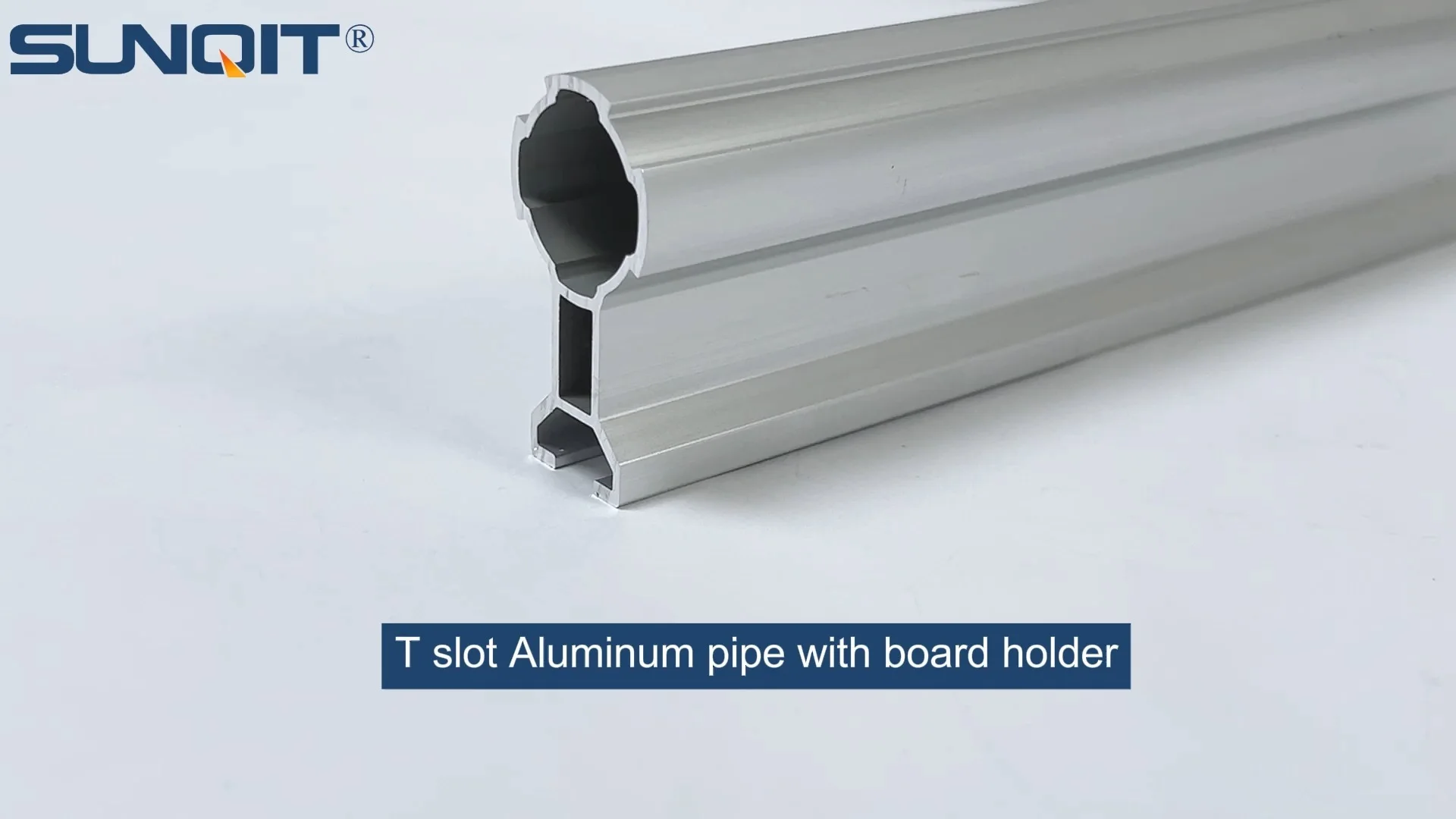
T slot Aluminum pipe with board holder,the pipe one side connected by a joint, the other side with a slot which can hold a tray or a aluminum pannel
In today's fast-paced manufacturing and workshop environments, efficiency isn't just a buzzword—it's the difference between meeting deadlines and falling behind, between profitability and wasted resources. Every tool, every workbench, and every inch of floor space matters. Yet many businesses still struggle with rigid, one-size-fits-all setups that drain time, money, and morale. What if there was a solution that adapts to your needs, grows with your business, and actually saves you money in the long run? Enter the T slot aluminum pipe with board holder—a modular, durable, and surprisingly cost-effective tool that's transforming how teams work.
What Is a T Slot Aluminum Pipe with Board Holder?
At its core, a T slot aluminum pipe is exactly what it sounds like: lightweight yet sturdy aluminum tubing with a longitudinal "T" shaped groove running along its length. This groove isn't just a design quirk—it's the key to its versatility. Pair it with a board holder, and you've got a customizable surface (think workbench tops, shelving, or material support) that locks securely into place. But what really makes this system shine is its compatibility with aluminum profile accessories—connectors, brackets, casters, and guides—that let you build, modify, and rebuild structures without welding, drilling, or specialized tools.
Unlike traditional steel or wooden setups, which are fixed in place and expensive to replace, T slot aluminum systems thrive on flexibility. Need to adjust the height of your workbench? Swap out a few brackets. Expanding production and need a new material rack? Add more pipes and connectors. It's like building with industrial-grade Legos, but designed for the demands of real-world workshops and factories.
The Hidden Costs of Rigid Workspaces
Before diving into the benefits of T slot aluminum, let's talk about the elephant in the room: the cost of not investing in flexible infrastructure. Many businesses stick with outdated workbenches or material racks because "they've always worked," but this mindset often hides silent drains on the bottom line.
Take, for example, a small electronics assembly line using a wooden workbench. After a year, the wood warps from humidity, leaving tools wobbling and parts sliding off. The team spends 10 hours a week just readjusting components—a hidden labor cost of $25/hour, adding up to $13,000 annually. When the company launches a new product with larger circuit boards, the workbench is too short, so they buy a second, custom steel bench for $2,000. Six months later, a third product requires a different layout, and now they're juggling three benches, wasting floor space and creating bottlenecks.
Then there's maintenance. Steel rusts, wood rots, and both require frequent repairs or replacements. A 2023 survey by the Manufacturing Efficiency Institute found that manufacturers spend an average of 4% of their annual equipment budget on replacing rigid workstations—money that could be reinvested in growth.

The Case for T Slot Aluminum: 4 Key Benefits
T slot aluminum pipe with board holder systems address these pain points head-on, offering a rare combination of cost savings, adaptability, and durability. Let's break down the advantages:
1. Lower Total Cost of Ownership (TCO)
At first glance, aluminum might seem pricier than wood or low-grade steel. A 1-meter T slot aluminum pipe costs roughly $15–$25, compared to $5–$10 for a wooden 2x4 or $8–$15 for basic steel tubing. But TCO isn't just about upfront costs—it's about lifespan, maintenance, and adaptability. Aluminum resists corrosion, so it lasts 10–15 years in most environments, compared to 2–5 years for wood or 5–7 years for uncoated steel. That means fewer replacements: over 10 years, a wooden setup might need 5 replacements, costing $500 total, while aluminum needs just 1, costing $250. Plus, aluminum is 100% recyclable, so at the end of its life, you can sell it back for scrap, offsetting costs further.
2. Flexibility That Grows With Your Business
The T-slot design and aluminum profile accessories are game-changers here. With connectors, brackets, and casters, you can reconfigure your workbench or material rack in minutes, not days. A furniture manufacturer in Ohio recently shared how they used T slot aluminum to build a modular assembly line: when demand for dining chairs spiked, they added three more workstations in a weekend by reusing pipes from a less busy product line. No new tools, no contractors—just a team of two workers and a bag of connectors. The alternative? Hiring a welder to build custom steel stations, which would have taken 2 weeks and cost $5,000.
3. Durability for Heavy-Duty Use
Don't let aluminum's lightweight fool you—it's surprisingly strong. Most T slot aluminum pipes have a load capacity of 50–100 kg per linear meter, enough to support power tools, heavy components, or stacks of materials. Unlike wood, it won't splinter or warp; unlike steel, it won't rust or require painting. A automotive parts supplier in Texas uses T slot aluminum workbenches to hold 80kg hydraulic presses—after 8 years, the pipes show no signs of bending or wear.
4. Supports Lean System Principles
Lean system thinking is all about eliminating waste—whether it's time, space, or materials. T slot aluminum aligns perfectly with this philosophy. By allowing quick reconfiguration, it reduces "motion waste" (workers walking farther to grab tools) and "inventory waste" (excess parts stored in inefficient racks). A bakery in California implemented a lean system using T slot aluminum material racks: by arranging racks to follow the production flow, they cut 15 minutes off each shift's setup time and reduced ingredient waste by 8%. As their lean coordinator put it, "The system adapts to our workflow, not the other way around."

Cost-Benefit Analysis: The Numbers Speak
To truly understand the ROI of T slot aluminum, let's compare it to a traditional steel workbench setup over 5 years. We'll use real-world figures from suppliers and industry benchmarks.
| Cost Factor | Traditional Steel Workbench | T Slot Aluminum Workbench with Board Holder | 5-Year Net Savings (Aluminum vs. Steel) |
|---|---|---|---|
| Initial Investment | $1,800 (custom-built, fixed size) | $1,200 (pipes, board holder, aluminum profile accessories) | +$600 |
| Assembly Labor | $500 (requires welding/contractors) | $150 (team-assembled with basic tools) | +$350 |
| Annual Maintenance | $300 (painting, rust repair) | $50 (occasional cleaning, tightening connectors) | +$1,250 |
| Reconfiguration Costs | $2,000 (new bench for product changes) | $200 (additional pipes/connectors) | +$1,800 |
| Labor Efficiency Gains | $0 (fixed setup = no time savings) | $5,200 (10 hrs/week saved at $25/hr) | +$5,200 |
| Total 5-Year Cost | $6,600 | $1,800 | +$4,800 |
The table tells a clear story: over 5 years, the T slot aluminum system saves $4,800 compared to steel. And this doesn't even account for intangibles like improved worker morale (less frustration with clunky setups) or faster time-to-market for new products (thanks to quick reconfigurations).
Real-World Impact: How a Furniture Manufacturer Cut Costs by 32%
Maple & Co., a mid-sized furniture maker in North Carolina, was struggling with rigid wooden workbenches that couldn't keep up with their custom-order business. In 2022, they replaced 10 workstations with T slot aluminum systems, investing $12,000 total (pipes, board holders, and aluminum pipe accessories like casters for mobility). Within 6 months, the results were staggering:
- Setup time dropped from 45 minutes per custom order to 10 minutes, saving 15 hours/week in labor ($19,500/year).
- Material waste decreased by 18% as workbenches could be adjusted to fit exact part sizes, saving $8,200/year.
- No new workbenches were needed for 12 new product lines—instead, they reconfigured existing systems for $300 in extra accessories.
By 2023, Maple & Co. had recouped their initial investment and now estimates annual savings of $27,700. "We used to see workbenches as a necessary expense," says operations manager Lisa Chen. "Now we see them as a tool to save money."
Choosing the Right System: What to Look for in a Supplier
Not all T slot aluminum systems are created equal. To maximize ROI, partner with a supplier that offers:
- High-quality aluminum: Look for 6063-T5 aluminum, which balances strength and lightweight properties.
- Comprehensive accessories: Ensure they stock a range of connectors, brackets, and casters to avoid compatibility issues.
- Technical support: A good supplier will provide design guides or even help you blueprint your setup.
Avoid cheap imitations—thin-walled pipes or flimsy plastic accessories will bend or break, negating the cost savings. Remember: durability is key to long-term TCO.
Conclusion: Investing in Flexibility Pays Off
In a world where manufacturing and production needs change faster than ever, rigid workspaces are no longer just inconvenient—they're a liability. T slot aluminum pipe with board holder systems offer a smarter alternative: a modular, durable, and cost-effective solution that grows with your business, reduces waste, and puts money back in your pocket.
Whether you're a small workshop or a large factory, the math is clear: the initial investment in T slot aluminum pays for itself in months, not years. And beyond the numbers, there's a human benefit too—workers who spend less time fighting with tools and more time creating, innovating, and driving your business forward.
So, what are you waiting for? Your future self (and your balance sheet) will thank you.