- Company Articles
- Products and Technology
- Procurement Guidelines
- Cost-Benefit Comparison: Aluminum Workbench B vs. Outsourcing Workstation Solutions

Cost-Benefit Comparison: Aluminum Workbench B vs. Outsourcing Workstation Solutions
Related Product
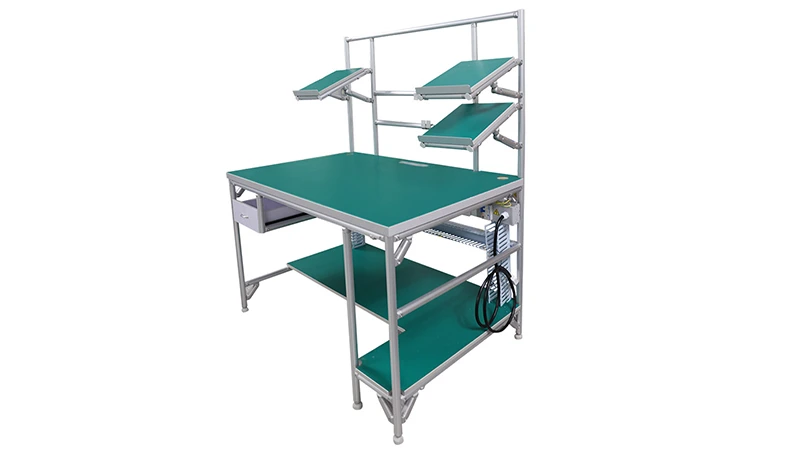
Aluminum Workbench B
Aluminum tube workbench is more flexible and durable, compared with traditional PE/ABS coated steel tube. It is easy to assemble, anti corrosion, rust protection, and recycle use after disassemble.
In the fast-paced world of manufacturing, warehousing, and production, the right workstation can make or break daily operations. A well-designed workstation streamlines workflows, reduces downtime, and keeps teams productive—while a poorly chosen one leads to inefficiencies, wasted resources, and frustrated employees. When it comes to setting up these critical workspaces, two options often rise to the top: investing in modular, in-house solutions like Aluminum Workbench B or outsourcing the entire process to third-party workstation providers. But which choice delivers the best value for your business? Let's dive into a detailed cost-benefit analysis to help you decide.
Understanding Aluminum Workbench B: A Modular Powerhouse
First, let's get to know Aluminum Workbench B. Part of a broader family of lean manufacturing tools, this workstation is built around the principles of flexibility, durability, and cost-effectiveness—key pillars of modern lean systems . Unlike generic workbenches, Aluminum Workbench B is engineered with precision, using high-quality aluminum profile as its core material. This isn't just any metal, though: aluminum profiles are lightweight yet surprisingly strong, resistant to corrosion, and designed for easy assembly with minimal tools.
What sets Aluminum Workbench B apart? Let's break down its features:
Modular Design: At its heart, Aluminum Workbench B is a modular system. It uses standard aluminum pipes and aluminum profile accessories —think joints, brackets, and connectors—that snap together like building blocks. This means you're not stuck with a fixed layout. Need to add a shelf? Swap out a flat surface for a perforated panel? Adjust the height? With the right accessories, it's as simple as disassembling and reconfiguring the frame. For example, if your team shifts from assembling small electronics to larger components, you can quickly add extensions or reposition the work surface without buying a whole new bench.
Durable Yet Lightweight: Aluminum is the star here. Unlike heavy steel workbenches that require forklifts to move, Aluminum Workbench B is lightweight enough for two people to reposition (no caster wheels needed for stationary setups, though casters can be added as an accessory). But don't let its lightness fool you—aluminum profiles are engineered to handle heavy loads, with some models supporting up to 500 lbs on the work surface. This makes it ideal for everything from assembly lines to packing stations, where tools, parts, and products need a stable base.
Corrosion and Wear Resistance: In environments where spills, humidity, or chemicals are common (like automotive or food processing plants), aluminum's natural resistance to rust and corrosion is a game-changer. Unlike wood, it won't warp or rot; unlike uncoated steel, it won't leave unsightly stains on products. This longevity means Aluminum Workbench B stays looking professional and functional for years, reducing the need for frequent replacements.
Cost-Effective Materials: Aluminum profiles and accessories are mass-produced, which keeps their costs relatively low—especially when sourced from a reliable aluminum profile supplier . Since the components are standardized, you won't pay a premium for custom machining or one-off parts. And because assembly is straightforward (most teams can put one together in under an hour with basic tools), you'll save on installation labor, too.
Outsourcing Workstation Solutions: The Third-Party Approach
Now, let's turn to outsourcing. When you outsource workstation solutions, you're hiring an external vendor to handle every step of the process: from designing the workstation to manufacturing, delivering, and installing it. These vendors might specialize in industrial workspaces, offering everything from custom-built benches to full flow rack systems integrated with conveyors and storage solutions. For many businesses, outsourcing sounds appealing—after all, it lets you hand off a complex task to "the experts." But how does it really work, and what hidden costs might come with it?
How Outsourcing Typically Works: The process usually starts with a consultation. A vendor representative visits your facility to assess your needs: workflow patterns, space constraints, load requirements, and team feedback. They then design a custom workstation (or recommend an off-the-shelf model) and provide a quote. Once approved, the vendor manufactures the workstation in their own facility, ships it to your location, and sends a team to install it. Some even offer post-installation support, like maintenance or repairs.
Types of Outsourced Solutions: Vendors often categorize their offerings into "custom" and "turnkey." Custom solutions are built from scratch to your exact specs—great if you have unique needs (e.g., a workstation that integrates with specialized machinery). Turnkey solutions, on the other hand, are pre-designed packages (think "packing station #3" or "assembly bench with overhead lighting") that the vendor tweaks slightly to fit your space. These are faster to deliver but less flexible.
The Appeal of Outsourcing: For businesses short on time or in-house expertise, outsourcing can seem like a no-brainer. It reduces the burden on your team—no need to research materials, source parts, or figure out assembly instructions. Vendors also bring industry experience: they might suggest features you hadn't considered, like ergonomic height adjustments or integrated cable management, that improve safety and productivity.

Cost-Benefit Analysis: Aluminum Workbench B vs. Outsourcing
Now, the critical question: which option delivers better value? To answer that, we'll compare them across five key areas: upfront costs, customization, lead time, maintenance, and long-term scalability. Let's start with the numbers.
| Factor | Aluminum Workbench B | Outsourcing Workstation Solutions |
|---|---|---|
| Upfront Cost | $450–$700 per unit (materials + basic assembly) | $1,200–$3,000 per unit (design + labor + vendor markup) |
| Customization Flexibility | High: Reconfigurable with aluminum profile accessories; modify anytime post-purchase | High initial (custom designs), but low post-installation (requires vendor approval/fees to modify) |
| Lead Time | 1–5 days (if parts are in stock from a supplier) | 4–12 weeks (design, manufacturing, shipping, installation) |
| Annual Maintenance Cost | $30–$80 (minimal: occasional tightening of joints, replacing worn accessories) | $150–$400 (vendor service fees, proprietary parts, professional repairs) |
| Scalability | Easy: Add units by purchasing extra aluminum profiles and accessories; reconfigure existing setups | Difficult: Requires new vendor contracts, design fees, and lead times for additional units |
| Total Cost Over 5 Years* | ~$800–$1,100 per unit | ~$2,500–$4,500 per unit |
*Estimates include upfront cost, maintenance, and minor upgrades.
1. Upfront Costs: Aluminum Workbench B Wins on Affordability
Let's start with the most obvious factor: how much you'll pay upfront. For Aluminum Workbench B, the cost breaks down into three parts: aluminum profiles, accessories (joints, work surface, etc.), and basic assembly labor. If you source parts from a reputable aluminum profile supplier , you can expect to pay $450–$700 per bench. For example, a standard 6-foot Aluminum Workbench B with a plywood top, two shelves, and basic aluminum joints might cost around $550. If you need extras like a pegboard or tool hooks, add $50–$100.
Outsourcing, by contrast, comes with a much higher price tag. Vendors charge for design (often $200–$500 per project), manufacturing (materials + labor), shipping (especially for large, heavy workstations), and installation (another $150–$300 per unit). A custom outsourced workstation with similar features to Aluminum Workbench B could easily hit $1,500–$2,000. Why the markup? Vendors need to cover their overhead—office space, sales teams, and profit margins—and they often use premium materials (or charge premium prices for standard ones) to justify the cost.
For small to mid-sized businesses, this difference is significant. If you need 10 workstations, Aluminum Workbench B would cost $4,500–$7,000, while outsourcing could run $12,000–$30,000. That's a savings of $7,500–$23,000 upfront—money that could be invested in other areas like employee training or new equipment.
2. Customization: Aluminum Workbench B Offers Long-Term Flexibility
Outsourcing vendors love to tout "customization," and it's true—they can design a workstation tailored to your exact needs. Want a bench with a built-in ESD mat for electronics assembly? They'll do it. Need a ergonomic height-adjustable surface with memory settings? No problem. But here's the catch: that customization is mostly locked in once the workstation is installed. If your needs change six months later—say, you switch product lines and need a deeper work surface—modifying an outsourced workstation often requires calling the vendor, paying for a new design, and waiting for them to send a crew to make changes. It's costly and time-consuming.
Aluminum Workbench B takes the opposite approach. Its modular design means customization isn't a one-time event—it's ongoing. With aluminum profile accessories like adjustable joints, slide rails, and clamp-on shelves, you can tweak the workstation whenever you want, without vendor involvement. For example, if your team starts using larger tools, you can swap out the standard shelf for a heavier-duty version in under an hour. If ergonomic audits reveal employees need higher work surfaces, you can adjust the leg height by replacing a few aluminum pipes. This flexibility is invaluable in dynamic industries where workflows evolve quickly.
3. Lead Time: Get Up and Running Faster with Aluminum Workbench B
Time is money, and when it comes to workstation setup, lead time can make a big difference. Outsourcing typically involves a lengthy process: 1–2 weeks for consultation and design, 3–8 weeks for manufacturing, 1–2 weeks for shipping, and another 1–3 days for installation. That's 6–14 weeks total—nearly three months in some cases. If you're launching a new production line or expanding to a new facility, that delay could slow down your entire operation.
Aluminum Workbench B, by contrast, is ready when you are—assuming you have the parts in stock. Most aluminum profile suppliers keep standard pipes, joints, and work surfaces on hand, so you can place an order and have parts delivered in 1–3 business days. Assembly is equally fast: a basic Aluminum Workbench B can be put together by two people in 1–2 hours, even if they've never done it before. For businesses in a hurry—like those ramping up for a busy season or replacing damaged workstations—this speed is a game-changer.
4. Maintenance: Lower Long-Term Costs with Aluminum
Upfront costs are just the start—you also need to factor in maintenance over time. Aluminum Workbench B is designed for minimal upkeep. Aluminum profiles resist rust and corrosion, so even in damp or dusty environments, they won't degrade quickly. The joints are simple mechanical connections; if they loosen over time, a quick tighten with a hex key fixes the issue. When accessories wear out (e.g., a caster wheel or a plastic shelf bracket), you can buy replacements from your supplier for $10–$50, no special order required.
Outsourced workstations, though, often come with hidden maintenance costs. Many vendors use proprietary parts—custom brackets, non-standard hinges, or specialized electronics—that you can only buy from them. If a part breaks, you'll pay a premium for the replacement plus a service fee for installation. For example, replacing a worn-out drawer slide on an outsourced bench might cost $150 (part + labor), whereas the same fix on Aluminum Workbench B would be $20 for a generic slide and 10 minutes of your team's time. Over five years, these small costs add up.
5. Scalability: Grow Without the Headache
Finally, consider scalability. As your business grows, you'll need more workstations—or you'll need to reconfigure existing ones to handle higher volumes. With Aluminum Workbench B, scaling is straightforward. Since it uses standard parts, you can order extra aluminum profiles and accessories in bulk (many suppliers offer discounts for large orders) and assemble new benches as needed. You can even repurpose parts from old workstations: if a bench becomes obsolete, take it apart and use the pipes to build a new flow rack or material cart.
Outsourcing, on the other hand, makes scaling a hassle. Adding a new workstation means going through the entire vendor process again: consultation, design, manufacturing, and installation. This not only takes time but also increases costs—vendors often charge more for small orders, and you'll pay design fees repeatedly. For businesses with unpredictable growth, this inflexibility can become a major bottleneck.

Real-World Scenarios: When to Choose Which Option
Of course, every business is unique. While Aluminum Workbench B offers clear advantages in most cases, there are situations where outsourcing might still make sense. Let's look at two examples:
Scenario 1: A Small Electronics Manufacturer
A 50-person electronics company needs 10 workstations for its assembly line. They expect to expand to 15 workstations in a year and may reconfigure layouts quarterly as they test new product designs. For them, Aluminum Workbench B is ideal: low upfront costs ($5,500 total for 10 units), quick assembly, and the ability to reconfigure or add units as needed. They can even train a few team members to handle assembly and modifications, reducing dependency on external vendors.
Scenario 2: A Large Automotive Plant with Unique Needs
A automotive manufacturer needs 50 specialized workstations that integrate with robotic arms and require precise alignment (within 0.1mm tolerance). These workstations also need built-in vibration dampening and custom steel frames. Here, outsourcing might be better: vendors have the engineering expertise to meet strict tolerances, and the custom design justifies the higher cost. However, even here, they could mix solutions—using Aluminum Workbench B for auxiliary stations (packing, inspection) and outsourcing only the specialized robotic workstations.
Conclusion: Aluminum Workbench B Delivers Long-Term Value
At the end of the day, the choice between Aluminum Workbench B and outsourcing comes down to what matters most for your business. If you value flexibility, low costs, and control over your workstations, Aluminum Workbench B is the clear winner. Its modular design, affordable price tag, and easy maintenance make it a staple of efficient lean systems —helping you do more with less.
Outsourcing has its place, especially for highly specialized or one-off projects, but for most businesses, the long-term benefits of Aluminum Workbench B—scalability, customization, and lower total cost of ownership—are too valuable to ignore. By investing in a modular, in-house solution, you're not just buying a workstation; you're building a foundation for adaptability in an ever-changing market. And in today's business landscape, adaptability is the ultimate competitive advantage.