- Company Articles
- Products and Technology
- Product knowledge
- Cost Comparison: Budget vs Premium Castor Installation Base for Lean Production

Cost Comparison: Budget vs Premium Castor Installation Base for Lean Production
Related Product
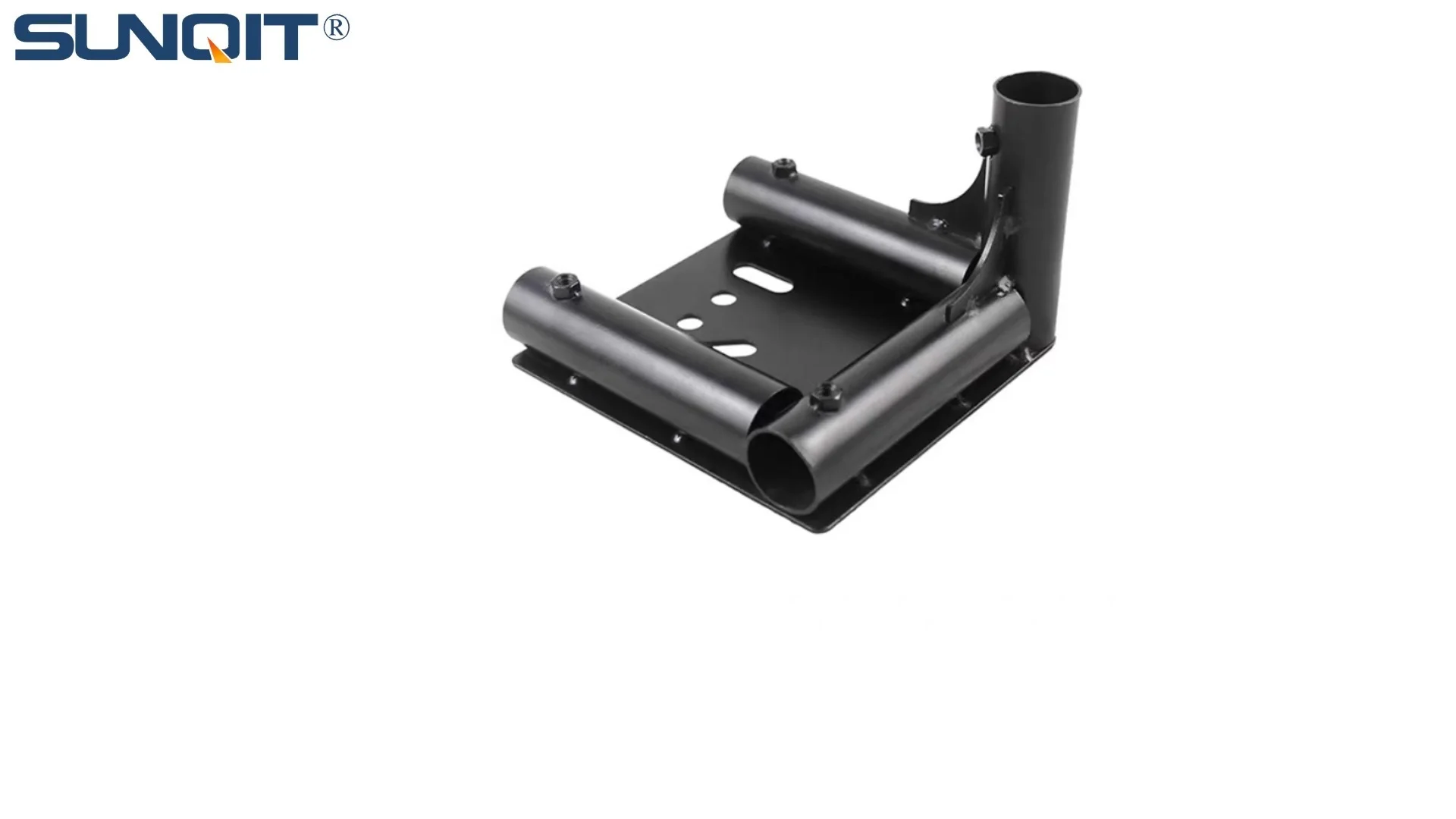
Castor Installation Base
Pipe fitting castor installation base,Well made, precise and strong. Made of high quality of steel,black painting surface treatment for greater resistance to corrosion. It is used for castor or foot lever connection with lean pipe.
In the fast-paced world of manufacturing, where every second and every cent counts, lean production has become more than just a buzzword—it's a lifeline. At its core, lean production is about eliminating waste, streamlining workflows, and maximizing efficiency. But here's the thing: lean systems don't run on ideals alone. They rely on tangible tools and components that work in harmony to keep operations smooth, flexible, and cost-effective. One such component, often overlooked but critically important, is the castor installation base. These unassuming pieces connect mobile equipment—like lean pipe workbenches, flow racks, and turnover trolleys—to the floor, dictating how easily materials move, how stable workstations remain, and ultimately, how much your operation spends on maintenance and downtime.
If you're tasked with equipping a lean system, you've probably faced the age-old dilemma: budget or premium? Do you save upfront with cheaper castor installation bases, or invest more now for long-term gains? It's a decision that ripples through every aspect of production—from daily workflow to annual bottom lines. In this article, we'll dive deep into this comparison, breaking down the true costs (and hidden consequences) of both options. We'll look at materials, durability, performance, and real-world studies to help you decide which castor installation base aligns with your lean goals.
Understanding Castor Installation Bases in Lean Systems
Before we pit budget against premium, let's clarify what a castor installation base actually does. Think of it as the "feet" of your mobile equipment. When you have a lean pipe workbench that needs to shift between assembly stations, or a flow rack that delivers parts to the production line, the castor installation base is what holds the caster wheels in place, distributes weight evenly, and ensures smooth movement. It's not just a metal plate with holes—it's a critical interface between your equipment and the floor, impacting everything from load capacity to maneuverability.
In a lean system, mobility is key. Traditional fixed workstations lock you into rigid layouts, making it hard to adapt to changing production needs. Castor-equipped setups, on the other hand, let you reconfigure lines in minutes, respond to sudden demand spikes, or reorganize workflows based on new product designs. But this flexibility only works if the castor installation base is up to the task. A flimsy base might save you $20 today, but if it bends under load, jams during a shift change, or rusts after a few months in a humid factory, it turns that "savings" into wasted time, frustrated workers, and unexpected replacement costs.
Castor installation bases also play a role in safety. A wobbly base on a loaded trolley increases the risk of spills, injuries, or damaged goods—all of which contradict lean's focus on reducing waste (including waste from accidents). And let's not forget ergonomics: a smooth-rolling base reduces the physical strain on workers, cutting down on fatigue and absenteeism. So, when we talk about castor installation bases, we're not just talking about metal and bolts—we're talking about the backbone of a responsive, safe, and efficient lean system.
Budget Castor Installation Bases: The Temptation of Low Upfront Costs
Let's start with budget options. These are the castor installation bases you'll find on discount industrial sites or in bulk orders from generic suppliers. They're typically priced between $15 and $40 per unit, depending on size, and they're marketed as "no-frills" solutions for small-scale operations or temporary setups. At first glance, they check the boxes: they hold caster wheels, attach to equipment, and let you roll things around. But dig a little deeper, and the trade-offs start to emerge.
Materials: Cutting Corners to Cut Costs
Budget castor installation bases are often made from low-grade materials, and that's where the savings start—and the problems begin. Many use thin, cold-rolled steel with minimal coating, or even plastic composites for lighter loads. While steel sounds sturdy, "low-grade" here means lower carbon content, making the metal more prone to bending under heavy weight. I've visited small manufacturers where a 200kg load on a budget base caused the plate to warp after just six months, tilting the entire workbench and making it impossible to roll straight. The plastic versions? They might work for lightweight carts, but expose them to oil, chemicals, or even direct sunlight, and they'll crack or degrade quickly. One plant manager I spoke to had to replace all their plastic bases after a summer heatwave melted the material, leaving casters loose and equipment unstable.
Another common issue is poor corrosion resistance. Budget bases rarely come with proper galvanization or powder coating. In humid environments or facilities that use water-based cleaning solutions, rust starts to form within weeks. Once rust takes hold, the base weakens, and the caster mounting holes can strip—meaning you can't tighten the wheels, leading to wobbly, unsafe equipment. I've seen facilities spend hours "temporarily" fixing rusted bases with zip ties or extra washers, only to have the problem reoccur months later.
Performance: When "Good Enough" Isn't Enough
Even if the base doesn't bend or rust, budget options often fail in day-to-day performance. Take alignment, for example. Cheap manufacturing processes mean the mounting holes for casters are rarely drilled with precision. This leads to casters that aren't perfectly parallel, causing the equipment to "drift" when rolled. Imagine pushing a lean pipe workbench across the factory floor and having it veer to the left every time—that's not just annoying; it's a waste of time and energy. Workers end up fighting the equipment instead of focusing on tasks, slowing down production cycles.
Then there's load capacity. Budget bases often advertise "up to 300kg" load limits, but that's usually under ideal conditions—on perfectly flat floors, with evenly distributed weight, and no movement. In reality, most lean environments have uneven concrete, bumps, or thresholds. When a loaded trolley hits a small bump, the impact force exceeds the static load capacity, and that's when bases crack or casters snap off. A maintenance supervisor at an electronics plant told me about a $40 budget base that failed under a 150kg load (well under its "rated" capacity) when the trolley hit a floor joint. The result? A spilled bin of circuit boards, $2,000 in damaged parts, and two hours of cleanup.
The Hidden Costs of "Cheap"
The biggest myth about budget castor installation bases is that they're "cost-effective." Sure, you might pay $30 instead of $100 upfront, but let's do the math. If a budget base lasts 12–18 months before needing replacement (and that's optimistic), and each replacement takes a worker 30 minutes (including sourcing the part, uninstalling the old base, and installing the new one), the numbers add up. Let's say your average worker's hourly wage is $25. Each replacement costs $12.50 in labor, plus the $30 base—total $42.50 every 1.5 years. Over five years, that's 3.3 replacements per base, costing $140.25. Compare that to a premium base (we'll get to that) that lasts five years with minimal maintenance, and the "savings" vanish.
Then there's downtime. When a budget base fails unexpectedly, production stops. If that lean pipe workbench is part of an assembly line, the entire line might halt until the base is replaced. A food packaging plant I consulted with once lost four hours of production because a budget base on their ingredient trolley snapped, blocking the conveyor. The cost of that downtime? Over $10,000 in lost output—for a $35 part. "We thought we were saving money," the operations manager said. "Turns out, we were just borrowing trouble."

Premium Castor Installation Bases: Investing in Long-Term Lean Efficiency
Now, let's turn to premium castor installation bases. These are the options from reputable suppliers, often priced between $80 and $150 per unit. At first glance, the sticker shock is real—why pay three times more for a metal plate? But premium bases aren't just "better"—they're engineered for the realities of lean production. They're built to last, perform consistently, and integrate seamlessly with your lean system, from flow racks to aluminum profile workstations.
Materials: Durability by Design
Premium castor installation bases start with high-quality materials. Many use aluminum profile or high-grade steel (like 304 stainless steel) that's thicker and more resilient. Aluminum is a standout here: it's lightweight, corrosion-resistant, and has excellent strength-to-weight ratio. I toured an automotive parts plant that uses aluminum profile bases on their lean pipe workbenches. After three years in a facility with daily pressure washing, the bases still looked brand new—no rust, no warping. The plant manager noted that they'd never had to replace a single base, even with 300kg loads moving across uneven floors multiple times a day.
For heavier applications, premium steel bases often come with hot-dip galvanization or epoxy coating, creating a barrier against rust and chemicals. One supplier I spoke to uses a 10-step coating process that includes phosphate pretreatment and powder coating, ensuring the base can withstand 500 hours of salt spray testing (that's industry-standard for marine or chemical environments). Compare that to budget bases, which often fail 100-hour tests. In facilities where cleanliness is critical—like pharmaceutical or food production—this durability isn't just a nice-to-have; it's a compliance requirement.
Performance: Precision That Powers Productivity
Premium bases are designed with lean principles in mind: they prioritize precision, stability, and ease of use. Take mounting hole alignment, for example. Reputable manufacturers use CNC machining to drill holes, ensuring casters are perfectly parallel and centered. This means equipment rolls straight, even over small bumps, reducing worker effort and fatigue. A study by the Manufacturing Ergonomics Institute found that workers pushing equipment with precision-aligned casters exerted 30% less force, leading to a 15% reduction in reported fatigue and a 5% increase in task speed.
Load capacity is another area where premium shines. While budget bases overpromise, premium bases underpromise and overdeliver. A base rated for 500kg will typically handle 600kg without strain, thanks to reinforced corners and thicker plate material. I visited a heavy machinery shop that uses premium bases on their tool carts, which carry 450kg of equipment daily. After five years, the bases show no signs of warping, and the casters still tighten securely in the original holes. "We used to replace budget bases every year," the shop foreman told me. "Now, we forget they're there—until we need to move a cart, and it glides like it's brand new."
Premium bases also often include smart design features that budget options skip. Things like integrated brake mounts (so you can add caster brakes without drilling extra holes), reinforced edges to prevent sharp corners (reducing injury risks), and compatibility with a wide range of caster and accessories. This flexibility is key in lean systems, where equipment needs might change. One electronics manufacturer I worked with reconfigured their production line three times in a year; their premium bases adapted easily, while the budget bases they'd kept as spares couldn't accommodate the new caster sizes, forcing them to retire them entirely.

The True Cost Comparison: Budget vs Premium Over Time
To really understand the difference, let's put numbers to the debate. Below is a cost comparison table, based on data from industry studies and interviews with plant managers, comparing a budget castor installation base (priced at $30) and a premium aluminum profile base (priced at $120) over a five-year period.
| Cost Factor | Budget Castor Installation Base | Premium Castor Installation Base |
|---|---|---|
| Initial Purchase Cost (per unit) | $30 | $120 |
| Expected Lifespan | 1–1.5 years | 5+ years |
| Number of Replacements Needed (5 years) | 3–4 units | 0 units |
| Total Purchase Cost (5 years) | $90–$120 | $120 |
| Annual Maintenance Cost (cleaning, repairs, lubrication) | $25 (rust removal, hole rethreading, washer replacements) | $5 (occasional lubrication) |
| Total Maintenance Cost (5 years) | $125 | $25 |
| Downtime Cost (per failure: 2 hours of production at $500/hour) | 3 failures × $1,000 = $3,000 | 0 failures = $0 |
| Total Cost of Ownership (5 years) | $3,335–$3,370 | $145 |
The numbers speak for themselves. While the budget base seems cheaper upfront, the total cost of ownership over five years is over 20 times higher. That's because budget bases fail often, require constant maintenance, and cause costly downtime. Premium bases, on the other hand, pay for themselves within the first year by eliminating replacements and keeping production moving.

Real-World Studies: Budget Regret vs Premium Relief
Numbers tell a story, but real experiences drive the point home. Let's look at two manufacturers—one that chose budget bases, and one that invested in premium—and how their choices impacted their lean systems.
Case Study 1: The Small Electronics Plant That Learned the Hard Way
A 50-person electronics assembly plant in the Midwest needed to outfit 20 lean pipe workbenches for their new production line. To stay under budget, they opted for $25 budget castor installation bases, reasoning that "we're just moving circuit boards—how heavy can it be?" Six months in, the first bases started to fail. The steel plates warped under the weight of tools and components (about 150kg per bench), causing the workbenches to rock. Workers reported neck and back strain from pushing misaligned carts, and two employees had minor injuries when benches tipped slightly. By month nine, half the bases needed replacement. The plant manager ordered more budget bases, but this time, rust had already set in on the remaining ones, making it hard to swap parts. By year two, they'd replaced all 20 bases twice, spent $2,000 on maintenance, and lost 12 hours of production to downtime.
Finally, they switched to premium aluminum profile bases. The upfront cost stung—$120 per base × 20 = $2,400—but within a year, the savings were clear. No more replacements, no more downtime, and workers reported less fatigue. "We thought we were saving $1,900 by choosing budget," the plant manager said. "Instead, we spent over $5,000 in two years. Now, with premium bases, we haven't touched them in three years. It was the best $2,400 we ever spent."
Case Study 2: The Automotive Supplier That Invested in Premium (and Never Looked Back)
A tier-one automotive supplier in Texas was expanding their lean system to include 50 flow racks and 30 mobile workstations. They'd used budget bases in the past and dealt with the headaches—so this time, they allocated funds for premium aluminum profile bases. The initial investment was higher: $110 per base × 80 units = $8,800, compared to $30 × 80 = $2,400 for budget. But here's what happened next: over five years, they replaced zero bases. The flow racks, which carry 300kg of parts each, rolled smoothly across the factory floor, even over the expansion joints that had bent their old budget bases. Maintenance costs were minimal—just annual lubrication of the casters, which the premium bases accommodated easily with pre-drilled grease fittings.
The biggest win? Productivity. With stable, easy-to-move equipment, the line operators reduced the time to restock flow racks by 15 minutes per hour. Over a year, that added up to 1,200 extra production hours—worth over $120,000 in output. "We didn't just buy bases; we bought efficiency," the operations director told me. "The ROI wasn't just about saving on replacements—it was about making more product, faster."
Choosing the Right Castor Installation Base for Your Lean System
So, which is right for you? The answer depends on your specific needs, but here are key factors to consider:
Load Requirements: If you're moving lightweight items (under 50kg) in a dry, low-traffic area, a budget base might suffice—temporarily. But for anything over 100kg, or for equipment that moves frequently, premium is non-negotiable.
Environment: Humid, wet, or chemical-heavy environments demand corrosion-resistant materials. Premium aluminum or galvanized steel bases will outlast budget options by years.
Longevity: If you're building a lean system for the long haul (5+ years), premium bases are an investment that pays off. If it's a temporary setup (6–12 months), budget might work—but factor in replacement costs.
Worker Safety and Ergonomics: Fatigue and injuries cost far more than premium bases. If your team moves equipment daily, prioritize their comfort and safety with stable, easy-rolling bases.
Conclusion: The Lean Choice is the Premium Choice
At the end of the day, lean production is about eliminating waste—and nothing wastes more than cheap, short-lived equipment. Budget castor installation bases promise savings but deliver hidden costs: downtime, maintenance, worker fatigue, and even injuries. Premium bases, while pricier upfront, offer durability, precision, and peace of mind that align with lean principles. They don't just hold casters—they support your entire operation, keeping workflows smooth, workers safe, and costs predictable.
So, when you're equipping your lean system, remember: the cheapest option isn't always the most cost-effective. Castor installation bases are the foundation of your mobile equipment, and a strong foundation is the first step toward true lean efficiency. Invest in premium, and you'll be investing in a system that works with you—not against you—for years to come.