- Company Articles
- Products and Technology
- Product knowledge
- Cost-Effective Mobility: Long-Term Savings with Flat Swivel Castor Wheel with Brake

Cost-Effective Mobility: Long-Term Savings with Flat Swivel Castor Wheel with Brake
Related Product
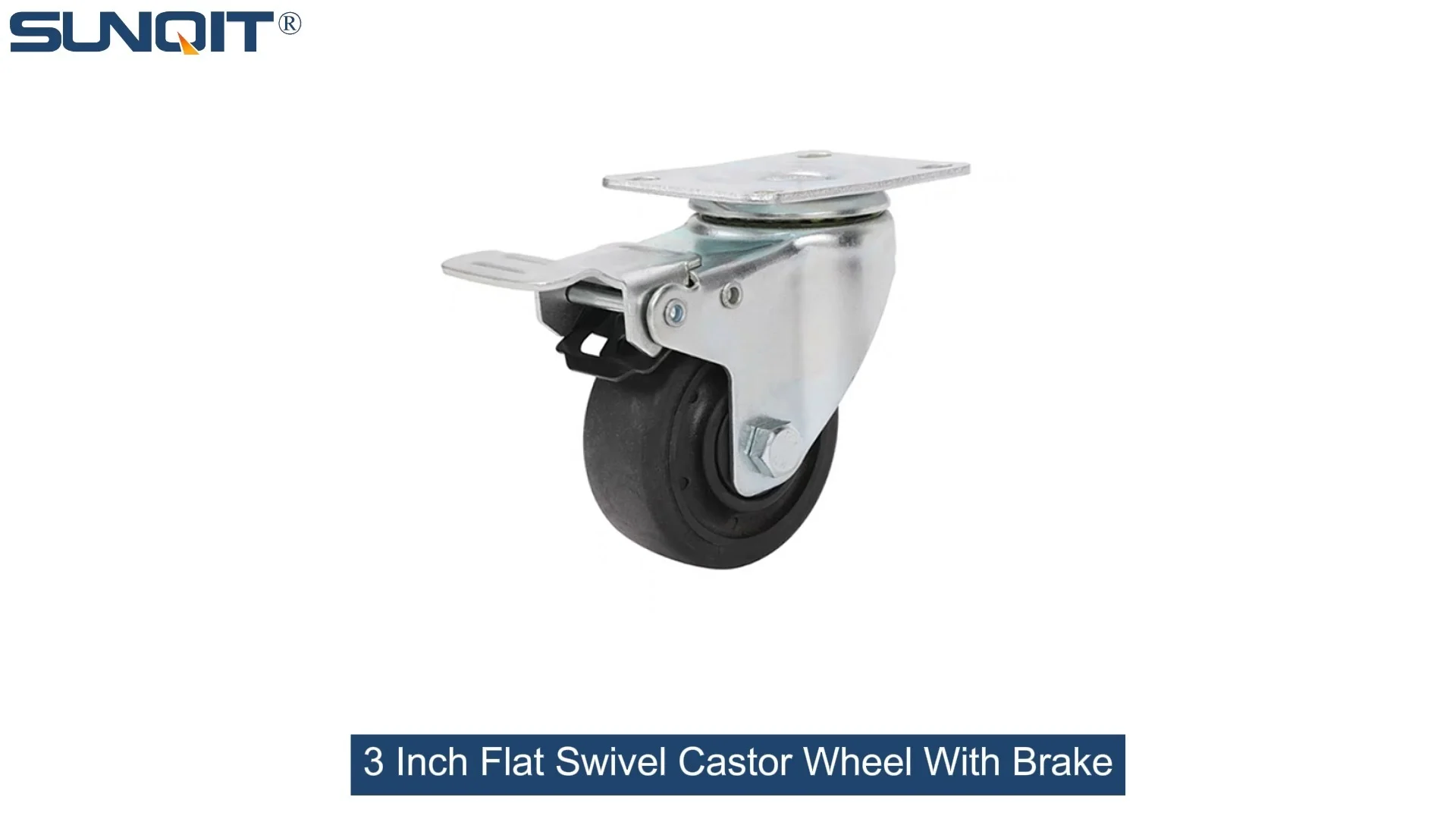
Flat Swivel Castor Wheel With Brake
Chair Casters Ball Bearing Wheels Rubber Base with brake design. Resistant to abrasion, impact and corrosion. Heavy payload can hold 70Kgs per pcs,which can make it works at a stable and smooth status.
The Hidden Cost of Poor Mobility in Your Workspace
Let's start with a scenario we've all seen (or lived through): Sarah runs a small electronics assembly shop with 12 employees. Her workspace is cramped but functional—until it's not. Every morning, her team spends 45 minutes manually shifting heavy workbenches to reconfigure the line for that day's orders. Last month, two employees strained their backs moving a loaded material rack, leading to missed workdays and workers' comp claims. And just last week, a workbench without proper locking wheels rolled into a production machine, scratching the surface and causing a 2-hour delay. Sound familiar?
Sarah's story isn't unique. Across manufacturing, warehousing, and even offices, poor mobility costs businesses far more than they realize. It's not just about the time wasted pushing heavy equipment or the occasional accident—it's the cumulative effect on productivity, safety, and employee morale. And here's the kicker: the solution might be simpler than you think. Enter the flat swivel castor wheel with brake —a humble component that's quietly revolutionizing how workplaces move, adapt, and save money over the long haul.
What Are Flat Swivel Castor Wheels with Brake, Anyway?
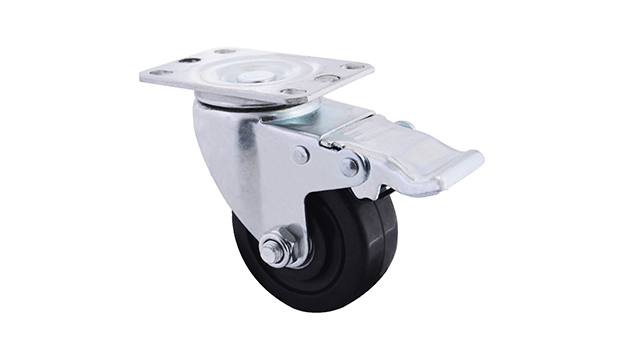
At first glance, a castor wheel might seem like a basic piece of hardware—just a wheel on a mount, right? But the flat swivel castor wheel with brake is a marvel of practical engineering. Let's break it down: the "flat" refers to the low-profile mounting plate, which sits close to the ground for stability; "swivel" means the wheel can rotate 360 degrees, allowing for easy maneuvering in tight spaces; and "with brake" adds a critical safety feature: a simple foot-operated lever that locks the wheel in place, preventing accidental movement.
These castors aren't one-size-fits-all. They come in a range of sizes, materials, and load capacities, designed to pair with everything from lightweight workbenches to heavy-duty material racks. The caster wheel itself might be made of rubber (for quiet, floor-friendly movement), polyurethane (for durability and grip), or steel (for extreme loads). And the caster accessories —like replacement brakes, axle caps, or mounting plates—ensure you can customize and maintain them for years.
But why does this matter? Because when you invest in the right castor, you're not just buying a wheel—you're buying a system that transforms how your workspace functions. Let's dive into what makes these castors a game-changer.
The "Why" Behind the Hype: Key Benefits of Flat Swivel Castor Wheels with Brake
If you're still on the fence, let's talk about the tangible benefits. These castors solve three big problems for businesses: mobility, safety, and adaptability. Let's unpack each.
Mobility That Doesn't Sacrifice Control
Imagine pushing a loaded workbench across your floor with one hand. That's the reality with a high-quality flat swivel castor. The 360-degree swivel mechanism lets you navigate around corners, squeeze through tight aisles, and reposition equipment with minimal effort. Unlike rigid castors (which only move forward and backward), swivel castors turn on a dime—so you're not wasting time doing three-point turns with a heavy trolley.
For Sarah, this meant her team could reconfigure the assembly line in 10 minutes instead of 45. "We used to need two people to move one workbench," she said. "Now, a single employee can shift it with one hand. That extra 35 minutes? We're using it to build more units."
Safety First: The Brake Makes All the Difference
Here's a scary statistic: the Bureau of Labor Statistics reports that over 25% of workplace injuries involve slips, trips, or falls—many of which are caused by unsecured equipment rolling unexpectedly. The brake on a flat swivel castor isn't an afterthought; it's a lifesaver. A simple tap with your foot engages the brake, locking the wheel in place and preventing movement even on sloped floors or uneven surfaces.
In Sarah's shop, the brake feature alone reduced near-misses by 70%. "We had a workbench that used to creep when someone leaned on it," she recalled. "Now, as soon as we set it in place, we hit the brake. No more close calls, no more scratches on the floor. It's peace of mind."
Adaptability for a Changing Work Environment
Modern businesses don't stand still—and neither should your equipment. Whether you're scaling up production, switching product lines, or adopting lean manufacturing principles, your workspace needs to adapt quickly. A workbench with flat swivel castors isn't just a static piece of furniture; it's a modular tool that can be repurposed as a packing station one day, a testing area the next, and a temporary storage unit the week after.
This adaptability is why these castors are a cornerstone of lean system implementation. Lean manufacturing thrives on eliminating waste—including wasted space and inefficient movement. With mobile workbenches and racks, you can create "cells" that minimize travel time between tasks, reduce inventory buildup, and respond faster to customer demand.

Long-Term Savings: It's Not Just About the Upfront Cost
Let's get real: quality castors cost more than the cheap, generic ones you'll find at the hardware store. A basic flat swivel castor might run $15, while a heavy-duty, brake-equipped model could be $40 or more. At first glance, that seems like a big markup. But here's the truth: the cheapest option almost always costs more in the long run. Let's crunch the numbers.
Reduced Labor Costs: Time = Money
Suppose your team spends 30 minutes daily moving equipment. With an average hourly wage of $25, that's $12.50 per day in wasted labor—per employee. For a team of 10, that's $125/day, $625/week, or $32,500/year. Now, if a set of quality castors cuts that time to 5 minutes, you're saving $10.42 per employee per day—adding up to $27,092/year. Suddenly, a $200 investment in castors for 5 workbenches seems like a steal.
Lower Maintenance and Replacement Costs
Cheap castors wear out fast. Their wheels crack, swivel joints seize, and brakes fail after a few months of heavy use. replace them once a year, and you're looking at $15/unit x 20 castors x 5 years = $1,500. Compare that to a high-quality castor with a 5-year lifespan: $40/unit x 20 castors = $800 total. That's a 47% savings—and you avoid the hassle of frequent replacements.
Fewer Accidents, Fewer Headaches
The average workplace injury costs businesses $40,000 in medical bills, lost wages, and insurance hikes, according to the National Safety Council. Sarah's two back injuries? That's $80,000 right there. A set of brake-equipped castors costs a fraction of that—and prevents the stress of dealing with injured employees and damaged equipment.
| Cost Category | With Cheap, Unbraked Castors | With Flat Swivel Castors with Brake | Annual Savings |
|---|---|---|---|
| Labor Time (10 employees) | $32,500 | $5,417 | $27,083 |
| Maintenance/Replacement | $300/year | $0 (5-year lifespan) | $300 |
| Accident Costs (1 injury/5 years) | $8,000/year | $0 (reduced risk) | $8,000 |
| Total Annual Savings | - | - | $35,383 |

Real-World Applications: Where These Castors Shine
Flat swivel castor wheels with brake aren't just for manufacturing shops. They're versatile enough to transform almost any workspace. Let's look at a few key industries where they make the biggest impact.
Manufacturing and Assembly Lines: The Lean System Backbone
In lean manufacturing, "flow" is everything. Materials should move smoothly from one workstation to the next, with minimal delays. A lean system relies on flexible, mobile workstations—and that's where these castors come in. Whether you're building cars, electronics, or medical devices, a workbench on braked swivel castors lets you adjust the line layout in minutes, not hours. Need to add a new station for quality control? Roll it into place, lock the brakes, and you're done.
Even better, they pair seamlessly with other lean tools like flow racks and turnover trolleys. A flow rack on castors can be positioned right next to the assembly line, reducing the distance employees walk to grab parts. And when the line changes, the rack moves with it—no more fixed storage that becomes obsolete after a product redesign.
Warehousing and Logistics: Moving Inventory Without the Hassle
Warehouses are all about speed. Order pickers need to grab items quickly, and stock needs to rotate efficiently. A material rack with flat swivel castors can be rolled directly to the packing station, cutting down on time spent carrying boxes. And the brake? It ensures the rack stays put while employees load and unload, preventing accidents in busy aisles.
For cold storage warehouses, where floors are often slippery, polyurethane wheels on these castors provide extra grip—so racks don't slide even on icy surfaces. And in high-traffic areas, the quiet movement of rubber wheels means less noise pollution, making the workspace more pleasant for employees.
Workshops and Garages: Safety Meets Flexibility
Auto repair shops, woodworking studios, and metalworking garages deal with heavy tools and messy environments. A tool chest or workbench on braked castors can be moved to where the project is, instead of hauling the project to the tool. And when the workday ends, everything can be rolled out of the way for cleaning—no more bending over to sweep around immovable equipment.
One auto shop owner we spoke to noted, "We used to have to lift engines onto fixed workbenches. Now, we roll the workbench under the engine hoist, lock the brakes, and lower it down. It's cut our setup time in half and reduced the risk of dropping heavy parts."
Choosing the Right Flat Swivel Castor Wheel with Brake: What to Look For
Not all castors are created equal. To get the most savings and performance, you need to choose the right model for your needs. Here's what to consider:
Load Capacity: Don't Skimp on Strength
First, calculate the total weight your castors will need to support. This includes the weight of the equipment itself plus the maximum load it will carry. If your workbench weighs 200 lbs and you'll put 300 lbs of parts on it, each castor (assuming 4 per bench) needs to handle at least 125 lbs (500 lbs total ÷ 4 castors). Always go for a higher capacity than you think you need—overloading castors is a common cause of failure.
Wheel Material: Match It to Your Floor
The wheel material affects how smoothly the castor rolls, how much noise it makes, and how it interacts with your floor:
- Rubber wheels: Quiet, gentle on hardwood or tile floors, good for indoor use. Best for light to medium loads.
- Polyurethane wheels: Durable, resistant to oil and chemicals, and roll smoothly on concrete. Great for medium to heavy loads in workshops or warehouses.
- Steel wheels: Handle extreme loads (1,000+ lbs) but are noisy and can scratch floors. Ideal for outdoor use or heavy industrial settings.
Brake Type: Foot-Operated vs. Hand-Operated
Most flat swivel castors come with foot brakes, which are easier to use—just tap with your shoe to engage or disengage. Some heavy-duty models have hand brakes, which offer more precise control but require bending down. For most workplaces, foot brakes are the way to go—they're intuitive and don't slow down workflow.
Supplier Reliability: Don't Overlook the Extras
A good castor supplier isn't just selling a product—they're selling support. Look for suppliers who offer caster accessories like replacement wheels, brake pads, and mounting hardware. This ensures you can keep your castors in top shape for years, instead of replacing the entire unit when a small part wears out. Also, check for warranties—many reputable suppliers offer 2-5 year guarantees on their castors, which is a sign of quality.
Case Study: Sarah's Shop, Six Months Later
Remember Sarah? Let's check in. Six months after installing flat swivel castor wheels with brake on her workbenches and material racks, here's what changed:
- Productivity: Assembly line reconfiguration time dropped from 45 minutes to 8 minutes. Daily output increased by 15%.
- Safety: Zero workplace injuries related to moving equipment. Employees reported feeling "less stressed" and "more in control."
- Maintenance: No more scratched machines or damaged floors. The castors' polyurethane wheels held up perfectly, even with daily use.
- Morale: "My team used to dread Monday mornings because of the setup hassle," Sarah said. "Now, they walk in, adjust the line quickly, and get to work. It's like night and day."
"I spent $600 on castors for 5 workbenches and 3 material racks. In six months, we've saved at least $15,000 in labor and avoided two potential injury claims. That's not just a return on investment—that's a no-brainer." — Sarah, Shop Owner
Conclusion: Invest in Mobility, Invest in Your Business
At the end of the day, flat swivel castor wheels with brake are more than just a "nice-to-have"—they're a strategic investment. They turn static workspaces into dynamic, adaptable environments that can keep up with changing demands. They reduce labor costs, prevent accidents, and make your employees' lives easier. And yes, they save you money—lots of it—over the long term.
So, take a look around your workspace. Are you still pushing heavy equipment by hand? Are your employees wasting time on avoidable setup tasks? Is safety a constant worry? It might be time to upgrade your castors. Remember: small changes often lead to big results. And in business, mobility isn't just about moving things around—it's about moving forward.
Ready to make the switch? Start small: pick one workbench or material rack, install a set of flat swivel castors with brake, and track the difference. We're willing to bet you'll be hooked—and wondering how you ever worked without them.