- Company Articles
- Products and Technology
- Solution
- Cost-Effective Solutions: Long-Term Savings with Three Way Aluminum Pipe Joints

Cost-Effective Solutions: Long-Term Savings with Three Way Aluminum Pipe Joints
Related Product
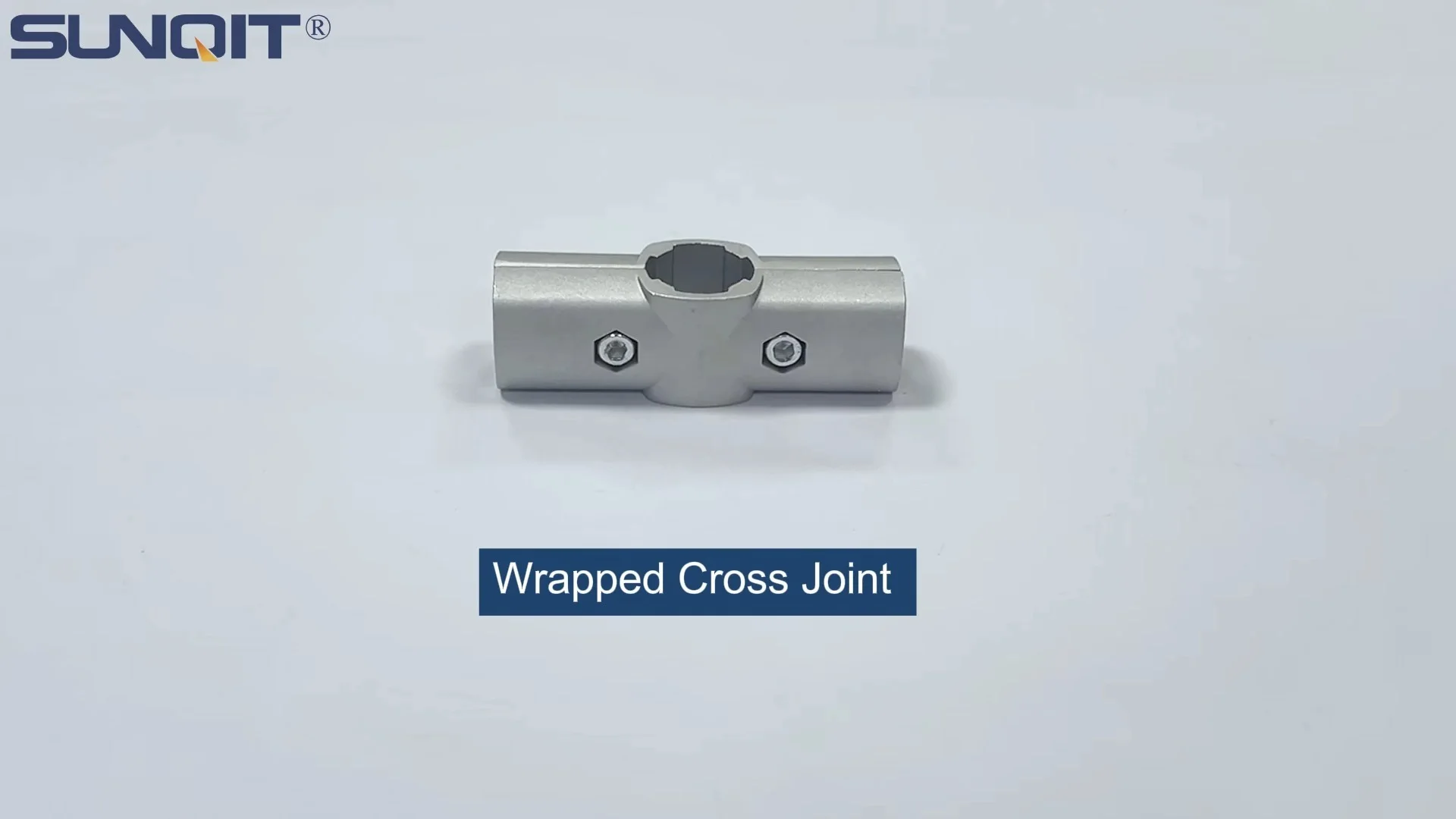
Three Way Aluminum Pipe Joint
Aluminum 3 way pipe joint for 28mm aluminum pipe connection in 3 direction.
It's a common scenario in workshops, warehouses, and manufacturing floors across the globe: a business invests in new equipment, sets up workstations, and optimizes its layout—only to realize six months later that needs have changed. Maybe a new product line requires different workbench heights, or a shift in demand means material flow racks need to be reconfigured. Suddenly, that "permanent" steel workstation feels like a ball and chain, costing time, money, and productivity to tear down and replace. The hidden cost of rigid workspaces isn't just in the initial setup; it's in their inability to adapt. This is where three way aluminum pipe joints step in—not as a flashy new tool, but as a quiet problem-solver that transforms how businesses approach workspace design.
What Are Three Way Aluminum Pipe Joints, Anyway?
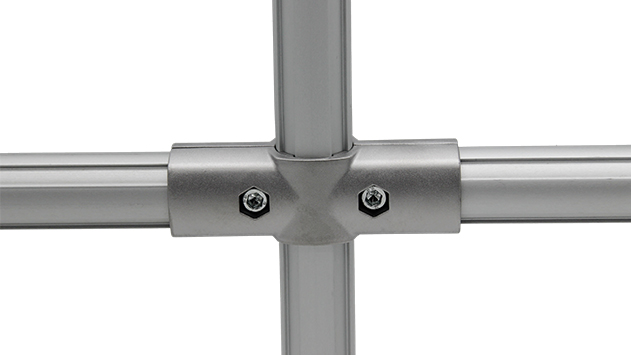
Let's start with the basics. Three way aluminum pipe joints are simple, yet clever, connectors designed to join aluminum profile pipes at (you guessed it) three different points, typically at 90-degree angles. Think of them as the building blocks of a flexible workspace. Unlike traditional welding or bolted steel brackets, these joints use friction and simple fasteners (like set screws or bolts) to hold aluminum pipes together. This means no specialized tools, no permanent modifications, and—most importantly—no headaches when you need to change things up.
They're part of a broader system that includes aluminum profile pipes (lightweight, durable tubes with grooves for easy attachment) and accessories like casters, shelves, and roller tracks. Together, they form a modular setup that can be assembled, disassembled, and reassembled in hours, not days. But why does this matter for your bottom line? Let's break down the benefits.
The Core Benefits: Why Three Way Aluminum Pipe Joints Stand Out
1. Versatility That Keeps Up With Your Business
Rigid workspaces trap businesses in a cycle of "buy, use, replace." A wooden workbench built for a specific task becomes obsolete when the task changes. A steel flow rack with fixed shelves can't adapt if your products get larger or smaller. Three way aluminum pipe joints flip this script. Because they're modular, you can reconfigure them to fit new needs without buying entirely new equipment.
For example, say your team needs a workbench for assembling small electronics. You build a basic setup with aluminum pipes and three way joints: a flat surface, a lower shelf for tools, and a back rail for hanging supplies. Six months later, you land a contract for larger components. Instead of buying a new bench, you can: add taller legs to raise the surface, attach a second tier for extra storage, or even mount a side extension—all using the same joints and pipes. It's like having a workspace that speaks your business's language, even as that language evolves.
2. Durability That Lowers Long-Term Costs
Aluminum often gets dismissed as "weaker" than steel, but that's a myth in this context. Aluminum profile pipes are engineered to be strong enough for most industrial tasks—think supporting heavy tools, stacks of materials, or even small machinery—while remaining lightweight. And because aluminum naturally resists rust and corrosion, these setups hold up in humid warehouses, dusty workshops, or even outdoor loading areas.
Compare that to wood, which warps with moisture, or uncoated steel, which rusts over time. A wooden workbench might last 3–5 years before needing replacement; a steel one, 5–7 years if well-maintained. An aluminum pipe setup? With basic care (like tightening screws occasionally and wiping down surfaces), it can easily last 10+ years. Over a decade, that's 2–3 fewer replacements than traditional options. When you factor in the cost of new equipment, labor to install it, and downtime during transitions, the savings add up fast.
3. Lightweight Design = Lower Labor and Installation Costs
Steel is heavy. Installing a traditional steel workstation often requires a team of workers, a forklift, or even professional installers. Aluminum profile pipes and three way joints? They're lightweight enough for two people to carry and assemble. This cuts down on installation time (and labor costs) from the start. Need to move a workbench across the shop floor? Add casters (easily attached via the joints) and roll it into place—no forklift needed. Need to disassemble a flow rack for a deep clean? Your existing team can take it apart in an hour, then put it back together just as quickly.
This lightness also reduces wear and tear on your facility. Heavy steel equipment can damage floors over time; aluminum setups are gentler, lowering maintenance costs for your workspace itself.
Real-World Applications: From Workbenches to Lean Systems
Three way aluminum pipe joints aren't just theoretical—they solve real problems in real workplaces. Let's look at two common applications where they deliver tangible savings: custom workbenches and flow racks, both key components of a lean system (a methodology focused on reducing waste and improving efficiency).
Building Custom Workbenches Without the Custom Price Tag
Workbenches are the heart of any production or assembly area. But off-the-shelf options rarely fit perfectly. A bench that's too low causes back strain; one that's too high slows down tasks. Custom wooden or steel benches cost a fortune and can't be adjusted later. Aluminum pipe joints change this.
With three way joints, you can build a workbench tailored to your team's height, the tools they use, and the materials they handle. Need a surface that's 42 inches high for standing work? Use longer pipes. Want a cutout for a keyboard or a slot for a power strip? Attach a custom panel using the joint's grooves. Add a pegboard on the back for tools, or a shelf underneath for bins—all without cutting, drilling, or welding.
And if your team grows? Add a second bench right next to the first, using the same joints. If someone needs a seated workstation? Swap out the tall legs for shorter ones. The result: a workspace that fits your team, not the other way around—at a fraction of the cost of custom-built alternatives.
Flow Racks: Keeping Materials Moving (Without the Rigidity)
Flow racks are critical for lean systems, ensuring materials move smoothly from storage to production. Traditional flow racks are often pre-built with fixed widths, heights, and shelf depths. If your materials change size—say, you start using larger bins or longer parts—the rack becomes useless. Aluminum pipe joints let you build a flow rack that adapts.
Using three way joints, you can adjust shelf heights to fit different bin sizes, widen the rack to accommodate longer parts, or even angle the shelves for better product flow. Add roller tracks (smooth, wheeled rails that let materials glide forward) to reduce manual lifting, and you've got a system that cuts down on waste and speeds up production. And if next quarter's materials are smaller? Simply reposition the shelves—no need to buy a new rack.
Traditional Setups vs. Aluminum Pipe Joint Systems: A 5-Year Cost Comparison
| Factor | Traditional Steel/Wood Setup | Aluminum Pipe Joint System |
|---|---|---|
| Initial Cost | $500–$800 (e.g., steel workbench) | $600–$900 (aluminum pipes, joints, accessories) |
| Installation Time | 4–8 hours (requires tools/welders) | 1–3 hours (basic tools, team can assemble) |
| Reconfiguration Ability | Limited (requires cutting/welding; often cheaper to replace) | Unlimited (reassemble with same parts; no new tools) |
| Expected Lifespan | 3–5 years (rust, warping, or obsolescence) | 10+ years (aluminum resists corrosion; modular design avoids obsolescence) |
| Maintenance Costs | High (rust removal, repairs, replacement parts) | Low (occasional screw tightening; no rust treatment) |
| Total 5-Year Cost* | $1,200–$1,800 (initial + 1–2 replacements + maintenance) | $700–$1,000 (initial + minimal maintenance) |
*Estimates based on average industrial workbench usage; costs vary by size and complexity.

Long-Term Savings: It's About More Than the Initial Price Tag
At first glance, aluminum pipe joint systems might seem pricier than traditional options. A steel workbench could cost $500, while an aluminum setup with similar features might start at $600. But as the table above shows, the initial cost is just the tip of the iceberg. Over five years, the traditional setup ends up costing 50%–100% more due to replacements, maintenance, and lost productivity during reconfigurations.
Let's dive deeper into "lost productivity." When you need to reconfigure a traditional workspace, you're looking at downtime: days of disassembling old equipment, waiting for new parts, and installing replacements. For a manufacturing line that produces 100 units per hour, even a day of downtime costs $8,000 (assuming $100/unit profit). With aluminum pipe joints, reconfiguration takes hours, not days—slashing downtime costs dramatically.
Then there's scalability. As your business grows, you won't need to "rip and replace" your entire workspace. You can expand incrementally: add a new workbench here, extend a flow rack there, or build a new storage system—all using the same joints and pipes you already own. This incremental growth avoids large, one-time expenses, making cash flow management easier.

Why This Matters for Your Business
In today's fast-paced market, agility isn't a luxury—it's a necessity. Consumer demands shift, product lines evolve, and new technologies emerge. Your workspace should support these changes, not hold them back. Three way aluminum pipe joints aren't just about saving money on workbenches or flow racks; they're about giving your business the flexibility to adapt, grow, and stay competitive.
They're also an investment in your team. A workspace that's tailored to their needs reduces fatigue, speeds up tasks, and boosts morale. When employees don't have to fight against clunky, outdated equipment, they focus on what matters: producing quality work and driving your business forward.
Conclusion: The Smart Choice for Long-Term Savings
Rigid workspaces are a silent drain on resources—costing you money in replacements, maintenance, and downtime. Three way aluminum pipe joints offer a better way: a modular, durable, and adaptable system that grows with your business. They might cost a bit more upfront, but their versatility, durability, and ease of use translate to significant long-term savings.
Whether you're building workbenches, flow racks, or entire lean systems, these joints transform your workspace from a fixed asset into a flexible tool. And in a world where change is the only constant, that flexibility is priceless.
So, the next time you're tempted to buy a "permanent" workspace solution, ask yourself: Will this still work for me in five years? With three way aluminum pipe joints, the answer is almost always yes.