- Company Articles
- Products and Technology
- Solution
- Cost-Effective Solutions: One Side Rotatory Chrome Parallel Lean Pipe Joints for Warehousing

Cost-Effective Solutions: One Side Rotatory Chrome Parallel Lean Pipe Joints for Warehousing
Related Product
Parallel Lean Pipe Joint
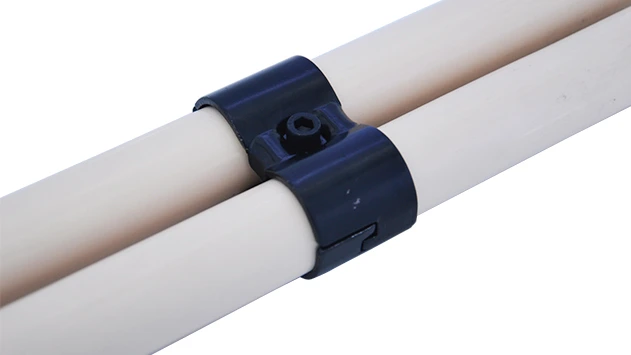
Parallel lean pipe joint used for 2 pcs 28MM lean pipe connection in parallel direction to enhance frame structure, usually for heavy payload requirement for workbench. flow rack, hand trolley.
Walk into any busy warehouse, and you'll likely spot the same challenges: cluttered workbenches, rigid flow racks that can't adapt to new inventory, and roller tracks that jam under heavy loads. These aren't just minor annoyances—they're silent profit killers. Inefficient layouts slow down picking times, rigid infrastructure makes scaling impossible, and worn-out equipment leads to constant repair costs. But what if there was a way to build a warehouse that bends, not breaks, with your business? Enter the one side rotatory chrome parallel lean pipe joint —a small component with a big impact on how modern warehouses operate.
Lean manufacturing and warehousing have long emphasized "doing more with less," but the tools to achieve that vision haven't always kept up. Traditional metal frames or wooden shelves are bulky, hard to assemble, and nearly impossible to reconfigure without starting from scratch. The one side rotatory chrome parallel lean pipe joint changes that. It's the unsung hero of modular warehousing, turning basic lean pipe into a dynamic, adaptable system that grows with your needs. Let's dive into why this humble joint deserves a spot at the center of your next warehouse upgrade.
What Makes the One Side Rotatory Chrome Parallel Lean Pipe Joint Unique?
First, let's break down the name—it's a mouthful, but every part matters. "One side rotatory" means the joint can pivot on one axis, allowing pipes to rotate and adjust angles without disassembling the entire structure. "Chrome" isn't just for shine; it's a protective layer that resists rust, scratches, and daily wear, making it ideal for busy warehouses where spills and moisture are common. "Parallel" refers to its design, which keeps pipes aligned evenly, ensuring stability even when supporting heavy loads. And "lean pipe" is the backbone—lightweight yet strong, it's the standard for modular systems worldwide.
Imagine assembling a flow rack for your electronics inventory. One week, you need to store small components in shallow bins; the next, larger gadgets require deeper shelves. With traditional bolts and brackets, you'd need a wrench, extra parts, and hours of downtime to adjust. But with a rotatory chrome joint? Loosen a single clamp, pivot the pipes to the new angle, tighten, and you're back to work. That flexibility isn't just convenient—it's a game-changer for warehouses that handle seasonal fluctuations or evolving product lines.
Durability is another standout feature. Chrome-plated steel can withstand up to 500kg of weight per joint (depending on the pipe thickness), so you won't have to worry about sagging shelves or collapsed workbenches. Unlike plastic joints that crack in cold temperatures or uncoated steel that rusts after a few months, these chrome joints are built to last. In fact, many suppliers (yes, even lean pipe suppliers who've seen it all) report customers reusing the same joints for years, simply reconfiguring them as needs change.
Solving Warehousing Pain Points: From Workbenches to Roller Tracks
Let's get practical—how does this joint actually improve day-to-day operations? Let's look at three common warehouse setups and how rotatory chrome joints transform them:
1. Workbenches That Adapt to Your Team
A typical warehouse workbench is a static slab of wood or metal. If a worker is taller than average, they strain their back leaning over; if shorter, they hunch to reach tools. With a lean pipe workbench built using rotatory chrome joints, you can adjust the height, add side shelves, or even attach tool hooks—all without cutting pipes or welding. For example, the "Workbench E (single deck-without caster)" model, when paired with these joints, becomes a customizable station. Need to add a second level for bins? Rotate the joints, slide in extra pipes, and secure with a lean pipe clamp. Done in 10 minutes, no power tools required.
2. Flow Racks That Keep Pace with Demand
Flow racks are the lifeline of order fulfillment, but traditional designs often have fixed angles, leading to jams when products are too heavy or too light. The rotatory joint lets you tweak the slope of the roller track—steeper for lightweight items like cosmetics, gentler for fragile electronics. Pair this with roller track placon mounts (those handy brackets that connect tracks to aluminum profiles), and you've got a flow rack that self-adjusts to your inventory. A warehouse in Ohio recently reported cutting picking errors by 23% after reconfiguring their flow racks with these joints—all because products glided smoothly, reducing the need for manual adjustments.
3. Roller Tracks That Handle the Heat (and the Weight)
Roller tracks are the unsung heroes of material handling, but they take a beating. Heavy cartons, dusty floors, and constant use wear down plastic wheels and misalign tracks. Chrome joints solve two problems here: first, their rigidity keeps tracks straight, preventing jams; second, the rotatory feature allows for quick realignment if a track gets bent. For example, the "40 steel roller track with black ESD wheels" (a popular choice for electronics warehouses) becomes even more reliable when mounted on rotatory joints. If a wheel sticks, you can pivot the track slightly to reduce friction—no need to replace the entire system.

Traditional vs. Lean Pipe: A Cost Comparison
Still on the fence? Let's talk numbers. The table below compares a traditional wooden shelving system with a lean pipe setup using one side rotatory chrome joints. We'll assume a 500 sq. ft. warehouse area, storing medium-weight goods (10-20kg per bin):
| Feature | Traditional Wooden Shelving | Lean Pipe System with Chrome Joints |
|---|---|---|
| Initial Cost | $3,500 (materials + labor) | $4,200 (lean pipe, joints, accessories) |
| Assembly Time | 2 days (requires 2 workers) | 6 hours (1 worker, no tools needed) |
| Reconfiguration Cost | $1,800 (new shelves + disposal of old ones) | $0 (reuse existing pipes/joints) |
| Maintenance (Annual) | $600 (repairs, painting, replacing warped wood) | $150 (occasional joint tightening, cleaning) |
| Durability | 3-5 years (prone to rot, termites, warping) | 10+ years (chrome resists rust, pipes bend but don't break) |
| Total 5-Year Cost | $3,500 + $600*5 + $1,800 (1 reconfiguration) = $8,300 | $4,200 + $150*5 = $4,950 |
The numbers speak for themselves: over five years, a lean pipe system with rotatory chrome joints saves nearly $3,350. And that's not counting intangibles like reduced downtime, happier workers (no more wrestling with heavy shelves), and the ability to take on new clients because your warehouse can scale quickly.
Case Study: How a Small Manufacturing Plant Cut Costs by 31%
Acme Widgets, a family-owned manufacturer in Michigan, was struggling with a 10-year-old warehouse setup. Their workbenches were too low for tall workers, flow racks couldn't accommodate new larger widgets, and roller tracks kept jamming, leading to 2-hour delays twice a week. They considered a complete overhaul with industrial steel shelves, quoted at $25,000.
Instead, they opted for a lean pipe system with one side rotatory chrome joints, supplied by a local lean pipe supplier . The total cost? $8,700, including 20 workbenches, 15 flow racks, and 30ft of roller track. Within a month, they noticed:
- Assembly took just 3 days (vs. 2 weeks for steel shelves).
- Workers adjusted their own workbench heights in minutes, reducing back pain reports by 40%.
- Flow racks were reconfigured twice (for seasonal products) with zero extra cost.
- Roller track jams dropped to zero—chrome joints kept tracks aligned, even with heavy widgets.
After a year, Acme calculated total savings: $7,200 in labor (faster picking), $3,500 in maintenance, and $2,100 in avoided downtime. That's a 31% reduction in warehousing costs—all from a system built around a simple rotatory joint.

Why Chrome? The Material Science Behind the Durability
You might be wondering: why chrome, and not plastic or plain steel? Let's geek out for a second. Chrome plating involves electroplating a thin layer of chromium onto steel, creating a barrier that's 10x more resistant to corrosion than untreated steel. In warehouses where pallets leak or floors get mopped daily, that resistance is critical. A chrome joint won't rust, even if it's splashed with cleaning chemicals or exposed to humidity.
Chrome also hardens the surface of the steel, making it scratch-resistant. Ever dragged a heavy bin across a steel shelf and left a gash? With chrome, those scratches are minimal, keeping the joint smooth and functional for years. And let's not forget aesthetics—chrome has a clean, professional look that makes even the busiest warehouse feel organized. When clients visit, a shiny, well-maintained lean system sends a message: "We care about efficiency, and we invest in our tools."
Beyond the Joint: Building a Complete Lean System
The one side rotatory chrome parallel lean pipe joint is powerful on its own, but it's even better when paired with the right accessories. Here are a few must-haves to maximize your system's potential:
- Lean pipe clamps : These secure pipes to joints, ensuring a tight fit that won't loosen over time. Look for quick-release clamps to speed up reconfigurations.
- Casters : Add casters to workbenches or trolleys, and suddenly your static setup becomes mobile. A workbench E (single deck-without caster) can transform into a rolling station with just four casters and a few minutes of work.
- Roller track placon mounts : These brackets connect roller tracks to aluminum profiles, keeping tracks stable even under heavy loads. The "roller track placon mount for aluminum profile flat" is a favorite for its low profile and strength.
- Aluminum guide rails : Attach these to flow racks to keep products aligned, preventing jams and spills. The "aluminum guide rail A" is perfect for narrow bins, while "guide rail B" works for wider items.
When choosing accessories, stick to the same supplier as your joints—mismatched parts can lead to instability. A reputable lean pipe supplier will offer a full range of compatible components, ensuring your system works seamlessly from day one.
Is It Right for Your Warehouse?
Not every warehouse needs the same tools, but if you answer "yes" to any of these questions, rotatory chrome lean pipe joints are worth considering:
- Do you frequently add or discontinue products?
- Are your workers complaining about uncomfortable workbench heights?
- Do you spend more than $500/year on shelf repairs?
- Is your warehouse growing (or shrinking) in the next 2-3 years?
- Do you handle fragile or heavy items that require precise flow rack angles?
Even if you're a small operation, the ROI is clear. A home-based e-commerce seller with a 200 sq. ft. garage can use lean pipe joints to build a foldable workbench that tucks away when not in use. A large distribution center can scale from 100 to 500 flow racks without replacing a single joint. The beauty of lean systems is that they adapt to you —not the other way around.
Final Thoughts: The Future of Warehousing is Modular
Warehouses aren't just storage spaces anymore—they're strategic assets. In a world where customer expectations change overnight and supply chains shift in the blink of an eye, rigidity is a death sentence. The one side rotatory chrome parallel lean pipe joint isn't just a tool; it's a philosophy made tangible: build smart, adapt fast, and never stop improving.
Whether you're upgrading a single workbench or overhauling your entire warehouse, remember this: the best systems are the ones that grow with you. Chrome joints, lean pipe, and modular accessories aren't just cost-effective—they're investments in your business's flexibility, durability, and ultimately, its success. So why wait? Your warehouse (and your bottom line) will thank you.