- Company Articles
- Products and Technology
- Product knowledge
- Cost-Effective Swivel Stem Caster Wheels: Budget-Friendly Options for Small Factories

Cost-Effective Swivel Stem Caster Wheels: Budget-Friendly Options for Small Factories
Related Product
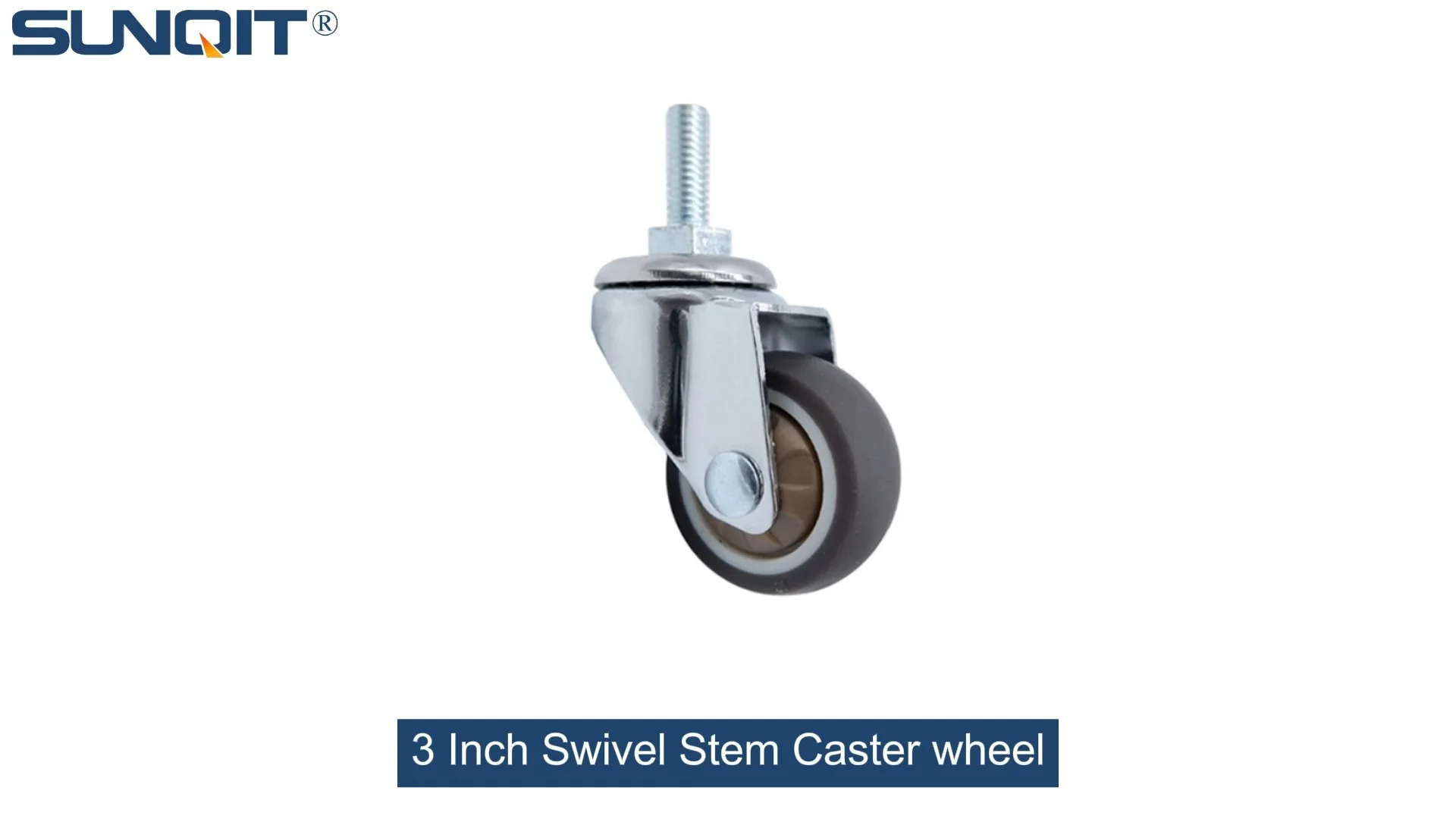
Swivel Stem Caster wheel
360 Degree Swivel Stem Caster. Threaded-post mount design, castors diameter 3 inch.Each swivel caster wheels loading 70KGS. Heavy enough and widely suit for carts, chairs, cabinet, flow rack, workbench, turnover rolley.
Let's start with a scenario we've all seen (or lived through): You walk into a small factory—maybe a family-run machine shop, a boutique electronics assembly line, or a local packaging facility—and the first thing you notice is the chaos. Workbenches are bolted to the floor, tools are scattered because moving the cart across the shop takes two people, and that heavy metal bin of raw materials? It's been stuck in the corner for a week because no one wants to wrestle it to the production line. Sound familiar? If you're running a small factory, you know the drill: every square foot of space matters, every minute of labor counts, and every dollar spent has to pull its weight. That's where mobility comes in—and at the heart of mobility, more often than not, are caster wheels. Specifically, swivel stem caster wheels.
You might be thinking, "Caster wheels? Really? Aren't those just… wheels?" But here's the thing: For small factories, the right caster wheels aren't just "wheels"—they're the difference between a workflow that hums and one that sputters. They're the reason your team can rearrange a production line in an hour instead of a day. They're how you turn a static workbench into a mobile workstation that follows your team's needs. And when you're working with a tight budget (because let's be real, most small factories are), finding cost-effective swivel stem caster wheels that don't skimp on quality isn't just a "nice-to-have"—it's a game-changer.
In this article, we're diving deep into swivel stem caster wheels: why they matter for small factories, what to look for when shopping on a budget, how to pair them with other accessories (like caster accessories and adjustable leveling feet) to maximize value, and even how to integrate them with existing setups, like your trusty lean pipe workbench. By the end, you'll have a clear roadmap to choosing caster wheels that keep your operations moving—without draining your bank account.
Why Swivel Stem Caster Wheels Matter for Small Factories (Spoiler: It's Not Just About Moving Stuff)
Let's start with the basics: What is a swivel stem caster wheel, anyway? Unlike fixed casters (which only roll forward and backward), swivel stem casters have a rotating joint that lets the wheel turn 360 degrees. That means you can maneuver equipment sideways, around corners, and into tight spaces—no more backtracking or awkward lifting. The "stem" part refers to the rod that attaches the wheel to your equipment (think: a threaded stem that screws into a hole, or a grip ring that snaps into place). Simple enough, right? But for small factories, this simplicity is its superpower.
Small factories often operate in tight spaces. Maybe you're in a 2,000-square-foot warehouse split between production, storage, and shipping. Every inch counts, and rigid, immovable setups waste precious space. Swivel stem caster wheels let you "shrink" your footprint when you need to—push that unused workbench into the corner during peak production, then roll it back out when orders slow down. Or, if you're juggling multiple projects, you can reconfigure your line in minutes: today, it's a straight assembly line for Product A; tomorrow, a U-shape for Product B. That flexibility? It's hard to put a price on, but for small businesses competing with larger operations, it's the kind of agility that keeps you competitive.
Then there's labor. Small factories rarely have the luxury of extra hands. If moving a heavy material rack takes two people and 20 minutes, that's 20 minutes those two people aren't building, packaging, or shipping. Swivel stem caster wheels cut that time down to 5 minutes and one person—maybe even less if the wheels are high-quality. Over a week, that adds up to hours of saved labor. And in small factories, hours = money.
But here's the biggest reason: ergonomics . You've probably got a team of 5, 10, maybe 20 people—your most valuable asset. If they're straining to push a cart with stiff, clunky wheels, or twisting their backs to maneuver a workbench, you're looking at increased fatigue, higher injury risks, and lower morale. Swivel stem caster wheels that roll smoothly and turn easily reduce that physical strain. Happier, healthier employees? That's an ROI no budget can ignore.
Key Features to Look for in Budget-Friendly Swivel Stem Caster Wheels (Don't Skimp on These!)
Okay, so you're sold on swivel stem caster wheels. Now, how do you choose the right ones—without overspending? The market is flooded with cheap options, but "cheap" doesn't always mean "budget-friendly." A $10 caster wheel that breaks after a month isn't a deal—it's a waste. To find (real) value, focus on these key features:
1. Load Capacity: Know Your Numbers
First rule of caster wheels: Never guess the load capacity. If you're putting caster wheels on a workbench that holds 300 lbs of tools and materials, a caster rated for 50 lbs per wheel will bend, crack, or fail—usually at the worst possible time. Most swivel stem caster wheels list their "per wheel" load capacity, so remember: if your equipment weighs 400 lbs and you're using 4 casters, you need each caster to handle at least 100 lbs (plus a 20% buffer, because life in a factory is unpredictable).
Budget-friendly options often come in lower load capacities (50-200 lbs per wheel), which is perfect for small factories. For example, a lean pipe workbench used for light assembly might only need 100 lbs per caster. You don't need to splurge on industrial-grade 1,000-lb casters if you're not hauling car parts—stick to what you need, and you'll save.
2. Wheel Material: Match the Floor, Save the Headaches
Wheel material matters more than you think. A hard plastic wheel might be cheap, but if your factory has concrete floors, it'll rattle, scratch the floor, and wear out fast. A rubber wheel, on the other hand, absorbs shocks, rolls quietly, and protects floors—but it might cost a few dollars more. Here's a quick breakdown of common materials and when to use them:
- Rubber (or polyurethane-coated rubber): Best for concrete, tile, or hardwood floors. Quiet, shock-absorbent, and gentle on surfaces. Great for indoor use (assembly lines, offices).
- Nylon: Durable and chemical-resistant. Good for warehouses with rough floors or exposure to oils/solvents. A bit noisier than rubber, but more affordable.
- Polypropylene: Lightweight and budget-friendly. Ideal for light loads (under 100 lbs) on smooth floors. Not great for heavy use, but perfect for carts or small workbenches.
Pro tip: If your factory has mixed flooring (e.g., concrete in the shop, tile in the office), rubber or polyurethane is your safest bet—it works on both without issues.
3. Brake Mechanism: Safety First (Even on a Budget)
Do you need brakes? Short answer: Yes. Even if you think "we'll just push it into place and leave it," small factories are busy places. A cart that rolls away because someone brushed against it can damage equipment, injure a team member, or ruin a batch of products. Look for swivel stem caster wheels with a "total lock" brake, which locks both the wheel and the swivel joint—so the caster can't roll or turn. Budget options often have "wheel-only" brakes, which are better than nothing, but total lock is worth the extra dollar or two for peace of mind.
4. Stem Type: Easy Installation = Less Frustration
Swivel stem caster wheels come with different stem types, and choosing the right one can save you time (and money) on installation. The most common are:
- Threaded stem: A bolt-like stem that screws into a pre-drilled hole. Best for wood, metal, or plastic surfaces where you can tap a thread (e.g., a lean pipe workbench with a metal frame).
- Grip ring stem: A smooth stem with a metal ring that snaps into a hole (no threading needed). Quick to install, but best for lighter loads (under 150 lbs).
- Top plate stem: Not technically a "stem," but a flat plate with holes for screws. More common on heavy-duty casters, but some budget options offer this for stability.
If you're retrofitting existing equipment (like that old workbench you've had for years), check what kind of mounting holes it has. Threaded stems are versatile, but if your equipment has pre-drilled unthreaded holes, grip ring stems might be easier (and cheaper) to install.

Top Budget-Friendly Swivel Stem Caster Wheels for Small Factories (Under $20 Per Wheel!)
Now that you know what to look for, let's get to the good stuff: actual caster wheels you can buy without breaking the bank. We've rounded up four top options, all under $20 per wheel, that balance quality, durability, and affordability.
| Model | Load Capacity (Per Wheel) | Wheel Material | Brake Type | Stem Type | Price Range (Per Wheel) | Best For |
|---|---|---|---|---|---|---|
| BudgetPro Swivel Stem Caster (Rubber Wheel) | 150 lbs | Rubber (polyurethane-coated) | Total lock (wheel + swivel) | Threaded stem (1/2" x 2") | $12–$15 | Lean pipe workbenches, light material carts |
| ValueLine Nylon Swivel Caster | 200 lbs | Nylon | Wheel-only lock | Grip ring stem (5/16" diameter) | $8–$10 | Heavy-duty storage racks, concrete floors |
| EcoRoll Polypropylene Caster Wheel | 100 lbs | Polypropylene | No brake (budget option) | Threaded stem (3/8" x 1.5") | $5–$7 | Light carts, office equipment, smooth floors |
| SturdyMax Dual-Lock Swivel Caster | 175 lbs | Rubber | Total lock (wheel + swivel) | Top plate (4" x 4" plate, screws included) | $18–$20 | Workbenches with wooden tops, heavy tool chests |
Each of these options has its sweet spot. For example, the BudgetPro is our top pick for lean pipe workbenches—it's affordable, has a total lock brake, and the threaded stem fits easily into the metal frames of most lean pipe setups. The ValueLine is great if you're on a super tight budget but need higher load capacity (200 lbs!) for storage racks. And the EcoRoll? Perfect for lightweight tasks, like moving bins of small parts around the shop.

Beyond the Wheel: Pairing Caster Wheels with Accessories to Boost Value
Swivel stem caster wheels are great on their own, but to get the most out of your investment, pair them with a few key accessories. These aren't "extras"—they'll help your caster wheels last longer, work better, and adapt to your factory's needs. Best of all, they're affordable, so you won't blow your budget.
Caster Accessories: Small Parts, Big Impact
Caster accessories are the unsung heroes of a smooth-running setup. Here are the ones worth adding to your cart:
- Stem extenders: If your caster stem is too short to reach the mounting hole (e.g., your workbench has a thick frame), a stem extender (a threaded rod that screws into the caster stem) adds length. Under $5 each.
- Dust covers: These plastic or rubber caps fit over the swivel joint to keep dirt, dust, and debris out. They prevent the swivel from jamming, extending the life of your casters. $2–$3 per cover.
- Replacement wheels: Even the best caster wheels wear out over time. Buying replacement wheels (instead of new casters) saves money. Look for wheels that match your caster's axle size (most budget casters use 5/16" or 3/8" axles).
Pro tip: Buy a few extra dust covers and replacement wheels when you order your casters. They're cheap, and having spares on hand means you won't have to shut down a workstation while waiting for parts.
Adjustable Leveling Feet: Stability When You Need It
Here's a scenario: You install swivel stem caster wheels on your workbench, roll it into place, and… it wobbles. Why? Because factory floors are rarely perfectly level. A small dip or bump can make even the best casters feel unstable. That's where adjustable leveling feet come in. These are threaded feet that you can screw into your equipment (alongside the casters) to "level" it out. When you need to move the workbench, just raise the leveling feet; when you're set, lower them to stabilize.
Adjustable leveling feet are especially useful if you use your workbench for precision tasks (e.g., assembling electronics, measuring parts). A wobbly workbench leads to mistakes, and mistakes cost money. Look for leveling feet with rubber pads—they grip the floor better and won't scratch surfaces. Most cost $3–$6 each, so adding four to a workbench costs less than $25 total.
How to pair them with casters: Install two casters and two leveling feet on a small workbench (e.g., casters on one end, leveling feet on the other). For larger setups, use four casters and four leveling feet (one at each corner). When you need to move, raise the leveling feet; when stationary, lower them to lock the workbench in place. It's the best of both worlds: mobility and stability.

Integrating Swivel Stem Caster Wheels with Your Existing Setup: The Lean Pipe Workbench Example
Let's say you already have a lean pipe workbench—a staple in many small factories because it's affordable, modular, and easy to customize. Can you add swivel stem caster wheels to it? Absolutely. In fact, it's one of the easiest ways to turn a static workbench into a mobile workstation. Here's how:
Step 1: Check Your Workbench's Frame
Lean pipe workbenches are typically made with metal pipes (lean pipe) and joints. The frame is usually a square or rectangular structure, with crossbars for stability. Look for the vertical legs—these are where you'll mount the casters. Most lean pipe legs are hollow, which is perfect for threaded stems.
Step 2: Choose the Right Caster Stem
For lean pipe legs (which are often 1.5" in diameter), a threaded stem caster is ideal. Measure the inside diameter of the leg to find the right stem size—most use 1/2" or 3/8" threaded stems. If the legs are solid (unlikely, but possible), you'll need to drill a hole for the stem.
Step 3: Add Leveling Feet for Stability
As we mentioned earlier, pairing casters with adjustable leveling feet prevents wobbling. Install a caster on two legs and a leveling foot on the other two, or use four casters and four leveling feet (one per leg). For a standard 4-foot workbench, four casters (150 lbs each) and four leveling feet will handle up to 600 lbs—plenty for tools, materials, and a team member working at the bench.
Step 4: Test and Adjust
Once installed, roll the workbench around to test the swivel action. If it's stiff, add a drop of lubricant to the swivel joint. If it wobbles, adjust the leveling feet until the workbench sits flat. That's it! You've just transformed your static lean pipe workbench into a mobile workstation for under $100 (casters + leveling feet + accessories).
Real-world example: A small electronics factory we worked with had three lean pipe workbenches bolted to the floor. They added swivel stem caster wheels and leveling feet, and suddenly, they could reconfigure their assembly line based on daily orders. On slow days, they pushed two workbenches together for a larger workspace; on busy days, they spread them out to create two separate lines. Productivity increased by 15% in the first month—all from adding $80 worth of casters and feet.
Installation and Maintenance Tips: Keep Your Casters Rolling (Literally)
Installing swivel stem caster wheels is straightforward, but a few tips will save you time and ensure they last. Maintenance is just as simple—with a little care, your budget casters can last 3–5 years (or longer).
Installation Tips for Beginners
- Prep the mounting surface: Clean the area where you'll install the casters—remove rust, dirt, or old paint. For threaded stems, use a tap to clean the threads in the mounting hole (this prevents cross-threading).
- Use a torque wrench (if needed): Threaded stems should be tight, but over-tightening can strip the threads. A torque wrench set to 15–20 ft-lbs is enough for most budget casters.
- Test before fully tightening: Screw the caster in partially, then check if it swivels smoothly. If it's stiff, adjust the angle or clean the stem before tightening fully.
- Install brakes on opposite corners: For stability, install braked casters on opposite corners (e.g., front-left and back-right). This prevents the workstation from tipping when locked.
Maintenance: 5-Minute Weekly Routine
You don't need to be a mechanic to keep your casters in shape. Just spend 5 minutes each week on these tasks:
- Clean the wheels: Wipe off dirt, debris, or sticky substances (like oil or glue) with a damp cloth. For caked-on grime, use a toothbrush to scrub the wheel tread.
- Lubricate the swivel joint: Apply a drop of light machine oil (e.g., 3-in-1 oil) to the swivel joint. This keeps the caster turning smoothly.
- Check brakes: Test the brakes to make sure they lock securely. If a brake is loose, tighten the adjustment screw (usually on the side of the brake lever).
- Inspect stems and wheels: Look for cracks in the wheel, bent stems, or loose threads. If you spot damage, replace the caster or part immediately—don't wait for it to fail.
Bonus: Once a month, check the leveling feet (if you're using them). Tighten any that have come loose, and clean the rubber pads to maintain grip.
Common Mistakes to Avoid (Because No One Needs to Learn the Hard Way)
Even with the best intentions, it's easy to make missteps when buying swivel stem caster wheels. Here are the most common mistakes small factory owners make—and how to avoid them:
Mistake #1: Choosing the Cheapest Option Without Checking Load Capacity
We get it—you're on a budget. But a $5 caster rated for 50 lbs isn't a deal if you need to support 100 lbs. It will bend, break, or wear out in weeks, forcing you to buy new casters. Always check the load capacity, and remember: it's per wheel, not per set.
Mistake #2: Ignoring Floor Conditions
Nylon wheels are cheap, but they're noisy on concrete and can scratch tile. Rubber wheels cost a little more, but they're quieter and gentler on floors. If you ignore your floor type, you'll end up with casters that annoy your team, damage your space, or wear out prematurely.
Mistake #3: Skipping Brakes to Save Money
"We don't need brakes—we'll just park it against the wall." Famous last words. A $2 brake can prevent a $200 equipment repair or a trip to the ER. Spend the extra money.
Mistake #4: Overlooking Stem Compatibility
Buying a threaded stem caster when your workbench has unthreaded holes leads to frustration (and maybe a broken stem). Measure your mounting holes, check the stem type, and if you're unsure, ask the supplier for help. Most budget caster sellers have customer service teams happy to assist.
Final Thoughts: Mobility Doesn't Have to Cost a Fortune
For small factories, every decision comes down to balance: quality vs. cost, function vs. flexibility. Swivel stem caster wheels might seem like a small part of the puzzle, but they're a part that connects everything else. They turn static workspaces into dynamic environments, reduce physical strain on your team, and help you make the most of your limited space—all without costing a fortune.
When you're shopping for budget-friendly options, remember to focus on load capacity, wheel material, brakes, and stem type. Pair your casters with affordable accessories like dust covers and replacement wheels, and add adjustable leveling feet for stability. And don't forget to maintain them—5 minutes a week keeps them rolling for years.
At the end of the day, the goal isn't just to buy caster wheels. It's to build a factory that works for your team, not against them. With the right swivel stem caster wheels, you're not just investing in wheels—you're investing in a workflow that's efficient, adaptable, and ready to grow. And that? That's priceless.
So go ahead—roll up your sleeves, order those casters, and get ready to watch your small factory move (literally) to the next level. Your team (and your bottom line) will thank you.