- Company Articles
- Products and Technology
- Product knowledge
- Cost-Effective Upgrades: Aluminum Workbench C for Budget-Conscious Manufacturers

Cost-Effective Upgrades: Aluminum Workbench C for Budget-Conscious Manufacturers
Related Product
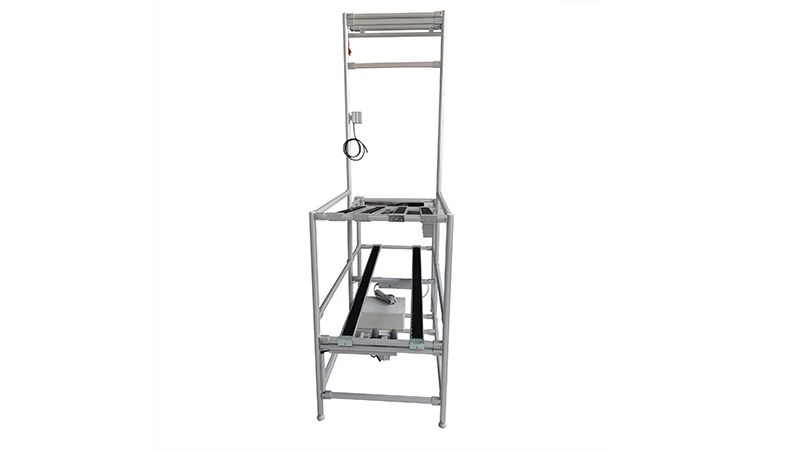
Aluminum Workbench C
aluminum-tube-workbench-is-more-flexible-and-durable,-compared-with-traditional-pe/abs-coated-steel-tube.-it-is-easy-to-assemble,-anti-corrosion,-rust-protection,-and-recycle-use-after-disassemble.
Let's start with a scenario we've all heard (or lived): You're running a manufacturing facility, and the budget meetings feel like a recurring headache. Raw material costs are up, labor shortages are stretching teams thin, and every dollar spent needs to justify itself—twice over. Yet, here's the kicker: Your workspace is holding you back. The old wooden workbenches wobble under heavy tools, the steel ones rust in the humid warehouse air, and every time you need to reconfigure a production line, you're stuck disassembling and rebuilding from scratch. Sound familiar? If you're nodding, you're not alone. For budget-conscious manufacturers, the struggle to balance "good enough" and "cost-effective" is real. But what if there was a workbench that didn't force you to choose?
Enter Aluminum Workbench C. It's not just another piece of equipment—it's a quiet revolution for teams that refuse to let tight budgets stifle efficiency. Built with modularity, durability, and long-term value in mind, this workbench is designed to grow with your needs without draining your wallet. Let's dive into why it's becoming the go-to choice for manufacturers who want to upgrade smart, not just spend more.
The Problem with "Cheap" Workbenches (Spoiler: They're Not Actually Cheap)
We've all been tempted by the allure of the "budget-friendly" workbench. You see a wooden one for $200, or a basic steel model for $350, and think, "That's manageable." But here's the dirty secret: cheap upfront costs often hide expensive long-term consequences. Let's break it down.
Wooden workbenches, for example, might seem like a steal. They're lightweight, easy to assemble, and feel "homely" in a workshop. But wood warps when exposed to moisture—common in factories with temperature fluctuations or spill-prone assembly lines. A warped bench means tools slide off, parts get misaligned, and suddenly you're wasting time (and materials) fixing mistakes. Then there's the maintenance: you'll need to sand, seal, or repaint them every year to keep them usable. And when they finally give out? You're back to square one, buying another $200 bench that lasts 18 months. Over five years, that's $600+ in replacements alone—not counting the productivity losses from wobbly surfaces or downtime during repairs.
Steel workbenches, on the other hand, promise durability. They're heavy, sturdy, and can handle serious weight. But that weight comes with a price: shipping costs skyrocket (ever tried moving a 300-pound steel bench up a loading dock?), and they're magnets for rust in humid environments. Unless you spring for stainless steel (which doubles the cost), you'll be dealing with flaking paint and corroded surfaces within a few years. Plus, they're rigid—want to add a shelf or reposition a tool rail? Good luck. You'll need a welder or specialized tools, and suddenly that "durable" bench becomes a costly, immovable obstacle when your production needs change.
The truth is, "cheap" workbenches are a false economy. They nickel-and-dime you with replacements, maintenance, and lost efficiency. What manufacturers really need is a workbench that's built to last, adapts to change, and keeps total costs low over time. That's where Aluminum Workbench C steps in.
What Makes Aluminum Workbench C Different? It's All in the Details
At first glance, Aluminum Workbench C might look like any other workbench. But take a closer look, and you'll see why it's quickly becoming a favorite among manufacturers who hate waste—of money, time, or space. Let's start with the material that makes it tick: aluminum profile. Not just any aluminum, either—this is high-grade, extruded aluminum, the same stuff used in aerospace and automotive industries for its strength-to-weight ratio. Why does that matter for your workshop? Let's unpack it.
Aluminum profile is inherently resistant to corrosion. Unlike steel, it doesn't rust when exposed to moisture, oils, or chemicals—common in manufacturing settings. That means no more scrubbing rust stains off work surfaces or replacing parts because they've corroded. A quick wipe with a damp cloth, and it's as good as new. And while aluminum is lighter than steel (about 1/3 the weight), it's surprisingly strong. Aluminum Workbench C can handle up to 500 pounds of evenly distributed weight—enough for heavy machinery, toolboxes, and piles of parts—without bending or warping. That light weight also makes it easy to move (with the right casters, but more on that later), so you can reconfigure your production line in hours, not days.
But the real magic is in its modular design. Aluminum Workbench C isn't a one-size-fits-all solution; it's a blank canvas. Thanks to compatible aluminum pipe accessories—think adjustable shelves, tool hooks, and side rails—you can customize it to fit your exact needs. Need a shelf for bins of screws? Snap one on. Want a rail to hang power tools? Add it in minutes. No drilling, no welding, no calling in a contractor. The aluminum pipe accessories click into place using simple connectors, so even your intern could reconfigure it. This modularity means you never pay for features you don't need, and you can add on as your business grows. It's like buying a smartphone that lets you swap out the camera, battery, and screen—without buying a whole new phone.
Let's talk about the "C" in Aluminum Workbench C. That "C" stands for "configurable," but it might as well stand for "cost-smart." This model is designed with the budget in mind from the ground up. It comes standard as a single-deck workbench without casters (you can add those later if you need mobility), which keeps the initial price tag lower than fully-loaded models. But don't mistake "basic" for "limited." The frame is built with the same heavy-duty aluminum profile as premium models, so you're not sacrificing durability for cost. It's the workbench equivalent of buying a car with cloth seats instead of leather—you get the same engine and safety features, just fewer frills upfront.

Cost-Saving Features That Add Up (Literally)
Let's get practical: How exactly does Aluminum Workbench C save you money? It's not just about the initial purchase price—it's about the total cost of ownership over time. Let's break down the numbers.
1. Durability = Fewer Replacements Wooden workbenches last about 2–3 years in a typical manufacturing environment before warping or cracking. Steel workbenches (non-stainless) last 3–5 years but often need part replacements (like rusted legs) by year 3. Aluminum Workbench C? With proper care, it's built to last 10+ years. Let's do the math: If a wooden bench costs $200 and needs replacing every 3 years, over 10 years, you'll spend ~$667 (plus labor to replace them). A steel bench at $400 every 5 years? ~$800 over 10 years. Aluminum Workbench C starts at $550—but you'll only buy one. That's a savings of $117–$250 over a decade, not counting the time lost to replacing wobbly benches.
2. Modularity = No Overbuying Traditional workbenches force you to pay for features you might never use. Need a bench with a back shelf? You're stuck with a model that includes it, even if you only need it on 2 out of 10 benches. Aluminum Workbench C lets you start basic (single deck, no casters) and add aluminum pipe accessories as needed. Need a shelf later? Buy just the shelf, not a whole new bench. Over time, this "pay-as-you-go" approach prevents wasteful spending on unnecessary features.
3. Lightweight = Lower Shipping and Handling Costs Steel workbenches are heavy—often 200+ pounds. Shipping one can cost $100–$200, and you'll need a forklift or team of people to move it into place. Aluminum Workbench C weighs in at just 85 pounds (without accessories), so shipping is closer to $50, and two people can carry it. For a facility with 10 workbenches, that's $500–$1,500 saved on shipping alone. Plus, its light weight puts less strain on warehouse floors, reducing the risk of cracks or damage—another hidden cost avoided.
4. Low Maintenance = Less Downtime Wooden workbenches need sanding, sealing, and occasional repainting to stay usable. Steel ones need rust treatment and paint touch-ups. Aluminum Workbench C? Wipe it down with a mild detergent, and you're done. No special cleaners, no time spent on maintenance. Let's say you spend 2 hours a month maintaining a wooden bench (sanding, sealing, etc.) at $25/hour labor cost. That's $600/year per bench. Aluminum Workbench C? Maybe 10 minutes a month—$42/year. Over 10 years, that's $5,580 saved per bench. For 10 benches? $55,800. That's not chump change.

Real-World Impact: How One Manufacturer Saved $12,000 in Two Years
Numbers on a page are one thing, but real-world results? That's where it clicks. Let's meet "Acme Electronics," a mid-sized manufacturer of circuit boards (names changed for privacy). Two years ago, they were using 12 wooden workbenches across their assembly lines. Their pain points? Frequent warping (leading to misaligned circuit boards), monthly sanding and sealing (taking 24 hours of labor), and the inability to add shelves or tool rails without drilling into the wood (which weakened the benches further).
They started small: replacing 2 wooden workbenches with Aluminum Workbench C. Within 3 months, they noticed a difference. The aluminum surfaces stayed flat, so circuit boards aligned perfectly, reducing defects by 15%. Maintenance time dropped to near-zero—no more sanding, just quick wipes. And when they needed to add shelves for new component bins, they snapped on aluminum pipe accessories in 10 minutes per bench. Encouraged, they replaced the remaining 10 workbenches over the next year.
The results? Over two years, Acme saved $3,600 on maintenance labor (24 hours/month × $25/hour × 24 months = $14,400 for wooden benches vs. $2,400 for aluminum), $4,800 on replacement costs (no new benches needed), and $3,600 on defect reductions (15% fewer defective boards saved $150/week). Total: $12,000. Not bad for an initial investment of $6,600 (12 workbenches × $550). ROI? Just over 6 months. And that doesn't include the intangibles: happier workers (no more wobbly benches), faster production line reconfigurations, and the ability to take on larger orders because their workspace finally kept up.

How Does It Stack Up? A Comparison You Can Use
Still on the fence? Let's put Aluminum Workbench C head-to-head with the alternatives. The table below breaks down key factors—initial cost, lifespan, maintenance, and scalability—to help you see where the value really lies.
| Feature | Wooden Workbench | Standard Steel Workbench | Aluminum Workbench C |
|---|---|---|---|
| Initial Cost | $200–$300 | $400–$600 | $550–$700 |
| Typical Lifespan | 2–3 years | 3–5 years | 10+ years |
| Annual Maintenance Cost | $600–$800 (sanding, sealing, repairs) | $300–$500 (rust treatment, paint touch-ups) | $40–$60 (occasional cleaning) |
| Scalability | Low (requires drilling/modification) | Medium (limited by fixed design) | High (modular aluminum pipe accessories) |
| Weight Capacity | 200–300 lbs | 400–600 lbs | 500 lbs (evenly distributed) |
| Total Cost Over 10 Years* | $2,600–$3,800 | $2,800–$4,000 | $650–$800 |
*Total cost includes initial purchase, replacements, and maintenance. Estimates based on average manufacturing conditions.
The takeaway? While Aluminum Workbench C has a higher upfront cost than wooden or basic steel models, its long lifespan, minimal maintenance, and scalability make it the most cost-effective choice over time. It's not just a workbench—it's an investment that pays dividends for years.
Lean System Alignment: Because Efficiency Saves Money, Too
If you're into lean manufacturing (and if you're budget-conscious, you should be), you know the goal is to eliminate waste—of time, materials, and space. Aluminum Workbench C isn't just a tool; it's a lean system ally. Let's see how.
First, it reduces "motion waste." In lean terms, motion waste is any unnecessary movement of people or equipment. With traditional workbenches, workers often have to walk to a storage area for tools or parts because the bench can't be customized to keep essentials within arm's reach. Aluminum Workbench C's modular aluminum pipe accessories fix that. Add a shelf above the work surface for frequently used tools, a bin rail for screws and washers, or a hook for a power drill, and suddenly your team spends less time walking and more time working. Over a shift, that adds up to hours of saved labor.
Second, it minimizes "inventory waste." Lean systems emphasize only keeping what you need on hand, but if your workbench can't organize small parts efficiently, you end up stockpiling extra bins "just in case." Aluminum Workbench C's adjustable shelves and bin rails let you sort parts by size, frequency of use, or production step—so you can keep exactly what you need, where you need it. No more overbuying parts to avoid running out, and no more hunting through piles of bins to find the right one.
Third, it supports "flexible manufacturing." In today's market, production runs change fast—one week you're making 100 units of Product A, the next 500 of Product B. Rigid workbenches slow you down. Aluminum Workbench C, with its lightweight frame and easy-to-add accessories, lets you reconfigure your line in hours. Need more space for larger Product B parts? Remove a shelf. Want to add a second work surface for dual assembly? Snap one on. No downtime, no lost production, no costly retooling. That flexibility is priceless for manufacturers who need to pivot quickly to stay competitive.
Long-Term ROI: It's Not Just About the Bench
Let's circle back to the big question: Is Aluminum Workbench C worth the initial investment? For budget-conscious manufacturers, ROI isn't just a buzzword—it's the bottom line. Let's run the numbers for a small facility with 5 workbenches.
Initial cost for 5 Aluminum Workbench C units: $550 × 5 = $2,750.
Alternative 1: 5 wooden workbenches at $250 each = $1,250. But over 10 years, you'll need to replace them 3–4 times (every 2–3 years), totaling $3,750–$5,000. Add maintenance ($600/year × 10 years × 5 benches = $30,000), and total cost hits $33,750–$35,000.
Alternative 2: 5 steel workbenches at $500 each = $2,500. Replacements every 5 years = $5,000 over 10 years. Maintenance ($400/year × 10 years × 5 benches = $20,000). Total cost: $25,000.
Aluminum Workbench C total cost over 10 years: $2,750 (initial) + $300 (maintenance: $60/year × 10 × 5) = $3,050. That's a savings of $30,700–$31,950 vs. wood, and $21,950 vs. steel. Even if you factor in occasional aluminum pipe accessories (say, $500 over 10 years for shelves and rails), total cost is still under $4,000. ROI? Less than a year, thanks to saved maintenance and replacement costs.
But here's the thing: ROI isn't just about the workbench itself. It's about the defects you avoid, the labor hours you save, and the new orders you can take because your workspace is finally efficient. As Acme Electronics showed, those "intangibles" often add up to more than the direct cost savings. When your workbench stops being a problem and starts being a tool for growth, that's when the real value shines through.
Final Thoughts: Upgrade Smart, Not Just Spend More
Budget-conscious manufacturing doesn't mean cutting corners. It means investing in tools that work as hard as you do—tools that last, adapt, and keep costs low over time. Aluminum Workbench C isn't just a workbench; it's a statement that you refuse to let tight budgets limit your potential. It's the kind of upgrade that pays for itself, over and over, in saved time, reduced waste, and increased efficiency.
So, the next time you're in a budget meeting, and someone asks, "Can we really afford this?" remember: Can you afford not to? Wooden workbenches wear out, steel ones rust, but Aluminum Workbench C? It grows with you. It's not just a cost—it's a partner in your success.
For manufacturers ready to stop choosing between "good enough" and "cost-effective," Aluminum Workbench C is the upgrade you've been waiting for. Your budget (and your team) will thank you.