- Company Articles
- Products and Technology
- Product knowledge
- Cost-Effectiveness of 1.0mm Stainless Steel Pipe in Mass Production

Cost-Effectiveness of 1.0mm Stainless Steel Pipe in Mass Production
Related Product
1.0mm Stainless Steel Pipe
Stainless steel pipe, lean pipe, diameter is 28mm, material is SS201 or SS304, SS201 is normally used in the market. It knows a KARAKURI, KAIZEN material for industrial plant to improve efficiency, save labor cost, standard management.
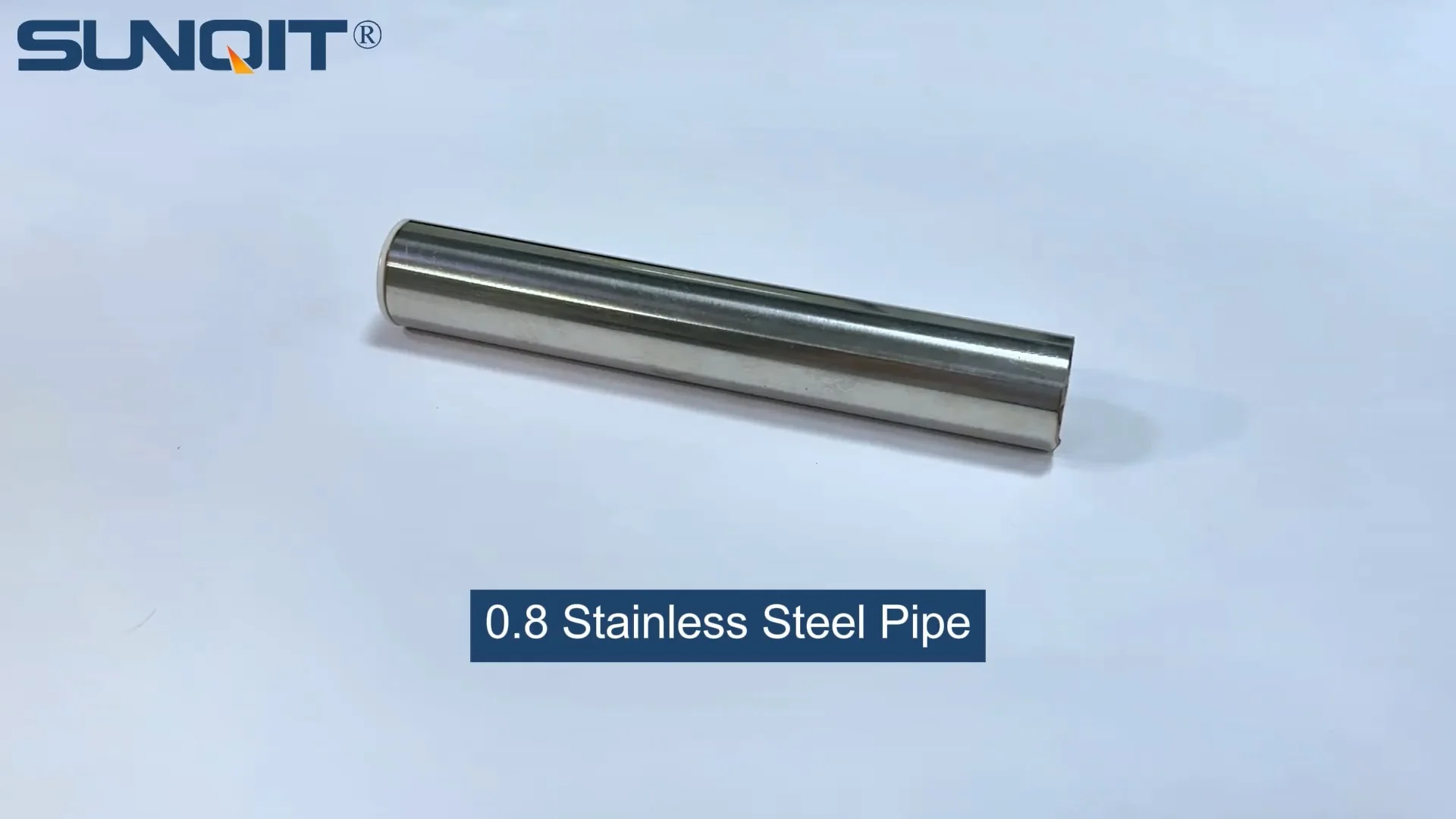
In the fast-paced world of mass production, where every penny and every minute counts, finding the sweet spot between quality, durability, and cost is the ultimate goal. Manufacturers are constantly on the hunt for materials that can keep up with high-volume demands without breaking the bank. Among the many components that form the backbone of production lines, stainless steel pipes have long been a staple—but not all stainless steel pipes are created equal. Today, we're zeroing in on a specific player that's been turning heads in cost-conscious industries: the 1.0mm stainless steel pipe. What makes this thin-walled wonder stand out, and how does it deliver unmatched cost-effectiveness in mass production? Let's dive in.
Understanding 1.0mm Stainless Steel Pipe: More Than Just a Thinner Wall
First, let's get clear on what we're talking about. When we refer to a "1.0mm stainless steel pipe," we're describing a pipe with a wall thickness of 1.0 millimeters, typically made from corrosion-resistant stainless steel alloys like 304 or 316. This isn't just a random thickness choice—it's a deliberate balance between structural integrity and material efficiency. Stainless steel, by nature, is prized for its strength, resistance to rust and chemicals, and longevity. But when you pair those inherent properties with a 1.0mm wall, something interesting happens: you get a pipe that's lightweight yet surprisingly robust, making it ideal for a wide range of mass production applications.
One common misconception is that "thinner" automatically means "weaker." But in the case of stainless steel, the alloy's inherent tensile strength and hardness mean that even a 1.0mm wall can withstand significant stress, especially when used in non-extreme load-bearing scenarios. Think about assembly line workbenches, material flow racks, or light-duty conveyors—these are environments where the pipe needs to support tools, components, or small to medium-sized products, not heavy machinery. In these cases, 1.0mm stainless steel pipes deliver more than enough strength, while opening the door to cost savings that thicker pipes simply can't match.
Cost Drivers in Mass Production: Where 1.0mm Makes Its Mark
To understand why 1.0mm stainless steel pipe is a cost-effective choice, we need to break down the key cost drivers in mass production. These typically include raw material costs, labor expenses, maintenance and replacement costs, and even indirect costs like shipping and energy use. Let's walk through how 1.0mm pipes address each of these:
1. Raw Material Costs: Less Steel, More Savings
The most straightforward saving comes from raw material usage. Stainless steel is priced by weight, so a pipe with a thinner wall requires less steel per meter. Let's put this into perspective: a 1.0mm stainless steel pipe (with an outer diameter of, say, 28mm) weighs approximately 0.65 kg per meter, while a 1.2mm pipe of the same diameter weighs around 0.78 kg per meter. That's a 16% reduction in weight per meter—and since stainless steel costs roughly $2–$3 per kg (depending on market rates), the 1.0mm pipe could save $0.26–$0.39 per meter. In mass production, where manufacturers might order tens of thousands of meters annually, this adds up quickly. For example, a factory using 10,000 meters of pipe per year would save $2,600–$3,900 on raw materials alone with 1.0mm pipes compared to 1.2mm.
2. Labor and Assembly Efficiency
Lighter pipes are easier to handle, which translates to faster assembly and reduced labor costs. A worker can carry more 1.0mm pipes in a single trip, maneuver them into place with less effort, and secure them to joints or frames more quickly. This might not sound like much on a per-pipe basis, but in a facility assembling hundreds of workbenches or flow racks, the time savings add up. Additionally, 1.0mm pipes are often part of modular systems—like the stainless steel pipe series offered by many suppliers—which use standardized joints and connectors. This modularity further speeds up assembly, as workers don't need specialized tools or extensive training to put together structures. Faster assembly means shorter production lead times, allowing manufacturers to meet orders more quickly and take on more projects.
3. Shipping and Logistics Savings
Lighter pipes also reduce shipping costs. Freight carriers charge by weight, so a truckload of 1.0mm pipes will carry more meters of pipe than a truckload of thicker pipes, lowering the cost per meter shipped. For international orders, where shipping costs can be exorbitant, this weight reduction is even more impactful. A container loaded with 1.0mm pipes can hold 15–20% more product than the same container with 1.2mm pipes, reducing the number of containers needed and cutting shipping expenses by a similar margin.

Durability and Longevity: Lower Lifecycle Costs
Cost-effectiveness isn't just about upfront savings—it's about long-term value. 1.0mm stainless steel pipes excel here thanks to stainless steel's legendary durability. Unlike carbon steel, which can rust and degrade over time, stainless steel resists corrosion, even in humid or chemical-exposed environments (common in manufacturing plants). This means fewer replacements over the years. A well-maintained 1.0mm stainless steel pipe can last 10–15 years, compared to 5–7 years for a galvanized carbon steel pipe of the same thickness. When you factor in the cost of replacing corroded pipes—including labor, downtime, and new materials—the longer lifespan of stainless steel more than offsets any minor upfront savings from cheaper materials.
It's also worth noting that 1.0mm pipes, when used in the right applications, rarely fail due to structural issues. Manufacturers often overengineer by choosing thicker pipes than necessary, assuming it's "safer." But with proper engineering—such as adding support brackets or using stronger joints—1.0mm pipes can handle the loads typical in assembly lines, workbenches, and light material racks. This means you're not sacrificing longevity for cost; you're getting both.

Integration with Lean Systems: Waste Reduction at Its Best
Modern manufacturing thrives on lean principles—eliminating waste, optimizing processes, and maximizing efficiency. 1.0mm stainless steel pipes align perfectly with this mindset, making them a favorite in lean system setups. Lean systems prioritize flexibility: the ability to reconfigure workstations, adjust flow racks, or repurpose conveyors as production needs change. 1.0mm pipes are lightweight and modular, so workers can disassemble and reassemble structures with minimal effort, reducing downtime and avoiding the need to buy entirely new equipment when processes change.
For example, a electronics manufacturer might need to adjust its assembly line to accommodate a new product size. With 1.0mm stainless steel pipes, the existing workbench or flow rack can be modified in hours by swapping out a few pipes and joints, rather than being scrapped and replaced. This not only saves on new equipment costs but also reduces waste—a core tenet of lean manufacturing. The stainless steel pipe series, with its compatible joints and accessories, further enhances this flexibility, ensuring that components from different batches or suppliers work seamlessly together.
The Role of the Lean Pipe Supplier: Ensuring Quality and Consistency
Of course, the cost-effectiveness of 1.0mm stainless steel pipe hinges on working with a reliable lean pipe supplier. A reputable supplier ensures consistent wall thickness, material purity, and dimensional accuracy—all critical for avoiding defects and rework. Imagine ordering a batch of 1.0mm pipes only to find that some are 0.9mm (too weak) and others are 1.1mm (wasting material). Inconsistent pipes can lead to assembly issues, structural failures, or unexpected cost overruns. A trusted supplier, however, will provide pipes that meet strict tolerances, so you know exactly what you're getting and can plan your costs accordingly.
Additionally, top suppliers offer not just pipes but a full range of accessories—joints, casters, brackets, and workbench components—that are designed to work with their 1.0mm stainless steel pipes. This one-stop shopping simplifies procurement, reduces lead times, and ensures compatibility, further streamlining the manufacturing process. Some suppliers even offer custom cutting or pre-assembly services, saving factories additional time and labor.
Real-World Impact: A Case Study
To illustrate the cost-effectiveness of 1.0mm stainless steel pipe, let's look at a hypothetical case study. A mid-sized automotive parts manufacturer was using 1.2mm stainless steel pipes in its assembly line workbenches and flow racks. Each year, the company purchased approximately 15,000 meters of pipe at a cost of $2.50 per kg. The 1.2mm pipes weighed 0.78 kg/m, so the annual raw material cost was 15,000m * 0.78kg/m * $2.50/kg = $29,250.
Seeking to reduce costs, the manufacturer switched to 1.0mm pipes from a reputable lean pipe supplier. The new pipes weighed 0.65 kg/m, reducing the annual raw material cost to 15,000m * 0.65kg/m * $2.50/kg = $24,375—a savings of $4,875 per year. But the savings didn't stop there: the lighter pipes reduced shipping costs by $800 annually, and assembly time for workbenches dropped by 12%, saving an additional $3,500 in labor. Over five years, the total savings exceeded $45,000, with no compromise in structural integrity or durability. The manufacturer also noted that reconfiguring workstations for new product lines was faster and easier with the lighter pipes, reducing downtime by 15%.
Comparing Pipe Thicknesses: A Quick Reference Table
| Pipe Thickness | Weight per Meter (kg) | Raw Material Cost per Meter* | Typical Applications | Estimated Lifespan (Years) |
|---|---|---|---|---|
| 1.0mm | 0.65 | $1.63 | Workbenches, light flow racks, small conveyors | 10–15 |
| 1.2mm | 0.78 | $1.95 | Medium-duty racks, assembly lines | 12–17 |
| 1.5mm | 0.96 | $2.40 | Heavy-duty racks, industrial machinery frames | 15–20 |
*Based on stainless steel cost of $2.50/kg
As the table shows, the 1.0mm pipe offers significant upfront savings while still providing a lifespan that meets the needs of most mass production environments. For applications that don't require the extra strength of 1.2mm or 1.5mm pipes, the 1.0mm option is clearly the more cost-effective choice.
Conclusion: 1.0mm Stainless Steel Pipe—The Smart Choice for Cost-Conscious Manufacturers
In the competitive world of mass production, every decision impacts the bottom line. 1.0mm stainless steel pipe emerges as a standout choice, offering a rare combination of raw material savings, labor efficiency, durability, and flexibility. By balancing strength and thickness, it addresses key cost drivers while integrating seamlessly with lean systems and modular manufacturing setups. When sourced from a reliable lean pipe supplier, 1.0mm stainless steel pipes deliver consistent quality, further reducing risks and ensuring long-term value.
Whether you're building workbenches, flow racks, or conveyor systems, the stainless steel pipe series—with 1.0mm as its star—proves that cost-effectiveness doesn't have to mean compromising on quality. It's a material that works as hard as your team does, keeping production lines running smoothly, efficiently, and affordably for years to come.