- Company Articles
- Products and Technology
- Product knowledge
- Cost-Effectiveness of 3030b EU Standard Aluminum Profile: Long-Term ROI Analysis

Cost-Effectiveness of 3030b EU Standard Aluminum Profile: Long-Term ROI Analysis
Related Product
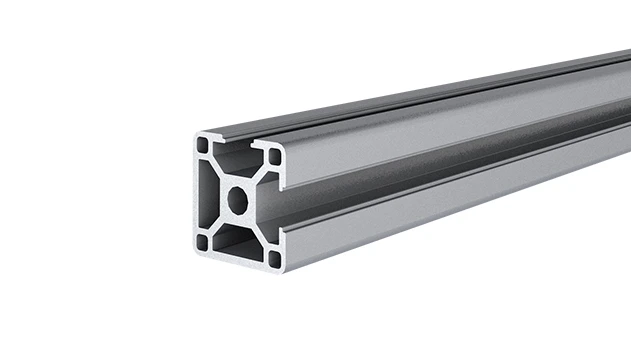
3030B EU Standard Aluminum Profile
3030 is a 3.00 x 3.00CM fractional 30 series square extrusion T-slot profile with two side open T-slots, each side with 3.00cm face, 2 side with open slot, 2 side with closed face. The profile has align-a-grooves to assist in aligning connecting profiles.
Introduction: The Hidden Cost of "Cheap" Manufacturing Solutions
Walk into any manufacturing facility, and you'll likely spot the same challenge: teams struggling to balance short-term budget constraints with long-term efficiency. Maybe it's a rickety steel workbench that shakes during precision tasks, a flow rack that's rusted after a year of use, or a production line that can't adapt when a new product launches. These are the silent drains on productivity—solutions that seem affordable upfront but quietly eat into profits through repairs, downtime, and missed opportunities.
For years, manufacturers have defaulted to heavy steel profiles or flimsy wood structures, assuming they're the "practical" choice. But what if the key to cutting costs isn't about spending less today, but investing wisely for tomorrow? That's where the 3030b EU standard aluminum profile comes in. It's not just another piece of material; it's a foundation for building systems that grow with your business, reduce waste, and turn every dollar spent into long-term value.
In this article, we'll dive into why the 3030b aluminum profile has become a go-to for lean system enthusiasts, how it transforms everyday tools like workbenches and flow racks, and why its upfront cost is often the smartest financial decision a manufacturing team can make. Let's start by understanding what makes this profile different.
What Is the 3030b EU Standard Aluminum Profile?
At first glance, the 3030b might look like any other metal bar—but that's where its modesty ends. Part of the EU standard aluminum extrusion profile family, it's defined by its dimensions: 30mm in width and 30mm in height, with a sleek, T-slot design that runs along its length. This T-slot isn't just for show; it's the secret to its versatility. Think of it as a built-in "connection hub" that lets you attach everything from brackets and shelves to wheels and panels without welding or drilling.
But what really sets the 3030b apart is its compliance with EU standards. That means rigorous testing for strength, durability, and safety—no cutting corners on material quality. Made from high-grade aluminum alloy, it's lightweight (about 1/3 the weight of steel) but surprisingly strong, with a tensile strength that rivals many steel profiles. And unlike steel, it resists corrosion, so it won't rust in humid factories or outdoor warehouses.
Quick Fact: The "b" in 3030b refers to its specific slot design and wall thickness, optimized for balanced load-bearing and flexibility. It's the middle ground between lighter 3030a profiles (better for light-duty tasks) and heavier 3030c models (overkill for most workbenches or flow racks), making it the sweet spot for 80% of manufacturing needs.
But the 3030b doesn't work alone. It's part of a ecosystem of aluminum profile accessories—connectors, end caps, hinges, and panel mounts—that snap into its T-slots like puzzle pieces. This compatibility turns a single length of aluminum into a building block for almost anything: a custom workbench, a mobile material cart, or a dynamic flow rack that adapts as your production line changes. And because these accessories are standardized, you never have to worry about mismatched parts or costly custom fabrication.

The Case for Cost-Effectiveness: It's Not Just About the Price Tag
Let's talk money. Yes, the 3030b aluminum profile costs more upfront than, say, a steel pipe or a wooden plank. A 1-meter length might run you $15–$25, compared to $5–$10 for steel or $2–$5 for wood. At first glance, that seems like a no-brainer: why pay more? But here's the catch: manufacturing costs don't stop at the purchase receipt. They include installation, maintenance, repairs, replacement, and even the cost of inefficiency.
Take steel, for example. It's cheap to buy, but heavy to transport and install. You'll need power tools, welders, and maybe even a crane to move longer pieces. If you ever need to reconfigure your production line (and in manufacturing, you will), you'll have to cut, weld, or repaint—each step adding labor hours and downtime. And after a few years, that steel will start to rust, requiring sanding, priming, and repainting to keep it functional. Suddenly, that "cheap" steel isn't so cheap anymore.
Wood is even worse. It's prone to warping, splintering, and water damage. A wooden workbench might last 1–2 years in a busy factory before it needs replacement. And when you need to add a shelf or adjust the height? You're back to the hardware store for screws, brackets, and maybe a new piece of lumber.
The 3030b, by contrast, is designed to minimize these hidden costs. Let's break it down:
- Installation: No welding, no drilling, no heavy tools. With aluminum profile accessories like T-bolts and corner brackets, you can assemble a basic workbench in under an hour with just a hex key. That cuts labor costs by 50% or more compared to steel.
- Maintenance: Aluminum doesn't rust, warp, or rot. A quick wipe with a damp cloth is all it takes to keep it looking new. No repainting, no sanding, no replacing rusted parts.
- Reconfiguration: Need to add a shelf to your flow rack? Just slide a bracket into the T-slot and tighten a bolt. Want to move your workbench to a new location? Disassemble it in 15 minutes, load it onto a cart, and rebuild—no cutting or waste.
- Longevity: A well-maintained 3030b system can last 10–15 years, compared to 3–5 years for steel or 1–2 years for wood. That's 3x the lifespan with 1/3 the maintenance.
But the biggest savings? Time. In manufacturing, downtime is measured in dollars per minute. A steel workbench that takes 8 hours to build and 4 hours to reconfigure costs far more in lost productivity than the upfront savings on material. The 3030b slashes that time, letting your team focus on what matters: making products, not building tools.
Lean System Integration: Building Efficiency Into Your Workspace
Lean manufacturing isn't just a buzzword—it's a philosophy centered on eliminating waste, streamlining workflows, and empowering teams to do more with less. At its core, lean is about adaptability: creating systems that respond quickly to changes in demand, product design, or team needs. And the 3030b aluminum profile is practically a lean system in material form.
Consider this: A traditional production line uses fixed, custom-built workbenches and flow racks. When a new product comes in with different dimensions, you're stuck: either spend weeks (and thousands) rebuilding, or force the team to work around the old setup, losing efficiency. With 3030b, reconfiguration is part of the design. Need a taller workbench for a new assembly task? Swap out the legs. Want to add a shelf to a flow rack to hold smaller parts? Snap on a bracket and a panel. It's manufacturing agility without the headache.
Example 1: The Adaptable Workbench
Imagine a electronics assembly team that builds both smartphones (small, delicate parts) and tablets (larger, bulkier components). With a fixed wooden workbench, they'd need two separate stations—one cluttered with smartphone tools, the other with tablet gear. With a 3030b workbench, they can adjust on the fly: add a height-adjustable shelf for tablet screens, swap out a tool rail for smartphone-specific holders, or even roll the entire bench to a new location with locking casters (another aluminum profile accessory). No more wasted space, no more time lost switching between stations.
Lean systems also thrive on visual management—making it easy for teams to see what's needed, where it is, and when it's time to restock. The 3030b's clean, modular design pairs perfectly with this. Attach color-coded bins to a flow rack, use clear acrylic panels to label parts, or add LED strips along the T-slots to highlight urgent materials. It's not just about organization; it's about reducing mental load for workers, so they can focus on quality instead of searching for tools.
And let's not forget about waste reduction. Aluminum is 100% recyclable, so when a 3030b profile finally reaches the end of its life (decades from now), it can be melted down and reused—unlike wood, which ends up in landfills, or steel, which often requires energy-intensive recycling. For companies aiming for sustainability goals, this is more than a bonus; it's a selling point for eco-conscious clients.
Real-World Impact: Workbenches and Flow Racks That Pay for Themselves
Enough theory—let's look at how the 3030b transforms two of the most essential tools in manufacturing: workbenches and flow racks. These are the workhorses of the production floor, and their design directly impacts everything from worker ergonomics to order fulfillment speed. Here's how upgrading to 3030b makes a tangible difference.
Workbenches: From Static to Dynamic
A typical steel workbench is a beast: heavy, hard to move, and impossible to adjust. If a worker is too tall, they hunch; too short, they strain their arms. Over time, this leads to fatigue, errors, and even injuries. A 3030b workbench solves this with adjustable legs (telescoping aluminum tubes with locking pins) that let each worker set their ideal height—no tools required. Add a perforated back panel for tool hooks, a built-in power strip (routed through the T-slots), and a non-slip aluminum honeycomb top, and you've got a workspace that reduces errors by up to 15% (according to lean manufacturing studies) and cuts fatigue-related downtime.
But the real ROI comes when needs change. A furniture manufacturer we worked with recently switched from building dining chairs to patio sets. Their old steel workbenches were too low for the taller patio frames, so they considered buying new ones for $3,000 each. Instead, they upgraded to 3030b: they raised the existing benches by swapping 600mm legs for 800mm ones ($50 per bench), added side rails to hold longer lumber ($20 per bench), and were back to full production in a day. Total cost? $70 per bench, vs. $3,000 for new steel ones. That's a 97% savings—and the benches are now ready for whatever product comes next.
Flow Racks: Speeding Up Material Flow
Flow racks are all about moving materials efficiently—from receiving to assembly to shipping. A poorly designed rack means workers bending, reaching, or walking extra steps to grab parts. A 3030b flow rack, paired with roller track accessories, turns that into a smooth, gravity-fed system where parts glide to the front as they're used. The T-slots let you adjust shelf angles (for faster or slower flow), add dividers to separate part types, or even integrate barcode scanners and LED pick-to-light systems for error-proofing.
A automotive parts supplier we consulted was losing 2 hours per shift because workers had to walk 50 feet to restock their flow racks. By reconfiguring with 3030b, they built a double-sided flow rack: one side for incoming parts, one for assembly. The T-slots made it easy to add a roller track that fed parts directly to the assembly line, cutting restocking time by 75%. Over a year, that added up to 500+ hours of saved labor—more than enough to cover the cost of the 3030b materials and accessories.
Long-Term ROI Analysis: Crunching the Numbers
Let's get concrete. To truly understand the 3030b's value, we need to compare its total cost of ownership (TCO) to alternatives over 5 years—the average lifespan of a manufacturing workspace setup. We'll use a common scenario: building a 2m x 1m workbench with storage shelves and a flow rack with 3 levels, typical for a small to mid-sized production team.
| Cost Category | 3030b Aluminum Profile | Steel Profile | Wooden Structure |
|---|---|---|---|
| Initial Material Cost | $450 (profiles + accessories) | $200 (steel + welding materials) | $100 (wood + screws/hardware) |
| Installation Labor | $150 (2 hours, basic tools) | $600 (8 hours, welding/grinding) | $200 (4 hours, cutting/sanding) |
| Maintenance (5 years) | $50 (occasional cleaning, replacement of 1-2 accessories) | $400 (rust removal, repainting every 2 years, welding repairs) | $300 (replacing warped wood, tightening loose screws, termite treatment) |
| Reconfiguration Costs (2 reconfigs in 5 years) | $200 (new accessories, no new materials) | $1,200 (cutting/welding new steel, repainting) | $800 (building new wooden components) |
| Downtime During Changes | 8 hours (1 day) | 40 hours (5 days) | 24 hours (3 days) |
| Total 5-Year TCO | $850 + 8 hours downtime | $2,400 + 40 hours downtime | $1,400 + 24 hours downtime |
Now, let's factor in the cost of downtime. Assuming an average labor cost of $30/hour, 8 hours of downtime for the 3030b setup costs $240, vs. $1,200 for steel and $720 for wood. Adding that to TCO, the 3030b comes out at $1,090, steel at $3,600, and wood at $2,120. Over 5 years, the 3030b saves $2,510 compared to steel and $1,030 compared to wood.
But numbers alone don't tell the whole story. The 3030b also adds intangible value: happier workers (ergonomic, adaptable workspaces reduce burnout), faster onboarding (modular systems are easier to learn), and a reputation for innovation (clients notice when your facility runs like a well-oiled machine). These factors translate to lower turnover, better quality, and more repeat business—priceless in today's competitive manufacturing landscape.
Why Not Just Use Another Aluminum Profile?
You might be wondering: If aluminum is so great, why the 3030b specifically? Why not a 2020 profile (smaller) or a 4040 profile (larger)? The answer lies in balance. The 3030b hits the sweet spot for most applications, offering enough strength to support heavy tools but enough flexibility to avoid over-engineering.
A 2020 profile, for example, is great for lightweight tasks like mounting small electronics, but it would buckle under the weight of a 50kg tool on a workbench. A 4040 profile could handle the weight, but it's bulkier, more expensive, and harder to maneuver—overkill for a basic assembly station. The 3030b, by contrast, supports up to 150kg per linear meter (depending on setup) while remaining easy to transport and assemble.
Then there are non-EU standard aluminum profiles—often cheaper, but with inconsistent slot sizes, weaker alloys, or poor-quality accessories. We've seen teams save $50 on material only to find their connectors don't fit, or the profile bends under minimal weight. The 3030b's EU certification isn't just a stamp; it's a guarantee that you're getting a product designed to last, with accessories that work seamlessly every time.
Conclusion: Investing in Your Team's Future
The 3030b EU standard aluminum profile isn't a magic bullet, but it is a multiplier. It takes your team's hard work, creativity, and lean principles and amplifies them—turning a static workspace into a dynamic, adaptable environment that grows with your business. Its upfront cost is an investment, not an expense, because it keeps paying dividends: in faster setup times, fewer repairs, less downtime, and a team that feels empowered to innovate.
So the next time you're tempted to go with the "cheap" option for a workbench, flow rack, or production line setup, ask yourself: What's the real cost of settling? A wooden structure might save $300 today, but cost you $1,000 in repairs and lost efficiency tomorrow. The 3030b is the opposite: it asks for a little more upfront, then spends years giving back—one adjusted shelf, one reconfigured workbench, one happier worker at a time.
At the end of the day, manufacturing isn't just about making products. It's about making progress. And the 3030b aluminum profile? It's progress you can build on.