- Company Articles
- Products and Technology
- Product knowledge
- Cost-Effectiveness of 40 Aluminum Roller Track Grey vs. Plastic Alternatives

Cost-Effectiveness of 40 Aluminum Roller Track Grey vs. Plastic Alternatives
Related Product
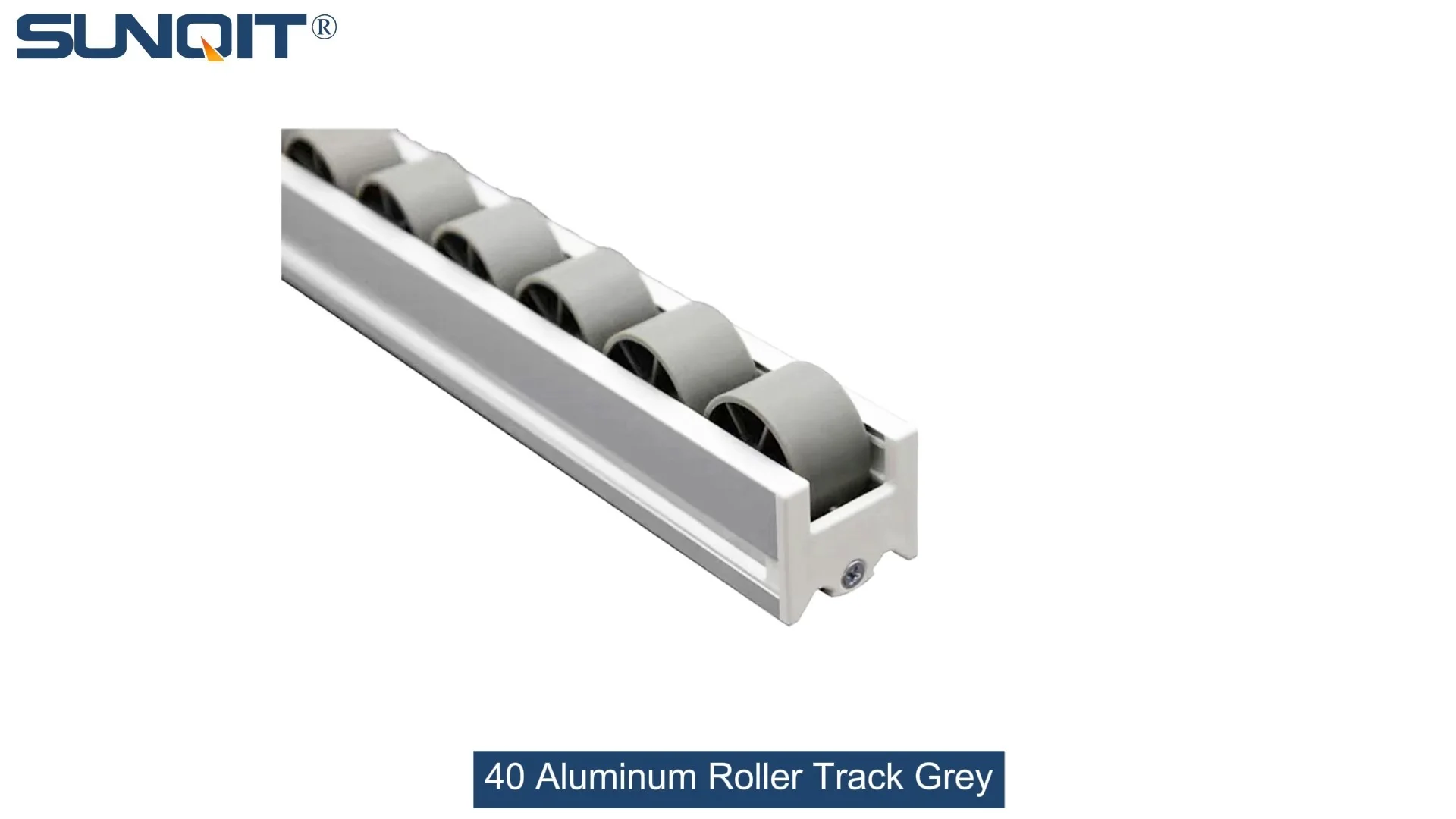
40 Aluminum Roller Track Grey
Durable and smooth-running modular roller rails. The system is fully assembled. The roller rail profile contains plastic rollers mounted on steel axles. Aluminum frame with plastic wheel make it anti corrosion,and material convey more smooth.
Introduction: The Unsung Hero of Material Handling
In the bustling world of manufacturing, warehousing, and logistics, there's a quiet workhorse that keeps operations moving smoothly: the roller track. These unassuming systems of wheels and rails are the backbone of efficient material flow, carrying everything from small components on a workbench to heavy bins in a distribution center. But not all roller tracks are created equal. When it comes to choosing between materials, two options often rise to the top: the sleek, industrial 40 aluminum roller track grey and its more budget-friendly counterpart, plastic alternatives like the plastic roller track guide rail grey. The decision between them isn't just about picking a track—it's about investing in long-term cost-effectiveness. In this article, we'll dive deep into how these two options stack up, exploring initial costs, durability, maintenance, and real-world performance to help you decide which one truly delivers the best value for your operation.
Understanding 40 Aluminum Roller Track Grey: The Industrial Workhorse
What Makes It "40 Aluminum"?
First things first: what exactly is 40 aluminum roller track grey? Let's break it down. The "40" typically refers to the width of the track profile, measured in millimeters, making it a versatile size for medium to heavy-duty applications. The "aluminum" part is key—it's constructed from extruded aluminum profile, a material prized in industrial settings for its strength-to-weight ratio. Aluminum profiles are created by forcing heated aluminum through a die, resulting in a consistent, precision-engineered shape that's both strong and lightweight. The "grey" finish is often anodized, a process that adds a protective layer to the aluminum, enhancing corrosion resistance and giving it that characteristic matte, industrial look.
Design and Functionality
The 40 aluminum roller track grey is designed with practicality in mind. Its structure usually features a rigid aluminum base (the profile) with integrated rollers—often made of steel or high-grade plastic—that glide along the track. The rollers are spaced evenly to ensure smooth movement of materials, whether you're pushing a bin of parts across a workbench or letting gravity feed items down a slope. What sets aluminum tracks apart is their rigidity: the aluminum profile resists bending, even under heavy loads, which means less warping over time and fewer jams in your material flow.
Common Applications
You'll find 40 aluminum roller track grey in a variety of settings, especially where durability and reliability are non-negotiable. Think lean manufacturing facilities, where it's used to build flow racks, conveyor systems, and workbenches that need to withstand constant use. It's also a staple in warehouses for material racks (like material rack b with 3 rows and 3 floors) and turnover trolleys, where its ability to handle frequent loading and unloading shines. Even in cleanroom environments, aluminum's resistance to rust and easy cleaning make it a go-to choice.

Plastic Roller Track Guide Rail Grey: The Budget-Friendly Contender
A Closer Look at Plastic Tracks
On the other side of the ring is the plastic roller track guide rail grey. As the name suggests, these tracks are primarily made from plastic materials—usually PVC, nylon, or polypropylene. The "grey" color here is often a result of the base plastic or added pigments, giving it a neutral, unobtrusive appearance that blends into most work environments. Plastic tracks are designed to be lightweight and easy to install, with a focus on affordability. Their construction typically involves molded plastic rails with integrated or attached plastic rollers, though some may use metal rollers for added durability (though this is less common in budget models).
Design and Use Cases
Plastic roller tracks prioritize simplicity and cost. They're often lighter than aluminum options, which can make them easier to handle during installation—no need for heavy lifting equipment. Their design is usually less rigid, with some flexibility built in, which can be a plus for light loads but a drawback for heavier ones. You'll commonly see plastic roller track guide rail grey in settings like small workshops, retail backrooms, or temporary storage areas where the volume of material flow is low, and upfront costs are a primary concern. They're also popular for DIY projects or as a quick fix for short-term material handling needs.

Initial Cost: The Temptation of "Cheap Now"
Let's start with the most obvious comparison point: initial cost. At first glance, plastic roller tracks seem like the clear winner here. Plastic materials are generally cheaper to produce than aluminum, and that translates to a lower price tag at the checkout. For example, a 1-meter section of plastic roller track guide rail grey might cost half as much as a similar length of 40 aluminum roller track grey. This price difference can be incredibly tempting, especially for small businesses or teams working with tight budgets. Why spend more upfront when you can get a track that "works" for less?
But here's the catch: initial cost is just one piece of the puzzle. While plastic tracks save you money on day one, they often come with hidden costs down the line. Aluminum, on the other hand, demands a higher initial investment but tends to pay off over time. To truly understand cost-effectiveness, we need to look beyond the first invoice and consider the total cost of ownership (TCO)—which includes durability, maintenance, and lifespan.

Durability & Lifespan: When "Tough Enough" Isn't Enough
40 Aluminum Roller Track Grey: Built to Last
Aluminum is a material that's synonymous with durability, and the 40 aluminum roller track grey is no exception. Thanks to its aluminum profile construction, it boasts impressive resistance to the wear and tear of daily use. The anodized grey finish adds a layer of protection against corrosion, making it suitable for humid environments or areas where spills are common—think food processing facilities or auto repair shops. Unlike plastic, aluminum doesn't scratch easily, and its rigid structure means it won't warp or bend under consistent weight. Even when loaded with heavy bins or repeatedly bumped by trolleys, an aluminum track retains its shape and functionality.
So, how long can you expect it to last? In a typical industrial setting with regular use, 40 aluminum roller track grey can easily serve for 10 to 15 years—sometimes longer with basic maintenance. Some lean pipe suppliers even report seeing their aluminum tracks in operation after 20 years in well-maintained facilities. That's a lifespan that's hard to beat, especially when you consider how quickly operations can change; a track that lasts two decades can adapt to multiple workflow revisions, new product lines, or facility expansions.
Plastic Roller Track Guide Rail Grey: The Fade of "Good Enough"
Plastic tracks, by contrast, have a much shorter lifespan. While they might hold up well in light-use scenarios, their durability quickly diminishes under heavy or frequent use. The plastic rails are prone to scratching and cracking, especially if they're exposed to sharp edges on bins or dropped tools. UV light can also take a toll—even indoor lighting can cause plastic to become brittle over time, leading to cracks and breakages. And while some plastic tracks claim to be "heavy-duty," they often sag under loads that an aluminum track would handle with ease. A bin that's slightly overloaded or a trolley that's pushed too hard can warp the plastic rail, creating uneven surfaces that cause jams in the material flow.
In terms of lifespan, don't expect miracles. A plastic roller track guide rail grey might last 2 to 3 years in a busy warehouse before showing signs of significant wear. In high-traffic areas, that lifespan could shrink to just 1 to 2 years. When you factor in the need to replace sections (or entire tracks) every few years, the "cheap upfront" price starts to lose its appeal.
Maintenance: The Hidden Cost of "Low Effort"
Maintenance is another area where the cost-effectiveness of aluminum and plastic tracks diverges sharply. Let's start with the aluminum option: 40 aluminum roller track grey is remarkably low-maintenance. Its smooth, anodized surface resists dirt and grime, so a quick wipe with a damp cloth every few weeks is usually enough to keep it clean. The rollers, often made of steel or high-grade plastic, may need occasional lubrication to keep them gliding smoothly—but that's a 5-minute task that can be done during routine facility checks. Because the aluminum profile is so durable, there's little risk of parts breaking or needing replacement. Even the joints and connectors (often made from aluminum or stainless steel) hold up well, requiring only occasional tightening if they loosen over time.
Plastic tracks, on the other hand, demand more attention. The plastic rails scratch easily, and those scratches can trap dirt and debris, which then gums up the rollers. This means more frequent cleaning—sometimes weekly—to prevent jams. The rollers themselves are often made of softer plastic, which wears down quickly; you'll find yourself replacing rollers every 6 months to a year in busy settings. And when the plastic rails crack or warp, there's no easy fix—you have to replace the entire section. For example, if a 1-meter section of plastic track cracks, you can't just patch it; you have to buy a new section, remove the old one, and reinstall the new one. That's time, labor, and money spent on maintenance that could have been avoided with a more durable material.
Consider this: a maintenance technician's time costs money. If they're spending an hour every week cleaning and repairing plastic tracks, that adds up to 52 hours a year—time that could be spent on more critical tasks like equipment upgrades or process improvements. With aluminum tracks, that same technician might spend just 2 hours a year on maintenance, freeing up time for other work. When you multiply that by the number of tracks in your facility, the labor savings alone make aluminum a smarter long-term investment.
Performance: When Reliability Equals Productivity
At the end of the day, a roller track's job is to keep materials moving—and any disruption to that flow costs money. 40 aluminum roller track grey excels here, thanks to its consistent performance. Its rigid aluminum profile ensures that rollers stay aligned, so materials glide smoothly without jams. Even when loaded to capacity, the track maintains its stability, reducing the risk of items getting stuck or falling off. This reliability translates to fewer workflow interruptions, faster material handling, and happier employees who don't have to stop and fix jams multiple times a day.
Plastic tracks, by contrast, are prone to performance issues. As they wear, the plastic rails can become uneven, causing rollers to bind or materials to slow down. A warped section might even bring an entire line to a halt while someone fixes it. In a lean manufacturing environment, where every second counts, these delays add up to lost productivity and missed deadlines. Imagine a scenario where a plastic track jams during a rush order—suddenly, workers are scrambling to unload stuck bins, production falls behind, and customers are left waiting. The cost of that delay could far exceed the savings from choosing a plastic track in the first place.
Total Cost of Ownership: The 10-Year View
To truly understand cost-effectiveness, let's take a long-term view: 10 years of operation. Let's assume a facility needs 10 meters of roller track for a material handling line. Here's how the numbers might shake out:
| Factor | 40 Aluminum Roller Track Grey | Plastic Roller Track Guide Rail Grey |
|---|---|---|
| Initial Cost (10m track) | $1,500 (higher upfront) | $750 (lower upfront) |
| Replacement Frequency | 1 track (lasts 10+ years) | 5 tracks (replaced every 2 years) |
| Total Replacement Cost | $0 (no replacement needed) | $3,000 (5 replacements x $750) |
| Annual Maintenance Cost | $100 (2 hours/year x $50/hour labor) | $2,600 (52 hours/year x $50/hour labor) |
| Total 10-Year Maintenance Cost | $1,000 | $26,000 |
| Total Cost of Ownership (10 years) | $2,500 | $29,750 |
The difference is staggering: over 10 years, the plastic track costs more than 11 times as much as the aluminum track. And this doesn't even account for the productivity losses from jams and delays, which could add thousands more to the plastic track's total cost. When you look at it this way, the higher initial investment in aluminum becomes a no-brainer.
Real-World Examples: Stories from the Shop Floor
Case Study 1: The Small Manufacturer's Wake-Up Call
A small electronics manufacturer in the Midwest recently shared their experience with plastic roller tracks. When they first opened, they opted for plastic roller track guide rail grey to save money on their assembly line workbenches. For the first year, things went smoothly. But by year two, the tracks were showing signs of wear: cracks in the rails, rollers that stuck, and frequent jams. They replaced the worst sections, costing $300. By year three, the entire line needed new tracks—another $750. Frustrated, they consulted a local lean pipe supplier, who recommended switching to 40 aluminum roller track grey. The upfront cost was $1,200 for 8 meters of track, but five years later, those tracks are still running like new. The maintenance team now spends 15 minutes a month on upkeep instead of 8 hours a week. "We thought we were saving money with plastic," the plant manager said, "but we ended up spending more in three years than we would have on aluminum in a decade."
Case Study 2: The Warehouse That Boosted Productivity
A large distribution center in Texas was struggling with slow order fulfillment due to frequent jams in their plastic roller track system. Workers were spending 2-3 hours a day unjamming bins, and morale was low. The facility manager decided to replace the plastic tracks with 40 aluminum roller track grey in their busiest picking area. Within a month, jams dropped by 95%, and order fulfillment speed increased by 20%. The initial investment of $5,000 for 50 meters of aluminum track was offset by the productivity gains—they estimate the switch saved them $20,000 in labor costs in the first year alone. "It wasn't just about the track itself," the manager noted. "It was about the confidence our team had in the system. They no longer dread walking up to a jammed track; they know it will work, so they work faster and more efficiently."
When to Choose Plastic: The Exception, Not the Rule
To be fair, plastic roller tracks aren't always a bad choice. There are scenarios where their lower upfront cost and lightweight design make sense. For example:
- Short-term projects: If you need a temporary track for a 6-month project, plastic might be the more economical choice.
- Light, occasional use: A small storage area where items are moved once a week (or less) could get by with plastic.
- Extreme budget constraints: If you're a startup with no capital for upfront investments and can't afford aluminum, plastic might be a stopgap—just plan to upgrade to aluminum as soon as possible.
But even in these cases, it's worth consulting a lean pipe supplier to explore financing options or used aluminum track availability. Often, the cost difference isn't as steep as it seems when you factor in the lifespan of aluminum.
Conclusion: Investing in Long-Term Value
At the end of the day, the choice between 40 aluminum roller track grey and plastic alternatives like plastic roller track guide rail grey comes down to one question: Are you willing to pay a little more now to save a lot later? Aluminum tracks demand a higher initial investment, but their durability, low maintenance, and long lifespan make them far more cost-effective over time. Plastic tracks may seem like a bargain upfront, but their short lifespan, high maintenance needs, and productivity-killing jams turn them into a costly liability.
If you're building a material handling system that needs to last, that needs to keep up with the demands of a busy operation, and that needs to deliver consistent value year after year, 40 aluminum roller track grey is the clear choice. It's not just a track—it's an investment in your operation's efficiency, reliability, and bottom line. And when you partner with a trusted lean pipe supplier, you can get expert advice on sizing, installation, and maintenance to ensure your aluminum track delivers maximum value for decades to come.
So, the next time you're shopping for roller tracks, remember: cost-effectiveness isn't about what's cheapest today. It's about what delivers the most value tomorrow, next year, and 10 years from now. For most operations, that's aluminum. And in the world of material handling, that's a decision you won't regret.