- Company Articles
- Products and Technology
- Product knowledge
- Cost-Effectiveness of 4040r EU Standard Aluminum Profile: Long-Term Savings

Cost-Effectiveness of 4040r EU Standard Aluminum Profile: Long-Term Savings
Related Product
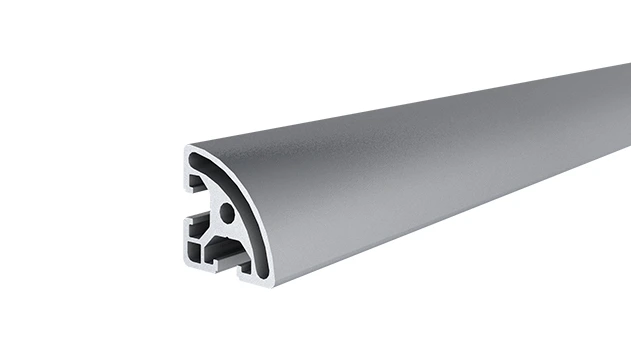
4040R EU Standard Aluminum Profile
4040R is a 4.00x4.00 CM fractional 40 series square extrusion T-slot profile with two side open T-slots, each side with 4.00cm face,the other side is round face. The profile has align-a-grooves to assist in aligning connecting profiles.
The Hidden Cost of "Cheap" Solutions in Manufacturing
If you've ever run a production floor, you know the drill: every decision comes down to balance. You need equipment that's sturdy enough to handle daily wear, flexible enough to adapt when your product line shifts, and—let's be real—affordable enough to keep the books in the black. But here's the catch: the cheapest upfront option rarely stays cheap. A flimsy workbench that warps after a year, a material rack that rusts through in a humid warehouse, or a production line setup that can't be reconfigured when you launch a new product—these "bargains" end up costing you more in replacements, downtime, and lost opportunities.
That's why more manufacturers are turning to a different approach: investing in tools and systems designed for the long haul. And one product that's been quietly revolutionizing this mindset is the 4040r EU Standard Aluminum Profile. It's not the flashiest piece of equipment on the floor, but when you dig into the numbers, its ability to deliver long-term savings is hard to ignore. Let's break down why this unassuming aluminum extrusion profile has become a go-to for businesses serious about cutting costs without cutting corners.
What Makes the 4040r EU Standard Aluminum Profile Different?
First, let's get clear on what we're talking about. The 4040r is part of the EU standard aluminum extrusion profile family—meaning it's engineered to meet strict European quality and safety benchmarks. The "4040" refers to its dimensions: 40mm by 40mm, a versatile size that's become a workhorse in factories, workshops, and warehouses. The "r" denotes its rounded edges, a small detail that adds big value (more on that later).
But what really sets it apart is its core material: high-grade aluminum. Unlike steel, which is heavy and prone to rust, or plastic, which lacks strength, aluminum hits that sweet spot of durability, lightweight design, and resistance to corrosion. And because it's an extrusion profile—shaped by forcing molten aluminum through a die—it has a consistent, precision-engineered structure that ensures every piece performs the same way, no surprises.
Pair that with aluminum profile accessories—things like joints, brackets, and connectors—and you've got a modular system that can be built, taken apart, and rebuilt again in almost endless configurations. Need a workbench today? Assemble it with 4040r rails and a plywood top. Six months later, need a material rack to hold heavier components? Disassemble the workbench, swap in some shelf brackets, and you're good to go. That flexibility alone is a game-changer for cost savings, but we're just getting started.

The Long-Term Savings Breakdown: Why "More Upfront" Equals "Less Over Time"
Let's talk numbers. It's true: 4040r aluminum profiles often cost more upfront than, say, a basic steel frame or a plastic shelving unit. But when you calculate total cost of ownership—the initial price plus maintenance, replacement, and adaptation costs over time—the math flips. Here's how:
1. Durability: It Lasts (and Lasts… and Lasts)
Aluminum doesn't rust. That might sound like a small thing, but in a busy facility—where spills happen, humidity fluctuates, or even just daily exposure to air and moisture takes a toll—rust is a silent budget killer. A steel workbench might start showing orange spots after a year; within three, you're replacing bolts or even the whole frame. Plastic? It cracks under heavy loads, fades in sunlight, and warps with temperature changes.
The 4040r? It stays strong. We've talked to manufacturers who've had the same 4040r-based material racks in use for 7+ years, with only minor part replacements (like worn casters). Even in harsh environments—think food processing plants with daily washdowns or automotive shops with oil and grease—aluminum holds up. No repainting, no rust removal, no premature replacements. Over a 5-year lifespan, that alone can save you 2-3x the upfront cost of cheaper materials.
2. Flexibility: Adapt Without Overhauling
Manufacturing isn't static. Your product line changes, demand spikes, or you adopt a new lean system to cut waste. When your equipment can't keep up, you're stuck: either work around inefficient setups (costing time) or buy new gear (costing money).
The 4040r's modular design fixes this. Thanks to those aluminum profile accessories—like internal rotary joints, T-slot connectors, and quick-release brackets—reconfiguring a workbench or material rack takes minutes, not days. A furniture manufacturer we worked with recently needed to shift from making dining chairs to sofas; their old steel workbenches were too low and couldn't be adjusted. With 4040r, they raised the height by swapping out leg brackets, added side shelves for tools, and were back to full production in an afternoon. No new workbenches, no downtime, no $10,000 equipment bill.
3. Labor Savings: Less Time Building, More Time Producing
Welding steel frames takes skill—and time. Even basic assembly of prefab plastic shelves can be a hassle, with mismatched holes or flimsy clips that break mid-install. The 4040r system? It's designed for "click-and-go" assembly. No welding, no drilling, no special tools. Just slide a joint onto the profile, tighten a screw with a hex key, and you're done.
A small electronics shop we spoke to reported cutting assembly time for new workstations by 60% after switching to 4040r. Instead of paying a contractor for a full day to build a custom steel bench, two of their own technicians could knock out three workbenches in an afternoon. Over a year, that adds up to thousands in labor savings—not to mention faster turnaround when they need to scale up.
4. Low Maintenance: Set It and Forget It
Ever spent an afternoon scraping rust off a steel rack? Or replacing broken plastic parts on a shelving unit? Maintenance isn't just about the cost of parts—it's about the time your team spends not doing their actual jobs. With 4040r, maintenance is almost non-existent. Wipe it down with a damp cloth to clean. Tighten a loose joint with a hex key if needed. That's it. No painting, no rust treatment, no replacing warped or cracked components. One warehouse manager told us, "We haven't touched our 4040r material racks in three years except to dust them. They look as good as the day we built them."
| Factor | 4040r Aluminum Profile | Basic Steel Profile | Plastic Profile |
|---|---|---|---|
| Initial Cost (per meter) | $15–$25 | $8–$12 | $5–$10 |
| Estimated Lifespan | 10+ years | 3–5 years (with rust) | 1–3 years (prone to cracking) |
| Annual Maintenance Cost | $5–$10 (occasional tightening) | $50–$100 (rust treatment, part replacement) | $30–$60 (replacing cracked parts) |
| Flexibility (Reconfiguration) | High (modular, tool-free adjustments) | Low (requires welding/cutting) | Very Low (permanent assembly) |
| Total Cost Over 5 Years* | $35–$65 | $150–$250 | $180–$330 |
*Estimates include initial cost, maintenance, and replacement of 10% of parts (where applicable). Actual costs vary by usage.
Real-World Example: How a Small Manufacturer Saved $24,000 in 3 Years
Let's put this into context with a real story. A family-owned automotive parts manufacturer in Ohio was struggling with their production setup. They had a mix of old steel workbenches (constantly rusting), plastic shelving (cracking under tool weight), and custom-built wooden racks (impossible to adjust when their product line changed). Their maintenance team was spending 8+ hours a month fixing or replacing equipment, and every time they launched a new part, they had to hire a welder to build new racks—costing $2,000–$3,000 per project.
Three years ago, they switched to 4040r aluminum profiles. They replaced all workbenches and material racks with modular setups using 4040r rails and aluminum profile accessories. Here's what happened:
- Maintenance time dropped to 1 hour per month (saving ~$7,200/year in labor).
- When they launched two new part lines, they reconfigured existing racks instead of building new ones (saving $5,000 in welding costs).
- No need to replace any major components in 3 years (compared to replacing 2 steel workbenches and 3 plastic shelves annually, saving ~$3,000/year).
Total savings over 3 years: ~$24,600. Their initial investment in 4040r profiles and accessories? $8,500. That's a 290% return on investment—and the savings keep growing as the system continues to perform.
Beyond the Numbers: The "Soft" Savings That Matter
Not all savings show up on a spreadsheet. The 4040r system also delivers "soft" benefits that make your operation run smoother, which in turn saves money indirectly:
Safety: Rounded edges (the "r" in 4040r) reduce the risk of cuts and scrapes, lowering workplace injury costs. Lightweight aluminum also makes it easier for teams to move equipment without straining, cutting down on worker compensation claims.
Efficiency: A well-organized workspace—built with modular 4040r racks and workbenches—cuts down on time wasted searching for tools or materials. One study found that efficient layout design can boost productivity by 15–20%.
Sustainability: Aluminum is 100% recyclable, and since the 4040r system is modular, you're not throwing away entire units when you reconfigure—just repurposing parts. This reduces waste disposal costs and can even qualify your business for green incentives.
Is It Right for You? Who Stands to Gain the Most
The 4040r EU Standard Aluminum Profile isn't a one-size-fits-all solution, but it shines brightest for businesses that:
- Need flexibility (frequent product changes, scaling up/down, or adapting to new processes).
- Value durability (operating in harsh environments, or looking to avoid constant replacements).
- Want to reduce labor costs (both in setup and maintenance).
- Focus on lean systems (minimizing waste, maximizing efficiency, and continuous improvement).
Even if you're a small operation—like a startup workshop or a home-based maker space—the modularity of 4040r means you can start small (a single workbench) and expand as you grow, without wasting money on equipment you'll outgrow.
Final Thought: Invest in Your Future, Not Just Your Today
At the end of the day, the cost-effectiveness of 4040r aluminum profiles comes down to a simple truth: manufacturing is a long game. The equipment you buy today will shape your ability to compete, adapt, and grow for years to come. Choosing the cheapest option might feel good for this quarter's budget, but it's a short-term fix that often leads to long-term pain.
The 4040r EU Standard Aluminum Profile, with its durability, flexibility, and low maintenance, is an investment in your operation's future. It's not just about saving money—it's about building a workspace that works with you, adapts to your needs, and keeps your team focused on what matters: making great products.
So the next time you're shopping for workbenches, material racks, or production line setups, ask yourself: "Am I paying for something that will cost me more later?" With 4040r, the answer is a resounding "No." And that's the kind of peace of mind that's priceless.