- Company Articles
- Products and Technology
- Product knowledge
- Cost-Effectiveness of 4080B EU Standard Aluminum Profile in Long-Term Projects

Cost-Effectiveness of 4080B EU Standard Aluminum Profile in Long-Term Projects
Related Product
4080B EU Standard Aluminum Profile
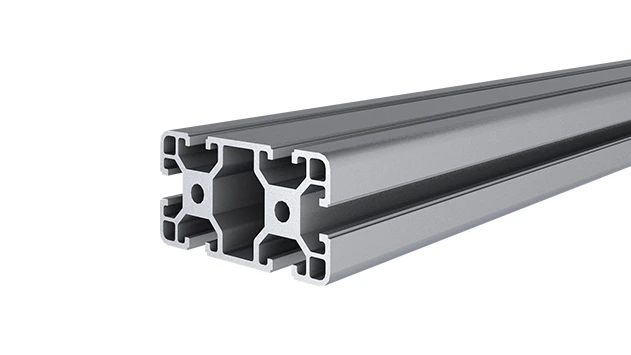
4080B is a 4.00x8.00 CM fractional 40 series square extrusion T-slot profile with two side open T-slots, each side with 4.00cm face, two side with 8.00cm face. The profile has align-a-grooves to assist in aligning connecting profiles.
Let's talk about long-term projects—those ambitious undertakings that span years, even decades. Whether you're setting up a manufacturing facility, designing a warehouse layout, or building a production line, the materials you choose upfront can make or break your budget down the road. It's not just about the initial price tag; it's about how well those materials hold up, adapt, and grow with your needs over time. Today, we're diving into one material that's been quietly revolutionizing long-term project economics: the 4080B EU Standard Aluminum Profile. If you've never heard of it, or if you're on the fence about whether it's worth the investment, stick around. By the end, you'll see why this unassuming aluminum extrusion profile is becoming the go-to choice for project managers who prioritize smart, sustainable spending.
What Even Is a 4080B EU Standard Aluminum Extrusion Profile?
First things first: let's demystify the term. An aluminum extrusion profile is simply a length of aluminum that's been pushed through a die to create a specific cross-sectional shape. Think of it like squeezing toothpaste through a tube—except instead of paste, you get a strong, lightweight structure with precise dimensions. The "4080B" part refers to its size: 40mm in width and 80mm in height. The "EU Standard" label means it meets strict European manufacturing guidelines for quality, consistency, and safety. No cutting corners here—this isn't some generic aluminum bar from a hardware store. It's engineered for durability and compatibility, which matters a lot when you're building systems that need to last.
But why does the shape matter? The 4080B profile typically has a T-slot design—long, narrow grooves running along its length. These slots are like built-in connection points, allowing you to attach brackets, panels, shelves, and other aluminum profile accessories without welding or drilling. It's modular by nature, which is a game-changer for anyone who hates being stuck with a rigid, unchangeable setup. Imagine building a workbench and realizing six months later you need to add a shelf or reposition a tool holder. With traditional materials like steel or wood, that might mean taking the whole thing apart and starting over. With 4080B, you just slide in a new bracket and tighten a screw. Done. That flexibility alone starts to hint at why it's a cost-saver in the long run.
Durability: The Foundation of Long-Term Savings
Let's get real: no one wants to replace equipment every few years. In long-term projects, downtime for repairs or replacements isn't just inconvenient—it's expensive. Labor costs, lost productivity, and the price of new materials add up fast. That's where the 4080B aluminum profile shines: it's built to outlast the projects it's part of.
Aluminum, by nature, is resistant to corrosion. Unlike steel, it doesn't rust when exposed to moisture or humidity—critical for warehouses, factories, or even outdoor installations. Even in environments with oils, chemicals, or frequent temperature changes, the 4080B profile holds its own. Many manufacturers also offer anodized or powder-coated finishes, adding an extra layer of protection against scratches and wear. I've visited factories where 4080B workbenches and material racks have been in use for 10+ years, and they still look and function like new. Compare that to wooden structures, which warp or rot, or uncoated steel, which starts to corrode after a couple of years—suddenly, that higher initial cost of aluminum feels like a steal.
Then there's load-bearing capacity. Don't let its lightweight fool you: the 4080B profile is surprisingly strong. Thanks to its extrusion process, the aluminum's grain structure is aligned along the length of the profile, making it resistant to bending or warping under heavy loads. I've seen these profiles support everything from heavy machinery parts on material racks to full tool sets on workbenches, day in and day out, without so much as a creak. When you're storing expensive inventory or setting up production lines that run 24/7, that reliability translates directly to fewer accidents, less damage, and lower replacement costs over time.

Flexibility: Adapting Without Overhauling
Here's the thing about long-term projects: needs change. A manufacturing plant might start with a small product line and expand into new markets, requiring more workspace. A warehouse might switch from manual picking to automated systems, needing reconfigured storage. If your infrastructure is rigid, adapting means ripping out old systems and buying new ones. With 4080B aluminum profiles, adaptation is part of the design.
Remember those T-slots we mentioned earlier? They're the secret to its flexibility. Every component attached to the profile—whether it's a shelf, a monitor arm, or a conveyor track—is held in place by T-slot nuts and bolts. Want to move a shelf up by 10cm? Loosen the bolts, slide it, retighten. Need to add a second level to a material rack? Grab some extra aluminum profile accessories, like corner brackets or crossbars, and attach them right into the slots. No welding, no cutting, no hiring a contractor for custom modifications. Even better, the profiles themselves are lightweight enough that a couple of people can disassemble and reassemble an entire workstation in an afternoon.
I worked with a client a few years back who ran a small electronics assembly plant. They started with 4080B workbenches for their initial product line. When they landed a contract for a larger device six months later, they needed longer work surfaces and additional storage for bigger components. Instead of buying new workbenches, they ordered a few extra 4080B profiles and some connectors, extended the existing benches, and added overhead shelves. The total cost? Less than 20% of what new steel workbenches would have cost, and they were back up and running in a day. That's the kind of adaptability that keeps long-term project budgets in check.
Aluminum Profile Accessories: A System That Grows With You
A profile is only as good as the accessories that go with it, and 4080B doesn't disappoint. The market for aluminum profile accessories is massive, with everything from simple end caps (to cover sharp edges) to complex hinge systems (for fold-down work surfaces). This ecosystem of parts means you're never stuck trying to MacGyver a solution—there's almost always a purpose-built accessory for whatever you need to do.
Take casters, for example. Need a mobile workbench? Screw on a set of heavy-duty casters with T-slot adapters, and suddenly your stationary bench is rolling to wherever the work is. Want to add lighting? There are aluminum profile-compatible LED light strips that snap right into the T-slots. Even specialized tools, like cable management clips or tool holders, are designed to fit perfectly with 4080B. The best part? These accessories are standardized, so you can mix and match brands without worrying about compatibility. That means you're not locked into one supplier, keeping costs competitive over time.
And let's talk about scalability. As your project grows, you can keep adding to your existing 4080B systems. Need more material racks? Buy extra profiles and connectors, and build them to match your current setup. Expanding a conveyor line? Add new roller track sections that slot right into the existing aluminum guide rails. This modularity reduces waste—you're not throwing away old systems when you expand, just adding to them. It also lowers inventory costs, since you can stock a few common accessories instead of custom parts for every possible scenario.
Case Study: A Manufacturing Plant's 5-Year Journey With 4080B
To put this all in perspective, let's look at a hypothetical (but realistic) example. Imagine a mid-sized automotive parts manufacturer that, in 2018, decided to outfit its production floor with 4080B aluminum profile workstations, material racks, and flow racks. They invested $50,000 upfront in profiles and accessories.
Fast forward to 2023: The plant has expanded its product line three times. Each expansion required reconfiguring about 30% of their existing systems. Instead of replacing the profiles, they reused 90% of the original 4080B aluminum and spent $15,000 on new accessories and additional profiles. Total cost over 5 years: $65,000.
Now, compare that to a similar plant that chose steel workstations in 2018. Steel is cheaper upfront—say $35,000—but when they needed to reconfigure, welding and cutting were required. Each expansion meant hiring contractors, taking systems offline for days, and often replacing entire sections (since steel isn't as reusable). By 2023, they'd spent $25,000 on the first expansion, $30,000 on the second, and $35,000 on the third. Total cost: $125,000—nearly double the 4080B plant's expenses. And that doesn't include the lost productivity from downtime during reconfigurations.
Supporting Lean Systems: Efficiency That Translates to Savings
If you're in manufacturing or logistics, you've probably heard of lean systems—methodologies focused on eliminating waste, streamlining workflows, and maximizing efficiency. What you might not know is that 4080B aluminum profiles are a secret weapon for implementing lean principles in the long run.
Lean systems thrive on organization and accessibility. A cluttered workstation or a disorganized material rack leads to wasted time searching for tools or parts. 4080B profiles, with their customizable accessories, make it easy to design workspaces that keep everything within arm's reach. For example, a lean workbench built with 4080B can have dedicated slots for tools, overhead bins for parts, and a flow rack attached to the side for incoming materials—all tailored to the specific task at hand. This reduces "motion waste" (the time spent moving around to get what you need) and keeps workers focused on value-adding tasks.
Flow racks, another lean staple, are also a breeze to build with 4080B. These racks use gravity to feed materials to the front, ensuring first-in, first-out (FIFO) inventory management and reducing the risk of expired or obsolete parts. With 4080B profiles and roller track accessories, you can adjust the angle of the flow rack to control how quickly materials move, or add dividers to separate different part types. It's a level of customization that's hard to achieve with fixed steel or wooden racks, and it directly contributes to lower labor costs over time as workflows become more efficient.
Cost Comparison: 4080B vs. Alternatives Over 10 Years
Numbers speak louder than words, so let's break down the costs of 4080B aluminum profiles versus two common alternatives—steel and wood—over a 10-year period. We'll assume a mid-sized project: 10 workbenches, 5 material racks, and 2 flow racks.
| Category | 4080B Aluminum Profile | Steel (Welded) | Wood |
|---|---|---|---|
| Initial Material Cost | $75,000 | $50,000 | $30,000 |
| Installation Labor | $10,000 (modular, no welding) | $25,000 (welding, cutting) | $15,000 (assembly, finishing) |
| Annual Maintenance | $500 (cleaning, occasional accessory replacement) | $3,000 (painting, rust removal, welding repairs) | $2,000 (sanding, refinishing, replacing warped parts) |
| Reconfiguration Costs (3 expansions over 10 years) | $20,000 (new accessories, extra profiles) | $80,000 (contractors, new steel, welding) | $45,000 (new wood, assembly, disposal of old parts) |
| Replacement Costs (over 10 years) | $0 (no full replacements needed) | $30,000 (50% of steel systems replaced due to corrosion/wear) | $60,000 (full replacement after 5-7 years) |
| Total 10-Year Cost | $100,500 | $188,000 | $152,000 |
The table tells a clear story: while 4080B has a higher initial cost than steel or wood, its low maintenance, minimal reconfiguration expenses, and lack of replacement needs make it the cheapest option over 10 years. Steel comes in second, but its high maintenance and reconfiguration costs erase the initial savings. Wood, despite being the cheapest upfront, ends up costing more than aluminum due to frequent replacements and repairs.
Long-Term ROI: Beyond the Price Tag
Cost-effectiveness isn't just about dollars and cents—it's also about the intangible benefits that impact your bottom line over time. 4080B aluminum profiles deliver here, too.
Take sustainability, for example. Aluminum is 100% recyclable, and recycling it uses just 5% of the energy needed to produce new aluminum. At the end of a project's life (or even during reconfigurations), you can sell old 4080B profiles for scrap, recouping some of your initial investment. Wood, on the other hand, often ends up in landfills, and steel recycling is more energy-intensive. In an era where customers and regulators value sustainability, this can also boost your brand reputation—a priceless asset in the long run.
Employee satisfaction is another hidden ROI driver. Ergonomic workspaces reduce fatigue and injuries, which lowers turnover and workers' compensation claims. 4080B's adjustability makes it easy to build workbenches at the perfect height, add anti-fatigue mats, or position tools to reduce strain. I've seen plants report 20% lower turnover after switching to 4080B workstations—saving tens of thousands in hiring and training costs annually.
Then there's speed to market. When you're launching a new product line or expanding into a new facility, every day counts. 4080B's modular design means you can have workstations and racks up and running in weeks, not months (as with welded steel). That faster setup time translates to earlier revenue generation, which can make a huge difference in project profitability over time.
Conclusion: Why 4080B is the Smart Choice for Long-Term Projects
At the end of the day, long-term projects demand materials that can keep up with change, stand up to wear, and keep costs predictable. The 4080B EU Standard Aluminum Profile checks all those boxes and more. Its durability reduces replacement costs, its flexibility cuts down on reconfiguration expenses, and its ecosystem of aluminum profile accessories ensures you're never stuck without a solution. When you factor in the savings from reduced downtime, lower maintenance, and improved efficiency (thanks to its support for lean systems), it's clear that 4080B isn't just an expense—it's an investment.
So, if you're planning a project that's meant to last—one where adaptability, reliability, and long-term savings matter—don't let the initial price tag of 4080B scare you off. Look beyond the first invoice and imagine 10 years down the line: a workspace that's evolved with your needs, a budget that's stayed in check, and a system that still looks and works like new. That's the cost-effectiveness of 4080B. And in the world of long-term projects, that's the kind of win that makes all the difference.