- Company Articles
- Products and Technology
- Product knowledge
- Cost-Effectiveness of Aluminum Profile 3 Way Connectors vs. Plastic

Cost-Effectiveness of Aluminum Profile 3 Way Connectors vs. Plastic
Related Product
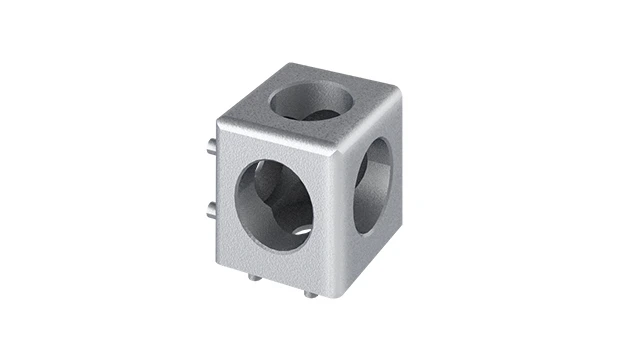
Aluminum Profile 3 Way Connector
The 3 way - squared corner connector is an external fastening method that is typically used to create a corner connection between three profiles. It is a heavy-duty connection that is simple to use and provides a polished look.
Walk into any modern workshop, manufacturing floor, or even a small-scale maker space, and you'll likely spot a common sight: workbenches, material racks, and assembly lines built from modular components. These setups are the backbone of lean systems, designed to maximize efficiency, minimize waste, and adapt to evolving needs. At the heart of this modularity lie connectors—the unsung heroes that hold everything together. When it comes to choosing between aluminum profile 3 way connectors and their plastic counterparts, the decision goes far beyond upfront cost. It's about long-term value, durability, and how well your setup can keep up with the demands of daily operations. Let's dive into what makes one option stand out as the smarter investment for most businesses.
Understanding the Basics: What Are Modular Connectors?
Modular connectors are the building blocks of flexible workspaces. They link aluminum extrusion profiles (or other materials) to form structures like workbenches, flow racks, and turnover trolleys. Among the most versatile are 3 way connectors, which allow for T-joints or cross-joints, enabling complex, multi-directional designs. For decades, plastic has been a go-to for budget-conscious buyers, while aluminum has been seen as the premium choice. But in today's fast-paced industrial landscape, "premium" doesn't always mean "unaffordable"—especially when you factor in longevity and performance.
Let's start by breaking down the two materials. Aluminum profile 3 way connectors are typically made from die-cast aluminum or aluminum alloy, known for their strength-to-weight ratio. Plastic connectors, on the other hand, are often injection-molded from polypropylene (PP) or nylon, materials chosen for their low production cost and moldability. Both serve the same basic function, but their real-world performance tells two very different stories.
Side-by-Side: Aluminum vs. Plastic Connectors
To truly grasp cost-effectiveness, we need to look beyond the price tag. Let's compare key metrics that matter to businesses—from initial cost to long-term maintenance—using a real-world scenario: a small manufacturing team building a material rack (similar to "material rack b (3 row and 3 floor)" in product catalogs) that will hold 50kg per shelf, 12 hours a day, 5 days a week.
| Metric | Aluminum Profile 3 Way Connectors | Plastic Connectors |
|---|---|---|
| Initial Cost (per connector) | $8–$12 | $2–$4 |
| Load Capacity (per connector) | Up to 150kg (static) | Up to 40kg (static) |
| Expected Lifespan (in heavy use) | 7–10 years | 1–2 years |
| Maintenance Needs | Minimal (occasional tightening) | Frequent (replacement of worn parts) |
| Reusability | High (can be disassembled/reassembled 10+ times) | Low (prone to cracking after 2–3 reassemblies) |
| Environmental Resistance | Resistant to moisture, chemicals, UV light | Prone to warping in high temps; degrades in UV light |
| Total Cost Over 5 Years* | $10–$15 (initial + minimal maintenance) | $20–$30 (initial + 3 replacements) |
*Based on a material rack using 12 connectors, replaced every 1.5 years for plastic.
The table tells a clear story: plastic connectors cost 75% less upfront, but over five years, they end up costing twice as much due to replacements. For our material rack example, that's a total difference of $180–$180 (12 connectors × $15 vs. 12 × $30). Multiply that by multiple racks, workbenches, or trolleys, and the savings add up fast.

Why Aluminum Profile 3 Way Connectors Win Long-Term
1. Strength That Stands the Test of Time
Aluminum's inherent strength is a game-changer. When you're loading heavy components onto a material rack, the last thing you need is a connector that bends or fails. Aluminum profile 3 way connectors, often paired with aluminum extrusion profiles, distribute weight evenly, reducing stress on joints. In contrast, plastic connectors can flex under load, leading to wobbly racks that risk damaging inventory or injuring workers. A lean system supplier will often emphasize this: instability in workspaces leads to inefficiencies—time wasted adjusting racks, damaged parts, and even downtime.
Consider this: A mid-sized electronics manufacturer switched from plastic to aluminum connectors for their assembly line workbenches. Within six months, they reported a 40% drop in "adjustment time" (workers no longer had to tighten loose plastic joints) and a 25% reduction in damaged circuit boards due to stable shelving. The initial investment paid off in under a year.
2. Reusability: Adapt Without Waste
Lean systems thrive on adaptability. A workspace that worked for last month's project might need a complete overhaul for the next. Aluminum connectors excel here. Their metal construction allows for repeated disassembly and reassembly without losing integrity. You can take apart a workbench, repurpose the aluminum extrusion profiles and connectors into a turnover trolley, and repeat the process five years later—something plastic connectors can't match.
Plastic connectors, by contrast, are often "single-use" in practical terms. The plastic weakens at the screw holes each time you tighten or loosen them, leading to cracks after just a few cycles. For a startup that's scaling quickly, this means constant repurchasing. As one lean system supplier put it: "Plastic connectors are like renting furniture—cheap at first, but you'll never stop paying."
3. Low Maintenance, High Reliability
Time is money, and maintenance eats into both. Aluminum connectors require almost no upkeep. A quick check every few months to ensure screws are tight is usually enough. Plastic connectors? They demand attention. Exposure to oils, coolants, or even just the friction of daily use can cause them to degrade. In one automotive parts warehouse, plastic connectors on roller tracks began to crack after eight months of holding metal components, leading to monthly replacements. The warehouse manager calculated: "We were spending $300 a month on new plastic parts. Switching to aluminum cost $1,200 upfront, but we haven't bought a connector since."
4. Environmental Resilience: Built for Harsh Spaces
Workshops aren't always clean, climate-controlled environments. Moisture, chemicals, and temperature swings are part of the job. Aluminum resists rust and corrosion, making it ideal for facilities with washdowns or exposure to humidity. Plastic? It absorbs moisture, swells, and weakens. In a food packaging plant using plastic connectors near steam ovens, the connectors warped within a year, causing conveyor belts to misalign. The solution? Aluminum connectors, which stood up to the heat and moisture for over five years.

When Might Plastic Connectors Make Sense?
We'd be remiss not to acknowledge that plastic connectors have their place. They're perfect for short-term, low-stress applications: trade show displays, temporary storage racks, or prototype workbenches that won't see heavy use. If you need a quick, disposable setup for a project lasting less than six months, plastic might be the budget-friendly choice.
But even here, the lines are blurring. Many lean system suppliers now offer "starter kits" with aluminum connectors at competitive prices, recognizing that small businesses need affordability and reliability. For example, a basic aluminum workbench with aluminum profile 3 way connectors might cost $200 more upfront than a plastic version, but it will outlast three plastic workbenches—and require zero replacements in between.
The Total Cost of Ownership: Crunching the Numbers
Let's quantify the long-term savings with a 5-year projection for a typical small business using 10 modular structures (workbenches, material racks, etc.), each requiring 15 connectors. We'll assume plastic connectors need replacement every 18 months, while aluminum lasts the full 5 years.
- Plastic Connectors: 10 structures × 15 connectors = 150 connectors. Initial cost: 150 × $3 = $450. Replacements needed: 5 years / 1.5 years = 3 cycles (initial + 2 replacements). Total cost: $450 × 3 = $1,350. Plus, 10 hours of labor for replacements (2 hours per cycle × 5 cycles) at $25/hour = $250. Total: $1,600.
- Aluminum Connectors: 150 connectors × $10 = $1,500 (initial cost). No replacements needed. Labor: 2 hours total for occasional tightening = $50. Total: $1,550.
Over five years, aluminum costs less than plastic—despite the higher upfront price. And this doesn't include intangibles like reduced downtime, fewer damaged products, or the ability to repurpose components. For businesses planning to stay operational for more than two years, aluminum is the clear financial winner.
Sustainability: The Hidden Cost of Plastic
Cost-effectiveness isn't just about dollars and cents—it's about responsibility. Plastic connectors contribute to the growing problem of industrial waste. Most end up in landfills, where they take centuries to decompose. Aluminum, by contrast, is 100% recyclable. Even if a connector eventually wears out, it can be melted down and reused, reducing your carbon footprint.
Many modern businesses prioritize sustainability not just for ethics, but for branding. Customers and partners increasingly prefer suppliers with eco-friendly practices. Using aluminum profile accessories sends a message: you care about long-term efficiency, not just short-term savings. As one operations manager noted: "Our clients ask about our sustainability efforts. Being able to say we use recyclable aluminum connectors instead of disposable plastic has helped us win contracts."
Making the Right Choice for Your Business
At the end of the day, the choice between aluminum profile 3 way connectors and plastic comes down to your timeline, needs, and values. If you're building a workspace that will evolve, heavy use, and contribute to your bottom line for years to come, aluminum is the investment that pays dividends. It's stronger, reusable, low-maintenance, and ultimately more cost-effective over time.
Plastic has its niche, but for most lean systems—whether you're a small workshop or a large manufacturer—aluminum connectors are the smarter, more sustainable choice. As the old saying goes: "Buy cheap, buy twice." With aluminum, you buy once, and you build to last.
So the next time you're sourcing components for your workspace, ask your lean system supplier about aluminum extrusion profiles and aluminum profile 3 way connectors. Your future self—and your budget—will thank you.